Illinois passed the nation’s first Climate Displacement Act, requiring a 17-seat task force to produce two reports on climate-driven migration by December 2026 and the end of 2027. Yet appointments were delayed and the panel has not been convened, putting the first report at risk. Supporters point to Illinois’ freshwater, agricultural capacity and urban infrastructure as potential draws for migrants, while experts warn no region is immune and emphasize that early planning is essential to reduce future disruptions.
Illinois Enacted The Nation’s First Climate Displacement Law — Implementation Has Stalled
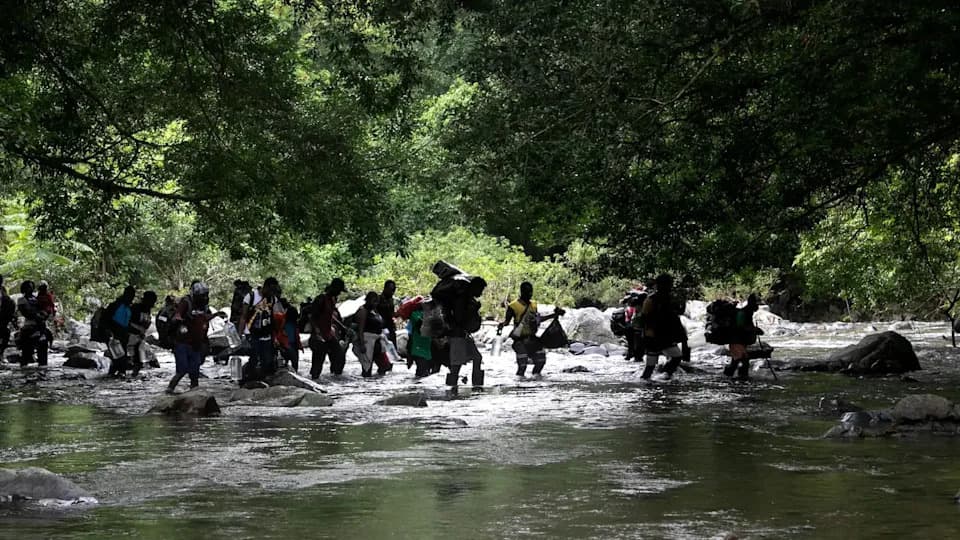
Migrants, most from Haiti, trek through the Darien Gap, a 66-mile stretch of rainforest between North and South America, on their journey towards the United States.
Each year, climate-driven disasters force millions of people to leave their homes. After floods, fires and droughts, displaced families must find new places to rebuild — joining a growing group commonly called climate migrants. Most move within their own countries, though some cross international borders.
What Illinois Tried To Do
Last autumn, Governor J.B. Pritzker signed the Climate Displacement Act, making Illinois the first U.S. state to create a statutory process to study how climate-driven migration could reshape its population, infrastructure and public services. The law established a 17-seat Climate Displacement Task Force charged with producing two reports: one due in December 2026 to estimate likely climate migration flows, and a second due at the end of 2027 to assess how state agencies should adapt.
But The Effort Has Largely Stalled
Despite the 90-day timeline in the statute for appointing task force members, for more than a year only one appointment was made. Lawmakers have extended reporting deadlines and officials have yet to convene the full panel, putting the first report at risk of being late.
"Governor Pritzker remains committed to fighting climate change and preparing Illinois for its impacts, including climate-related migration," said Jose Correa, a spokesperson for the governor. "This work is important, and the administration will continue working with lawmakers, state agencies, and stakeholders to establish a timeline and move the task force forward."
After reporters contacted the offices responsible for appointments, Illinois Senate President Don Harmon added State Senator Graciela Guzman to the panel. Guzman — who introduced the Climate Displacement Act and is the daughter of Salvadoran refugees — said she is "honored to serve" but that officials have not provided a clear explanation for the delay.
Why Illinois Matters (And Why It’s Complicated)
Illinois is often singled out as a potential destination for climate migrants: it has a temperate climate, major agricultural capacity, and access to roughly 20% of the world’s unfrozen freshwater. AlphaGeo, a climate-risk firm, recently ranked Chicago among the most climate-resilient large cities — citing its urban infrastructure and inland location.
Still, experts caution there are no true "climate havens." The Midwest is already experiencing climate impacts: heavy flooding that nearly taxed Chicago’s tunnel and reservoir system, a record number of tornadoes, extreme heat, and wildfire smoke that degraded air quality for days. Those events underline why some policymakers argue anticipatory planning is urgent.

People are seen along Lake Michigan in Chicago ahead of a heatwave in June 2025.
Policy Context And Challenges
Projections vary, but many models estimate tens of millions of internal displacements globally by 2050. At the low end, some forecasts point to at least 44 million people displaced inside their own countries by midcentury — roughly the population of Argentina. Yet "climate migrant" has no single internationally accepted definition, and climate-driven movements are rarely covered by existing refugee law.
Modeling migration is inherently complex: decisions to move reflect economic opportunity, family networks, gender, poverty and other social factors. Adding climate stressors increases uncertainty. Still, researchers say states can make progress by tailoring models to local conditions — for example, examining how Illinois’ agricultural economy, freshwater resources and metropolitan labor market might attract or sustain newcomers.
How Other Places Are Responding
Although Illinois’ law is the first of its kind, other jurisdictions are beginning limited planning. Maine has integrated climate migration into resilience planning, while lawmakers in California, Hawaii and New Jersey have proposed coastal relocation and buyout measures. Alaska recently passed a law to assist the relocation of low-lying communities such as Kipnuk and Kwigillingok after storm impacts.
Local plans also exist: Cincinnati circulated a blueprint to accommodate up to 500,000 additional residents by 2050, focused on expanding affordable housing and transit rather than marketing itself as climate-proof.
Experts' Take
Byran Jones, a geographer at Baruch College who has worked on major climate relocation reports, called Illinois' assignment "daunting" but valuable. He said the state can build on existing research and focus on its unique characteristics to produce actionable insights. "Planning now is the best way to limit future disruptions," Jones said.
What’s Next
For Illinois to move forward, state leaders must complete appointments, set a clear timeline and fund the task force’s work. If the panel delivers robust, evidence-based reports, the state could offer a much-needed model for how jurisdictions prepare for population shifts driven by climate change. If it does not, Illinois will miss an early opportunity to shape policy before displacement pressures grow.
Note: This article is based on reporting by WBEZ and Grist and reflects the statute, public statements and expert commentary available as of September 2026.
Help us improve.