Key Takeaway: UAC and Russia's Defence Ministry say a new batch of upgraded Su-57 fighters has been handed over, though officials provided no delivery numbers or detailed specifications. Rostec plans to add a two-seat cockpit and "sixth-generation" technologies to coordinate drones, but Western experts remain skeptical. Production has been slow amid the Ukraine war; the IISS estimated at least 21 Su-57s in service by early 2026, and Ukraine has reported several strikes on the type.
Russia Delivers Upgraded Su-57 Fighters as Production Lags and Drone Roles Expand
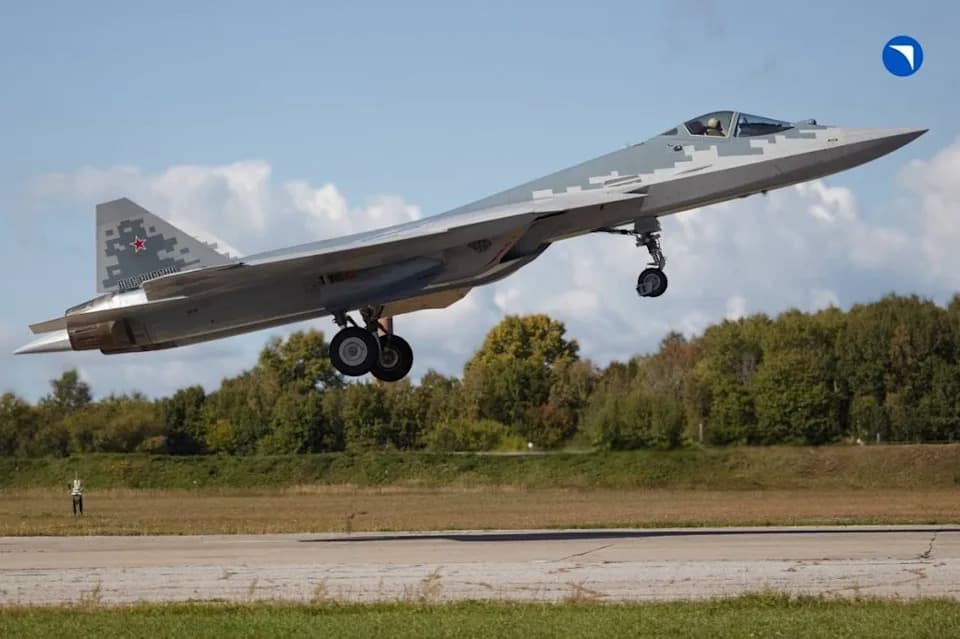
An image published by Russia's state-owned United Aircraft Corporation on September 24, purporting to show a newly upgraded Su-57 fighter jet as Russia's government said it had received a new batch of the aircraft.
Russia's state-owned United Aircraft Corporation (UAC) has handed over a "batch" of modified Su-57 fighters to the air force, the company and the Defence Ministry said, while providing few details about the size of the delivery or the specific upgrades.
Official Claims and Visuals
UAC published an image on Sept. 24 that it presented as one of the newly upgraded Su-57s. The Defence Ministry described the jets as featuring a "new technical design" but did not disclose how many aircraft were delivered or list the technical changes.
Planned Upgrades and Future Concepts
Rostec, UAC's parent conglomerate, has previously said the Su-57 programme will include a two-seat variant with a "second cockpit" intended to control accompanying drone swarms and that it will incorporate experimental "sixth-generation" technologies. Industry discussion of sixth-generation concepts generally emphasizes heavier integration with unmanned systems, allowing cheaper drones to handle the riskiest tasks while manned aircraft operate farther from danger.
Expert Skepticism
Western analysts, including Justin Bronk of the Royal United Services Institute (RUSI), say the described changes are unlikely to close the gap with leading U.S. and Chinese stealth programmes. Many experts also question whether the Su-57, in its current form, meets the stealth and systems benchmarks typically associated with fifth-generation fighters.
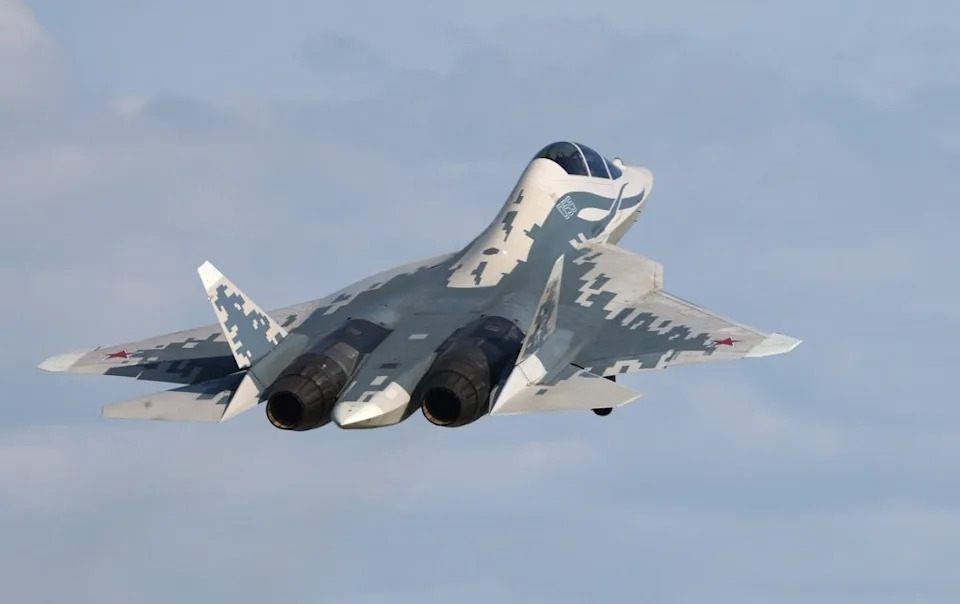
The new Russian Sukhoi Su-57D two-seater multirole fighter jet, equipped with the fifth-generation engine known as "Product 177," flies during its test flight in the Moscow region on May 19. This image was provided to AP by a third party and has not been independently verified.
Operational Use and Losses
Moscow has used Su-57s for long-range strikes in Ukraine, but observers say their battlefield impact has been limited and that Russian commanders have been cautious about exposing these scarce assets to risk. The International Institute for Strategic Studies (IISS) estimated Russia had at least 21 Su-57s at the start of 2026. Ukraine has reported damaging at least one Su-57 in June 2024 and, according to Ukrainian officials, two more were hit by drones in late April 2026 in Russia's Chelyabinsk region.
Two-Seat Prototype and Engine
Rostec and UAC have highlighted a two-seat Su-57D prototype equipped with the "Product 177" engine, which conducted a test flight in the Moscow region on May 19. The photo of that flight was provided to the Associated Press by a third party and has not been independently verified.
Practical Constraints
Russian forces have used Su-57s to fire air-to-air missiles at Ukrainian drones attacking Russian infrastructure — an example of how one of the country's most advanced and expensive jets has sometimes been employed against low-cost unmanned threats. Industry sources and analysts point to slow production rates, wartime resource demands and cautious operational use as constraints on the Su-57 programme's expansion.
"The fifth-generation Su-57 aviation complex is the best aircraft in its class," UAC CEO Vadim Badekha said, while also stressing efforts to improve production pace to meet state defence orders.
What Remains Unclear
Authorities have not released detailed technical specifications for the upgraded aircraft, the exact number delivered, or a timetable for wider deployment. Independent verification of many claims remains limited.
Help us improve.