Researchers at the University of Nottingham used magnetic shielding to lower Earth's ambient field to near zero and followed healthy and Pink1 mutant fruit flies for 70 days. Hypomagnetic conditions extended lifespan by ~20% in the Parkinson’s-model flies but shortened lifespan in healthy flies while improving their mobility. The team links these genotype-specific effects to changes in mitochondrial Complex II activity and superoxide production, and notes implications for neurodegenerative disease research and long-duration spaceflight.
How Earth's Magnetic Field Shapes Cellular Energy — Clues For Parkinson's, Alzheimer's And Space Travel
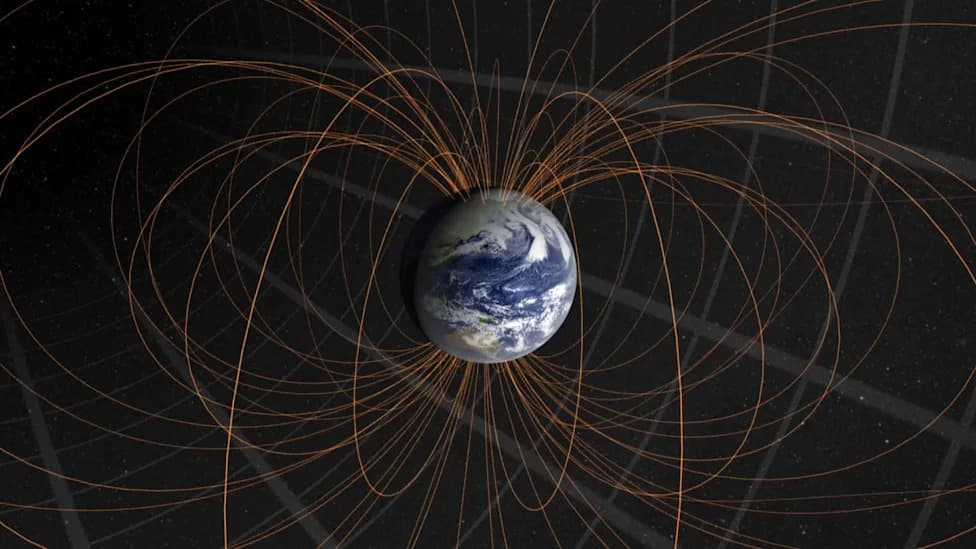
A visualization of Earth surrounded by orange loops that connect to its poles.
Life on Earth evolved inside a protective magnetic cocoon. New laboratory work from the University of Nottingham suggests that the planet's geomagnetic field may subtly influence cellular energy machinery — with strikingly different effects in healthy animals versus a Parkinson’s disease model.
Researchers led by Lisa Chakrabarti used magnetic shielding to reduce ambient geomagnetic exposure to near zero and compared two groups of fruit flies: wild-type (healthy) flies and flies carrying a mutation in Pink1, a gene linked to inherited early-onset Parkinson’s in humans. From adulthood the team followed each fly for 70 days, scoring survival daily and testing mobility by timing how quickly flies climbed a small vial after being tapped to the bottom.
Key Findings
The results were unexpected and genotype-dependent. Hypomagnetic conditions:
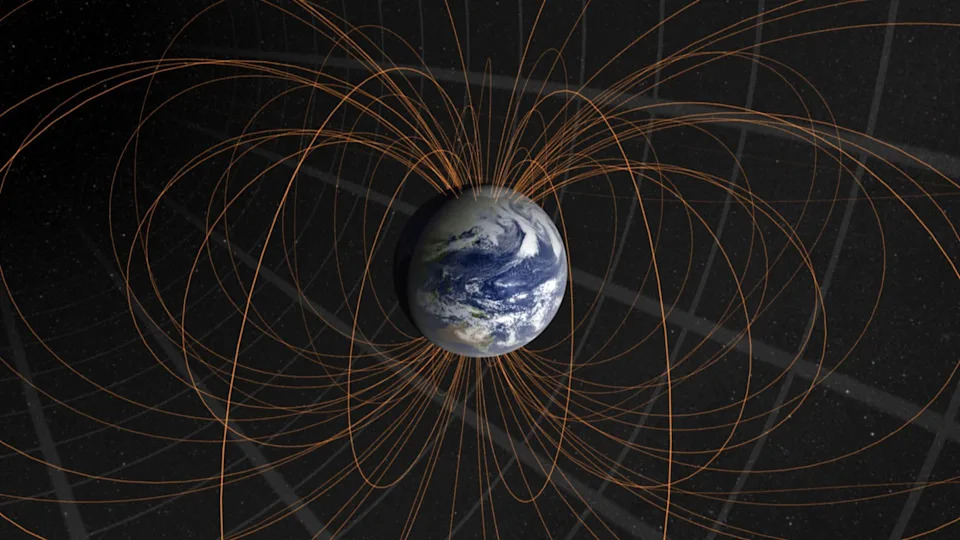
A simple visualization of Earth's magnetosphere. | Credit: NASA's Scientific Visualization Studio
- Extended lifespan in Pink1 mutant flies by roughly 20%.
- Reduced climbing performance in the Pink1 mutants.
- Shortened lifespan in healthy flies, while improving their climbing performance.
Mechanistic tests pointed to mitochondria — the cell’s energy factories — and specifically to Complex II of the respiratory chain. Shielded healthy flies showed increased Complex II activity and higher levels of superoxide, a reactive byproduct of mitochondrial respiration that can accelerate cellular damage and likely contributes to their reduced lifespan. In the Pink1 mutants, that same boost in Complex II activity appeared to partially compensate for the genetic defect, producing a beneficial, life-extending effect.
Why This Matters
These findings suggest that ambient magnetic fields can modulate core cellular processes tied to energy production and oxidative stress. The authors propose that carefully controlled, non-invasive hypomagnetic environments might one day inform therapeutic strategies for conditions involving mitochondrial dysfunction, such as Parkinson’s and possibly Alzheimer’s disease. However, the work is preliminary and limited to a fly model.
Broader Context And Limitations
Previous human and animal studies of magnetic-field exposure have been mixed: small cognitive or pupil-size changes were reported in some human experiments, while animal studies (for example on bone density) produced inconsistent results. The new study adds to this scattered literature and highlights that responses vary by cell type and genetic background.
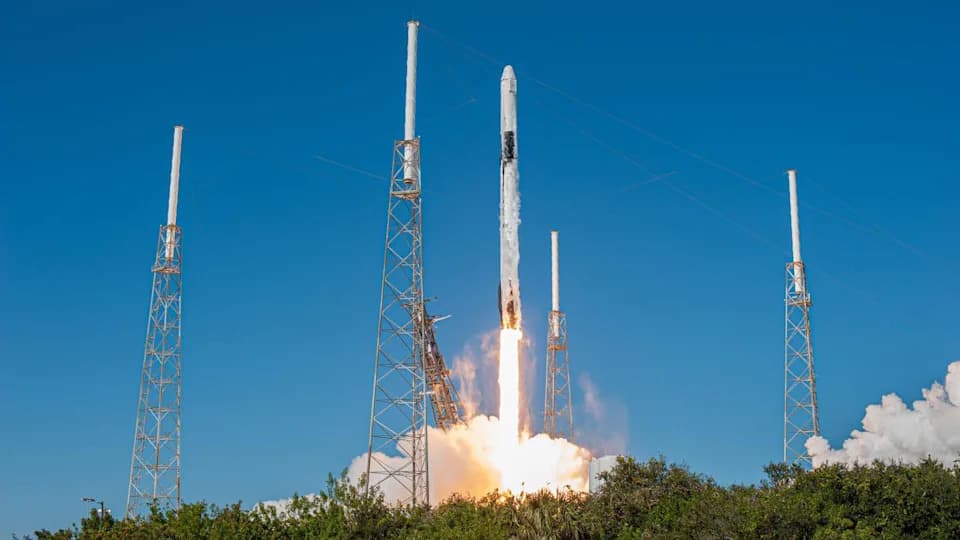
The authors also flag implications for long-duration space missions. Astronauts venturing beyond Earth’s magnetosphere will face not only higher radiation but also prolonged absence of the geomagnetic field itself — an understudied factor that could influence physiology. The study was published Sept. 23 in the journal Aging.
Takeaway: Magnetic field exposure can alter mitochondrial function in genotype-dependent ways. The finding is intriguing but requires careful follow-up in mammalian models and humans before any medical or operational recommendations can be made.
Help us improve.