The journal Cortex reports a 16-year-old, identified as KCL, who meets criteria for highly superior autobiographical memory (HSAM). Researchers found that 87% of his sampled spontaneous off-task thoughts were autobiographical (13 of 15), compared with ~39% in controls, while his general cognitive functions were typical. The case highlights a specific enhancement in involuntary autobiographical retrieval, possibly due to heightened sensitivity to memory cues and a lower retrieval threshold, but broader conclusions require more cases and replication.
Teen’s Involuntary Memories Exceed 99.9% of Population, Case Study Finds
Image: Deposit Photos
A case report in the journal Cortex describes a 16-year-old identified as KCL who meets criteria for highly superior autobiographical memory (HSAM). Unlike popular portrayals of perfect recall, KCL’s distinction centers on unusually frequent and vivid involuntary recollections of his own life rather than superior performance across all memory tasks.
Key Findings
Researchers assessed KCL remotely using validated autobiographical memory questionnaires and controlled laboratory-style tasks, comparing his results with existing comparison-group data. Investigators used a probe-caught thought-sampling method—interrupting an attention task to ask what he had been thinking—and found that about 87% of sampled off-task thoughts (13 of 15) were autobiographical memories, versus roughly 39% in the comparison data.
Importantly, KCL’s future-oriented thoughts and overall level of task-unrelated thought were within normal limits, indicating the effect is specific to involuntary personal memories rather than a general tendency to mind-wander or be distractible.
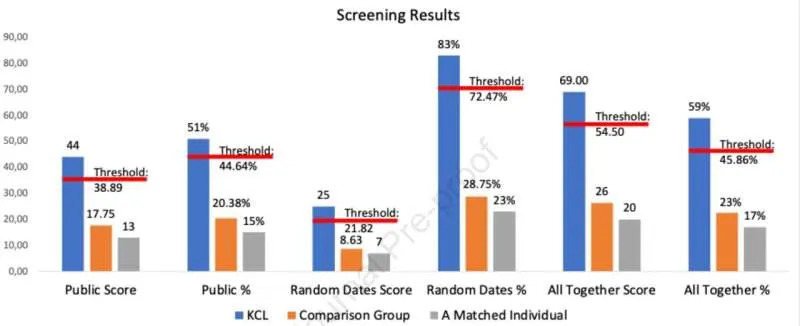
HSAM screening results. Credit: Cortex (2026). DOI: 10.1016/j.cortex.2026.08.017
Scope and Verification
KCL reported being able to recall detailed events for about half of days since around August 2022. He also described memories reaching back to roughly three months of age; some early recollections from 2010–2011 were reportedly corroborated by his parents. The authors note that memories from infancy are inherently hard to verify and should be treated as self-report rather than confirmed fact.
What HSAM Means Here
Assessments of attention, working memory, executive function, and general development appeared broadly typical for KCL. The authors emphasize that HSAM represents a specific specialization in autobiographical retrieval—most likely involving increased sensitivity to memory cues and a lower threshold for retrieving personal events—rather than a universal memory upgrade.
Citation: Cortex (2026). DOI: 10.1016/j.cortex.2026.08.017
Context and Caution
Fewer than 100 HSAM cases have been reported worldwide since the first account in 2006. The KCL case is notable because it focuses on involuntary autobiographical memories using a controlled thought-sampling technique, an aspect earlier HSAM studies largely set aside. Because this is a single-case report, broader conclusions about causes, prevalence, and real-world impact require more participants and replication.
Open question: Whether the constant stream of vivid personal memories is experienced as a gift or a burden remains unresolved and likely varies between individuals.
Help us improve.