The Hebrew University team led by Profs. Uzi Leibner and Orit Peleg-Barkat uncovered a 280 m² ritual complex at the Ophel containing multiple mikvaot and a central plastered pool (about 12 x 9.5 m) dating to the early 1st century CE. Drain holes and large drainage channels suggest the baths used running water, possibly from an aqueduct. An earlier first-century BCE mikveh was found beneath the complex, which was destroyed in 70 CE during the First Jewish Revolt and later reused in the Byzantine period.
Massive Second Temple–Era Mikva Complex Unearthed at Ophel Sheds Light on Pilgrim Purification
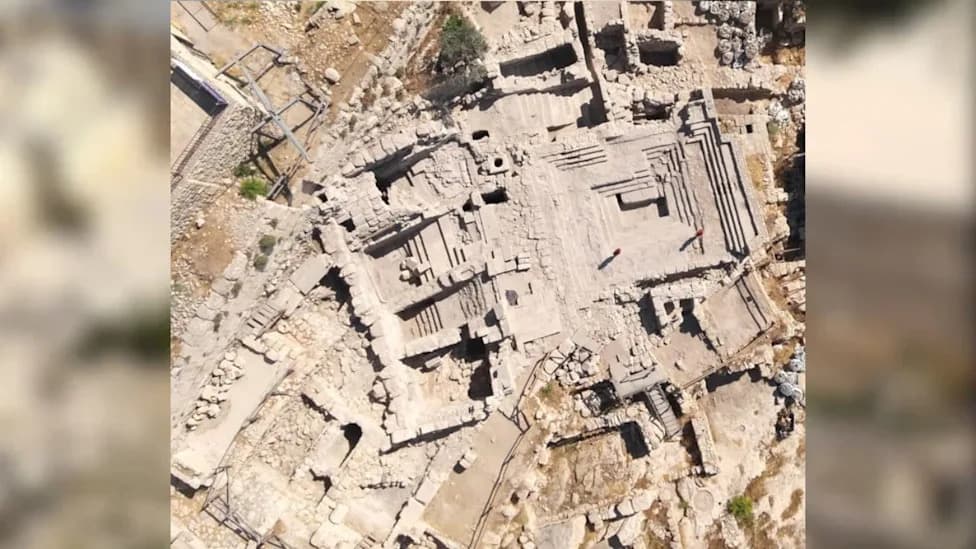
The Ophel archaeological site where a monumental complex housing several Second Temple-era mikvaot were uncovered by the Hebrew University of Jerusalem, September 23, 2026. (photo credit: Emil Sadikov)
A substantial ritual complex of multiple mikvaot (Jewish ritual baths) and a large central pool has been uncovered at the Ophel, the slope at the foot of the Temple Mount on Jerusalem's Old City outskirts. Excavated over five seasons by a Hebrew University team led by Profs. Uzi Leibner and Orit Peleg-Barkat, the site reveals how pilgrims likely prepared to enter the Temple precincts in antiquity.
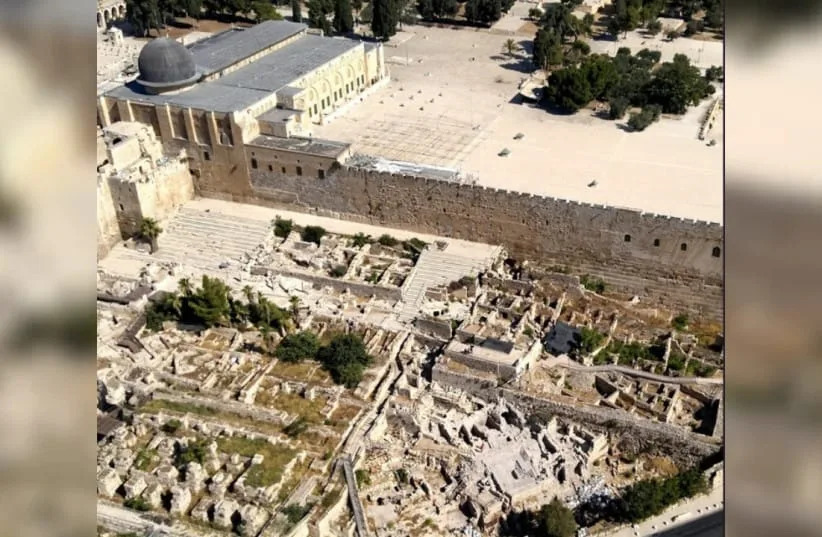
The Ophel archaeological site where a monumental complex housing several Second Temple-era mikvaot were uncovered by the Hebrew University of Jerusalem (south eastern corner), September 23, 2026. (credit: Emil Sadikov)
What Was Found
The exposed area spans roughly 280 square meters and centers on a plastered pool measuring about 12 by 9.5 meters, entered by steps on all four sides and dated to the early 1st century CE. Northwest of the central basin, archaeologists revealed an ashlar-built structure of four rooms, three of which functioned as mikvaot. One mikveh is exceptionally well preserved to its original height of 4.2 meters, complete with a vaulted stone roof and a fill shaft.
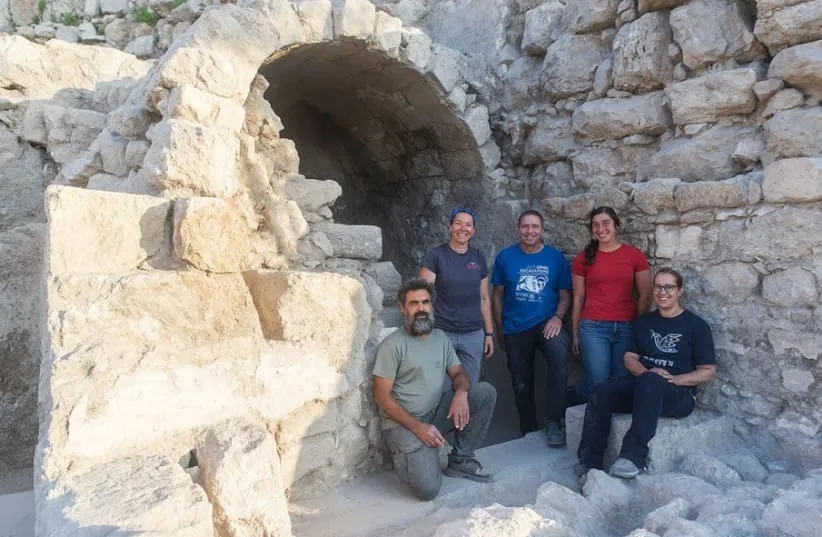
Members of the Hebrew University of Jerusalem's archaeology team standing in front of the vaulted mikvah, September 23, 2026. (credit: Aubrey Mercado)
Water System and Architecture
All the mikvaot share an uncommon feature: floor drain holes that suggest the baths could be emptied and refilled. The pools and the central basin were connected to an extensive drainage system that discharged toward the Kidron Valley; surviving sections of the channels reach over two meters in height and contained many coins and pottery fragments. The team suggests the complex may have been supplied by running water—possibly linked to an aqueduct that brought water from the Hebron Mountains—rather than relying solely on rainwater collection.
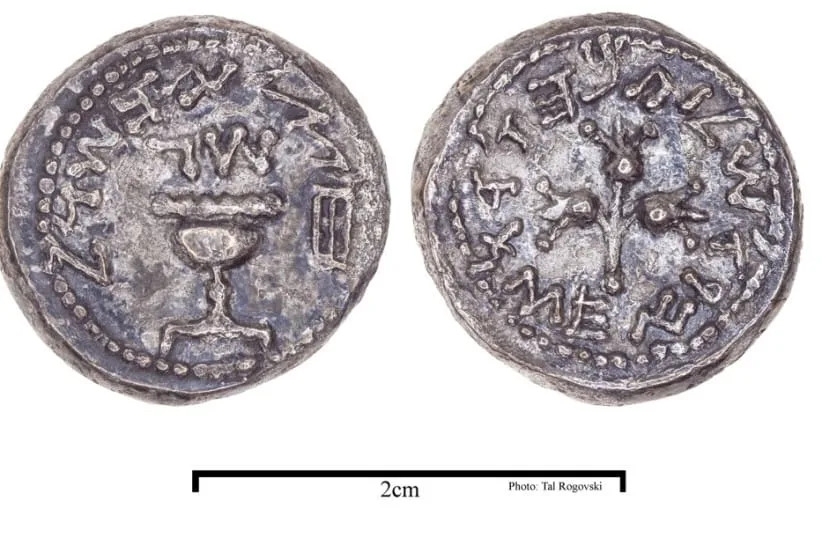
Silver half-shekel from the third year of the First Jewish Revolt found at the Ophel archaeological site, September 23, 2026. (credit: Tal Rogovski)
Earlier Phase and Later Reuse
Underneath the monumental Second Temple–period installation the excavation exposed an earlier ashlar-built public purification facility, including a large mikveh likely from the first century BCE. The later drainage works appear to have cut through and rendered that earlier pool unusable. After the complex’s destruction in 70 CE, the area was abandoned for centuries and then reoccupied in the Byzantine period when domestic structures were built atop the ruined ritual installations.
Destruction and Finds
Evidence indicates the complex was destroyed during the Roman suppression of the First Jewish Revolt in the summer of 70 CE. Excavators recovered dozens of coins from the revolt period across the site, including a silver half-shekel dated to the third year of the uprising. These finds corroborate a clear destruction horizon in the archaeological record.
"Our excavation lies right at the base of the stairway that climbed to the Triple Gate," Leibner explained, noting the complex is about 50 meters from this sealed ancient entrance to the Temple Mount.
Significance
The location, scale, and infrastructure of the complex point to an organized system for accommodating large numbers of pilgrims arriving at the Temple Mount from the south. The combination of multiple mikvaot, a large central pool, and robust drainage suggests a public, monumental facility designed for frequent ritual use. The sequence of construction phases—from an earlier Hellenistic/Hasmonean-era mikveh to the monumental Second Temple installation and later Byzantine reuse—adds depth to our understanding of ritual, urban, and water-management practices in Jerusalem over several centuries.
The Ophel excavations are conducted by the Hebrew University of Jerusalem's Institute of Archaeology in cooperation with the Armstrong Institute of Biblical Archaeology and funded by the Israel Science Foundation, the Armstrong Institute, and the Hertog Center for the Archaeological Study of Jerusalem.
Help us improve.