A DoorDash delivery on Jan. 8 escalated into a standoff when the driver ran into a Minnesota home and federal immigration agents waited outside. The homeowner, TikTok user @stormibabyy27, refused to open the door because agents did not show a judge-signed warrant and identified as Native American during the exchange. Video does not establish the driver’s immigration status or whether any specific DHS policy applied; agents left without removing the driver, who the homeowner later said was safe.
DoorDash Delivery Sparks Standoff: Minnesota Homeowner Denies Entry to Immigration Agents After Driver Runs Inside
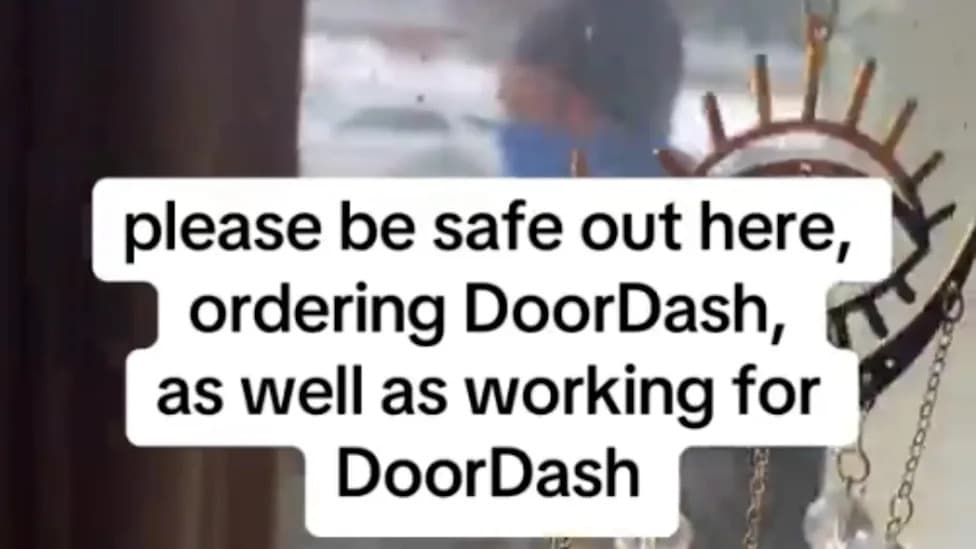
Image Credit: StormiBabyy27 on TikTok.
A routine DoorDash delivery on Jan. 8 turned into a tense standoff outside a Minnesota home when the delivery driver ran inside while federal immigration agents waited at the door, video later posted by the homeowner shows. The footage resurfaced online in September and drew renewed attention to questions about warrants and enforcement policy.
The homeowner, who posts on TikTok as @stormibabyy27, recorded much of the confrontation as they tried to care for a baby inside and decide how to handle an unexpected visitor seeking refuge. In the video the homeowner says,
"I literally ordered DoorDash, and now there's ICE agents around my house because the lady ran in my house."
The family repeatedly refused to open the door because agents did not present a judicial warrant on camera. The homeowner told agents they would not allow entry without a judge-signed warrant; agents reportedly said they would "get one," which prompted the family to keep the door closed. At one point the homeowner identified themself as Native American while speaking with agents.
The family also called 911 during the encounter. The TikTok user later said they were warned that sheltering the driver could expose them to a potential harboring allegation; that specific warning does not appear in the shared clips and cannot be independently verified from the available footage.
What the Footage Does — And Does Not — Show
Available video does not establish the DoorDash driver's immigration or citizenship status, why federal agents were pursuing the driver, or whether agents had any specific documents. The clips end with agents leaving without taking the driver; in a subsequent TikTok update the homeowner said the driver was safe.
Legal Context
The homeowner’s central concern — whether agents presented a judge-signed warrant — is pivotal in determining lawful entry into a private residence. The Congressional Research Service notes that administrative immigration warrants are issued within the executive branch and historically have not, by themselves, authorized forced nonconsensual entry into a private home. Officials may enter if the occupant consents, if agents hold a judicial (judge-signed) warrant, or if a recognized emergency exception to the warrant requirement applies.
Adding to the legal complexity, the American Civil Liberties Union said in an April 2026 lawsuit that the Department of Homeland Security adopted a policy permitting agents, in some cases, to enter homes without a judicial warrant when a DHS official determined someone inside was subject to a final order of removal. The shared footage does not show whether any such policy or a final removal order applied to this incident.
Takeaway
The short video captures a high-tension moment and highlights how social media can bring renewed scrutiny to enforcement encounters. But the clips are limited in scope: they document the homeowner’s perspective and the agents’ presence outside the residence, not the underlying reasons for the agents’ actions or any paperwork they may have had. Those missing facts are essential to fully understand the legality of the interaction.
Note: This report is based on publicly shared footage and the homeowner's description. Several key details — including the driver's status and whether agents had a judicial warrant or relied on a specific DHS policy — remain unverified.
Help us improve.