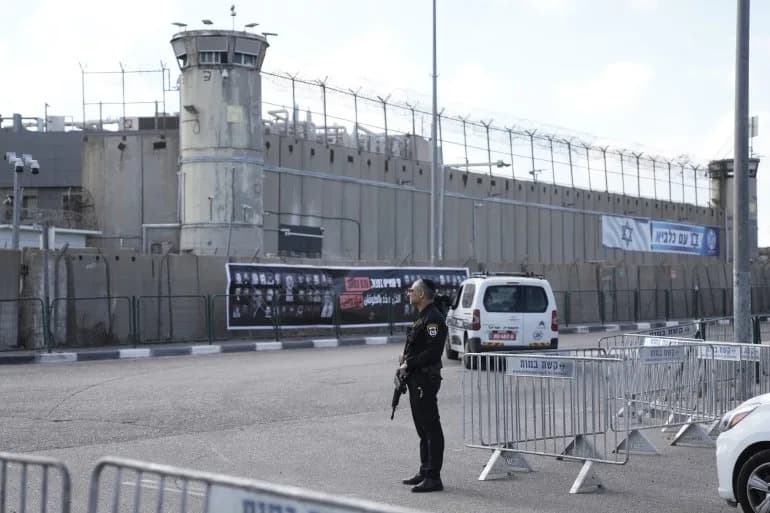
The Tel Aviv District Court prohibited solitary confinement for 19-year-old Agam Tsarafi, limiting her separation from the general prison population to six additional days and criticizing an escort video showing her handcuffed and led by masked officers. The court upheld a general telephone restriction after reviewing classified intelligence but did not decide who filmed or released the footage. The ruling addresses detention conditions only; the murder case continues in the Jerusalem District Court.
Court Bars Solitary Confinement For Agam Tsarafi, Rebukes Prison Service Over Escort Video
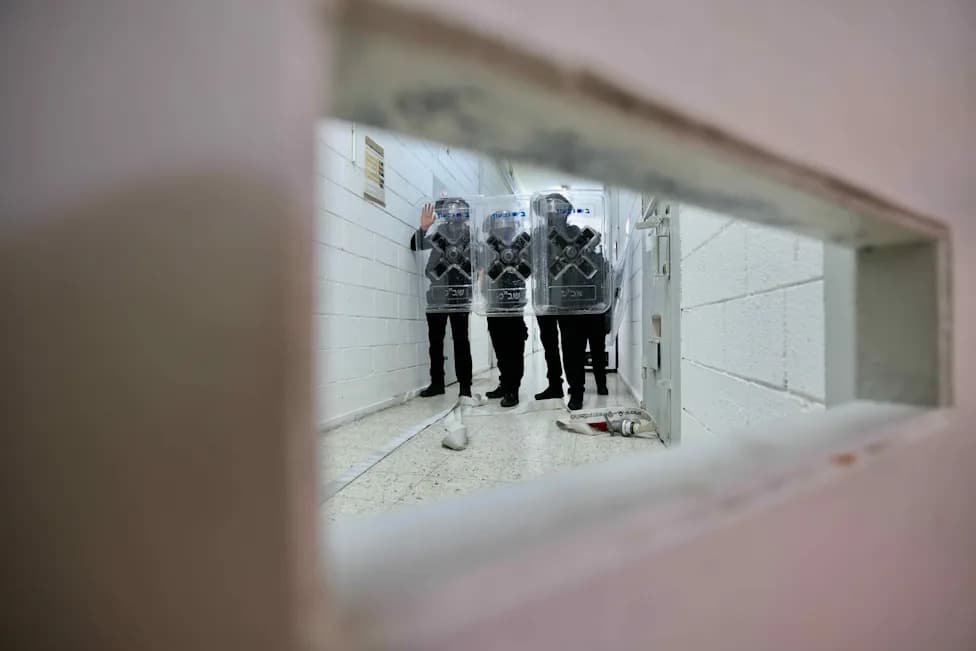
Prison guards of the Israel Prison Service seen at the Givon Prison in the city of Ramla, central Israel, January 11, 2026 (photo credit: Oren Cohen/Flash90)
The Tel Aviv District Court has ruled that the Israel Prison Service (IPS) may not hold 19-year-old defendant Agam Tsarafi in solitary confinement, limiting her current separation from the general prison population to six additional days and sharply criticizing the way she was shown in a circulating detention video.
Ruling Focuses on Detention Conditions
Judge Gilad Hess said the measures taken against Tsarafi appeared excessive, harmed her dignity and lacked adequate justification. The decision addressed detention conditions only and did not resolve the underlying criminal charges against Tsarafi in the Benyahu Razi murder case, which remain before the Jerusalem District Court.
Video Raises Concerns About Conduct
The court reviewed footage that showed Tsarafi handcuffed behind her back and bent forward while masked officers led her through the facility. Hess said the images raised serious concerns about professional conduct and noted that, where feasible, male officers should not be responsible for escorting a female detainee. He added these remarks were an assessment of the video, not a final adjudication of all defense claims regarding the escort, restraints or the footage’s publication.
Separation And Phone Restrictions
Practically, Tsarafi may not be held alone: the IPS may continue to separate her from the general population but must house her with at least one other detainee. The judge limited that measure to six additional days, through Thursday, rather than the 30 days sought by the IPS, and ordered that the need for further separation be reassessed unless new intelligence emerges. Tsarafi may petition again if the service seeks to extend the arrangement.
On telephone access, the court largely sided with the IPS. After reviewing classified material submitted by the IPS and the Israel Police, Hess found the restriction on general calls was based on reliable, corroborated intelligence and that even monitored calls could compromise the intelligence’s purpose. The blanket phone restriction therefore remains in place, although Tsarafi’s lawyers may submit specific requests for calls — including with her parents — for the IPS to consider.
Defense, IPS And Next Steps
Public Defender Daniel Mirsky filed the petition on September 14 challenging Tsarafi’s separation and the limits on calls and visits. The defense argued the footage humiliated a detainee who has not been convicted and risked prejudicing her right to a fair trial, and asked the court to identify who authorized or released the video and to prevent further internal publications.
The IPS told the court it had not authorized the video’s release and said it was investigating how the footage became public. Judge Hess declined to determine who filmed or distributed the recording, saying those questions require a separate, properly filed proceeding.
After the ruling the defense said: "Prison officers are expected to respect themselves, the law and Agam's presumption of innocence." National Security Minister Itamar Ben-Gvir had defended the IPS after the footage emerged, asserting that Tsarafi disrupted order and mistreated inmates and staff and that her transfer in custody was justified.
Procedure note: This ruling concerns only detention conditions and not the substantive murder charges, which continue to be adjudicated in the Jerusalem District Court.
Help us improve.