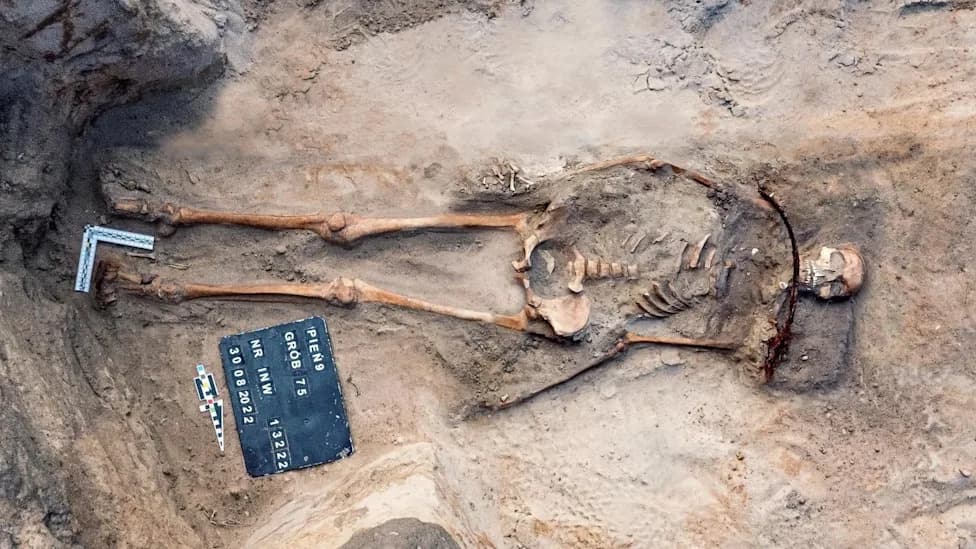
A skull from the Sanzhiyuan cemetery in Henan province shows partial removal of the nasal bones and healed fractures inside the nasal cavity, indicating the woman survived a punitive nose amputation. Radiocarbon dating places her between 1298 and 1404 (late Yuan–early Ming). The solitary, face-down burial and historical records of nasal removal as a legal punishment support the interpretation. The study, published in Journal of Archaeological Science: Reports, urges further screening of skeletal collections for similar cases.
700-Year-Old Chinese Skull Provides First Skeletal Evidence Of Punitive Nose Amputation
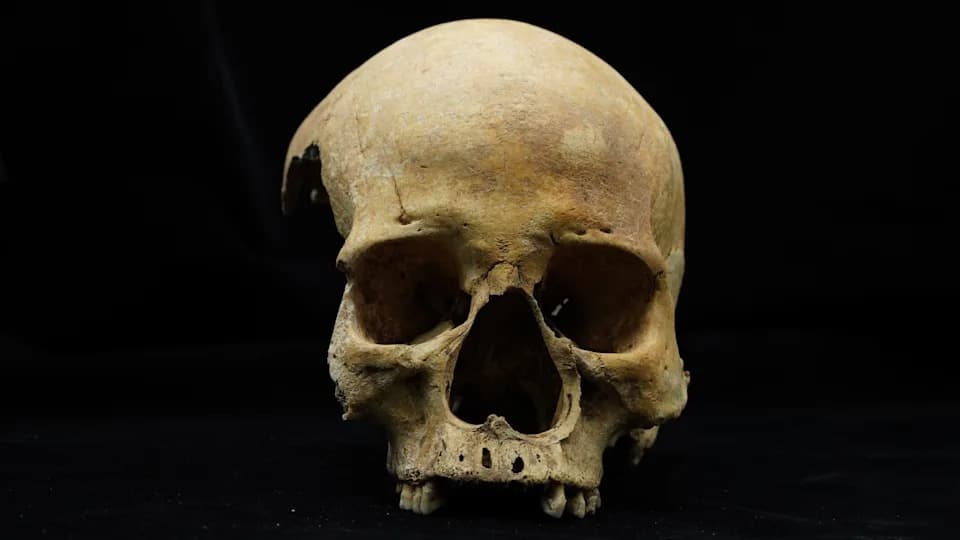
The nasal opening of the skull of a woman buried in the 14th century in China shows evidence of an amputation that she survived. | Credit: Qian Wang, Texas A&M University College of Dentistry
A female skull recovered from a 14th-century cemetery in eastern China appears to preserve the first clear osteological evidence of a punitive nasal amputation, researchers report. The skull was found among roughly 300 burials at the Sanzhiyuan cemetery in Henan province and shows partial removal of the nasal bones along with healed fractures inside the nasal cavity, indicating the woman lived for several years after the trauma.
Archaeological Context
The skeleton was excavated in 2019 during a rapid salvage dig ahead of construction. The individual was interred alone on the southern edge of the cemetery, placed face-down in a wooden coffin and accompanied only by a copper hairpin. Radiocarbon dating places her lifespan between 1298 and 1404, corresponding to the late Yuan or early Ming dynasties.
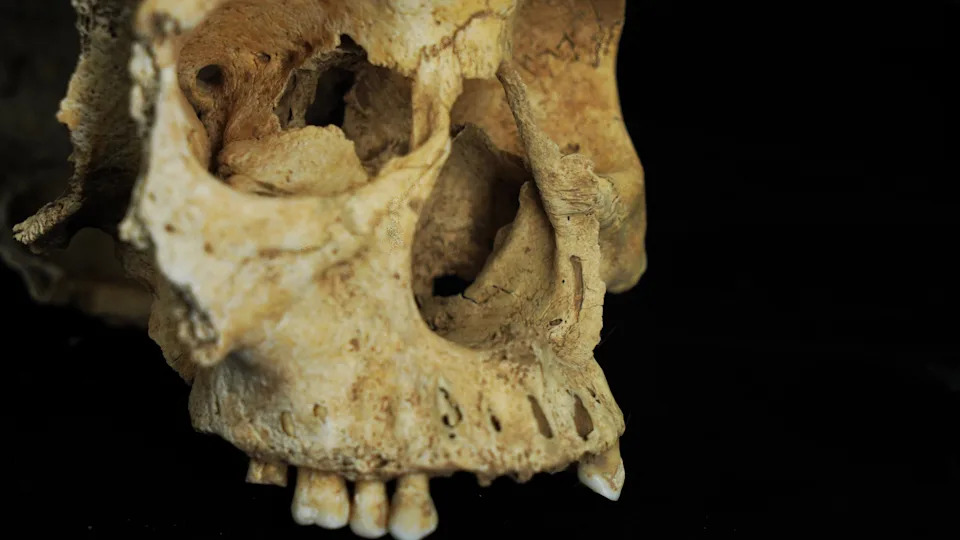
Several bones inside the nose show signs of healing, indicating that the woman lived for several years after the punishment occurred. | Credit: Qian Wang, Texas A&M University College of Dentistry
Osteological Evidence
Detailed analysis found an enlarged piriform aperture (the bony opening of the nose) and partial loss of both nasal bones, leaving approximately half of the nasal bridge. Several internal nasal bones showed healed breakage with remodeling at the edges, consistent with survival for multiple years after the injury. The pattern of bone loss and repair produced a noticeably hollowed mid-face appearance.
Interpretation And Historical Context
The research team considered alternative causes such as congenital defects, infectious disease, or accidental trauma, but concluded that the combination of bone removal, healed fractures and the socially marginal burial context most plausibly indicates a punitive amputation. Nasal removal is documented in ancient Chinese legal sources and oracle bone characters dating back to the Shang dynasty, and late-Yuan legal codes prescribe nasal amputation for certain felonies.
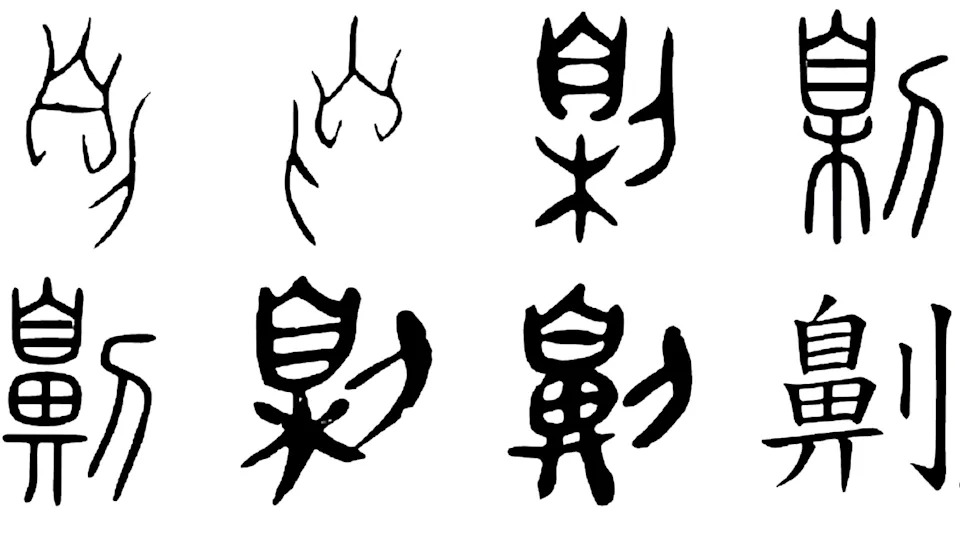
Examples of the Chinese character for nasal amputation, which includes a knife on the left or right side of the nose. | Credit: Qian Wang, Texas A&M University College of Dentistry
Study co-author Qian Wang, a biological anthropologist leading the Asia module of the Global History of Health Project, notes that the face-down, solitary burial suggests postmortem social rejection linked to the punishment.
Implications
The find, analyzed by Yawei Zhou (Zhengzhou University) and colleagues and published in the November issue of the Journal of Archaeological Science: Reports, fills a gap between historical records of corporal punishments and physical evidence in human remains. Bioarchaeologists say this case should encourage targeted screening of other skeletal collections for similar injuries and could shed light on how such punishments were carried out and medically managed, including possible use of prosthetics.
The authors emphasize caution: additional well-documented cases would strengthen the interpretation and help clarify who was most often subjected to this penalty and under what circumstances.
Help us improve.