ICE has removed thousands of people with final deportation orders from its public detainee locator, preventing families and attorneys from finding them. Data from UCLA and U.C. Berkeley's Deportation Data Project indicate about 16,000 people received final removal orders in July — over a third of that month's ICE bookings. The change, implemented on September 15 without public notice, complicates habeas filings and could enable rapid transfers or deportations before detainees can challenge their cases.
ICE Removes Thousands From Public Detainee Locator, Blocking Families and Lawyers
ICE Just Made Thousands of Detainees Vanish From Its System
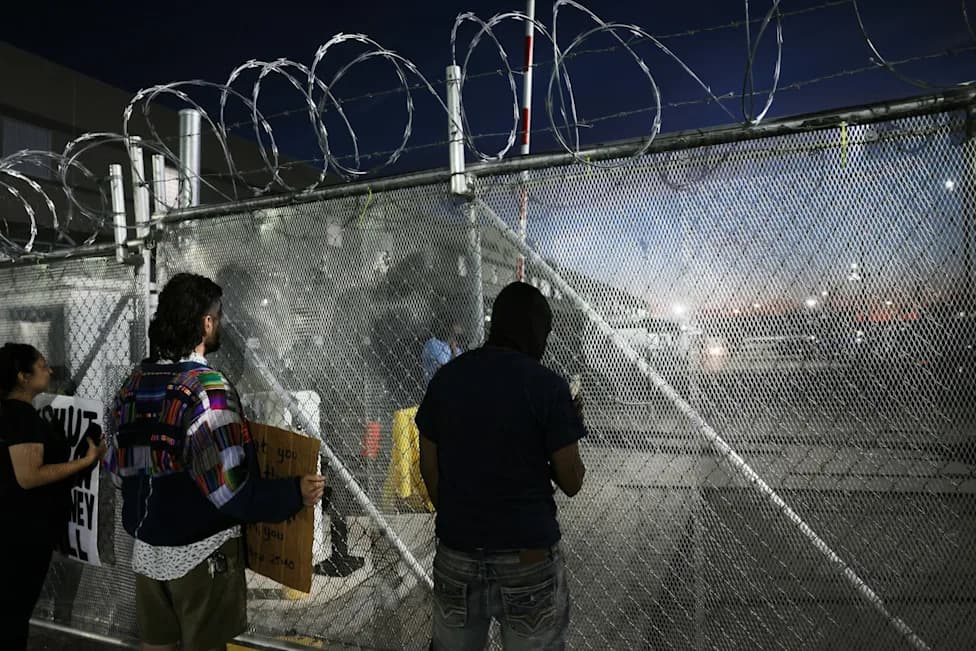
Immigration and Customs Enforcement (ICE) has stopped listing the locations of thousands of immigrants who were issued final deportation orders, effectively removing them from the agency's public detainee locator. The change, implemented on September 15 according to officials who spoke to The Associated Press, prevents family members and legal representatives from finding detainees and complicates legal challenges to their removal.
Data compiled by UCLA and U.C. Berkeley for the Deportation Data Project show that roughly 16,000 people processed into ICE custody received final removal orders in July — more than a third of all ICE bookings that month. Lawyers and advocates say the decision to remove these records from the online locator severely hinders the ability to contact clients and to determine the correct federal district for filing habeas corpus petitions.
“Families are freaking out because they think the person has been deported and they don't know where the person might be,” said Greg Chen, senior director of government relations at the American Immigration Lawyers Association. “On the attorney side, this has serious implications for the ability to contact their client. It certainly has implications about how it will interfere with the attorney-client relationship.”
Some facilities remain exempt from the change because of court orders that require ICE to record arrivals in the public locator immediately; those facilities include the ICE detention center in Adelanto, California, and temporary holding sites in Minneapolis, New York City and suburbs of Chicago. For other locations, lawyers reported this week that clients suddenly could not be found in the online system, and AILA alerted its members to the issue.
What This Means
Advocates warn that removing detainee location information can enable faster transfers or deportations before detainees have a chance to contest removal orders. It also cuts off family members who are trying to locate loved ones and may prevent lawyers from filing time-sensitive challenges. Given previous reports of medical neglect in immigration detention, advocates say the lack of transparency raises additional humanitarian concerns.
ICE did not issue a public announcement at the time of the change, and agency officials cited by the AP spoke on the condition of anonymity. Supporters of transparency and legal groups have called for ICE to restore public access to detention locations so that detainees can connect with counsel and family and ensure access to timely legal and medical care.
Help us improve.