Three people have died in a rare "airport malaria" outbreak linked to the area around Frankfurt Airport. Tests identified Plasmodium falciparum in confirmed cases; authorities believe infected mosquitoes were transported by aircraft. Local health agencies deployed mosquito traps in July and continue to investigate while urging standard travel precautions and malaria prevention measures.
Rare 'Airport Malaria' Outbreak Near Frankfurt Airport Kills Three

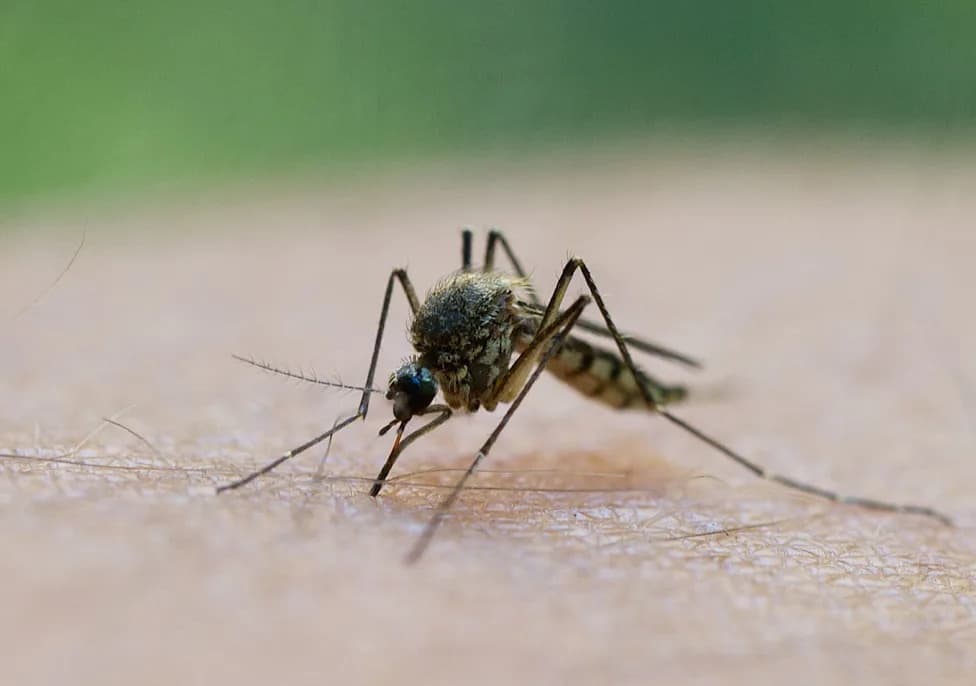
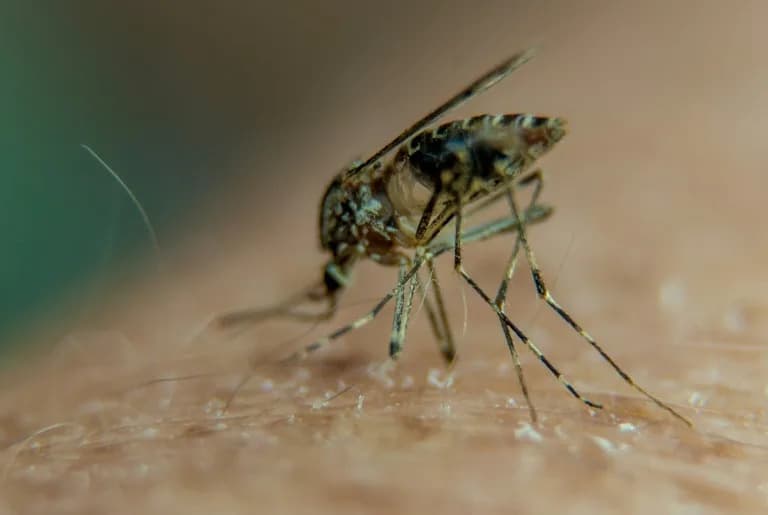
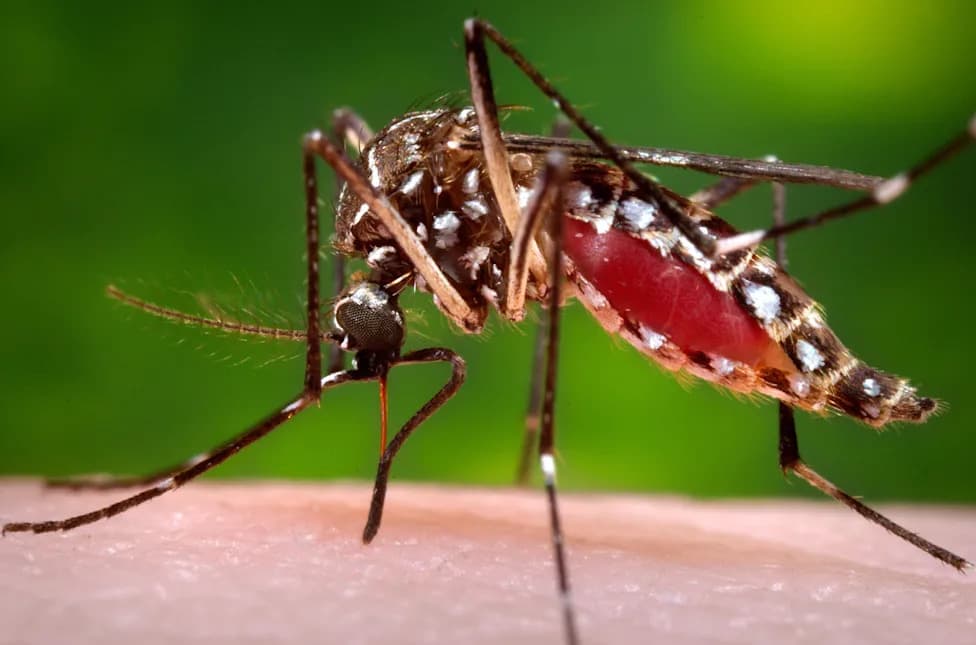
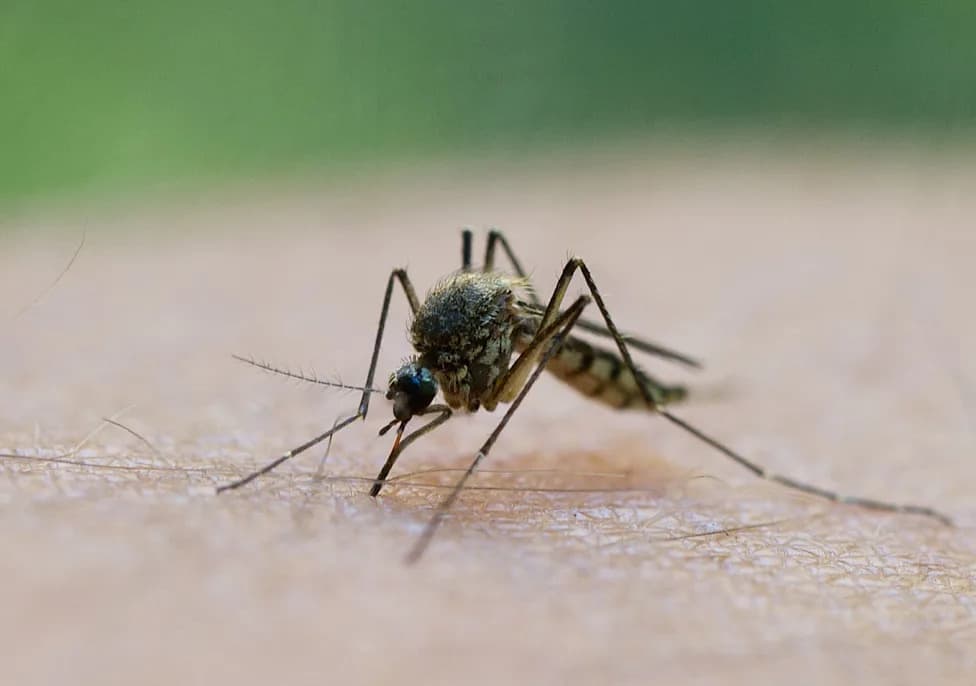
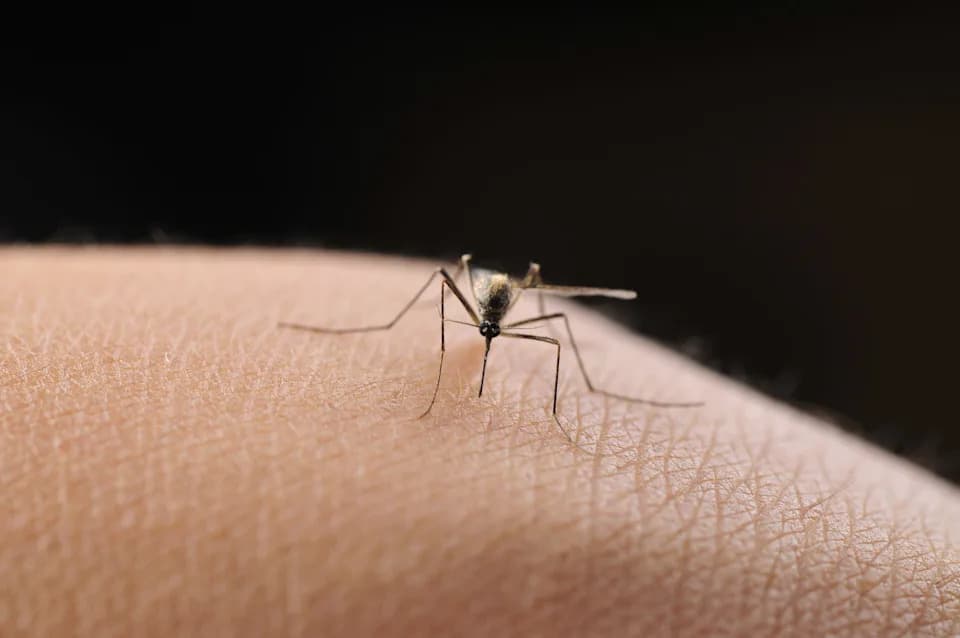
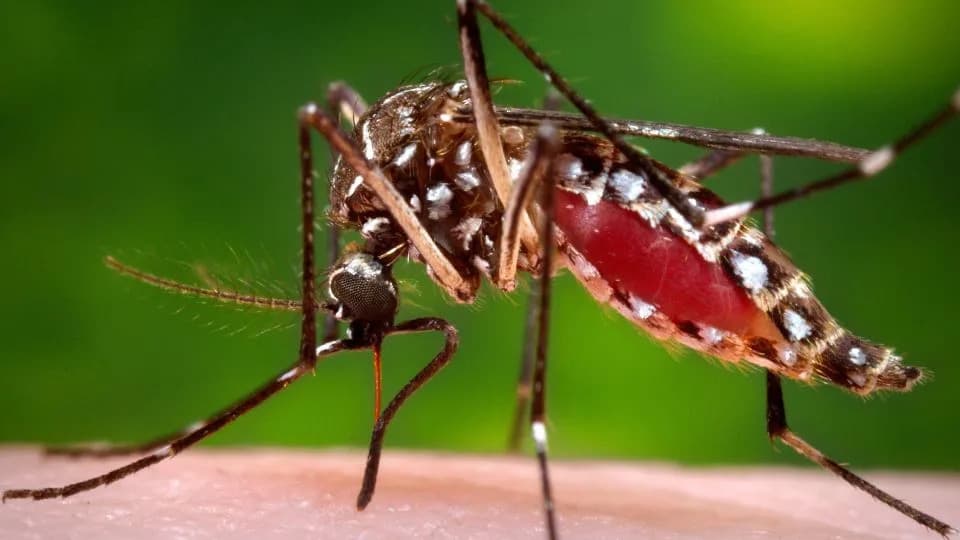
Mosquito on the skin drinks blood macrophotography.
Three people have died in a rare outbreak of "airport malaria" linked to the area around Frankfurt Airport, one of the world's busiest travel hubs, German health officials said.
What happened: Authorities say the infections were traced to mosquitoes believed to have been transported aboard aircraft. Laboratory testing identified the malaria parasite Plasmodium falciparum in confirmed cases— the species most often associated with severe illness.

Mosquito on the skin drinks blood macrophotography.
Officials reported that several airport workers fell ill in early July, and an airport worker who became unwell in August later died. A resident of Schwanheim was the most recent fatality; another local resident was hospitalized and treated for malaria. None of the victims had recently traveled to malaria-endemic regions.
As part of containment and surveillance measures, airport and public-health authorities placed mosquito traps around Frankfurt Airport in July and said they continue to monitor arrivals and investigate how infected mosquitoes reached the area. Media reports said several people were rushed to hospital after flights to Frankfurt, but the origins of those flights were not confirmed.

Plasmodium falciparum parasite analysed by light microscope. It's causes of malaria. Medical and health care conceptional image.
How "Airport Malaria" Occurs
The phenomenon known as "airport malaria" happens when an infected mosquito is inadvertently carried by air travel—either trapped inside the cabin or hidden in luggage—and then bites people after arrival in a malaria-free area. Malaria is transmitted by the bite of an infected mosquito and does not spread directly from person to person.
Health Context and Advice
While malaria is uncommon in temperate regions such as Germany, it remains widespread in many tropical and subtropical countries. The Mayo Clinic estimates nearly 290 million malaria infections globally each year and more than 400,000 deaths annually. The World Health Organization recommends vaccination for children in areas with high malaria transmission.

Aerial view of Frankfurt Airport showing terminals, parked aircraft, runways, and The Squaire building. Clear skies and expansive infrastructure dominate the scene.
Health officials advise travelers to high-risk areas to use protective clothing, bed nets, and insect repellents, and to consider antimalarial prophylaxis before, during and after travel. Experts also warn that resistance to some antimalarial drugs has emerged in parts of the world, complicating treatment in some regions.
In the United States, the Centers for Disease Control and Prevention records roughly 2,000 malaria cases each year and an average of about seven deaths; most U.S. cases involve travelers returning from Africa.
Local response: German federal and local agencies, including the Robert Koch Institute, said they are maintaining traps, monitoring the situation, and conducting investigations to limit further spread and to determine the route by which infected mosquitoes reached the airport area.
Help us improve.