Researchers at ETH Zurich followed 61 pairs of strangers across six weekly collaborative drawing sessions using wearable fNIRS sensors. Drawing together produced greater inter-brain synchrony than drawing alone. Cross-generational pairs began with higher synchrony that declined even as partners reported increased closeness; same-age pairs showed rising synchrony over time. The authors suggest early synchrony across generations may reflect extra effort to understand one another, while peers grow coordinated through play and shared routines.
Drawing Together: How Young and Old Brains Forge Connection—Even When Neural Sync Falls

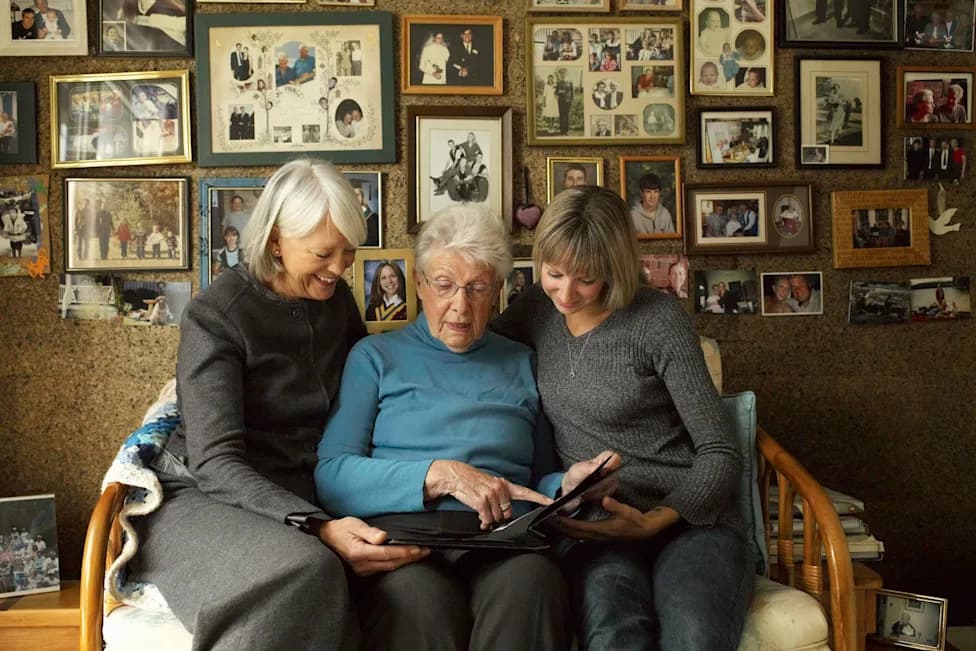
ETH researchers tracked brain activity as strangers from different age groups met repeatedly to draw together. (CREDIT: Shutterstock)
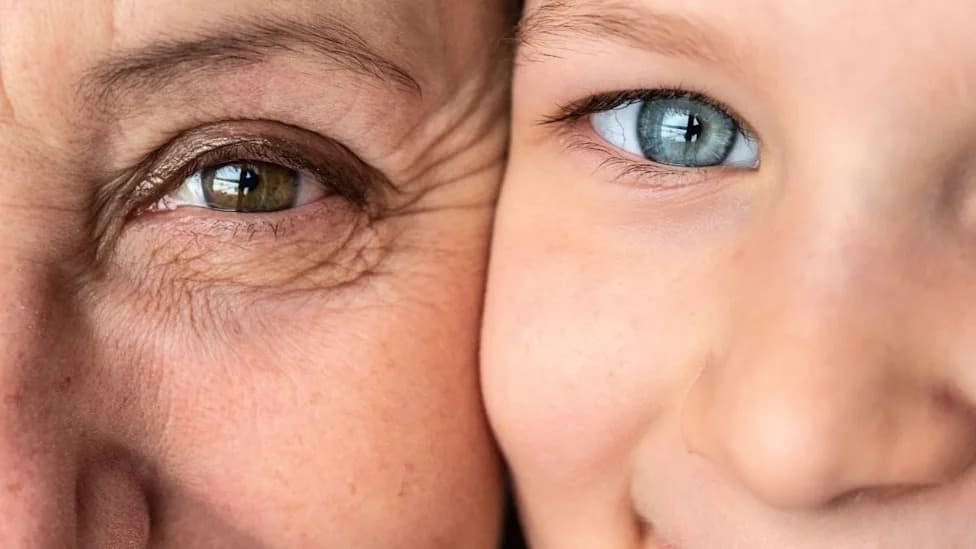
When strangers sat side by side and sketched on the same sheet of paper, their brain signals became more alike than when they drew apart—but how that similarity changed over time depended on age. A six-week study from ETH Zurich shows that cross-generational pairs grew socially closer even as their moment-to-moment neural synchrony declined, while same-age pairs showed the opposite pattern.
Study Design and Methods
Ryssa Moffat and colleagues at ETH Zurich’s Social Brain Sciences Lab followed 61 dyads who met once a week for six weeks to take part in collaborative drawing sessions. Participants were either younger adults (18–35) or older adults (70–85); the sample included 31 intergenerational pairs and 30 same-age pairs. At the outset, none of the pairs knew each other.
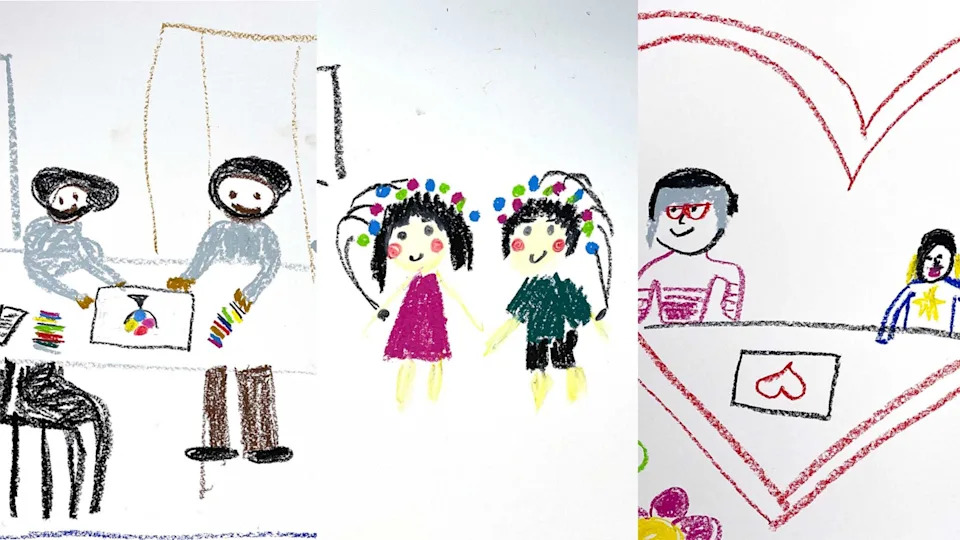
Three examples of collaborative drawings (three self-portraits among the many wide-ranging motifs). Participants could draw anything they chose – the motifs of drawings were never specified by the researchers, to allow maximal creativity. The researchers chose drawing as the collaborative activity because it is also frequently used in practice in intergenerational social programmes. (CREDIT: ETH Zurich)
Each session had a consistent structure: individual drawing on separate sheets followed by two collaborative drawings on the same sheet. Pairs could choose to draw simultaneously or take turns; talking was allowed during non-drawing periods but the drawing itself was performed in silence. To preserve natural interaction, the team used lightweight wearable fNIRS caps to record blood-flow–based brain activity over frontal and temporal areas while participants moved freely.
Key Findings
Drawing together increases inter-brain synchrony compared with drawing alone. Across both pair types, paired drawing produced greater synchrony than the individual baseline.
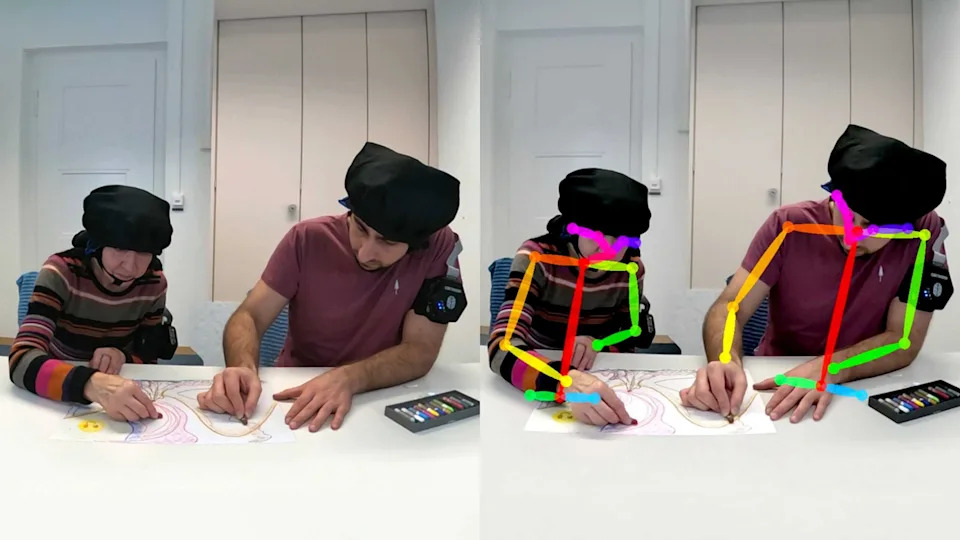
With the help of portable brain-scanning technology (fNIRS), the ETH researchers recorded the brain activity of two people while they were drawing at the same time. The lightweight caps fitted with sensors measure changes in blood flow in the brain – while allowing participants complete freedom of movement. The colourful lines show how the participants' body movements were also captured, to be analysed in near future. (CREDIT: ETH Zurich)
Trajectories diverged by age pairing. Cross-generational dyads began with relatively high neural synchrony that declined over the six weeks, even as those partners reported increasing social closeness. Same-age dyads started with lower synchrony that rose across sessions.
“Greater brain synchrony can also mean that two people are making a particularly strong effort to understand one another,” Moffat notes—an interpretation that helps explain the initial high synchrony in cross-generational pairs.
Interpretation: Effort Versus Play
The authors contrast two frameworks. The older “Common Cognitive Processing” model attributes synchrony to shared external stimuli and similar processing. By contrast, the Mutual Prediction model emphasizes learning to anticipate a partner’s behavior. Ethnically similar peers—often students with similar routines—may find common ground quickly and over time become more playful and unpredictable, increasing synchrony differently than pairs that must invest effort to understand one another across a generational gap.
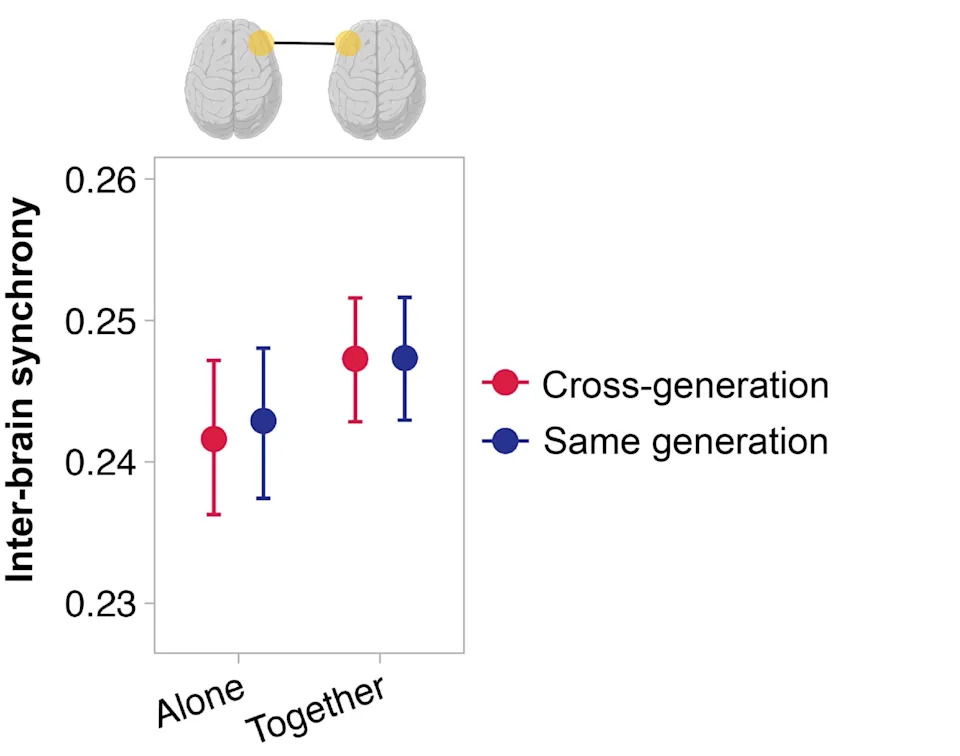
Inter-brain synchrony was measured between participants' frontal and temporal brain regions. This image shows that, between frontal brain regions, inter-brain synchrony is greater when people draw together than alone. It also shows no difference between cross-generational and same generation pairs of participants. (CREDIT: ETH Zurich)
Complementary Analyses
A companion analysis in Acta Psychologica identified seven recurring “two-brain states” across sessions. One state—marked by relatively low between-brain synchrony but strong within-frontal connectivity in one partner—lasted longer in intergenerational pairs. The pattern may reflect asymmetric adaptation, where one person (often the younger) adapts more to the other (often the older), and behaviourally intergenerational pairs tended to take turns more often while same-age pairs more often drew simultaneously.
A separate analysis of cardiac synchrony (Annals of the New York Academy of Sciences) using the same dataset found that self-reports and observed behaviours tracked relationship development better than cardiac measures did.
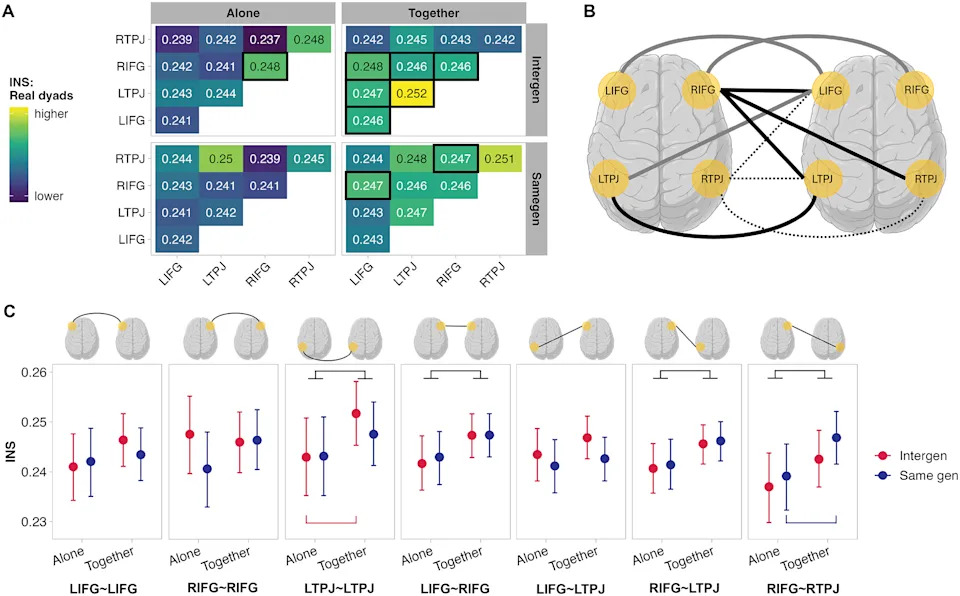
INS in real dyads for all sessions combined. (CREDIT: PLOS Biology)
Implications and Limitations
The study shows that growing social closeness does not always mean two brains will display increasing moment-to-moment similarity. High synchrony can reflect effortful mutual understanding early in a relationship, while falling synchrony can indicate that partners no longer need to exert the same level of cognitive monitoring to coordinate.
Limitations include the correlative nature of the findings, the use of fNIRS which captures haemodynamic rather than direct electrical activity (with limited spatial resolution), and the sample composition (younger participants skewed toward students). Future work should test broader populations, control task variables further, and probe causal mechanisms behind asymmetric adaptation.
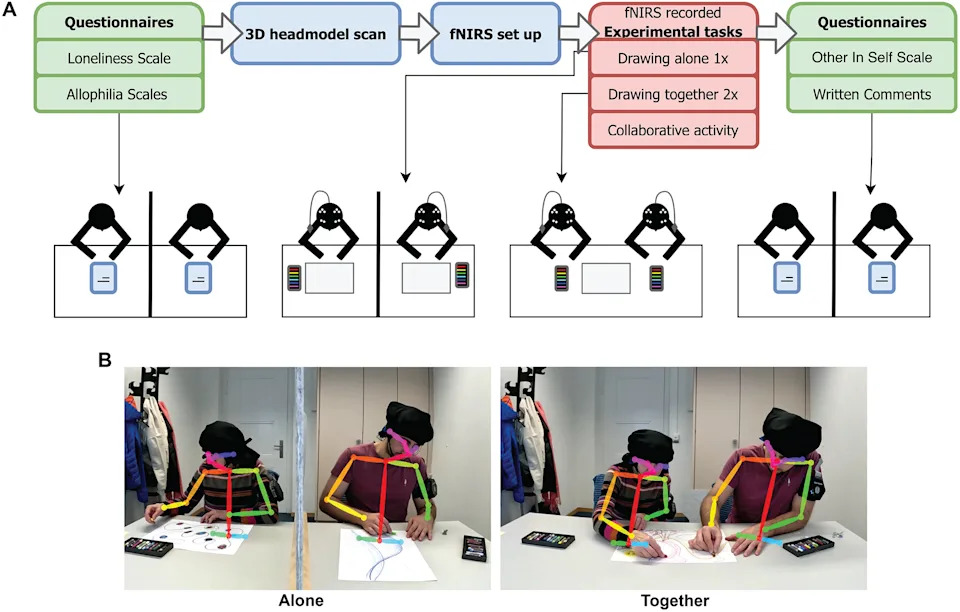
Visual summary of each session. (CREDIT: PLOS Biology)
Takeaway
Joint creative activities can reveal how people coordinate, predict, and adapt to one another—showing that relationship-building can involve both phases of close neural alignment and phases when less overt synchrony reflects smoother, less effortful coordination.
Sources: PLOS Biology (main study), Acta Psychologica (companion analysis), Annals of the New York Academy of Sciences (cardiac synchrony analysis).
Help us improve.