Overview: Polling shows many young Democratic women attribute societal challenges to men's behavior even as women have made measurable gains in education, employment and legal rights. The column argues that media narratives and social incentives amplify grievance: films and short-form social platforms reward emotional, present-focused content, and public outrage can confer social status. These cultural dynamics help explain the intensity of contemporary denunciations of men and the risk of increased polarization.
Why Many Young Democratic Women Blame Men — Media, Status and Social Incentives

Demonstrators in "Handmaid's Tale" costumes lead the “No Kings” protest downtown in Nashville on March 28, 2026.
Recent polling finds that a large share of young Democratic women attribute many of the challenges women face in U.S. society to the behavior or actions of men. That claim coexists with measurable gains for women in education, employment and legal equality — raising the question: what explains the intensity of grievance among some women today?
What the Data Show
A poll from the Survey Center on American Life reports that about two-thirds of Democratic women ages 18–29 say "the challenges that women face in American society are in a great deal due to the behavior or actions of men." Older Democratic women register similar but somewhat smaller rates of agreement (roughly 47%–54%).
At the same time, women have achieved concrete advances: voting rights equal to men, broad access to most professions, and legal authority over property, contracts and marriage. Educational attainment has shifted strongly in women’s favor: in 1995 roughly one-quarter of both men and women ages 25–34 held a bachelor’s degree; by 2024 that share was about 47% for women and 37% for men. A recent CNBC analysis of Bureau of Labor Statistics data also found that women accounted for a large share of recent job gains in a given month.
Perception Versus Measurable Barriers
Many Democratic women point to continuing gaps — no female U.S. president to date, underrepresentation in some political offices, and male dominance in many senior corporate roles. Those disparities are factual, but unequal outcomes do not always prove intentional or systemic discrimination in every instance.
Other concerns, such as "health care access," often focus on abortion access. Claims that women were broadly excluded from clinical trials before rule changes in the early 1990s are contested and depend on the specific historical and regulatory context.
Culture, Media and the Incentives of Outrage
Culture and media help shape how people interpret personal and social setbacks. Films and television frequently foreground stories about sexism — sometimes centrally, sometimes as a marketing angle — and short-form social media rewards immediacy and strong emotion. As a result, a woman who feels slighted at work or in a relationship can rapidly encounter content that reinforces a narrative of male wrongdoing.
"I feel that 'man-hating' is an honorable and viable political act," wrote feminist activist Robin Morgan — a reminder that moral outrage can be framed as a form of political identity and social capital.
Expressing indignation can confer status within certain peer groups. For some, activism or public denunciation is an accessible route to recognition: it requires less time than earning prestige in highly competitive fields such as medicine or academia, yet can yield social reward. That dynamic can incentivize strong public rhetoric and deepen polarization between groups.
Examples and Consequences
Popular examples illustrate how cultural currents amplify grievance. The TikTok-viral song "Labour," used in videos connected to the Lindsay Clancy case, lists unpaid and undervalued roles women often perform and frames women as serving men. Such content can validate feelings of resentment and prompt collective expressions of outrage.
Whether one reads these developments as a sign of continuing structural injustice, heightened sensitivity, or a mixture of both depends on perspective. What is clear is that media ecosystems and social incentives shape how grievances are expressed and rewarded, with real consequences for social cohesion.
Conclusion
Young Democratic women's tendency to blame men's behavior reflects a complex mix of real disparities, shifting social status dynamics, cultural narratives and incentivized outrage on social media. Understanding these forces — and distinguishing structural barriers from perceptual and cultural drivers — is important for productive public conversation about gender, policy and social life.
Author: Natalie Sandoval is an opinion fellow with the Intercollegiate Studies Institute and a 2024 Columbia University graduate. She previously wrote opinion pieces on politics and culture for the Daily Caller.
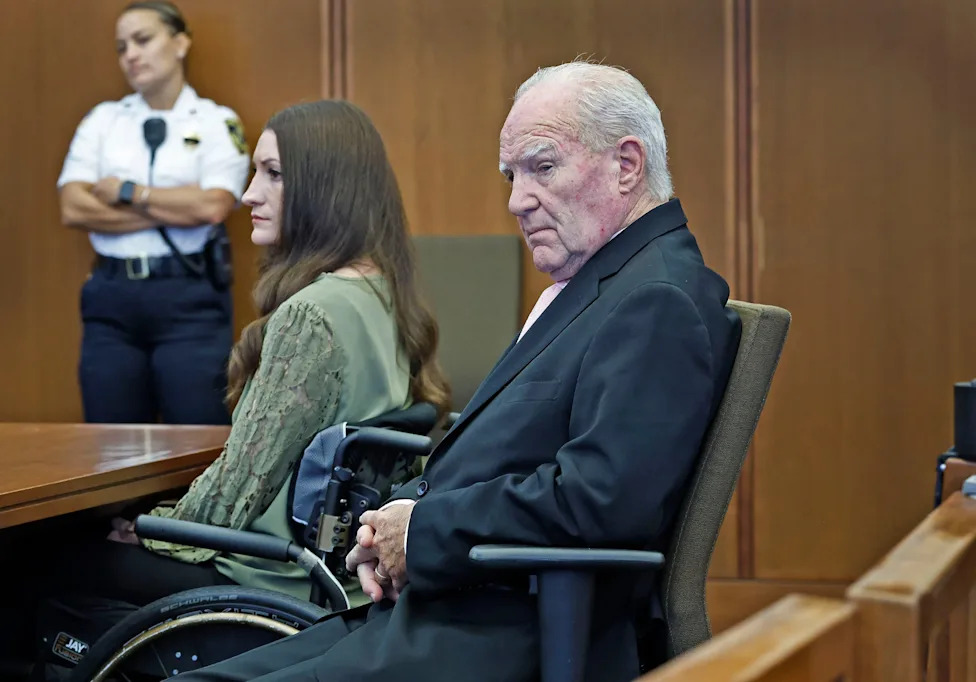
Lindsay Clancyand attorney Kevin Reddington look at jurors as Judge William Sullivan instructs them to continue deliberations in Clancy's murder trial on Sept. 4, 2026.(Greg Derr, The Patriot Ledger via USA TODAY Network)
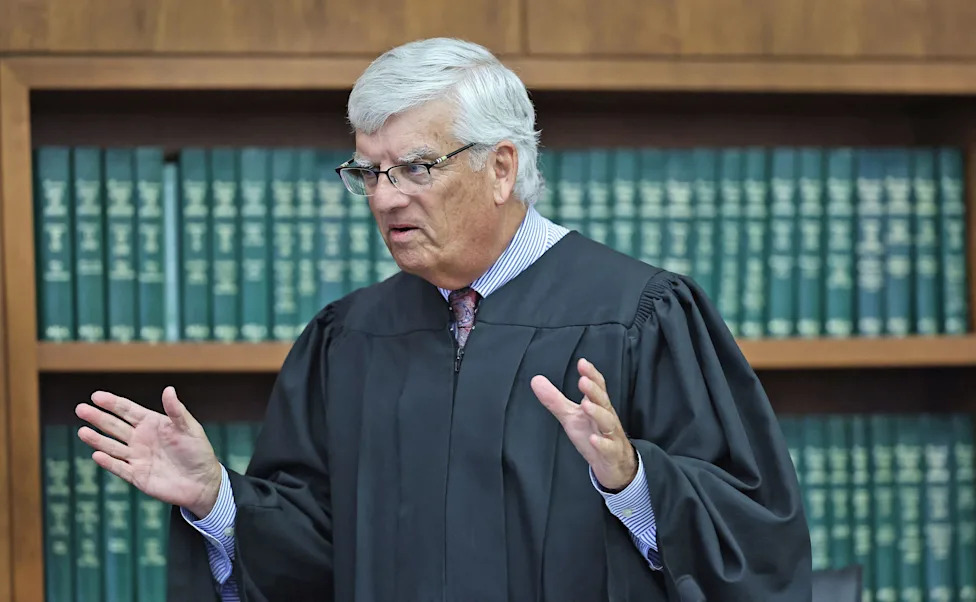
Judge William Sullivan gestures, as the jury resumes deliberations in theLindsay Clancymurder trial, in Plymouth Superior Court, in Plymouth, Mass., Sept. 4, 2026.(Greg Derr, The Patriot Ledger via USA TODAY Network)
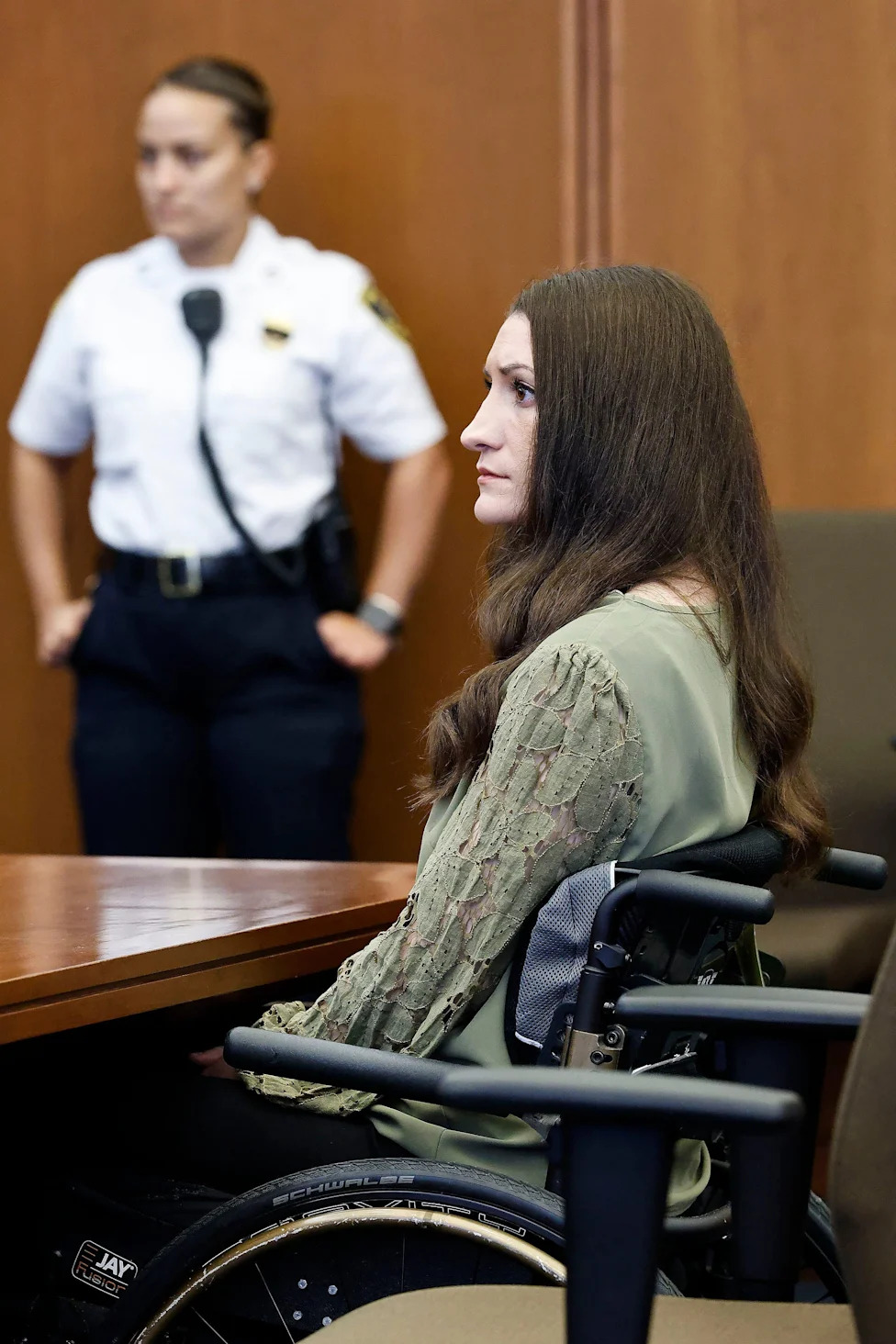
DefendantLindsay Clancywatches jurors enter the courtroom at her trial on the seventh day on jur deliberations on Sept. 4, 2026(Greg Derr, The Patriot Ledger via USA TODAY Network)
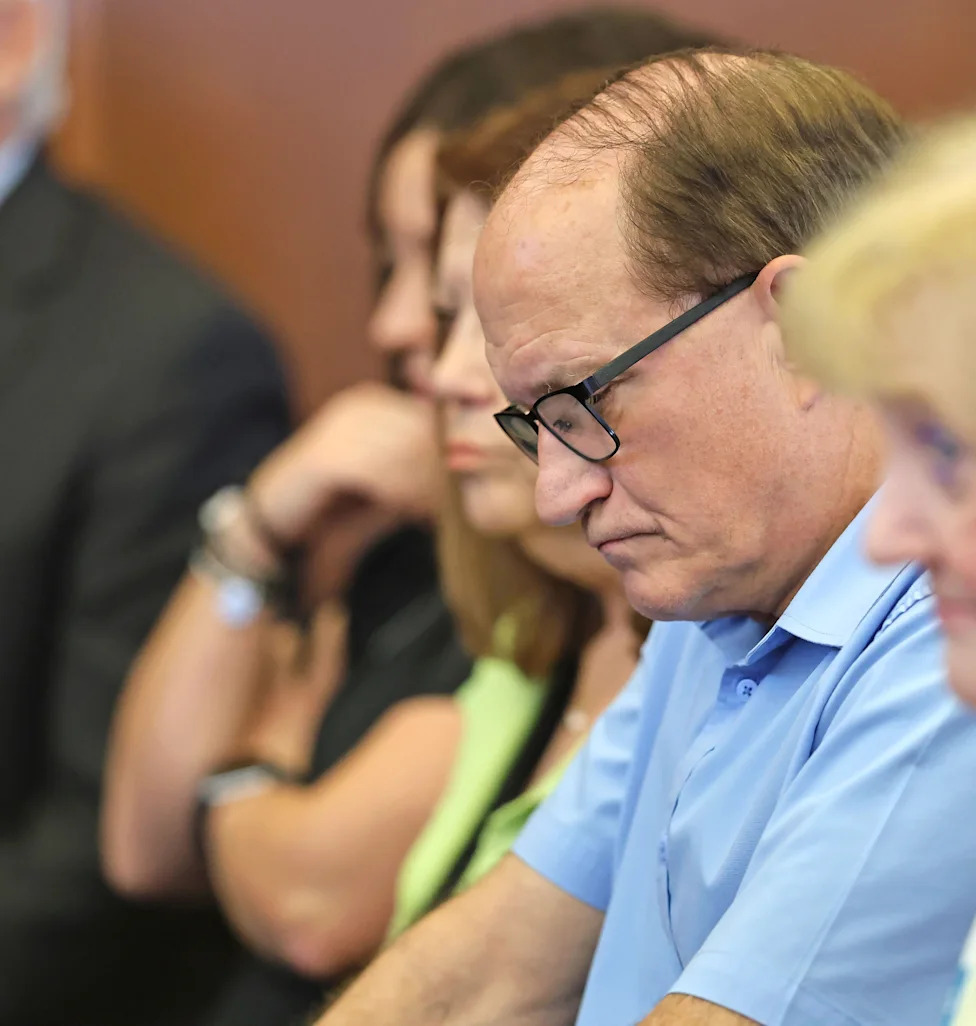
Lindsay Clancy's father Mike Musgrove reacts inside the courtroom on Sept. 4, 2026.(Greg Derr, The Patriot Ledger via USA TODAY Network)
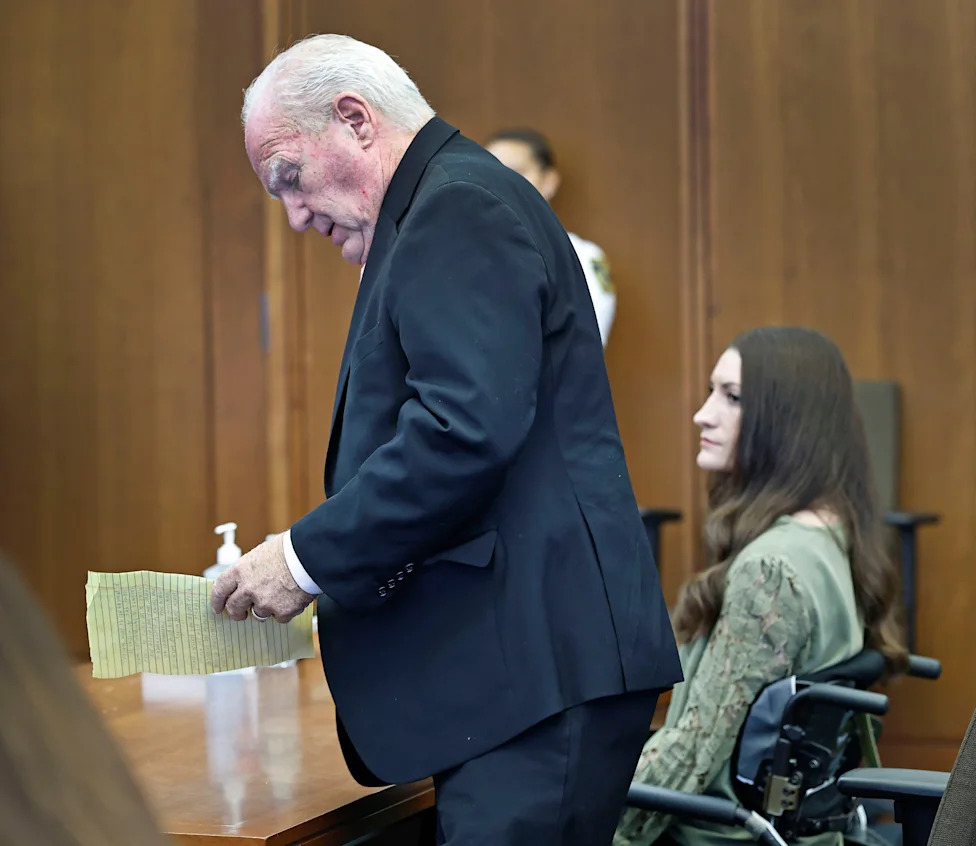
Defense attorney Kevin Reddington argues for removing one juror from deliberations in Lindsay Clancy's murder trial on Sept. 4, 2026.(Greg Derr, The Patriot Ledger via USA TODAY Network)
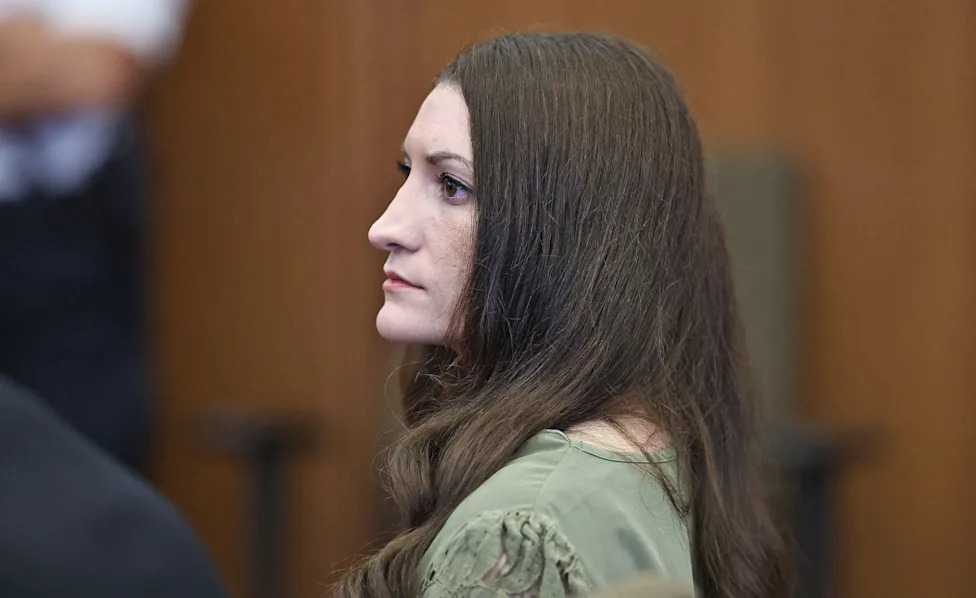
Defendant Lindsay Clancy watches jurors enter the courtroom, as the jury resumes deliberations, in Plymouth Superior Court, in Plymouth, Mass., Sept. 4, 2026.(Greg Derr, The Patriot Ledger via USA TODAY Network)
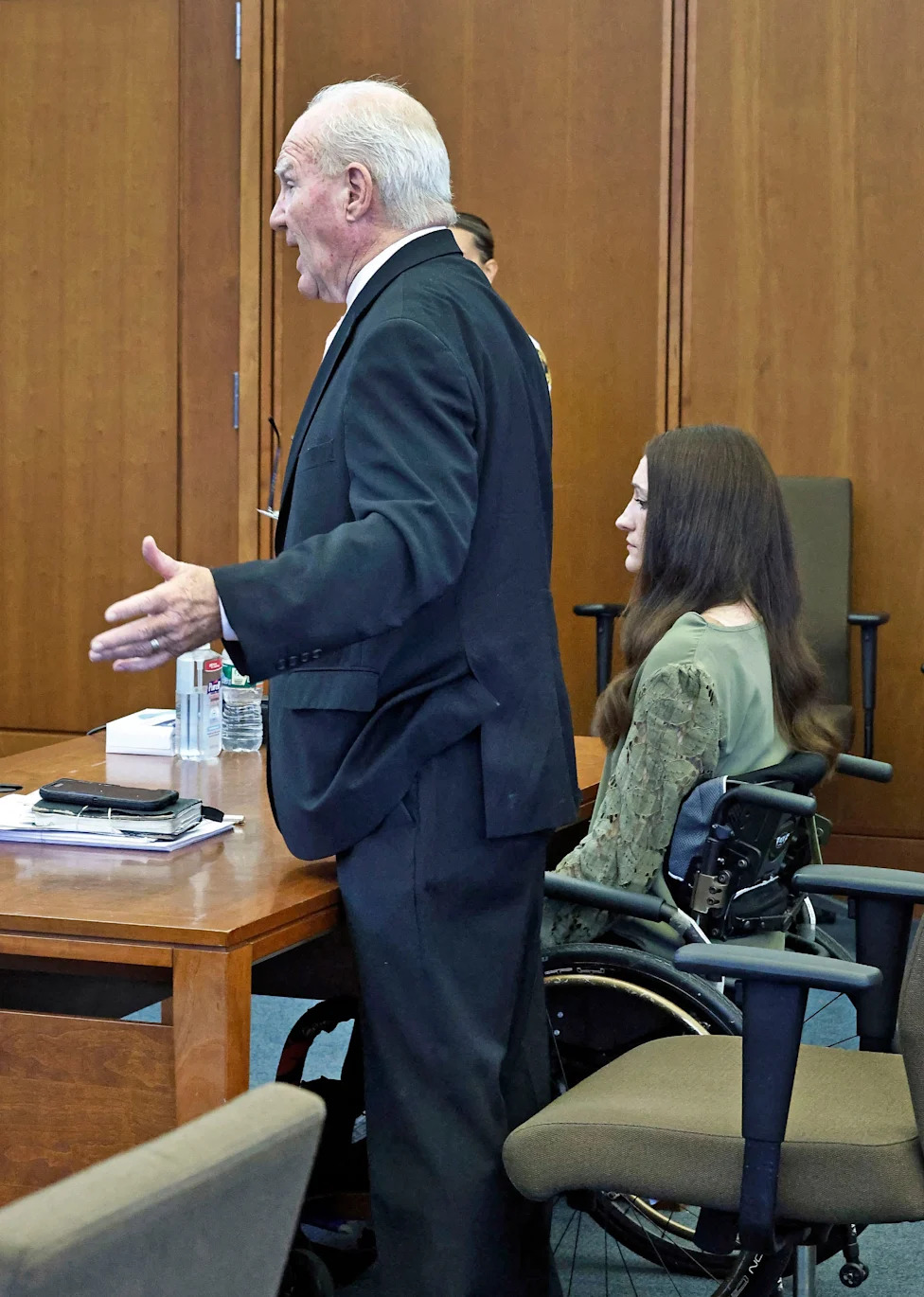
Kevin Reddington argues for a stay, as the judge gives him one hour on Sept. 4, 2026. The jury in the Lindsay Clancy case indicated that they are unable to reach a verdict, Judge Sullivan indicated he will rule a mistrial, Kevin Reddington asked for a one hour stay to appeal to the state supreme court.(Greg Derr, The Patriot Ledger via USA TODAY Network)
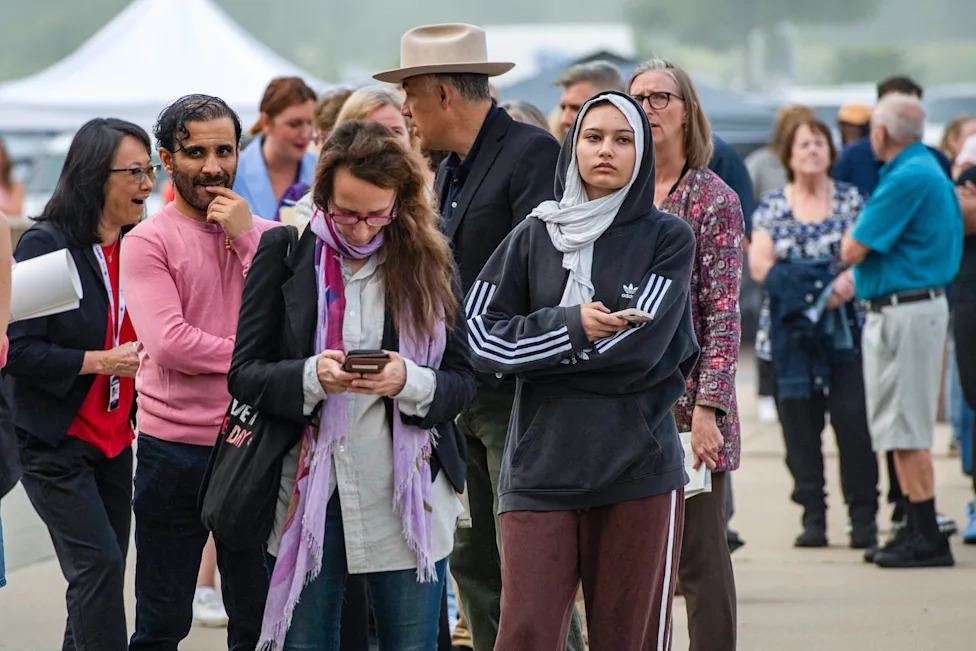
Members of the public and reporters wait in line to enter the courthouse as the jury deliberation phase continues in Lindsay Clancy's murder trial at the Plymouth County Superior Court in Plymouth, Massachusetts, on Sept. 4, 2026.(JOSEPH PREZIOSO, AFP via Getty Images)

A Plymouth County Sheriff transport van arrives at the courthouse as the jury deliberation phase continues in Lindsay Clancy's murder trial at the Plymouth County Superior Court in Plymouth, Massachusetts, on Sept. 4, 2026.(JOSEPH PREZIOSO, AFP via Getty Images)
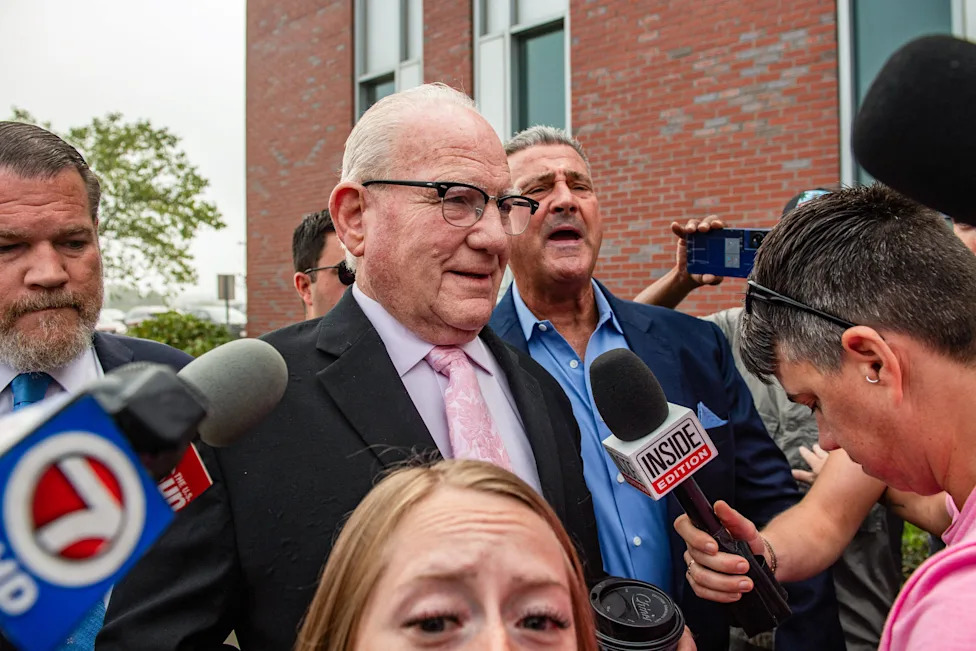
Kevin Reddington, defense attorney for Lindsay Clancy, is surrounded by press as he arrives at the courthouse as the jury deliberation phase continues in Lindsay Clancy's murder trial at the Plymouth County Superior Court in Plymouth, Massachusetts, on Sept. 4, 2026.(JOSEPH PREZIOSO, AFP via Getty Images)
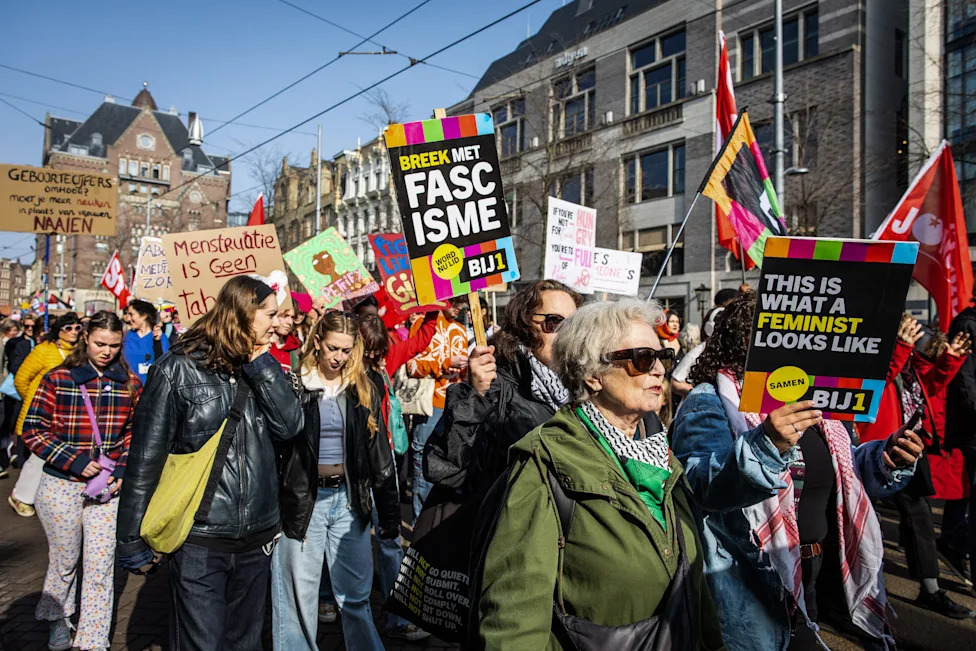
Protestors hold signs during a march marking the International Women's Day in Amsterdam on March 8, 2026.(DINGENA MOL, ANP/AFP via Getty Images)
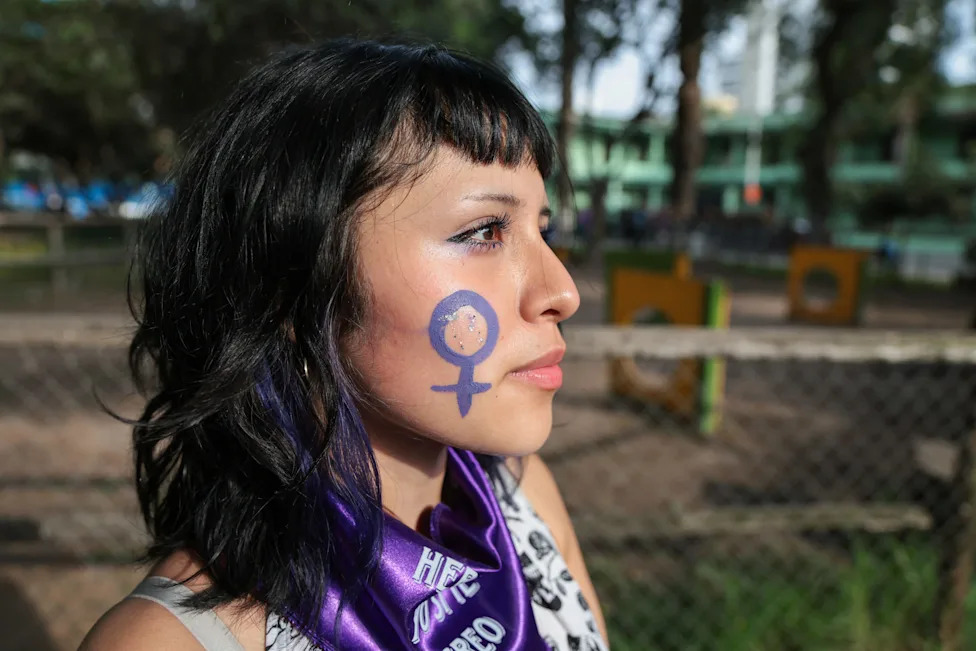
A demonstrator shows the Venus symbol painted on her cheek during a march on the eve of International Women's Day in Lima on March 7, 2026.(CONNIE FRANCE, AFP via Getty Images)
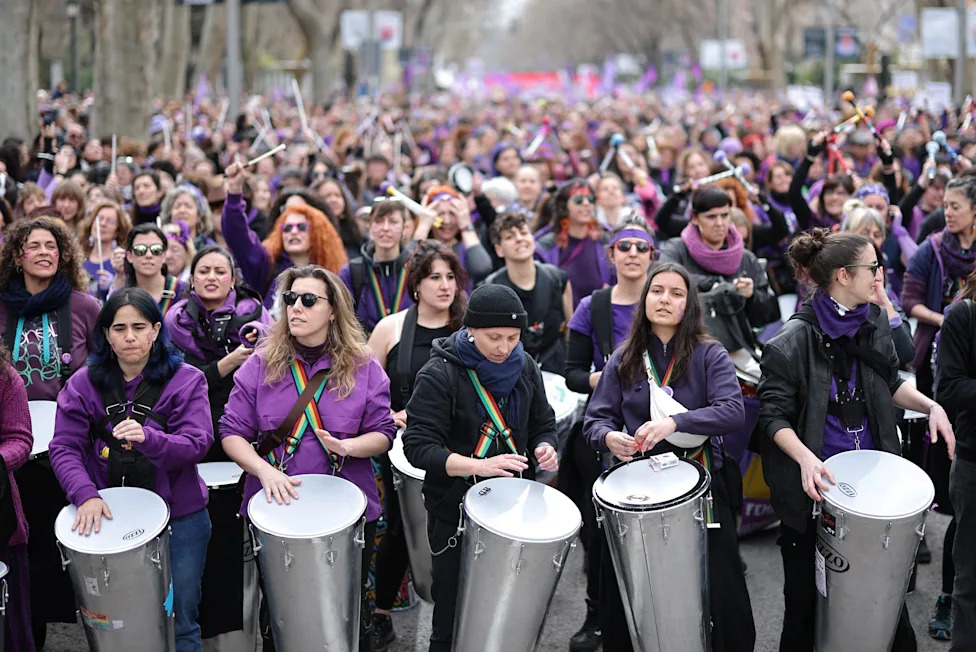
Women in a 'batucada' perform during a demonstration marking the International Women's Day in Madrid on March 8, 2026. Thousands of people marched through the streets of Madrid to call for equality and an end to violence against women, also protesting against the war in the Middle East.(THOMAS COEX, AFP via Getty Images)
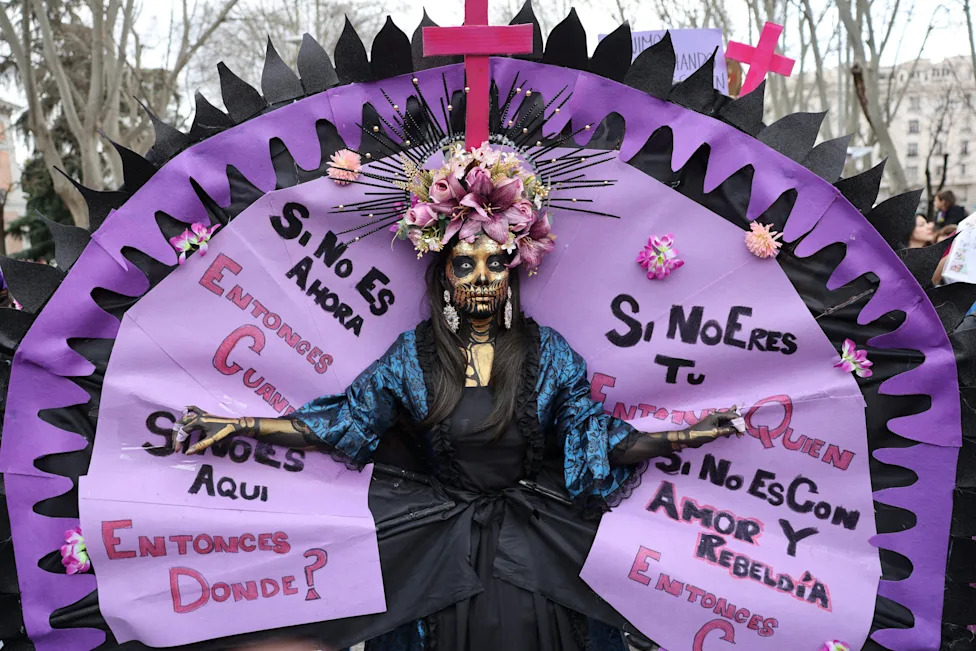
A woman parades with a writing reading 'If not now, when? If not here, where? If not you, who? If not with love and rebellion, how?' during a demonstration marking the International Women's Day in Madrid on March 8, 2026. Thousands of people marched through the streets of Madrid to call for equality and an end to violence against women, also protesting against the war in the Middle East.(THOMAS COEX, AFP via Getty Images)
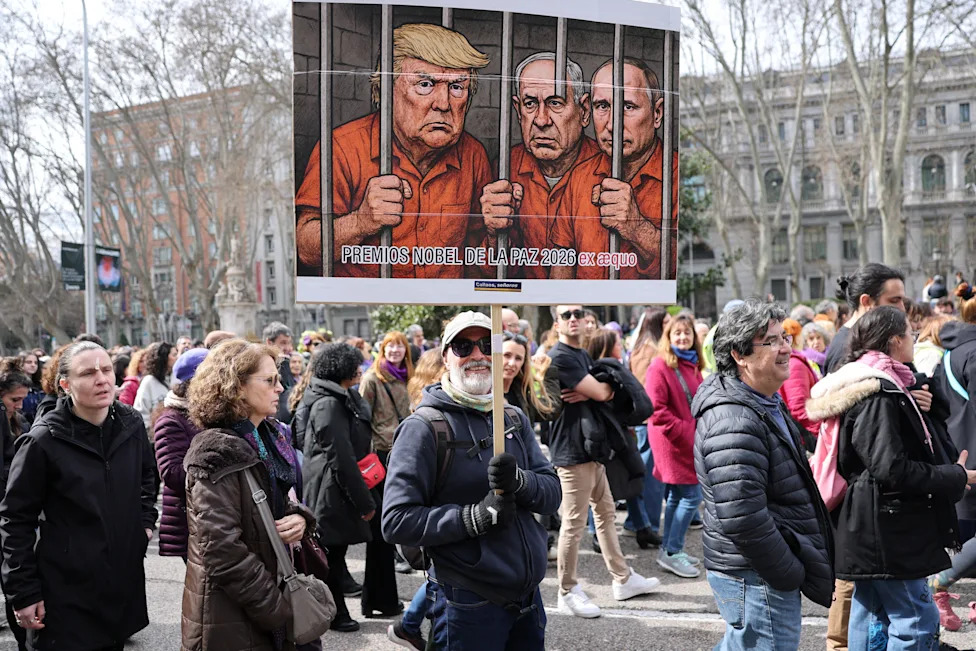
A man holds a banner mocking US President Donald Trump, Israeli Prime Minister Benjamin Netanyahu and Russia's President Vladimir Putin during a demonstration marking the International Women's Day in Madrid on March 8, 2026. Thousands of people marched through the streets of Madrid to call for equality and an end to violence against women, also protesting against the war in the Middle East.(THOMAS COEX, AFP via Getty Images)
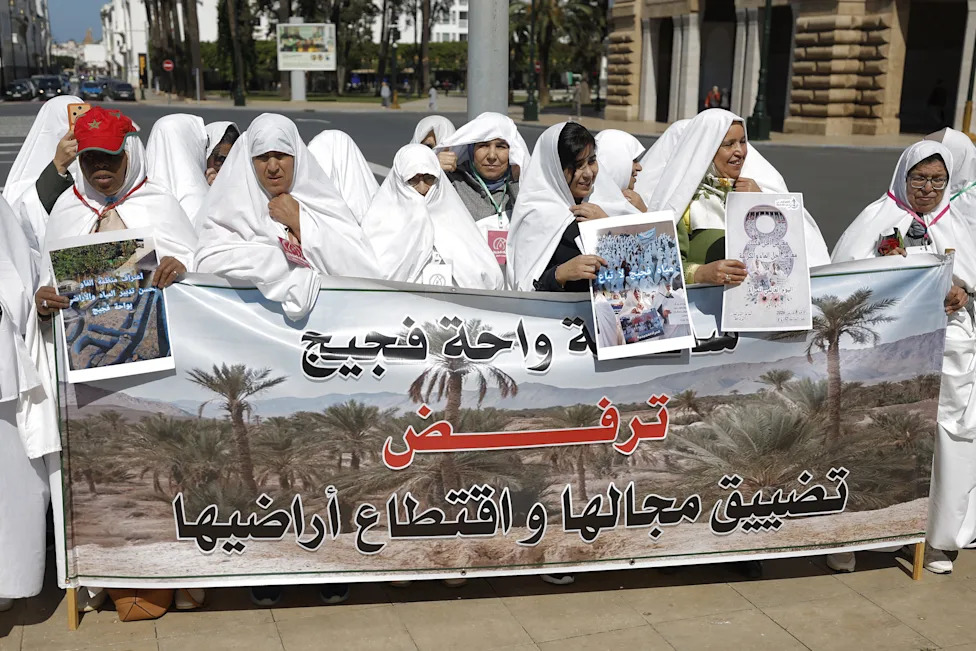
Women protesters gather during a demonstration organized by the "National Coordination for the Support of the Hirak of Figuig" demanding protection for the water rights of residents of the Figuig Oasis in eastern Morocco near the border with Algeria, outside the Moroccan parliament headquarters in Rabat on March 8, 2026, on International Women's Day.(ABDEL MAJID BZIOUAT, AFP via Getty Images)
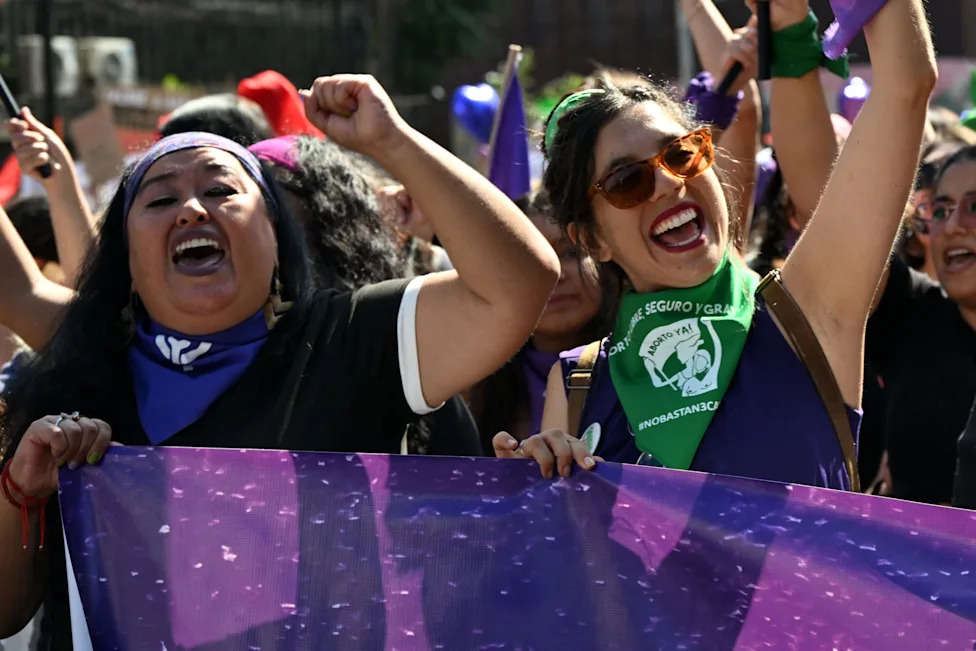
Women shout slogans as they take part in a demonstration markingInternational Women's Dayin Santiago on March 8, 2026.(RODRIGO ARANGUA, AFP via Getty Images)
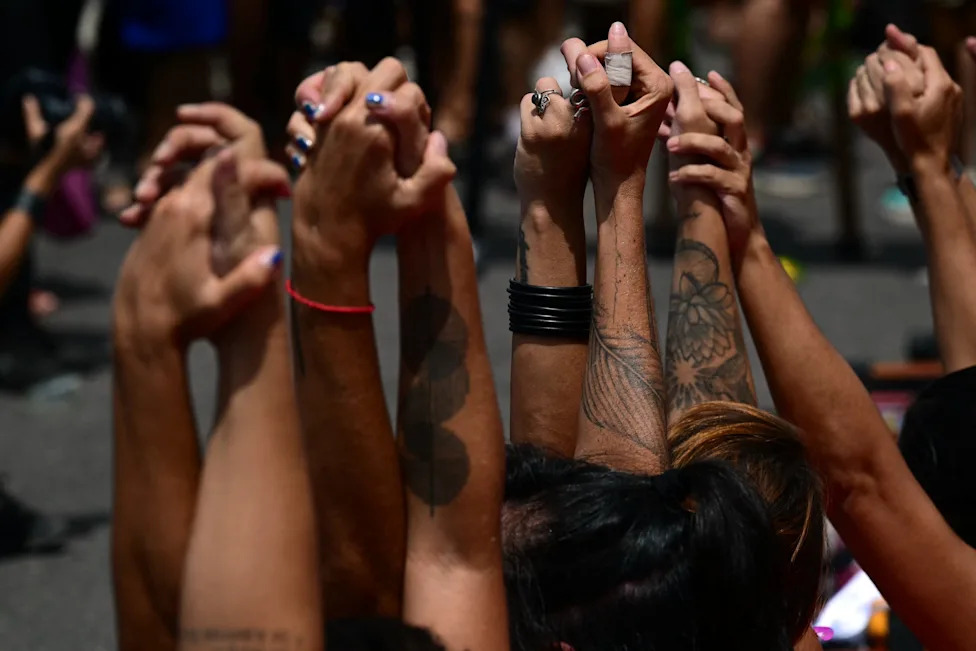
Women raise their hands intertwined as they take part in a demonstration marking International Women's Day in Rio de Janeiro, Brazil, on March 8, 2026.(PABLO PORCIUNCULA, AFP via Getty Images)
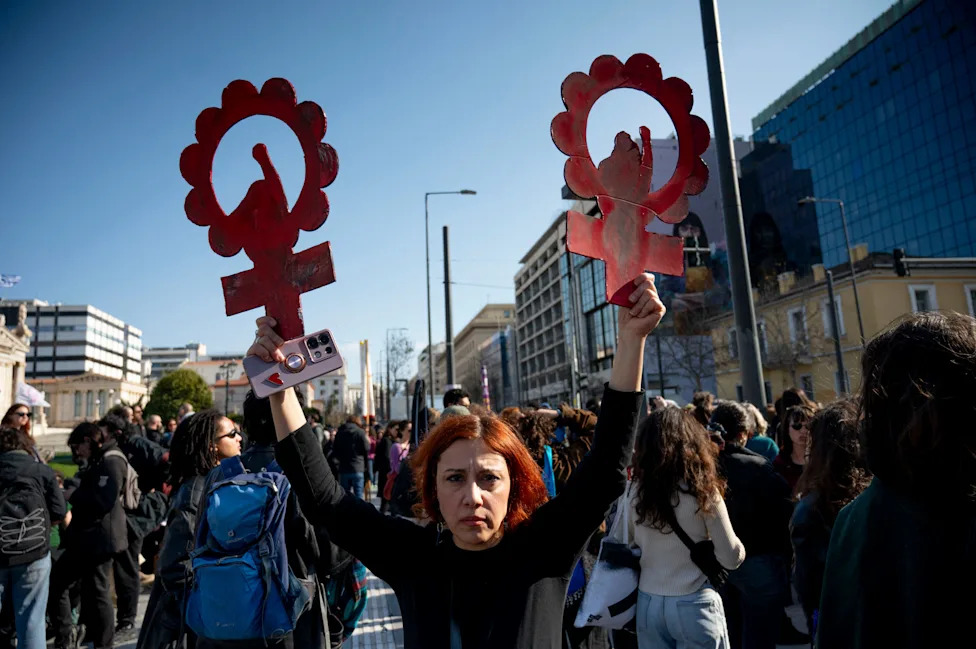
A woman takes part in a demonstration to mark the International Women's Day in Athens on March 8 , 2026.(AGGELOS NAKKAS, AFP via Getty Images)
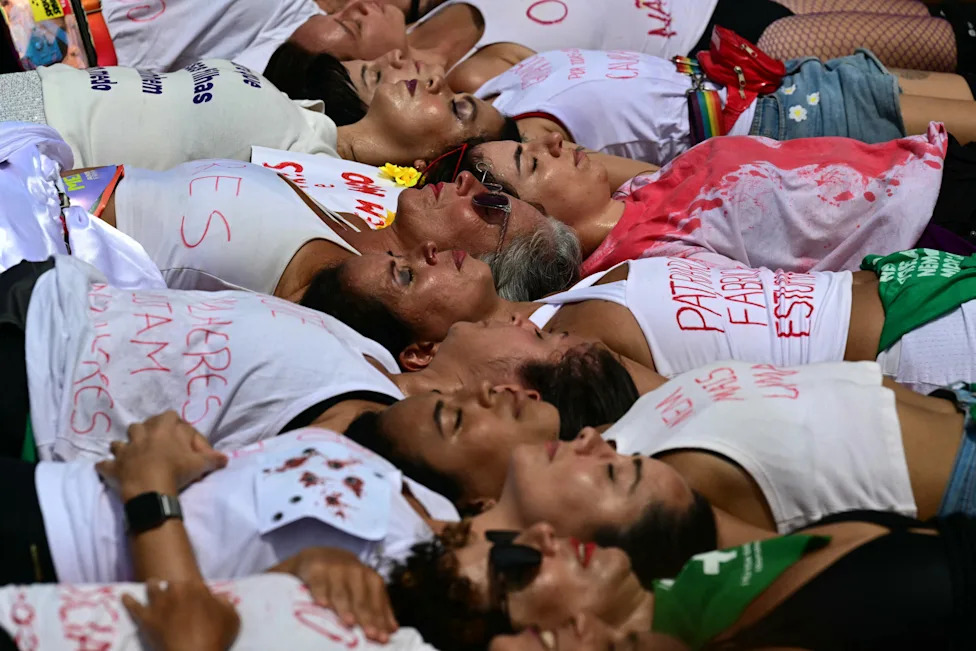
Women lie on the ground during a performance as they take part in a demonstration marking International Women's Day in Rio de Janeiro, Brazil, on March 8, 2026.(PABLO PORCIUNCULA, AFP via Getty Images)
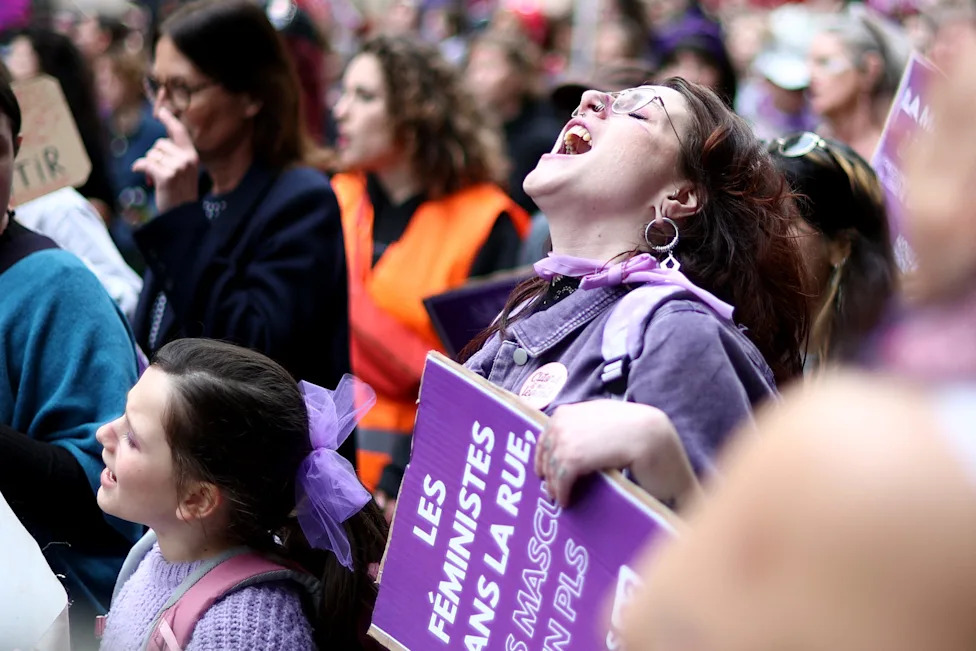
A protestor screams during a march marking the International Women's Day in Bordeaux, southwestern France on March 8, 2026.(ROMAIN PERROCHEAU, AFP via Getty Images)
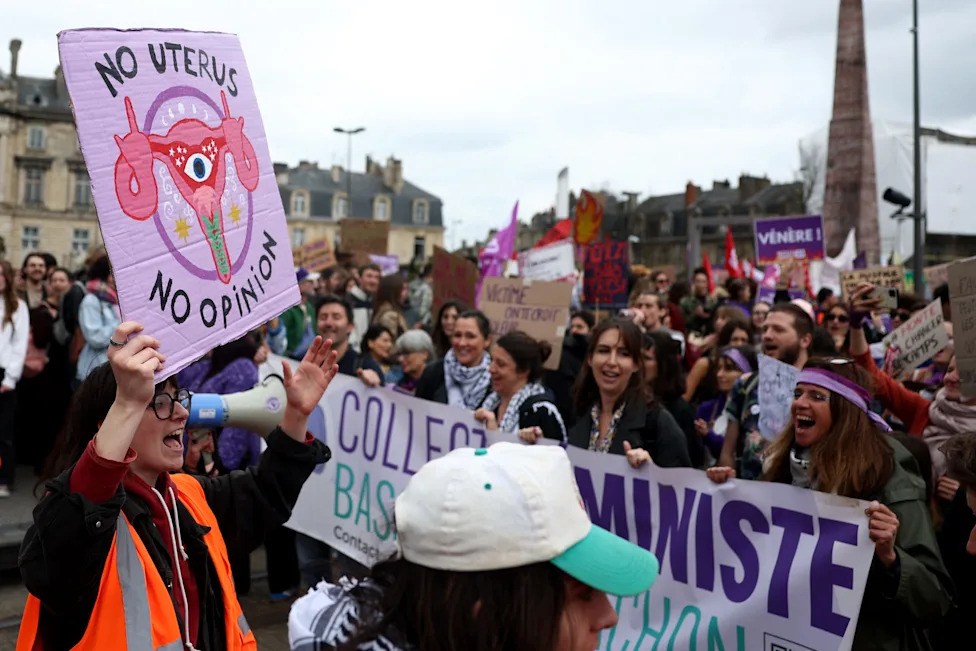
A protestor holds a sign reading "No uterus no opinion" during a march marking the International Women's Day in Bordeaux, southwestern France on March 8, 2026.(ROMAIN PERROCHEAU, AFP via Getty Images)
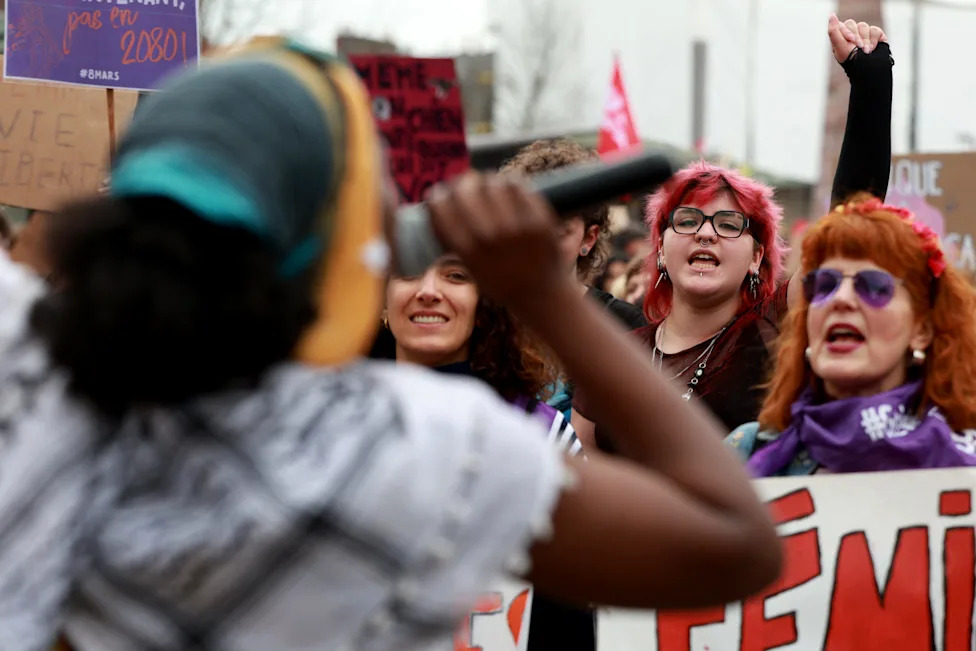
A protestor raises her fist during a march marking the International Women's Day in Bordeaux, southwestern France on March 8, 2026.(ROMAIN PERROCHEAU, AFP via Getty Images)
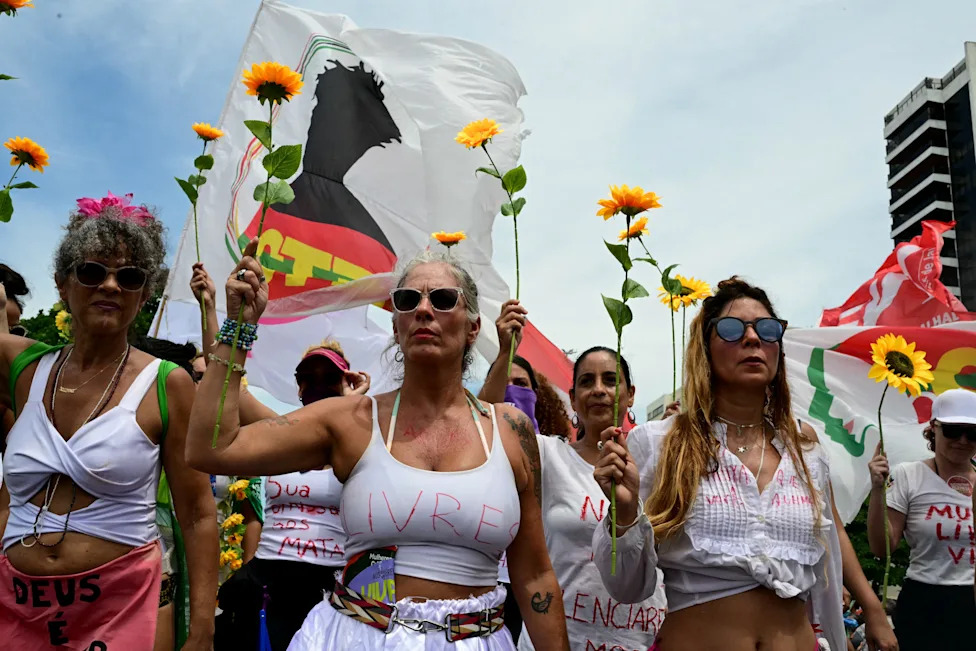
Women hold sunflowers as they take part in an International Women's Day demonstration in Rio de Janeiro, Brazil, on March 8, 2026.(PABLO PORCIUNCULA, AFP via Getty Images)
Help us improve.