Milo, a 26-foot (8 m) male whale shark, has traveled more than 34,000 miles (54,700 km) over nearly a decade—the longest tracked shark movement in a tagging study. Researchers retagged Milo in 2017, 2018, 2020, 2023 and July 2026, producing an unusually long, connected record that shows extensive migrations across the Gulf of Mexico, Caribbean and as far north as Massachusetts, interspersed with months-long stays at seasonal feeding aggregations off the Yucatán Peninsula. Long-term tracking improves understanding of feeding sites, habitat fidelity, environmental drivers and conservation needs for this Endangered species.
Milo the Whale Shark Sets Record After Traveling 34,000+ Miles Over Nearly a Decade
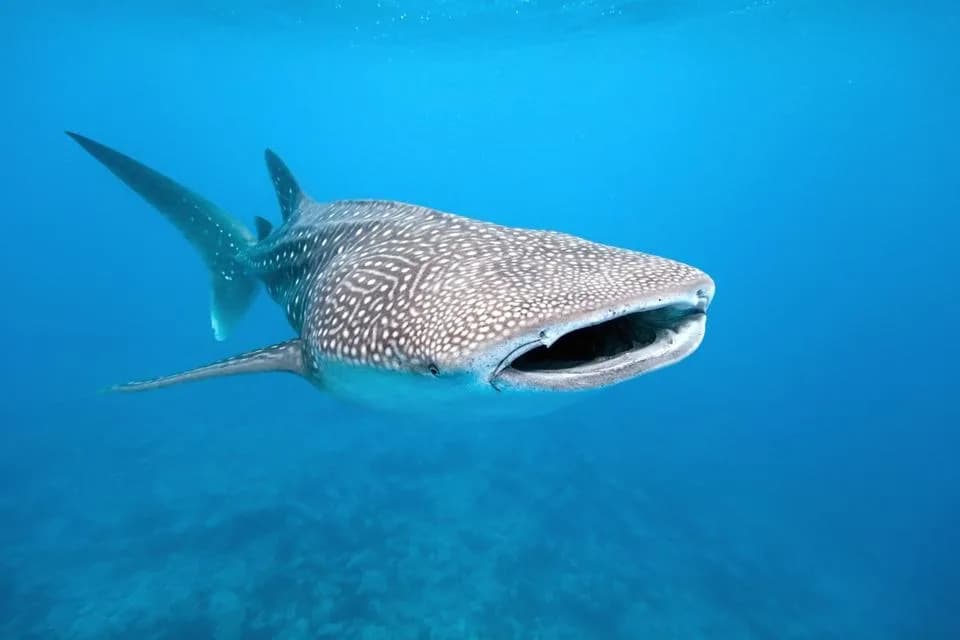
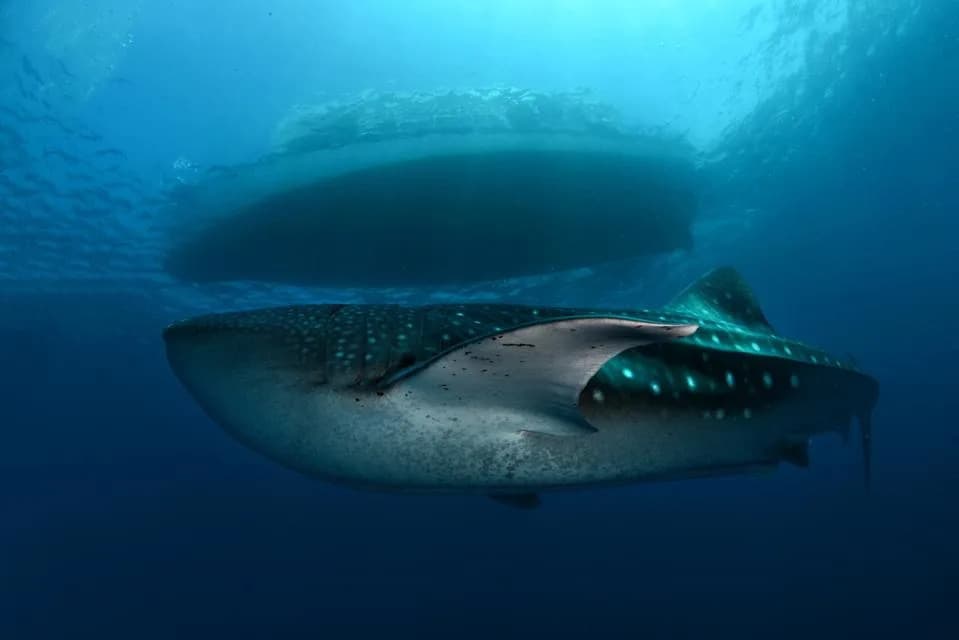
Whale sharks are known to inhabit both deep and shallow coastal waters and the lagoons of coral atolls and reefs.getty
Milo, a roughly 26-foot (8-meter) male whale shark tracked from Mexico’s Yucatán Peninsula, has set a tracking record: over nearly a decade he has traveled more than 34,000 miles (54,700 km), the longest documented movement track for any shark in a tagging study.
Researchers first fitted Milo with a satellite tag in 2017; that initial tag transmitted for only a few weeks while methods were refined. The team persisted and attached fin-mounted satellite tags to Milo again in 2018, 2020, 2023 and most recently in July 2026. Those repeated retaggings produced an unusually long, connected record of a single animal’s movements.
Rafael de la Parra, of the Mexican conservation organization Ch'ooj Ajauil AC, said: 'Milo is a highly significant whale shark, a large sub-adult male measuring more than eight meters in length. He was the first one I fitted with a real-time, fin-mounted satellite transmitter.'
The tracking data reveal that Milo has ranged widely across the western Atlantic: through the Gulf of Mexico, around the northern Caribbean islands, east of Bermuda and as far north as Massachusetts. At other times he has stayed in relatively small areas for months, illustrating the species’ behavioral flexibility.
Dr. Mahmood Shivji, director of the Guy Harvey Research Institute at Nova Southeastern University, noted: 'Milo has revealed just how flexible whale sharks can be—capable of enormous transoceanic migrations while also remaining in localized productive patches for long periods.'
Why Whale Sharks Gather
Whale sharks (Rhincodon typus) are the largest fish in the ocean but feed by filtering tiny prey such as zooplankton, fish eggs and larvae. Each summer, huge quantities of fish eggs and larvae accumulate near the surface offshore of the Yucatán Peninsula, creating a seasonal feeding bonanza that attracts whale sharks and manta rays from across the region. This seasonal aggregation is where researchers have repeatedly encountered Milo, and it has become both an important research site and a major ecotourism destination.
In 2026, researchers reported a notable resurgence of the aggregation, with hundreds of whale sharks and manta rays present each day after lower numbers in recent years.
Long-Term Tracking and Conservation
Since 2017 the research team has deployed 48 fin-mounted satellite tags on whale sharks in the Yucatán Peninsula region. Milo’s five retaggings are unusual because they allow scientists to connect movement data across almost ten years. 'Long-term studies like these are critical to better understanding the complete life history of these long-lived animals,' said Dr. Guy Harvey, founder and chairman emeritus of the Guy Harvey Foundation.
Previous work suggests whale sharks may live more than 125 years, so a decade is only a fraction of their potential lifespan—but even that window reveals patterns single-season studies cannot. Repeated tracking shows where sharks feed, which habitats they revisit, and how movement patterns shift over time. It also helps researchers investigate environmental drivers—temperature, currents and prey availability—that concentrate food and shape migrations.
Whale sharks are listed as Endangered by the International Union for Conservation of Nature (IUCN). Major threats include overfishing and ship strikes. Mapping movements like Milo’s helps identify key feeding grounds and migration corridors that are essential for the species’ survival and for targeted conservation efforts.
Milo’s story shows that while a whale shark can cross thousands of miles of open ocean, the same individual can repeatedly return to productive local feeding areas—making the vast ocean feel a little smaller.
This article was originally published on Forbes.com.
Help us improve.