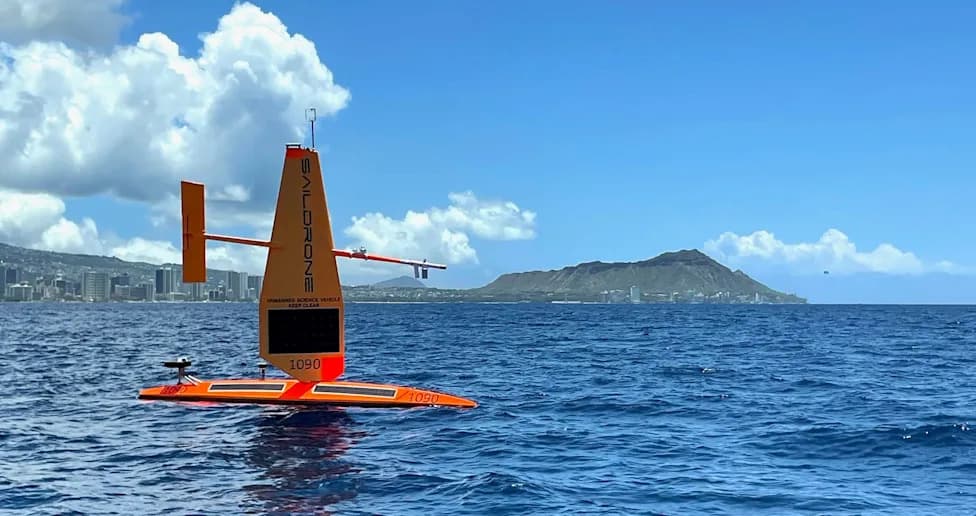
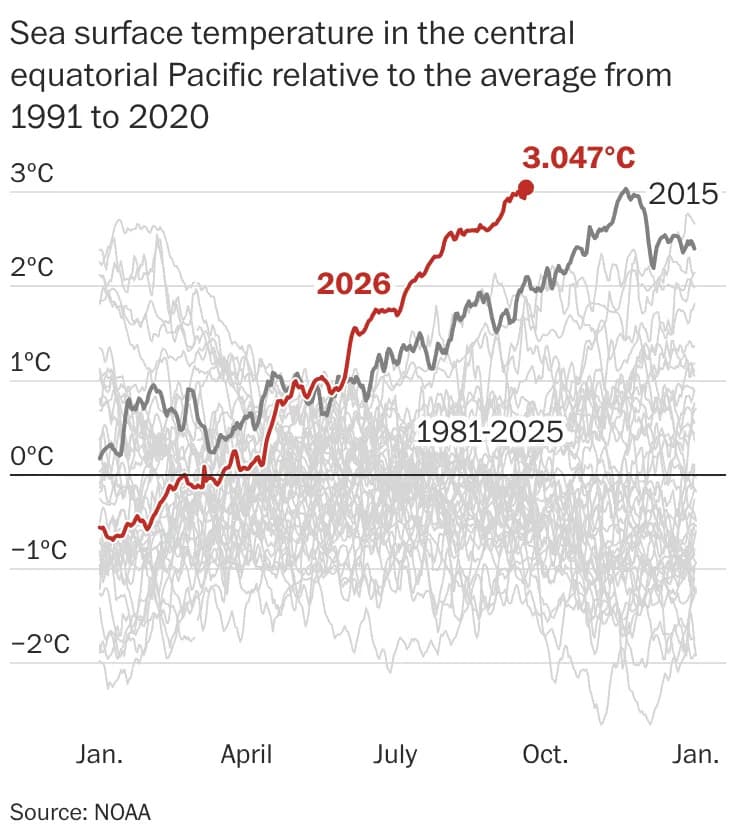
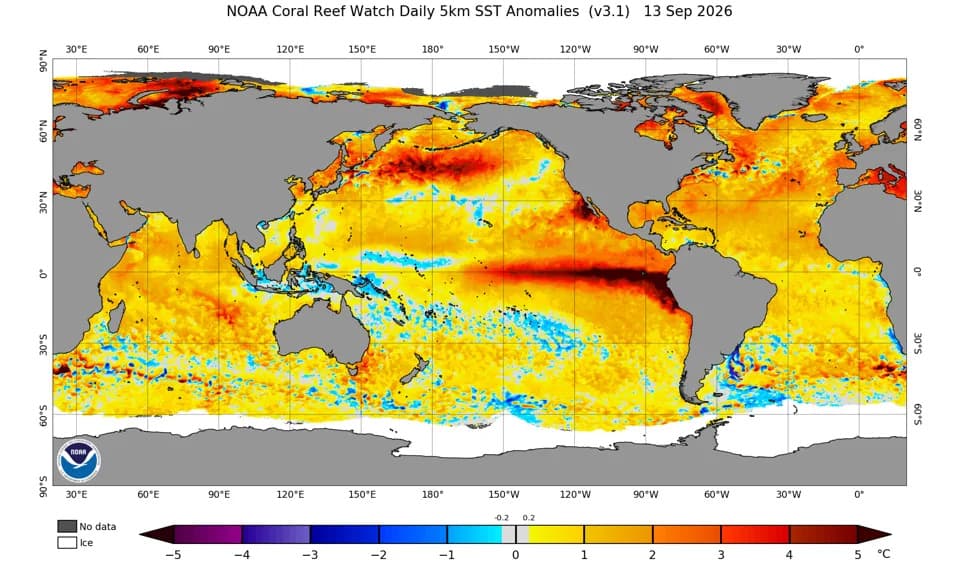
NOAA has deployed four wind‑propelled, solar‑instrumented Saildrones to the Niño 3.4 region to study where this developing El Niño transfers ocean heat to the atmosphere. The vehicles record measurements as often as once per minute and can be rerouted in real time — two were shifted to avoid Hurricane Lowell. Their observations will be integrated with buoys, Argo floats, drifters, gliders and satellites to sharpen forecasts of regional and global weather impacts over the coming months.
Inside NOAA's Pacific Watch: Saildrones Probe the Birthplace of a Potentially Historic El Niño
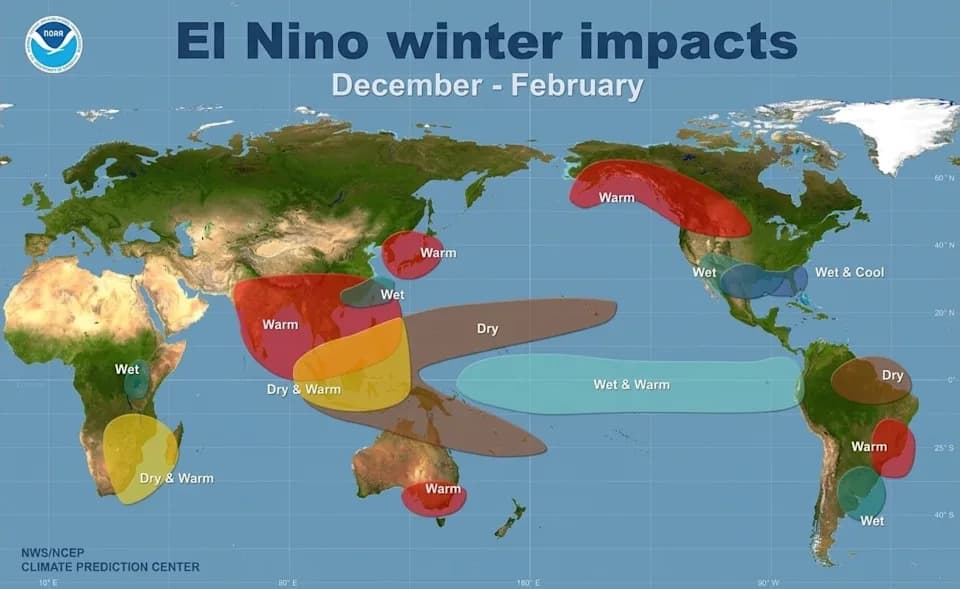
El Nino Impacts
NOAA has stepped up ocean monitoring as the current El Niño strengthens, deploying four autonomous Saildrones to the Niño 3.4 region to better observe how ocean heat is transferred to the atmosphere.
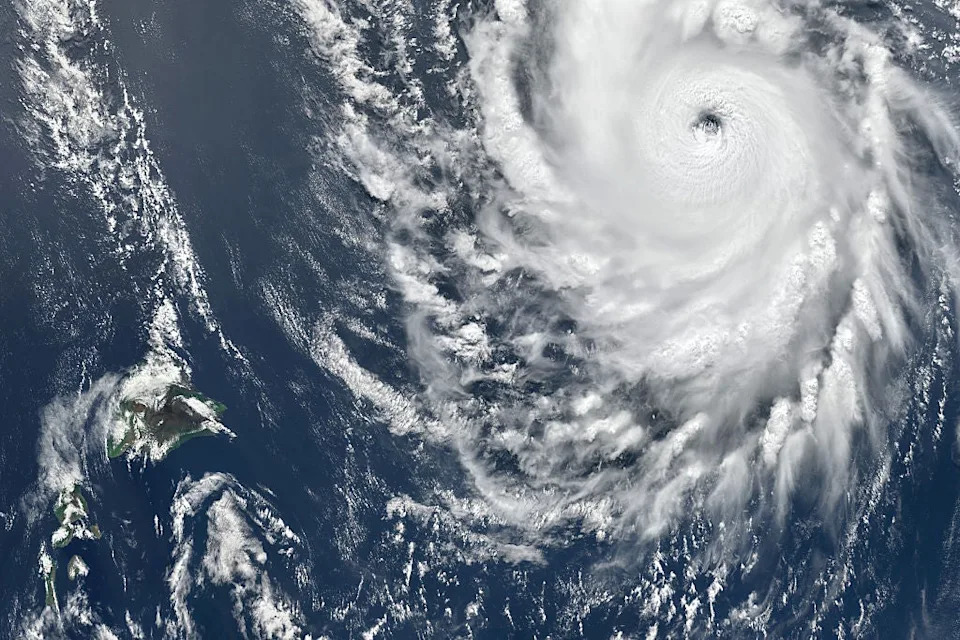
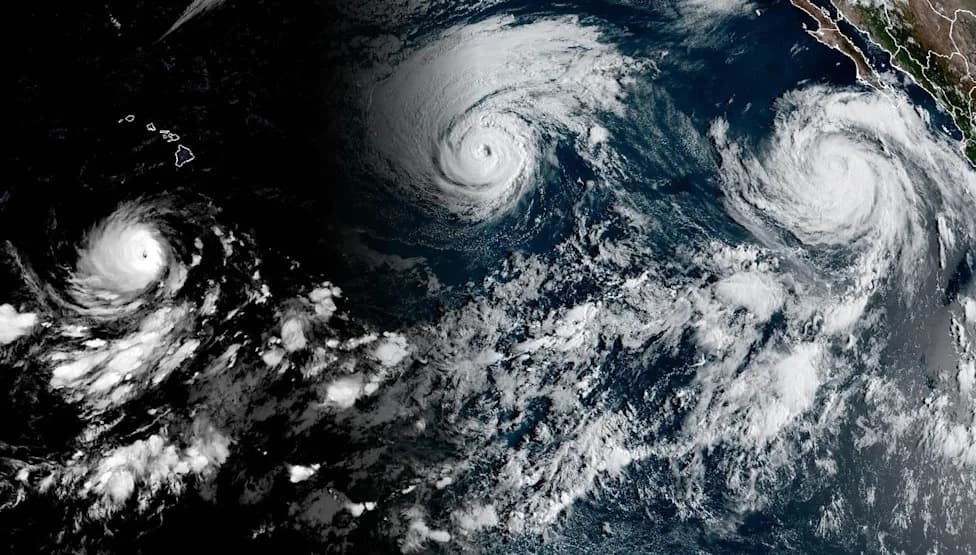
Hurricane Lowell
The Saildrones — bright orange, wind‑propelled surface vehicles equipped with solar‑powered sensors and onboard computers — left Honolulu in August and are headed to the Niño 3.4 sector of the tropical Pacific. That region is the standard index area forecasters use to determine whether an El Niño event is underway. Operators send remote waypoints that the craft follow; waypoints can be updated in real time, a capability that allowed two Saildrones to change course and avoid Hurricane Lowell while continuing to collect data.
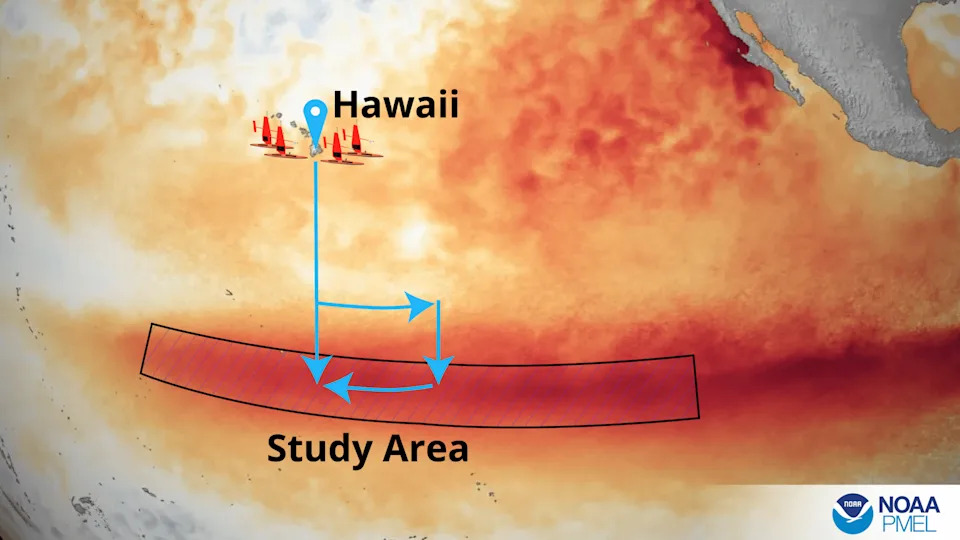
The path of the four Saildrones in the El Niño monitoring area.
Saildrones On The Front Line
These uncrewed surface vehicles sample continuously, recording measurements as often as once per minute. Their rapid, mobile observations help fill gaps between fixed instruments and provide cross‑checks for data consistency across the monitoring array. By sampling the very interface where the ocean passes heat to the atmosphere, Saildrones deliver high‑resolution information about the processes that seed large‑scale atmospheric changes.
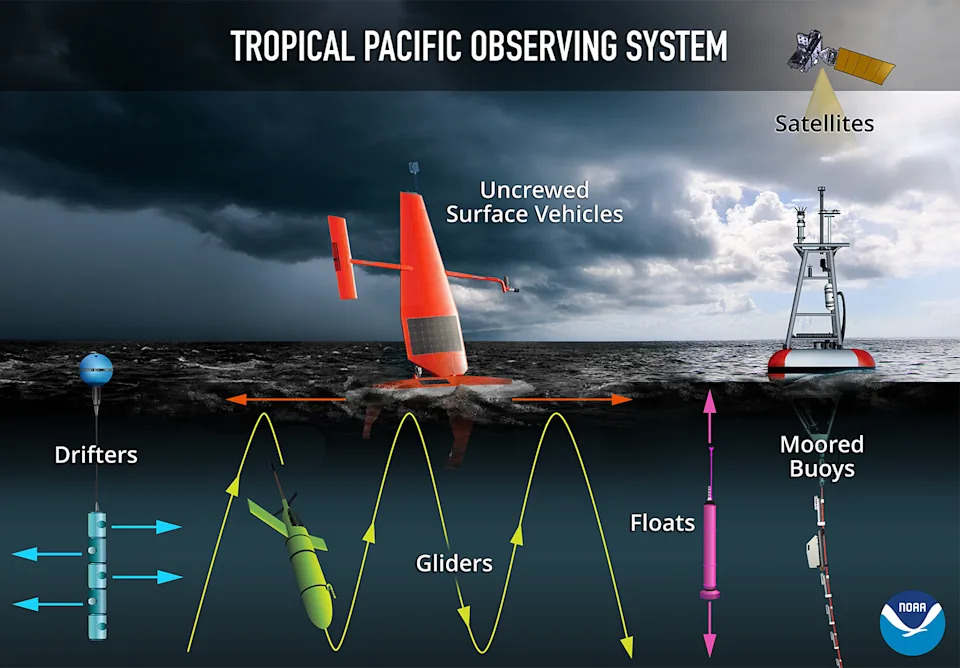
The Squad
What They Measure And Why It Matters
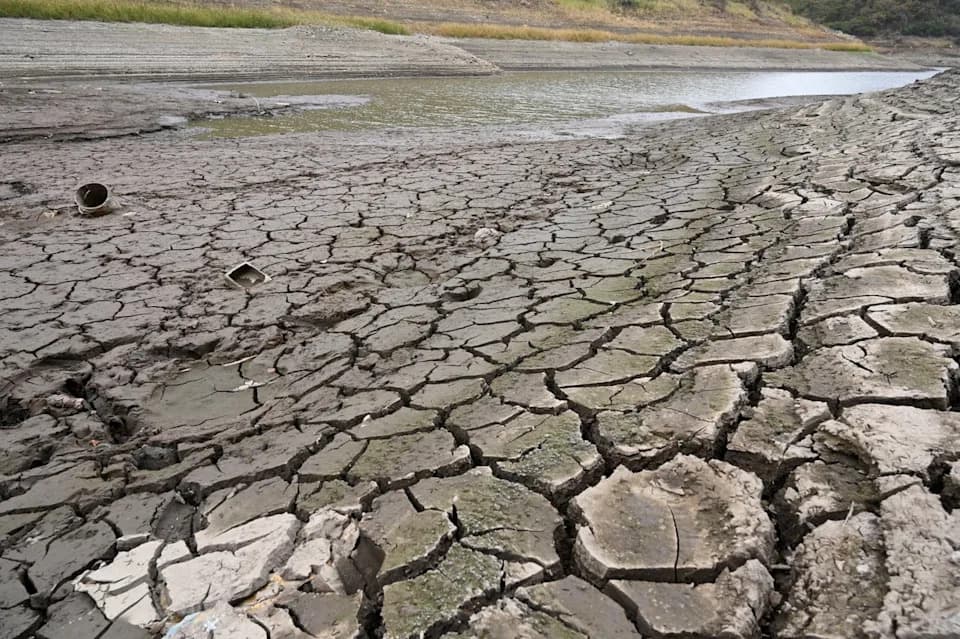
Measurements focus on sea‑surface temperature, wind, humidity, and other surface and near‑surface properties that determine how efficiently ocean heat is released into the atmosphere. That heat exchange is a key driver of changes to the tropical convection and jet streams: during El Niño, altered circulation patterns can increase rainfall and flood risk across the southern United States while producing warmer, drier conditions in northern states. The same shifts influence storm tracks, monsoons and weather patterns around the globe.
A Networked Observing System
NOAA’s Saildrones are part of a broader, complementary observing system that includes:
- Moored buoys: Anchored arrays that provide long‑term, continuous records at fixed locations.
- Argo floats: Autonomous profilers that cycle between the surface and depths down to about 2,000 meters to map subsurface temperature and salinity.
- Drifters: Surface instruments that follow currents and help trace heat transport across the sea surface.
- Gliders: Low‑noise vehicles that traverse the water column for months, building a vertical picture satellites cannot capture.
- Satellites: Broad, repeated surface measurements that provide regional and global context but are less able to sense subsurface conditions.
Together, these platforms improve situational awareness of the developing El Niño and feed into forecast models to refine predictions of regional and global impacts over the coming months.
What To Watch For
As datasets from Saildrones and partner platforms are assimilated into operational forecasts, expect progressively clearer guidance on the timing, intensity and likely weather impacts of this El Niño — information that will be important for water managers, emergency planners and communities worldwide.
Help us improve.