Authorities discovered about 200 decaying drums and roughly 1,000 tonnes of contaminated soil at the former Dobra Voda military range in the Šumava National Park. Tests found dioxins, furans, mercury, arsenic and organic solvents. Cleanup is due to begin later this month and run through 2028 at an estimated cost of 192 million korunas (≈$9.2M). Groundwater testing and Ministry of Defence cooperation will determine the full scale and safety requirements of the operation.
Toxic Barrels Found Near Šumava National Park: 200 Drums and 1,000 Tons of Contaminated Soil
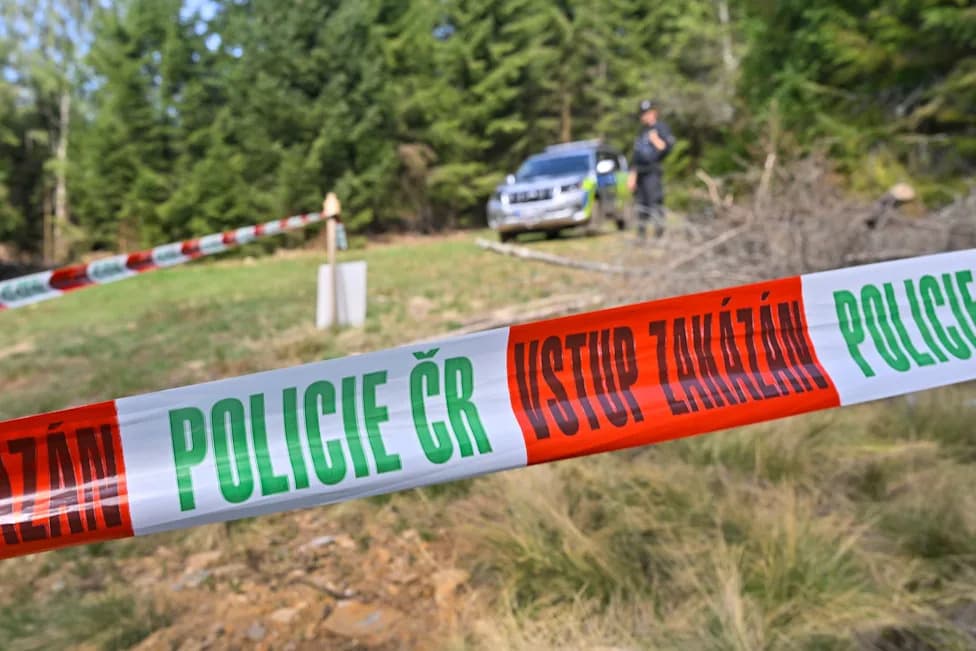
A police cordon is seen at the Sumava National Park, after chemicals have been found. Drums containing hazardous chemicals at a former military training area have caused alarm in the Czech Republic. New investigations have revealed that there are around 200 dilapidated drums and 1,000 tons of contaminated soil at the site, Environment Minister Igor Cerveny said on Tuesday. (is associated with: «Alarm in the Czech Republic over toxic barrels found in forest») Chaloupka Miroslav/CTK/dpa
The discovery of roughly 200 dilapidated steel drums and an estimated 1,000 tonnes of contaminated soil at the former Dobra Voda military training range has raised urgent environmental and safety concerns in the Czech Republic.
What Was Found
Environment Minister Igor Cerveny announced that samples taken from the site detected a range of hazardous substances, including dioxins and furans, mercury, arsenic and a variety of organic solvents. The drums were located in a densely wooded section of the Šumava National Park near the German border with Bavaria.
Why Authorities Are Alarmed
Large parts of the former Soviet-era training range, which operated from 1952 until 1991, have remained off-limits because of unexploded ordnance and contaminated ground. Authorities have not disclosed the exact location of the barrels, in part to avoid drawing onlookers and to reduce risk.
"These are very dangerous toxic substances," Cerveny warned, adding that a forest fire could trigger uncontrolled chemical reactions and significantly worsen the hazard.
Cleanup Plan and Next Steps
The removal operation is scheduled to begin later this month and is expected to continue through 2028. The minister estimated the cost at 192 million korunas (about $9.2 million). Additional testing is planned to determine whether groundwater has been contaminated.
The Ministry of Defence has pledged to cooperate with the clean-up effort; explosives, grenades and mines are also suspected to be present in the area, which will complicate removal operations and require specialist handling.
Context and Concerns
The Dobra Voda range was used in the Soviet era and parts of the former restricted zone have been left largely undisturbed since the 1990s. Environmentalists and park authorities are likely to monitor the site closely because dioxins and heavy metals such as mercury and arsenic can persist in soils and bioaccumulate in plants and animals.
What to Watch For: results of groundwater tests, the timeline and methods for safe drum removal, and coordination between environmental agencies and defense specialists to handle both toxic waste and unexploded ordnance safely.
Help us improve.