Key Takeaway: Cuba says it is not negotiating with the United States and has labelled renewed US measures a form of "economic asphyxiation" and a "genocidal" blockade. The government estimates the embargo cost the economy $8 billion between March 2025 and February 2026 — up 7% from the prior period — and noted the figure excludes recent January energy restrictions and May secondary sanctions. Havana reports widespread power outages and disruptions to daily life, and expects the UN General Assembly vote on ending the embargo on Oct 27–28 to win strong support.
Cuba Says It Is Not Negotiating With US, Calls Blockade 'Genocidal' as Losses Hit $8bn
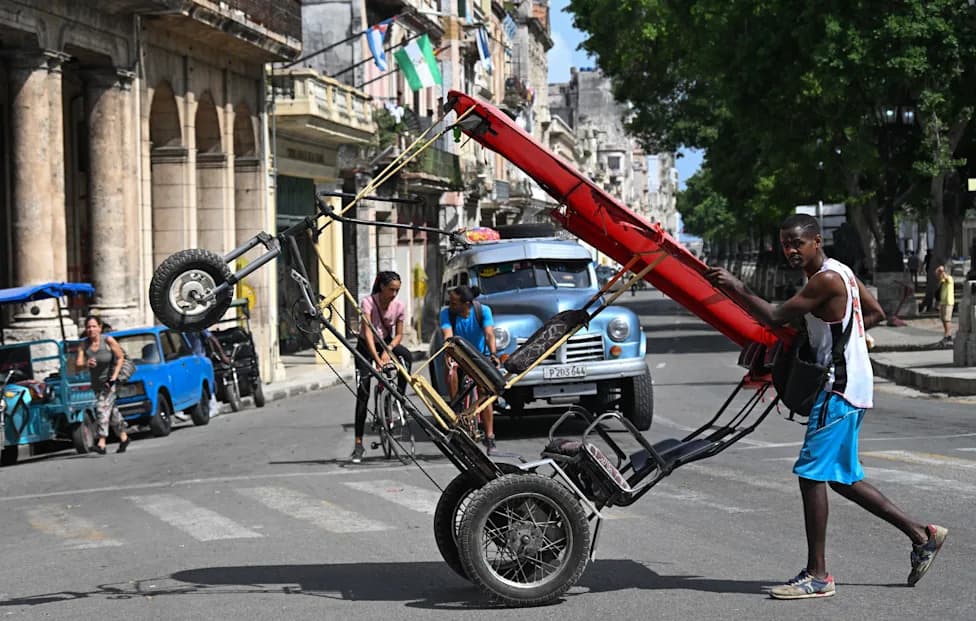
Pushing a bicycle taxi in the Cuban capital Havana, September 7, 2026 [Yamil Lage/AFP]
Cuba says it is not negotiating with the United States and has accused the Trump administration of intensifying an economic campaign that Havana describes as a "genocidal" blockade. Foreign Minister Bruno Rodríguez made the remarks at a media briefing while presenting Havana's latest estimate of the embargo's economic impact.
The Cuban government estimates the US embargo cost the economy $8 billion between March 2025 and February 2026 — the highest single-year total recorded and a 7% increase over the previous reporting period. Rodríguez cautioned that this figure does not yet include some of Washington's more recent measures, notably energy restrictions imposed in January and secondary sanctions introduced in May.
Human Cost and Energy Crisis
Rodríguez described the daily hardships many Cubans face: prolonged power outages often limited to two or three hours a day, food spoiling without reliable refrigeration, parents fanning infants in stifling heat, children trying to study in the dark, and young people losing internet access. "These are long months of living with only two or three hours of electricity per day or less," he wrote on X, underlining the severity of the island's energy crisis.
"All family life [is] damaged. Cuba is not a threat, but the blockade is," Rodríguez said, calling the measures "collective punishment" and an "energy siege."
Diplomatic Fallout and the UN Vote
Relations between Washington and Havana have deteriorated under President Donald Trump. Although officials from both countries held talks earlier this year, Rodríguez said there are currently no negotiations and no agenda for future talks. The diplomatic dispute will be revisited at the UN General Assembly on October 27–28, when Cuba's annual resolution calling for an end to the embargo is expected to be debated and voted on.
Rodríguez accused the United States of exerting "extraordinary pressure and intimidation" on other UN member states ahead of the vote, but said Havana still expects "overwhelming support" for the resolution. Cuban officials also warned that because recent sanctions are not yet fully reflected in the report, the economic damage could rise further in coming assessments.
While Havana frames the embargo as a primary cause of widespread hardship, Washington maintains that its measures are intended to pressure Cuba’s government. The upcoming UN vote will again place the decades-old policy under international scrutiny.
Help us improve.