Matt Jukes, the Metropolitan Police deputy commissioner, says the disorder after the A66 crash in Middlesbrough shows the limits of having 43 separate police forces. Senior leaders — including Chief Inspector Michelle Skeer — back proposals for a National Police Service and merging forces into roughly 10–15 regional constabularies. The reforms aim to preserve local neighbourhood policing while concentrating specialist capabilities for faster, coordinated responses to national and cross-border threats.
Middlesbrough Violence Spurs Call For Fewer, Larger UK Police Forces, Says Met Deputy
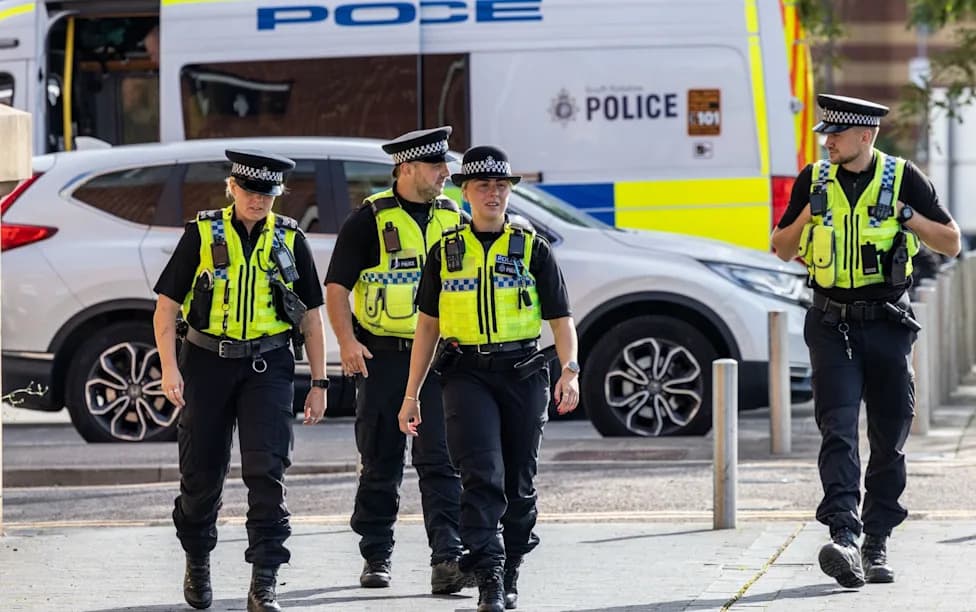
Police officers outside Teesside magistrates' court in Middlesbrough on Sept 1 as a man faced charges of murder over a house fire in which two people died in the days after the A66 crash - Andy Commins/PA Wire
Matt Jukes, Deputy Commissioner of the Metropolitan Police, says the violent disorder in Middlesbrough following a fatal crash on the A66 highlights the limitations of operating 43 separate police forces and strengthens the case for major structural reform.
The crash, in which two officers and five occupants of a Volkswagen Passat died after the vehicle allegedly attempted to evade police by driving the wrong way along the A66, was followed by intensified gang-related disorder. Cleveland Police received support from about 200 officers from other forces as specialist resources and mutual aid were mobilised.
Jukes and other senior leaders argue those responses expose a mismatch between the scale of modern threats and the current policing architecture. "As communities in Middlesbrough grappled with the aftermath of the crash, policing drew on support, specialist expertise and resources from beyond force boundaries," he said. "If policing increasingly works as one during major incidents, why do we continue to organise ourselves as 43 separate forces for so much of what we do?"
Proposed Reforms
Chief Inspector of Constabulary Michelle Skeer has backed a shake-up of policing that includes creating a National Police Service (NPS) — likened by some to a "British FBI" — and reducing the number of territorial forces to roughly 10–15 larger regional constabularies. The NPS would absorb national functions currently carried out by the National Crime Agency (NCA), counter-terrorism units and regional organised-crime teams.
Under the proposals, larger regional forces would retain local policing areas in every borough, town and city to handle everyday crimes, while specialist capabilities (murder investigations, firearms response, and major organised-crime units) would be concentrated and sustained at scale.
Why Change Now?
Jukes emphasises that many modern threats are national or international in scope: public disorder can be organised online and amplified via social media; organised-crime groups move drugs, weapons and money across multiple force areas; and cybercriminals target victims remotely. He says the public expects a single, timely policing response rather than a patchwork of locally funded capabilities.
"The fact that policing succeeds as often as it does is a testament to the professionalism of officers and staff. But too often success comes despite the system rather than because of it." — Matt Jukes
Victoria Fuller, Cleveland’s chief constable, has said her force faces some of the highest crime levels in the country while lacking the resources needed to match demand, and she supports integrating Cleveland into a larger, more resilient force.
Safeguarding Local Policing And Accountability
Proponents stress reform is not intended to pull policing away from communities. Rather, it aims to strengthen neighbourhood teams by backing them with better national and regional capabilities that can be deployed instantly. They also say democratic oversight — through mayors, local leaders and elected bodies — can be preserved within larger force areas.
Sixty years after the last major redesign of policing, advocates argue the case for reform is compelling: a stronger national service, improved technology and less duplication to deliver more resilient neighbourhood policing and better responses to complex, cross-border threats.
Note: This account summarises public statements by Matt Jukes and others on proposed police reform following the events in Cleveland. Details of investigations into the A66 crash and subsequent disorder are subject to official enquiries.
Help us improve.