Canal Edge, led by Justin Ishbia, unveiled preliminary plans for "The Railyards," a mixed-use redevelopment of Amtrak's 14th Street Coach Yard that could include a White Sox ballpark and Northwestern Medicine facilities. The proposal depends on relocating Amtrak's maintenance operations about 1.8 miles south along Canal Street; Amtrak recently received $572 million in federal support for the move. The project faces Bridgeport neighborhood opposition over environmental, noise and traffic concerns and remains contingent on studies, approvals and financing.
Ambitious 'Railyards' Plan Unveiled in Chicago — Potential White Sox Ballpark, New Amtrak Facility and Health Campus
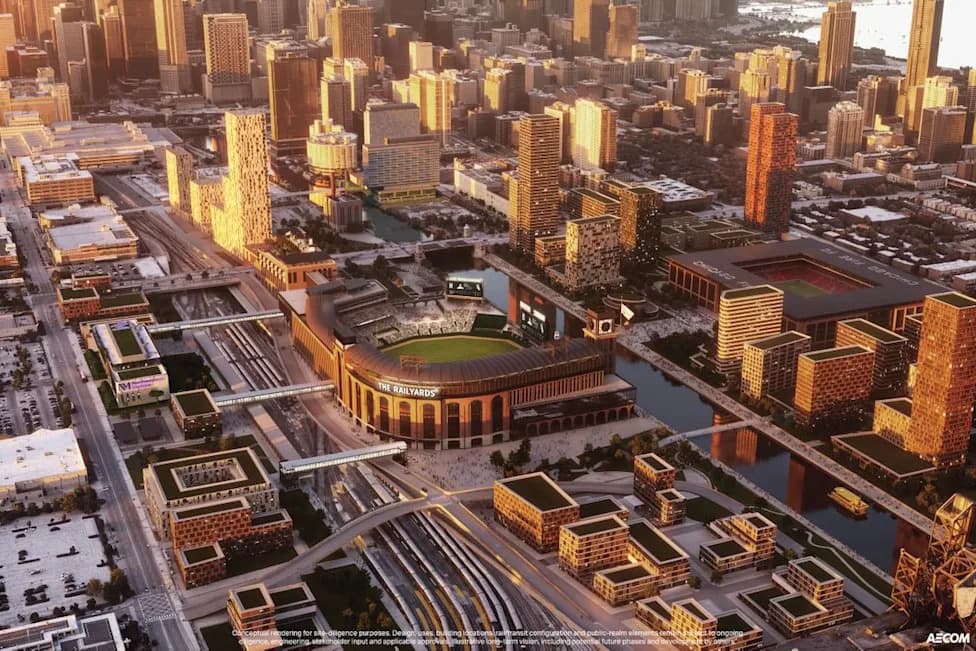
Developer Canal Edge has unveiled its plans for a development, intended to include a new ballpark for the Chicago White Sox, that would be built on the site of the current Amtrak 14th Street Coach Yard, as well as above an adjacent BNSF yard. Canal Edge/AECOM
Canal Edge, a development group led by Chicago businessman Justin Ishbia, on Sept. 5 released preliminary plans to redevelop Amtrak's 14th Street Coach Yard into a mixed-use project branded as "The Railyards." The proposal envisions a potential Chicago White Sox ballpark, Northwestern Medicine health-care facilities, and substantial residential, commercial and retail development.
New Amtrak Maintenance Facility and Land Transfer
To enable redevelopment of the 14th Street site, the plan calls for relocating Amtrak's Midwest Maintenance Facility roughly 1.8 miles south along Canal Street, between Archer and Pershing streets. The proposed complex would include a five-track maintenance "trainshed" and a nine-track storage yard. The maintenance site's north end would sit about 2 miles from Chicago Union Station, compared with the current yard's location roughly 1 mile from the station.
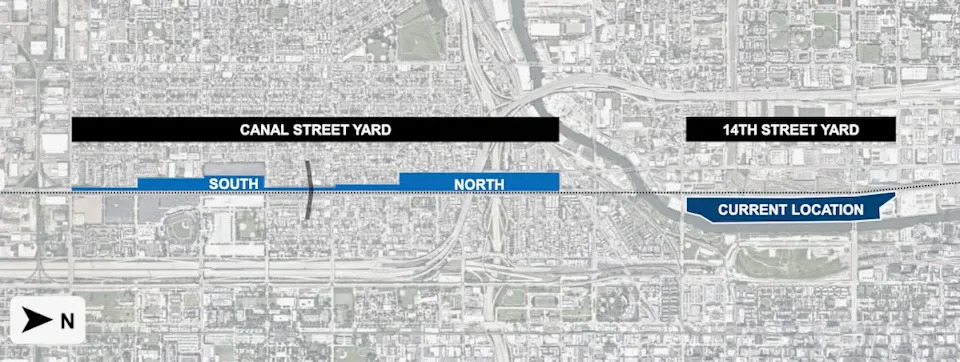
An illustration from an Amtrak presentation shows the current and future sites of its Chicago-area Maintenance faciilty. Amtrak
Under the parties' agreement, Canal Edge would build the new maintenance facility on land that includes Union Pacific's Canal Street Yard (UP has agreed to sell the site), then sell the finished facility to Amtrak. Once Amtrak takes ownership of the new facility, Canal Edge would gain control of the existing 14th Street land for redevelopment.
Financing, Costs and Ownership Notes
Amtrak recently received $572 million from the federal National Railroad Partnership Program to support the relocation. The full project is expected to exceed $900 million; Ishbia has committed more than $125 million of his personal capital. Canal Edge-affiliated entities have also purchased adjacent parcels (reported at about $20 million), and one Ishbia-led firm is reported to be pursuing roughly $1.8 billion in low-interest RRIF financing to support transit-oriented development and related railroad projects.
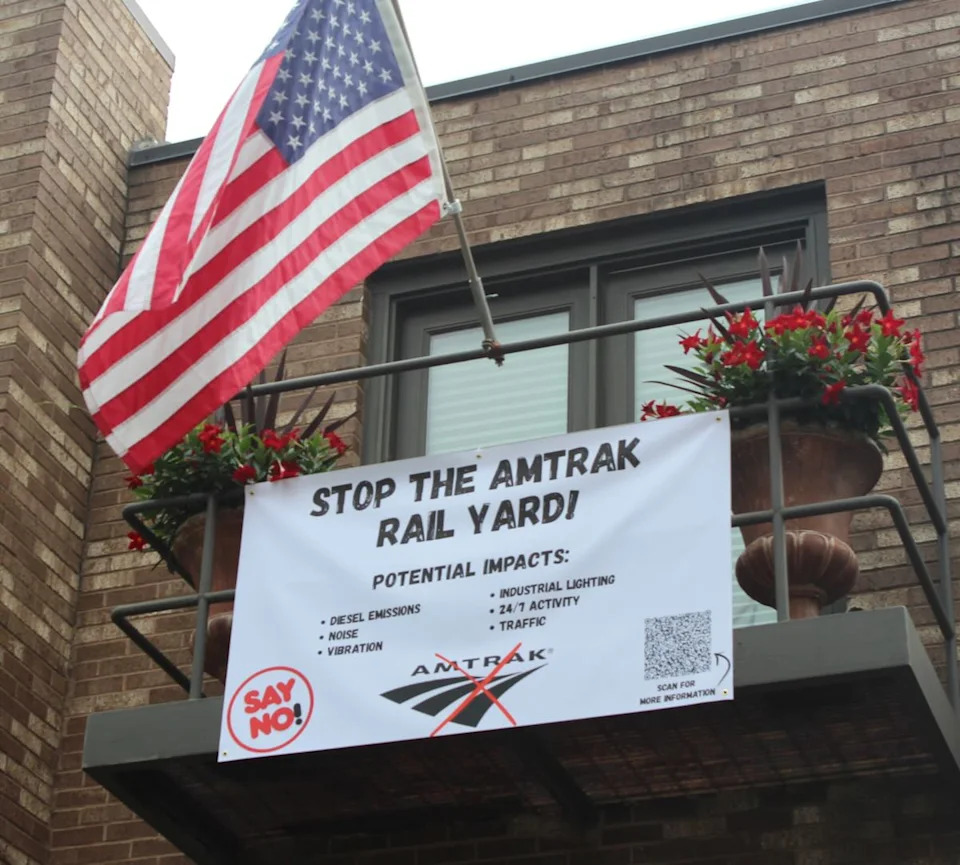
A sign on a residence in the 3200 block of South Canal Street calls for opposition to Amtrak's maintenance facility. The alley at the rear of the residence is across from the southern half of the planned facility. Bob Johnston
Project Status, Studies and Community Reaction
Canal Edge emphasizes that "The Railyards" is at the start of a multi-year planning and approval process. The proposed ballpark is described only as a "potential anchor" and would require detailed feasibility studies covering transportation, environmental impacts and other factors. Ishbia's press release notes he has an option to buy the White Sox after the 2034 season, but current Chairman Jerry Reinsdorf remains the franchise's sole decision-maker until then.
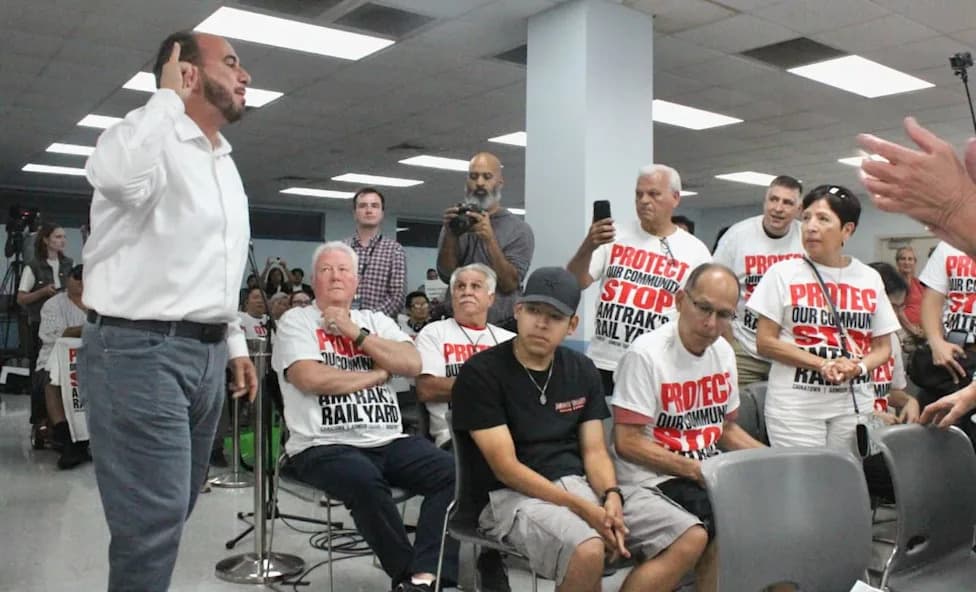
The relocation proposal has prompted opposition from Bridgeport residents near the proposed maintenance site. A Sept. 2 community meeting reported by Block Club Chicago drew more than 100 attendees who raised concerns about environmental impacts, noise and local traffic. In response, a project website created by a joint venture of construction firms FH Paschen and Harbour includes a Frequently Asked Questions section and community presentation materials intended to address neighborhood questions.
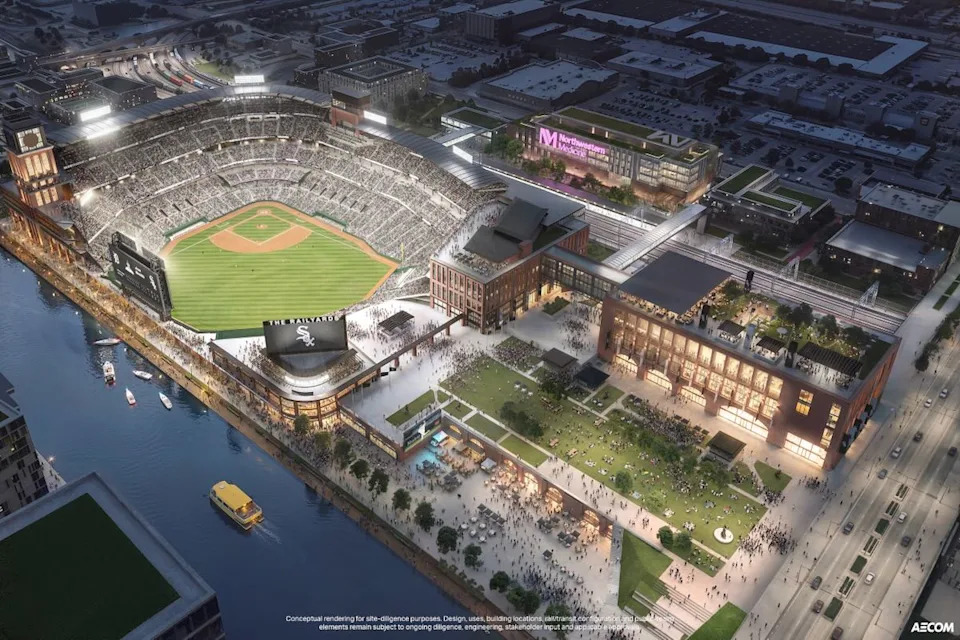
The Railyards development would also include residential and retail space, as well as a new Northwestern Medicine health care facility. Canal Edge/AECOM
Scale and Additional Development Notes
Renderings and materials first reported by Crain's Chicago Business suggest The Railyards could cover more than 80 acres, substantially larger than the roughly 47-acre footprint of the current Amtrak site. Crain's also reports Ishbia is in advanced talks with BNSF Railway to acquire air rights over the BNSF yard west of the main lines into Union Station to enable further development.
In a statement, Ishbia said: "The Railyards is about turning idle land into opportunity—for patients who need better access to care, for a team and its fans who deserve a dynamic riverfront home, and for a city that needs jobs, housing, and economic investment. This is a Chicago project, built by and for Chicagoans."
The project remains conceptual and contingent on multiple approvals, financing arrangements and community engagement. Canal Edge describes the effort as transforming underused rail and industrial land into a major economic opportunity for the city.
Reporting Contacts: To report news or errors, contact [email protected].
Help us improve.