The proposed $250 million sale of Union Pier has prompted a congressional provision to permanently "deauthorize" Tidewater Reach, which would remove federal responsibility for maintaining the channel's width and depth. Local maritime groups and the Charleston Area Harbor Safety Committee warn the change could push up to 5,000 shallow-draft vessels into deeper channels, increasing congestion and safety risks. The committee has requested a Coast Guard safety assessment and minimum channel dimensions of 650 feet by 24 feet. SC Ports and the buyer say the move would enable public waterfront access while preserving maritime uses, and the sale is expected to close next year.
Charleston Union Pier Sale Could Deauthorize Tidewater Reach, Harbor Users Warn of Safety Risks
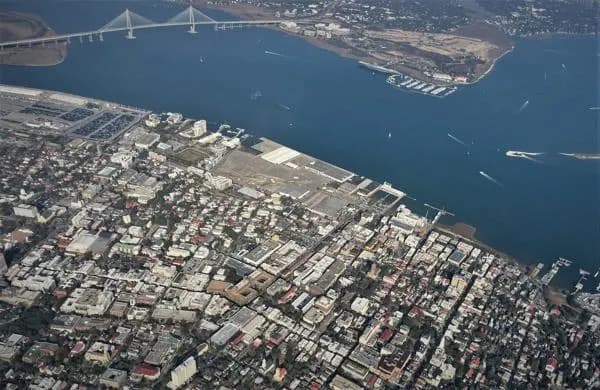
The federally maintained 0.7-mile Tidewater Reach navigation channel hugs the east side of the Charleston peninsula, roughly between Waterfront Park (center, right) and the north end of Union Pier Terminal (center). FIle/Robert Behre/Staff
The proposed $250 million sale of Charleston's Union Pier Terminal has prompted a congressional provision that would permanently "deauthorize" a small but commercially important channel in Charleston Harbor known as Tidewater Reach. If enacted, the federal government would no longer be obligated to maintain the channel's width and depth, a change maritime groups say could affect navigation and safety.
What the Change Would Do
The provision appears in the proposed 2026 Water Resources Development Act and was disclosed by U.S. Rep. Nancy Mace. According to the language, the deauthorization would take effect when S.C. Ports finalizes the sale of Union Pier to Marti Holdings LLC, an affiliate of investor Ben Navarro's Beemok holding company. Because the change was added to legislation, it bypassed the standard 90-day public review typically required for channel changes or deauthorizations.
Local Concerns and Requests
The Charleston Area Harbor Safety Committee has asked the U.S. Coast Guard to perform a formal safety assessment of Tidewater Reach before federal control is relinquished. The committee also urged regulators to maintain a minimum channel width of 650 feet and a depth of 24 feet if the waterway’s status is altered.
"Tidewater Reach remains an important component of Charleston Harbor's navigation system," the harbor committee wrote in its petition, noting that the reach provides navigational redundancy and helps keep smaller commercial vessels out of deep-water channels used by the Port's largest ships.
How the Channel Is Used
Tidewater Reach is an unmarked, roughly 0.7-mile stretch running along the east side of Charleston's southern peninsula between Waterfront Park and the north end of Union Pier. The Army Corps of Engineers lists it among 28 monitored reaches, bends, or turning basins in Charleston Harbor. By some estimates, as many as 5,000 shallow-draft and working vessels—small tugs, fuel barges and other commercial craft—use the reach each year. The channel also guided cruise ships to Union Pier until the terminal’s last call in late June.
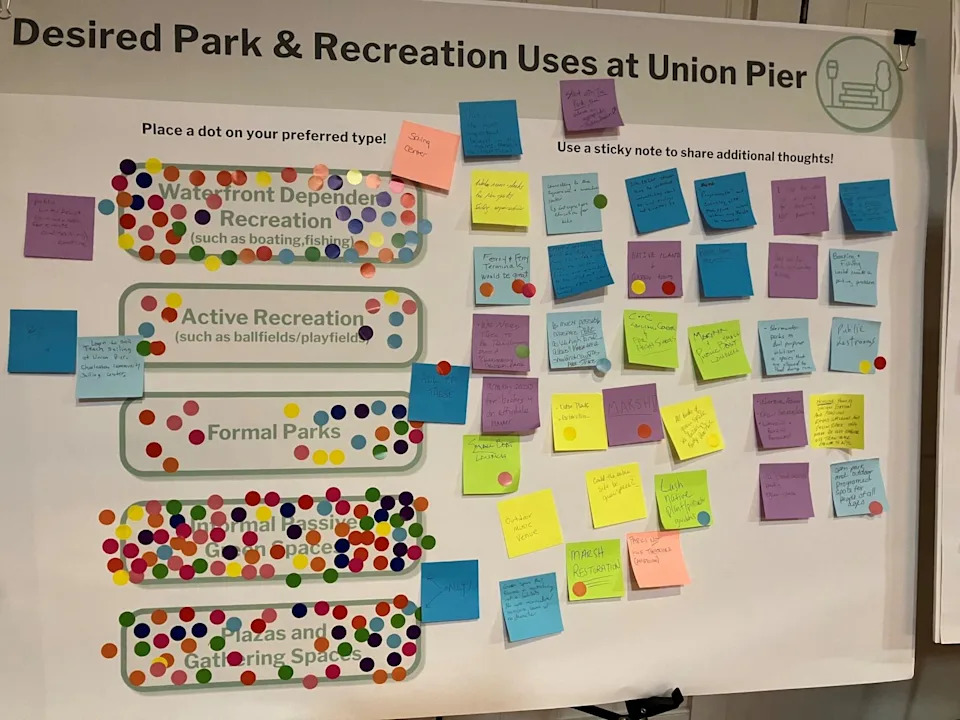
Waterfront access was high on the list of community requests at a January 2024 public feedback session about the redevelopment of Union Pier Terminal. File/Staff
Positions From Key Parties
A Beemok spokesperson said the deauthorization is necessary to open more of the waterfront to public access—something community members repeatedly requested during redevelopment feedback sessions—while still preserving Charleston's maritime economy. The company also said that, even without routine Corps maintenance dredging, the area would retain "adequate depth and space for recreational and commercial vessels to safely navigate" between Union Pier and Shutes Folly Island.
Cord Smythe, a longtime mariner and waterfront worker who supports redeveloping Union Pier, criticized the process for not engaging enough with regular waterway users. Smythe urged removing the provision from the water resources bill and restarting the conversation with broader stakeholder input.
The State Ports Authority says the Union Pier sale—expected to close next year—is not contingent on the Tidewater Reach deauthorization and that it is working with maritime industry partners to assess potential safety and traffic impacts. "We are engaged," an SC Ports spokesperson said. "The port would not do anything to negatively impact the safety of our waterways."
What Happens Next
With the 2026 Water Resources Development Act advancing through Congress, options for changing or delaying the provision are limited but not impossible. The Coast Guard has been asked to conduct a formal safety assessment; its findings, along with consultations among SC Ports, the Army Corps and local maritime stakeholders, will help determine operational and safety outcomes before the sale is finalized.
Key facts: the provision is tied to the Union Pier sale; the harbor committee has requested minimum dimensions (650 ft x 24 ft); and up to 5,000 small commercial vessels may rely on Tidewater Reach annually.
Help us improve.