On November 4, 2023, private security guard Ronald Portillo used blue‑front/red‑rear lights to signal an off‑duty New Mexico State Police captain to stop on I‑40 near Albuquerque. Activating such lighting on a private vehicle violates NMSA 66‑3‑835, and Portillo was cited for impersonating a peace officer under NMSA 30‑27‑2.1; the original citation was dismissed without prejudice for unsigned paperwork and later refiled after bodycam review. Officials advise drivers who cannot positively identify a police vehicle to slow down, use hazards, and go to a well‑lit, populated area while calling 911.
Security Guard Tried To Pull Over An Off‑Duty Cop On I‑40 — Broke New Mexico Law Before Police Arrived
A New Mexico Security Guard's Fake Traffic Stop Was Illegal Twice Over — Before Police Ever Showed Up
Driving onto Interstate 40 near Albuquerque on November 4, 2023, an off‑duty New Mexico State Police captain noticed a pickup behind him using blue lights in front and red lights in back — the universal cue that an official wants you to pull over. The vehicle, however, was driven by a private security guard, Ronald Portillo. The attempted stop of a real police captain became a striking bodycam case because Portillo had already violated multiple laws before troopers ever arrived.
What Happened
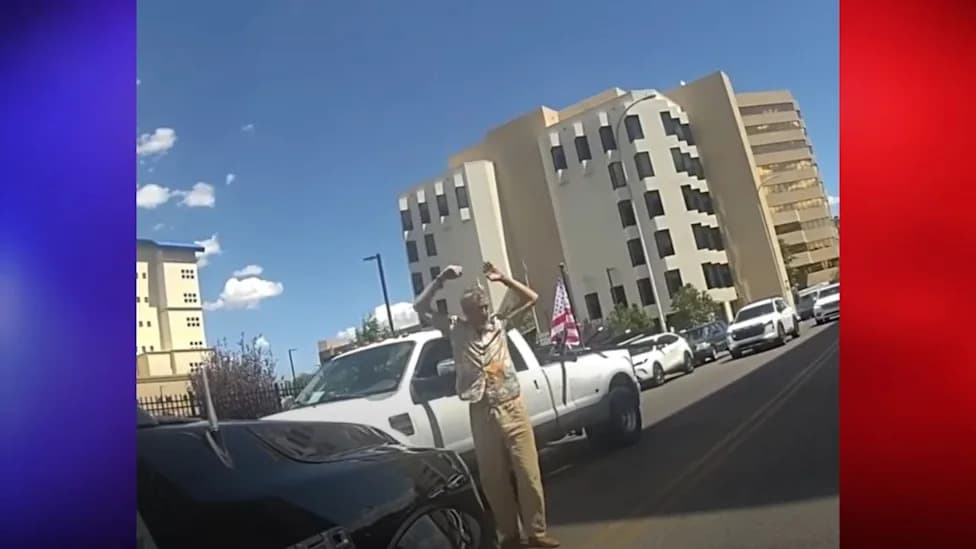
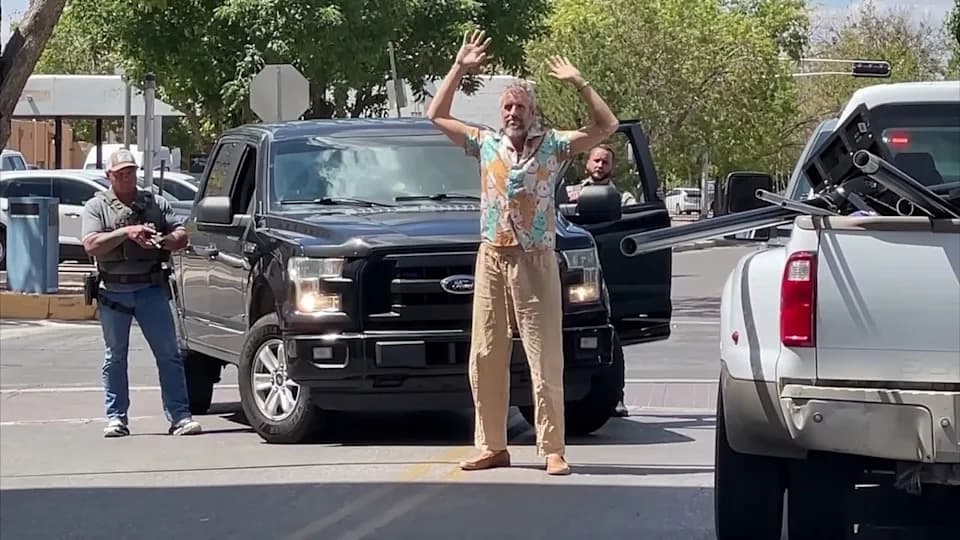
According to the captain’s account, captured on state police body‑worn cameras and relayed to responding units, a truck trailed him while displaying the red‑and‑blue lighting pattern. As he eased toward the shoulder, assuming the truck belonged to the Bernalillo County Sheriff’s Office, the lights turned off the moment he began to pull over and the vehicle kept driving — behavior inconsistent with a legitimate traffic stop. The captain radioed the incident, and troopers located Portillo after he continued on to a property he said he had been hired to patrol.
Officer Encounter
When troopers arrived, Portillo made the encounter difficult. He contended the captain hadn’t shown a badge before he activated his lights, declared
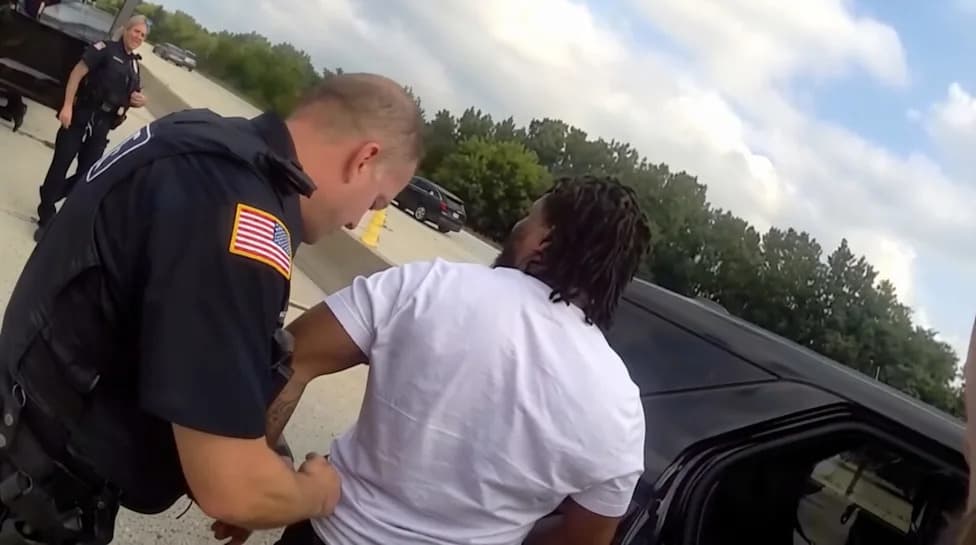
"I'm in charge of this right now,"invoked the shift of conversation onto private property, and refused to produce his driver’s license. State police warned that refusing to provide ID during a lawful stop could lead to arrest; Portillo resisted, was handcuffed, and later criticized the officers’ arrest technique while in custody.
Legal Violations
Crucially, the lighting on Portillo’s truck violated New Mexico law as soon as it was activated. Under NMSA 66‑3‑835, flashing lights of any color are broadly prohibited on privately owned vehicles except for a narrow list of exemptions — authorized emergency vehicles, school buses, snow‑removal equipment, and highway‑marking rigs. Forward‑facing red lights are restricted to fire department vehicles, law enforcement, ambulances, and school buses. A privately owned pickup equipped to resemble an official cruiser therefore creates an equipment violation independent of any impersonation claim.
Portillo identified himself as a PPO (Private Patrol Operator), a legitimate license category administered by New Mexico’s Regulation and Licensing Department. That license authorizes firms to patrol private lots and buildings but confers no authority to conduct traffic stops on public interstates or order drivers to pull over.
State police charged Portillo with impersonating a peace officer under NMSA 30‑27‑2.1, which criminalizes either exercising the functions of a peace officer without authority or falsely representing oneself as such with intent to deceive. A first conviction under this statute is a misdemeanor (potentially up to 364 days in jail and a fine up to $1,000); a second conviction escalates to a fourth‑degree felony.
Case Status
The initial citation was dismissed without prejudice because the officer who prepared it failed to sign the paperwork — a procedural defect that does not resolve the underlying facts. After reviewing bodycam footage, state police concluded probable cause remained and refiled the impersonation charge the following month. As of this writing, the refiled charge remains pending and will likely hinge on the same bodycam evidence.
Practical Takeaway For Drivers
No one is required to immediately pull onto the shoulder for a vehicle they cannot positively identify as law enforcement, especially at night or on a highway. Reasonable, commonly recommended steps include slowing down, activating your hazard lights, and proceeding to a well‑lit, populated location such as a gas station or police substation while calling 911 to verify whether a marked unit is trying to stop you. Agencies across the country give similar advice, and legitimate officers generally understand drivers taking these precautions.
Portillo’s case is a reminder that a light bar and tactical vest can momentarily mislead drivers, but they do not override state statutes or licensing limits. The bodycam footage that prompted the refiled charge will be central to the final outcome.
Note: State police bodycam video of the traffic stop exists and was used in the decision to refile charges.
Help us improve.