C2N Diagnostics’ PrecivityAD2 blood test has won FDA clearance for adults aged 40 and older, making it the first Alzheimer’s assessment approved for patients this young. The assay uses high‑resolution mass spectrometry to measure amyloid and tau biomarkers and combines two biomarker ratios into an Amyloid Probability Score 2 (APS2) ranging from 0–100. Intended to complement clinical evaluation rather than serve as a standalone screen, the clearance places C2N in competition with other blood‑based tests amid a rapidly expanding Alzheimer’s market.
FDA Clears C2N’s PrecivityAD2: First Blood Test Approved for Alzheimer’s Assessment in Patients Aged 40+

FDA clears C2N Diagnostics’ early Alzheimer’s assessment test
C2N Diagnostics has received clearance from the US Food and Drug Administration for its PrecivityAD2 blood test, marking the first time the agency has cleared an Alzheimer’s assessment test for use in patients as young as 40. The test is indicated for adults aged 40 and older who present with cognitive symptoms and are undergoing evaluation for Alzheimer’s disease or other causes of cognitive decline.
What the Test Does
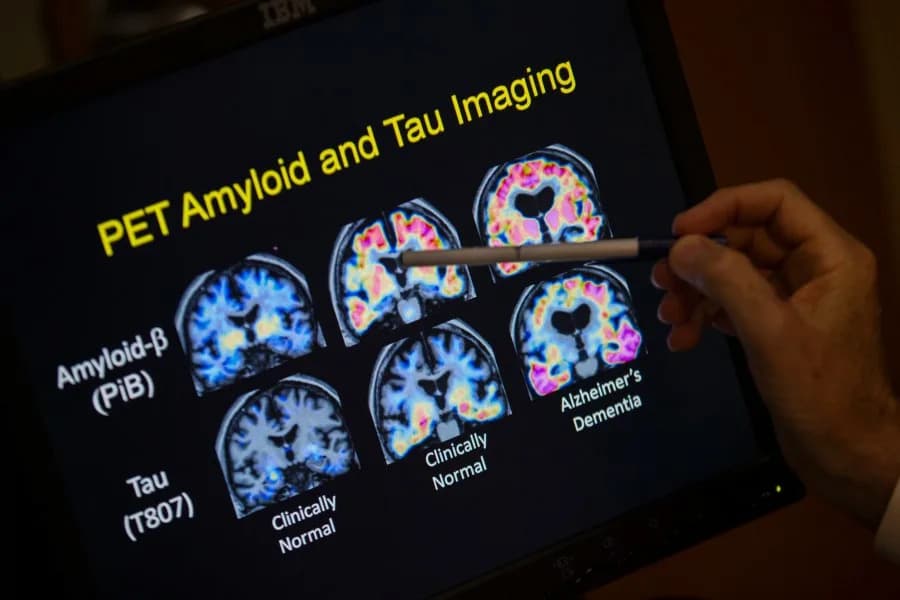
PrecivityAD2 is designed to complement a clinician’s evaluation—not to replace clinical judgment or serve as a population screening tool. It helps health care professionals identify patients who are more likely to have amyloid pathology, the abnormal accumulation and clumping of beta‑amyloid protein fragments associated with Alzheimer’s disease. Amyloid pathology, together with tau protein tangles, is a core pathological hallmark of the disease.
How It Works
The assay uses high‑resolution mass spectrometry (HRMS), a highly precise laboratory method, to quantify specific plasma beta‑amyloid and tau peptide isoforms. Results are expressed as two biomarker ratios: the Aβ42/40 ratio and the p‑tau217/np‑tau217 ratio (%p‑tau217). Those ratios are combined by a statistical algorithm to generate an Amyloid Probability Score 2 (APS2), a value from 0 to 100 that estimates the likelihood of amyloid pathology associated with Alzheimer’s disease.
Dr. Joel Braunstein, CEO of C2N Diagnostics: "The FDA clearance is a watershed moment for our company, the Alzheimer’s community, molecular diagnostics, and precision medicine. We believe PrecivityAD2 will play a vital role in health systems by helping to streamline and simplify the complex diagnostic pathway many patients face when dealing with serious memory concerns."
Clinical and Market Context
Research estimates that roughly 20 million US adults aged 65 and older — and thousands more between 45 and 65 — live with some form of cognitive impairment and could benefit from earlier, more precise diagnostic information. FDA clearance positions C2N’s test in direct competition with other blood‑based biomarker assays, such as Roche’s Elecsys pTau tests, which have also received recent regulatory milestones.
Interest in Alzheimer’s diagnostics has accelerated alongside regulatory approvals of disease‑modifying therapies in recent years, including Biogen & Eisai’s Leqembi and Eli Lilly’s Kisunla. Despite reimbursement challenges, industry analysis projects the Alzheimer’s market across the eight major markets (US, France, Germany, Italy, Spain, UK, Japan, China) to grow at a compound annual growth rate of about 21.8%, reaching an estimated $33 billion by 2033.
Limitations and Intended Use
PrecivityAD2 is intended to support clinical assessment by indicating the probability of amyloid pathology. It is not approved as a standalone diagnostic or population screening test. Final diagnosis and treatment decisions should integrate clinical evaluation, imaging, and other relevant tests as appropriate.
As with all diagnostic tools, clinicians should interpret APS2 scores in the context of patient history, examination, and additional biomarker or imaging results when available.
Help us improve.