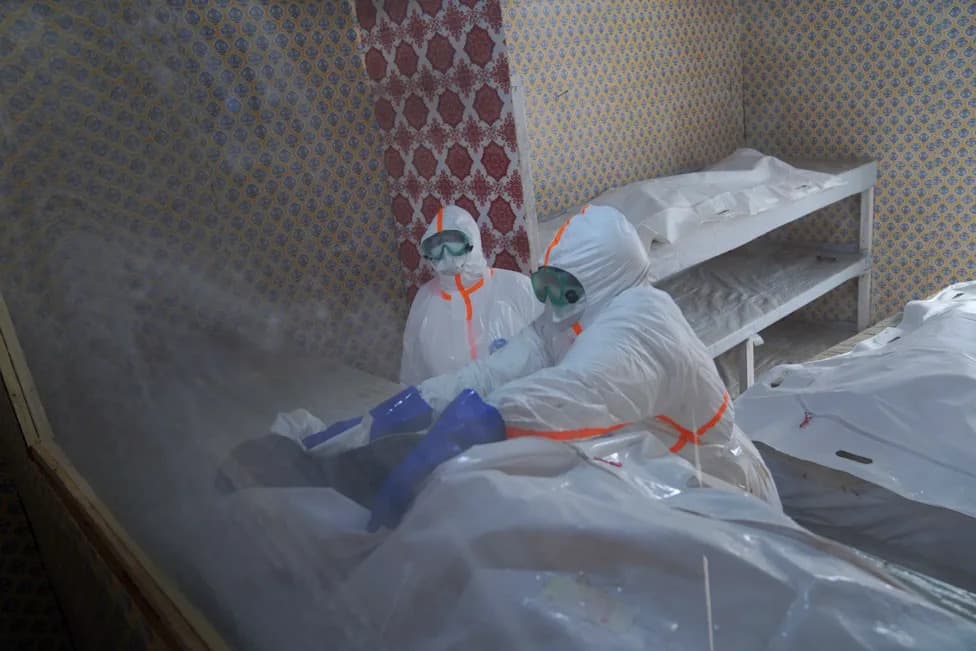
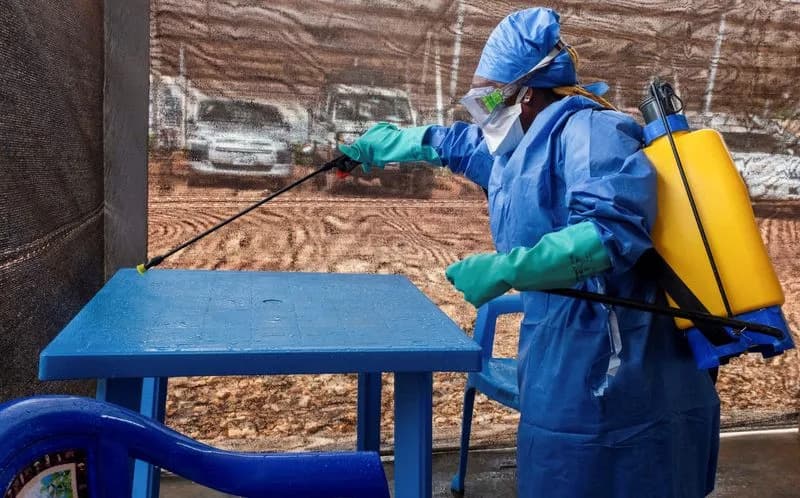
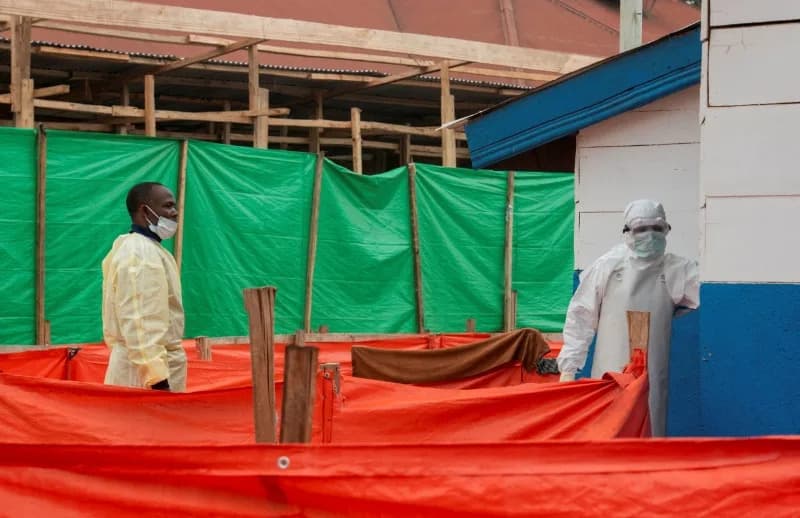
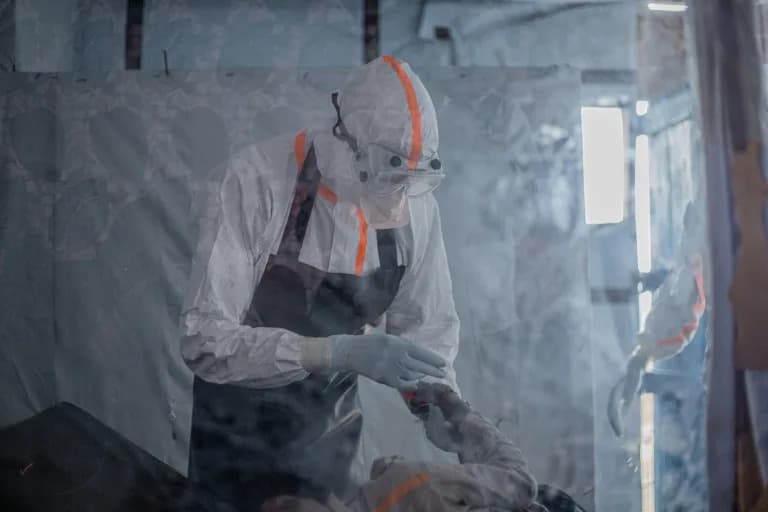
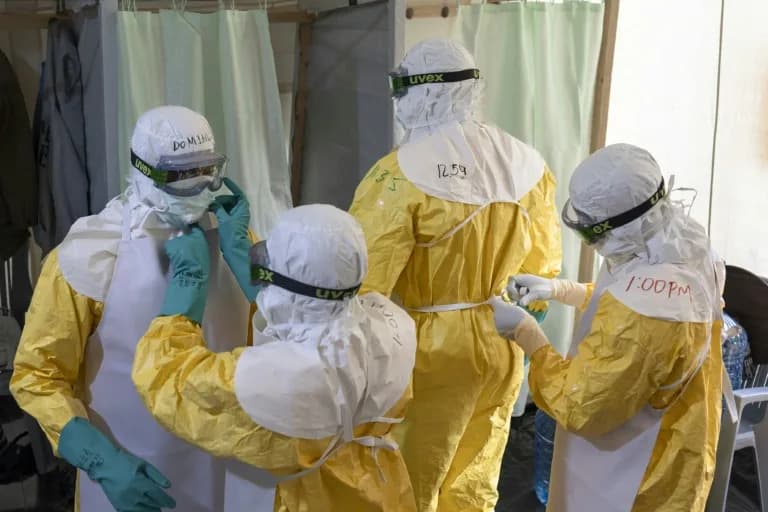
The WHO director-general warned the Ebola outbreak in the Democratic Republic of Congo is "far from being under control," with more than 5,000 cases and nearly 2,500 deaths in under 100 days. Experts from WHO and Africa CDC say the outbreak is spreading faster than previous epidemics and could become Africa's largest. Health specialists warn many cases and deaths are likely unreported and that deaths outside treatment centres indicate hidden transmission chains. Containment relies on rapid detection, contact tracing, safe burials and community engagement.
WHO: Congo Ebola Outbreak 'Far From Being Under Control' — 5,000+ Cases and Rising
FILE PHOTO - Doctors from various countries in East Africa train in safe practices at an Ebola treatment center as part of the tEACH project, carried out by experts from the Institute of Global Health and Berlin's Charité hospital. (is associated with: «WHO chief: Ebola outbreak 'far from being under control'») Eva Krafczyk/dpa
The Ebola outbreak in the Democratic Republic of Congo remains "far from being under control," World Health Organization (WHO) Director-General Tedros Adhanom Ghebreyesus warned at an emergency meeting on Tuesday. In just under 100 days authorities have recorded more than 5,000 cases and nearly 2,500 deaths.
Rapid Spread and Global Concern
"This is now the second-largest Ebola outbreak ever recorded, and it is moving faster than any previous Ebola outbreak," Tedros told the second meeting of the IHR Emergency Committee. The International Health Regulations set out countries' obligations for managing public-health risks that could cross borders.
"Every death like that points to a chain of transmission we have not yet found. Until every chain is found and broken, the epidemic will continue." — Tedros Adhanom Ghebreyesus
Unreported Cases and Community Transmission
Experts from the WHO and the Africa CDC warn the outbreak could develop into the continent's largest, potentially surpassing the 2014–15 West Africa epidemic that killed more than 11,000 people. Maximilian Gertler, a tropical medicine specialist at Berlin's Charité hospital, cautioned that the number of unreported cases remains large and that many infections and deaths may not be registered at all.
Gertler noted that the vast majority of recent cases had not previously been listed as contacts. Of particular concern are deaths occurring at home, in communities and outside treatment centres — signs of unseen transmission chains that hinder containment efforts.
How Ebola Spreads and What Helps Contain It
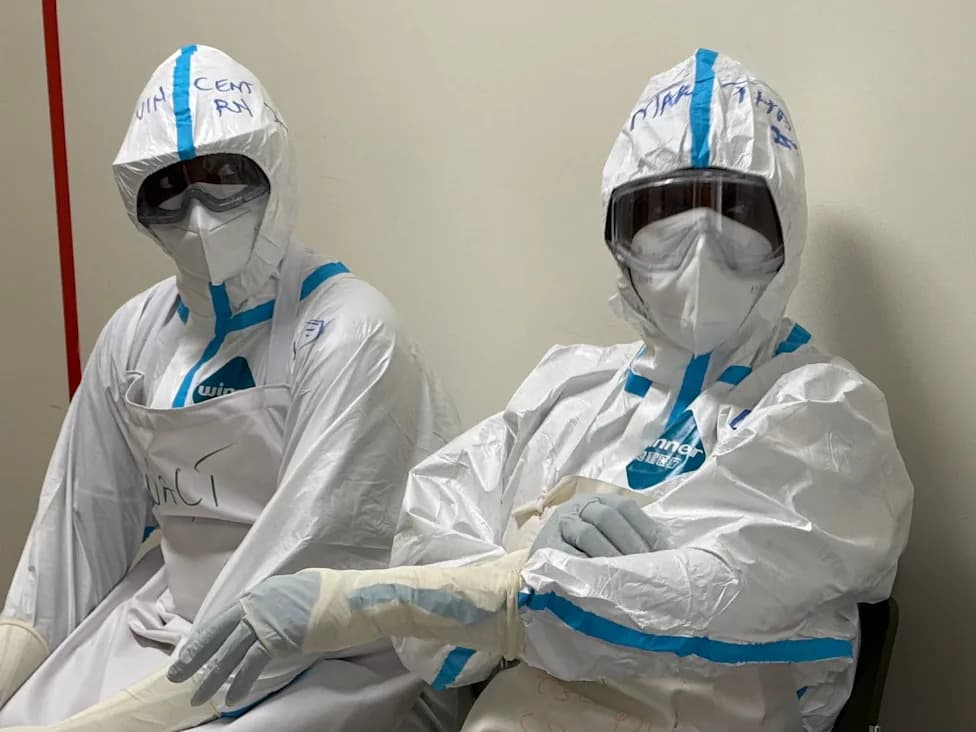
Ebola is a life-threatening viral disease transmitted through direct physical contact and exposure to infected bodily fluids. It typically causes high fever, severe diarrhoea and, in some cases, haemorrhaging. Containment depends on rapid case detection, thorough contact tracing, safe burials, community engagement and accessible treatment and vaccination where available.
What authorities say: Until every chain of transmission is found and interrupted, health officials warn the epidemic will continue to grow.
Help us improve.