This early-release study in Translational Psychiatry explored links between gut and oral microbiota and self-reported psychopathic traits in 200 adults. Several bacterial taxa—Allisonella, Prevotella and C. evryensis—were associated with higher scores, while T. vincentii correlated with lower scores. The authors stress key limitations: modest sample size, self-reported measures, single-site recruitment, and correlational data that do not establish causality. Larger, clinically assessed, and geographically diverse studies are needed to clarify directionality and relevance.
Gut Microbes Linked to Psychopathic Traits? Small Study Finds Correlations, Not Causation
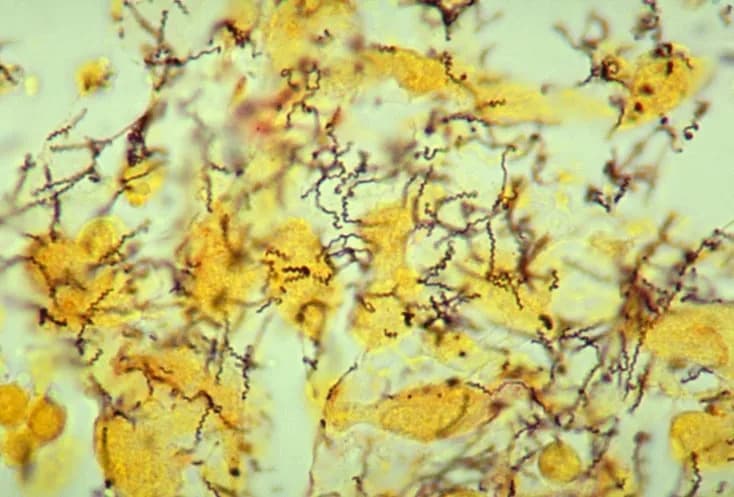
Treponema pallidum spirochetes under the microscope. The study linked lower psychopathy scores to higher levels of T. vincentii, an oral bacterium in the same genus | ©Image Credit: CDC/Dr. Edwin P. Ewing, Jr., Public Domain
A preliminary study published as an early-release paper in Translational Psychiatry suggests there may be associations between the composition of the gut and oral microbiota and self-reported psychopathic traits. The research, led by Carolina Costa of the University of Porto, analyzed microbiota samples alongside questionnaire-based measures in 200 adults.
Study Design
The team enrolled 200 participants who completed a validated questionnaire designed to measure subclinical psychopathic personality traits. Researchers collected saliva and fecal samples for microbiota profiling and drew blood to assess metabolic markers. As the authors note, this is among the first studies to investigate links between microbiota composition and psychopathic traits.
"We hypothesized that the composition of the gut and oral microbiota may be associated with subclinical psychopathic personality traits… To our knowledge, this is the first study to explore this association," the authors wrote.
Key Findings
There was no clear difference in overall microbial diversity between participants with higher versus lower psychopathy scores. However, several individual taxa showed associations with self-reported traits. The genera Allisonella and Prevotella, plus the species C. evryensis, were linked to higher psychopathy scores, while T. vincentii correlated with lower scores.
The researchers highlight that Allisonella has been previously associated with disease and inflammation, and that inflammation is implicated in various psychiatric conditions. Prior work connecting Prevotella to differences in brain regions involved in emotion, attention, and sensory processing may provide a possible biological context for that association.
Major Limitations
The authors emphasize several important caveats: the sample was modest (n=200), psychopathy measures were based on self-report rather than clinical diagnosis, and the study was conducted at a single site. Geographic and population differences could produce different results in other cohorts.
Crucially, the findings are correlational: "Finally, as findings are correlational, causality cannot be established, especially given the bidirectionality of microbiota-brain communication." It remains unclear whether microbiota influence psychopathic traits, or whether behavioral, dietary, or hormonal differences associated with those traits shape the microbiota.
Context And Next Steps
The suggestion that biology contributes to psychopathic features is not new—other research has identified shared brain-structure patterns among people with such traits, including prefrontal cortex pathways. To determine whether the observed microbial associations are meaningful or incidental will require larger, geographically diverse, clinically assessed, and ideally longitudinal studies that can better address directionality and confounding factors.
Bottom line: This study reports intriguing correlations between a few bacterial taxa and self-reported psychopathic traits, but limitations in sample size, measurement method, and study design mean these findings should be treated as preliminary.
Help us improve.