Germany's grain harvest is expected to fall about 7% to 41.9 million tonnes after a dry spring and a June heatwave, the German Farmers' Association (DBV) said. Losses vary widely by region, with southern and western areas worst affected and some farms reporting total crop failure. Winter rapeseed yields are down ~20% and winter barley ~4%; the apple crop is forecast to drop 17.9% from last year. Rising diesel and fertiliser costs and pest damage are intensifying financial pressure, prompting calls for emergency government aid.
German Farmers Warn Drought Will Cut Grain Harvest by About 7% to 41.9 Mt
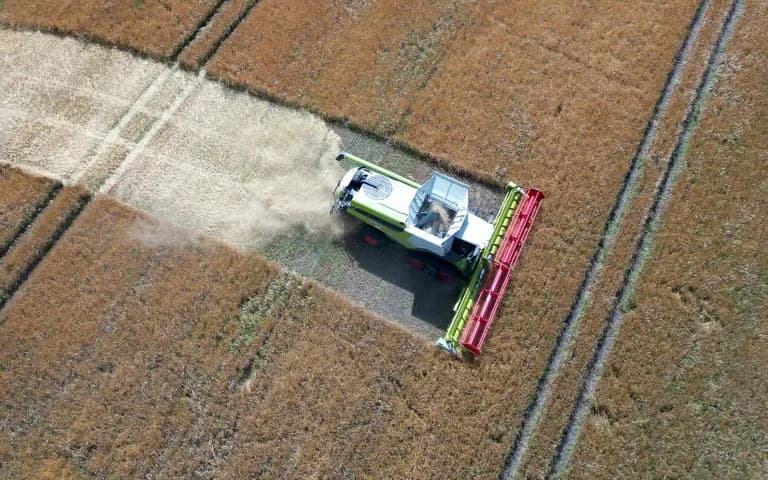
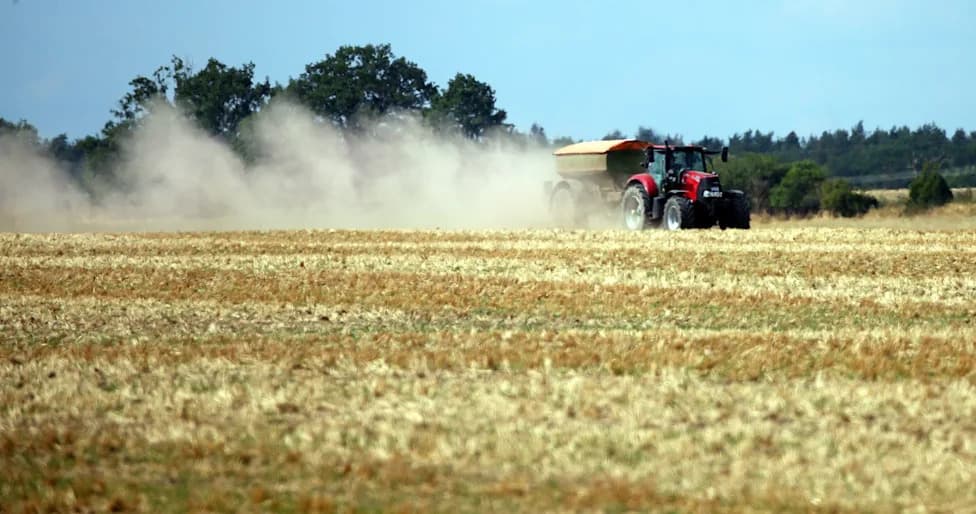
A combine harvester in Gross Machnow, eastern Germany, at the start of the country's harvest in early July (RALF HIRSCHBERGER)
Germany's grain harvest is forecast to shrink by roughly 7% this year to 41.9 million tonnes after months of intense drought and heatwaves, the German Farmers' Association (DBV) said on Tuesday.
DBV President Joachim Rukwied said an "overly dry spring and a heatwave in the second half of June" were decisive factors behind the association's projection of a below‑average harvest. The forecast is also about 1.5% below the five‑year average of 42.5 million tonnes.
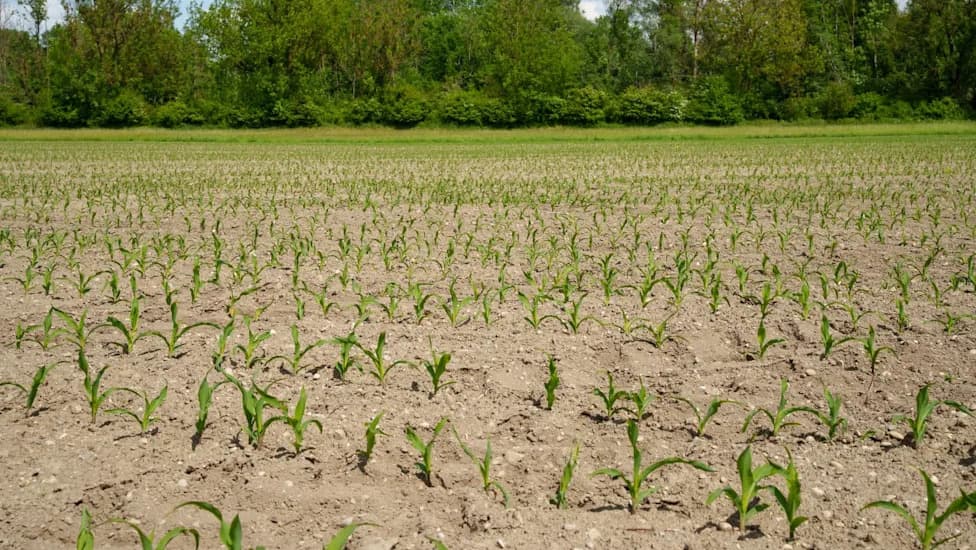
Much of Europe, including Germany, experienced record summer temperatures and limited rainfall, leaving rivers unusually low and large tracts of farmland parched. Rukwied noted "enormous regional differences," with farmers in southern and western Germany particularly hard hit — some reporting low yields and, in extreme cases, total crop failure.
The DBV warned that in regions where drought damage is severe it is now too late in the growing season to expect recovery from a change in the weather. Pest outbreaks also compounded losses, especially for some crops.
Crop-Specific Impacts
Winter rapeseed was the worst affected, with yields down about 20%, Rukwied said, partly because pests added to drought and heat damage. Winter barley performed better, with yields falling roughly 4%, a result attributed to a larger planted area this year and the fact that much of the crop had matured before the heatwave and could be harvested earlier.
Germany's Federal Statistical Office reported that the apple harvest is also expected to suffer: total apple output is forecast to drop 17.9% from last year's exceptionally large crop and to be down 5.4% compared with the decade average. The agency said recurring heatwaves and persistent spring and summer dryness in 2026 have caused many apples to fall prematurely, remain undersized, or suffer sunburn damage.
Financial Strain and Calls for Aid
The DBV highlighted rising input costs as a major additional burden. Global shortages of oil and other raw materials following the closure of the Strait of Hormuz during the Middle East conflict have pushed up prices for diesel, fertilisers and pesticides, squeezing farm liquidity.
"Overall, the poor harvest comes at a time of economic precariousness," the association said, noting that lower yields combined with low producer prices and higher input costs are placing severe strain on many farms.
Rukwied urged the German government to open an emergency aid programme that could include early payouts of farm subsidies, increased state support for fertiliser purchases and cuts to diesel fuel taxes to help farms weather the immediate crisis.
Outlook: Short-term weather relief will help only where damage is limited; in heavily affected regions farmers may face long-lasting economic consequences without rapid targeted support.
Help us improve.