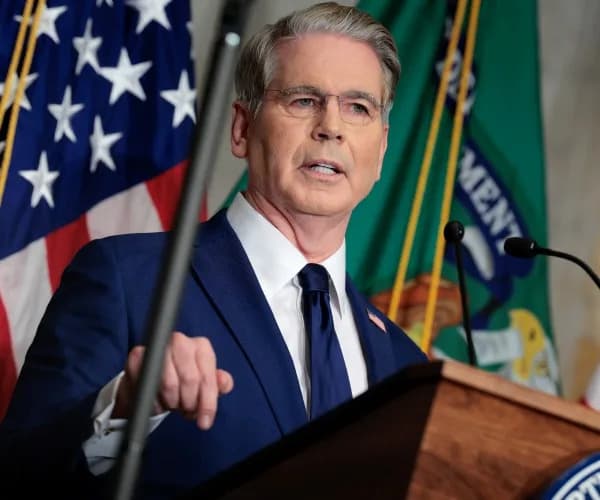
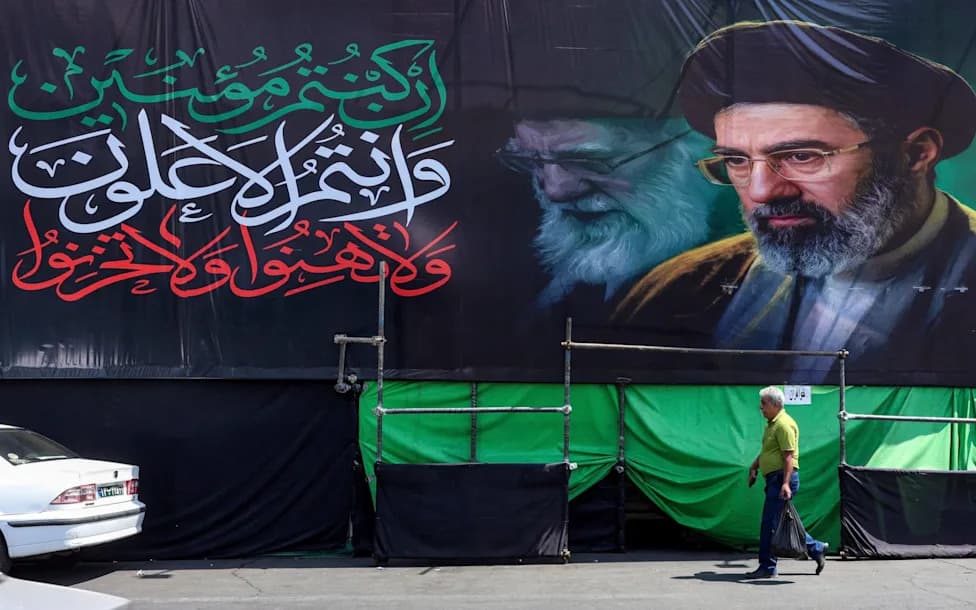
President Trump pledged stronger economic pressure on Iran after Treasury Secretary Scott Bessent warned of unprecedented measures. Since February the U.S. has layered maritime, energy and financial sanctions, including a naval blockade and more than 1,000 OFAC designations. Experts say Washington could further target Chinese "teapot" refiners and banks, step up enforcement against evasive networks, pursue difficult-to-execute land restrictions, or seek new tariff authorities pending congressional action.
Trump Vows Tougher Economic Pressure on Iran — What Tools Could the U.S. Use?
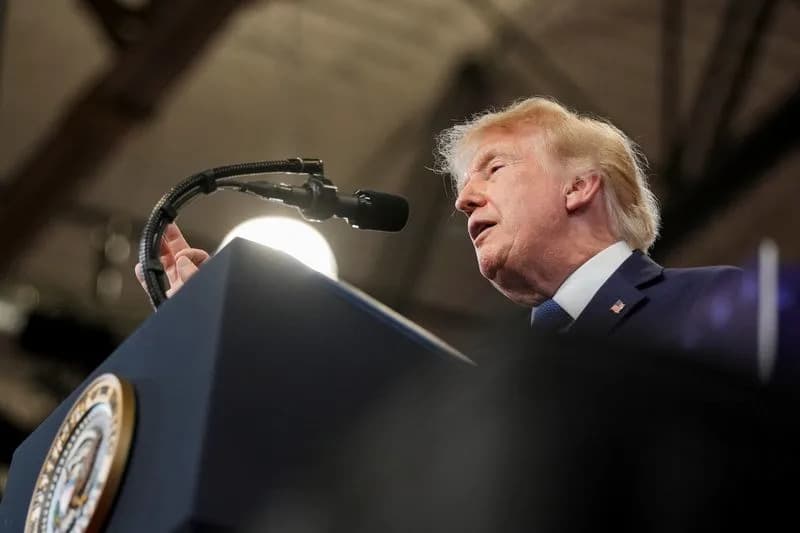
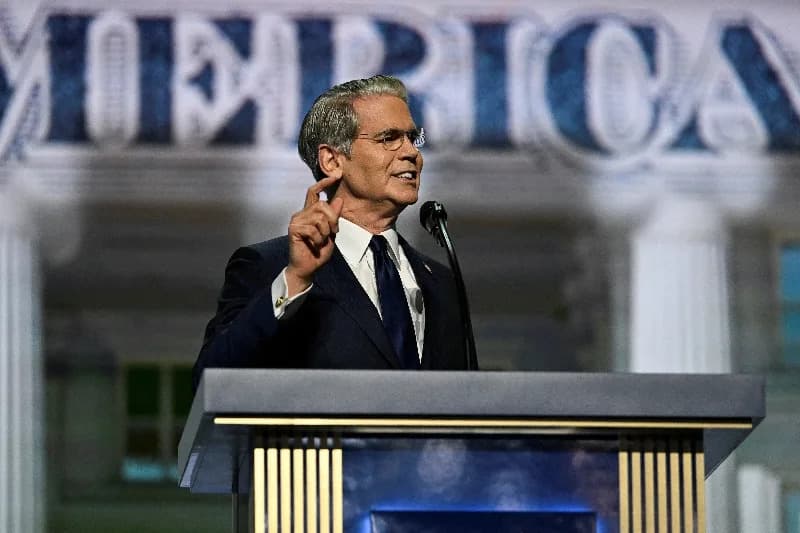
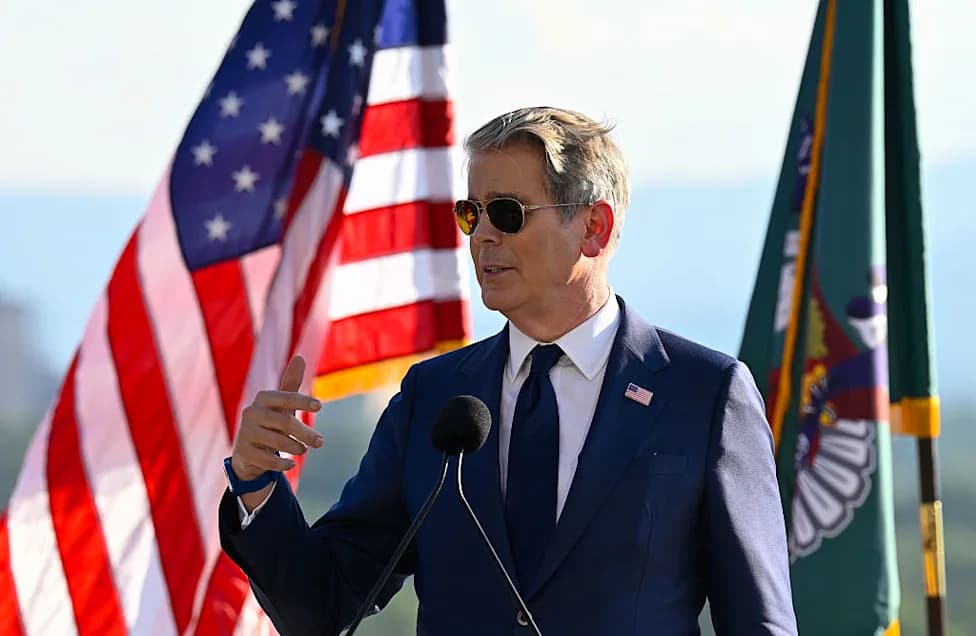
U.S. President Donald Trump delivers remarks at David S. Mack Center for Training and Intelligence in Garden City, New York, U.S., August 14, 2026. REUTERS/Ken Cedeno
WASHINGTON, Aug 16 (Reuters) - U.S. President Donald Trump pledged renewed economic pressure on Iran, following remarks from Treasury Secretary Scott Bessent that Washington would soon roll out measures “never been seen” before. The administration has expanded maritime, energy and financial measures since the outbreak of the Iran war in February, including a naval blockade and a steady stream of sanctions.
Data from the U.S. Treasury Department's Office of Foreign Assets Control (OFAC) shows more than 1,000 people, vessels and aircraft have been sanctioned since the start of Trump’s second term. Recent U.S. actions have targeted Iran’s shadow oil fleet, shipping insurers, entities linked to weapons procurement and some digital currency platforms — authorities say they froze an estimated $500 billion in Iran-linked cryptocurrency.
Options the Administration Could Pursue
SANCTIONS ON CHINESE "TEAPOT" REFINERS
Independent Chinese refiners — commonly called "teapots" — account for roughly a quarter of China’s refining capacity and often operate on thin margins. China currently takes more than 80% of Iran’s seaborne oil (2025 data from Kpler), and many shipments are absorbed by these smaller buyers. Because teapots have limited exposure to the U.S. financial system, they are somewhat insulated from U.S. pressure, though they remain vulnerable to secondary measures that penalize entities aiding a primary sanctions target.
SANCTIONS ON CHINESE BANKS
OFAC has already targeted smaller China- and Hong Kong-based firms accused of processing billions linked to Iranian oil. Treasury has warned two larger Chinese banks that they could face secondary sanctions if Iranian funds are found transiting their systems, though those institutions have not been publicly named or designated. Sanctions on larger banks could chill major financial intermediaries, but could also risk diplomatic or economic retaliation from Beijing.
ENFORCEMENT AGAINST EVASION — A "WHACK-A-MOLE" CHALLENGE
U.S. officials can continue to designate Iranian individuals and networks — and third parties in China, the Gulf and elsewhere — that help Tehran evade restrictions and generate revenue for its war effort. Experts caution this approach can resemble "whack-a-mole," with Tehran setting up new entities to replace those sanctioned. Still, Treasury officials appear poised to sharpen enforcement against oil shippers, buyers and currency exchangers that enable Iran’s trade.
AVIATION AND OTHER TARGETED MEASURES
Analysts say further aviation sanctions are possible to degrade Iran’s ability to move goods, particularly after the U.S. naval blockade of shipping through the Strait of Hormuz. Additional designations could aim at logistics chains and service providers that facilitate Iran’s imports and weapons procurement.
LAND BLOCKADE — LOGISTICAL AND POLITICAL HURDLES
Some U.S. and Israeli officials have proposed a land blockade, which would require cooperation from Iran’s neighbors — Iraq, Turkey, Pakistan, Afghanistan, Turkmenistan, Azerbaijan and Armenia. The U.S. has varying degrees of influence with many of those governments; Afghanistan’s mountainous border would be especially difficult to police. A land blockade could sharply curtail imports of food, energy and textiles, but experts warn it would be hard to implement and might not produce the desired internal political pressure in Iran.
SECONDARY TARIFFS AND LEGISLATIVE TOOLS
President Trump has threatened tariffs on countries that do business with Iran, but the legal basis for such measures faced hurdles in the courts. The U.S. Senate recently passed a sweeping Russia sanctions bill that includes new Iran measures and would grant the president expanded tariff authorities that could be used against countries assisting Iran’s commerce or weapons procurement. That legislation still needs House approval, where tariff provisions could face bipartisan opposition.
Expert View: Brett Erickson of Obsidian Risk Advisors described repeated designations as cyclical — Tehran often replaces sanctioned networks — while Miad Maleki of the Foundation for Defense of Democracies suggested enforcement may be stepped up against shippers, buyers and exchangers enabling Iran’s imports.
(Reporting by Andrea Shalal; Editing by Sergio Non and Sanjeev Miglani)
Help us improve.