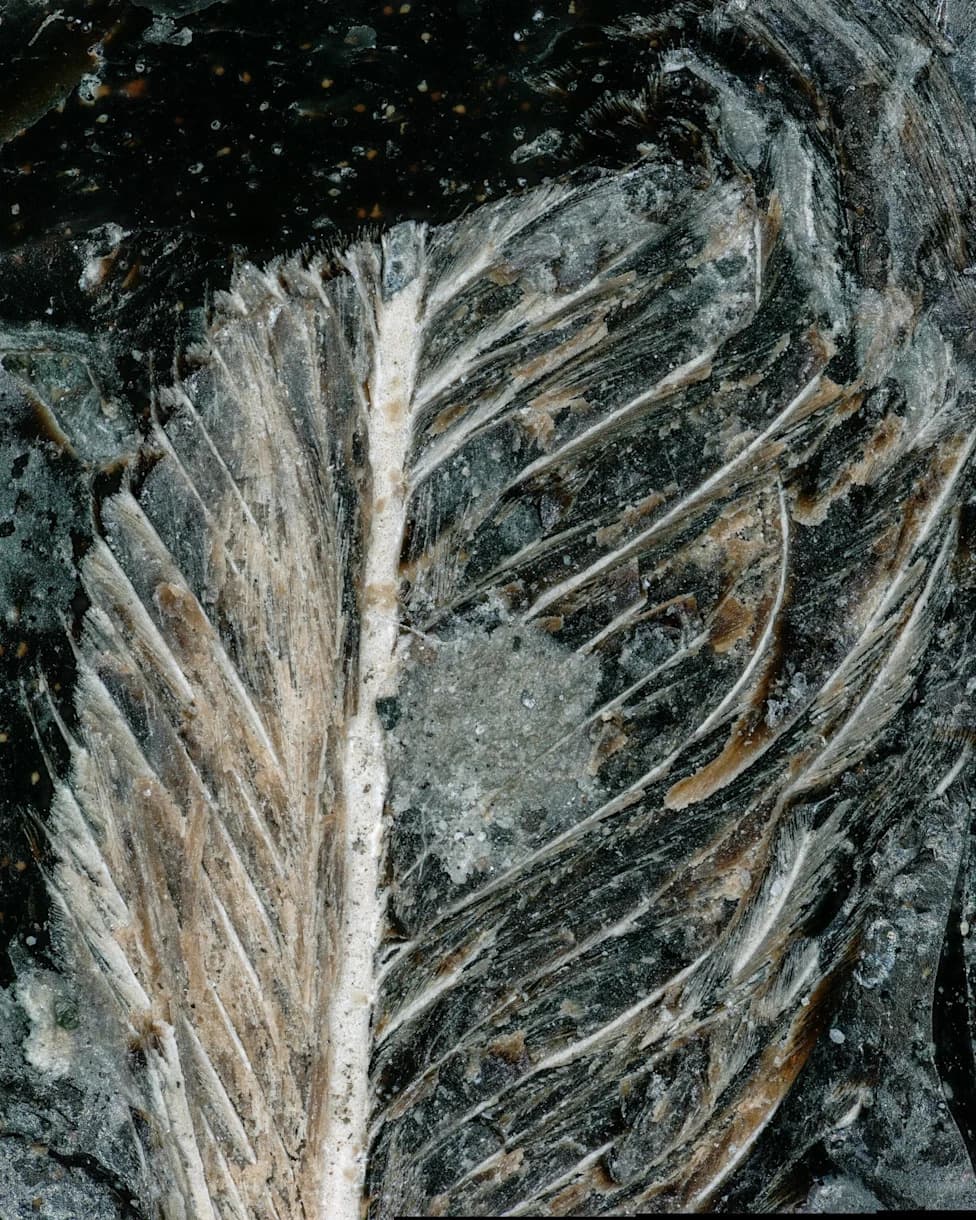
Researchers report a 125-million-year-old juvenile dinosaur, Haolong dongi, from China that appears to bear hollow, quill-like spikes projecting from its skin. Exceptional soft-tissue preservation—down to individual skin cells—allowed the team to reconstruct the spikes’ internal structure using X-ray scanning and high-resolution histology. Possible functions include defense, thermoregulation, or sensory roles, but the specimen’s juvenile status means it is unclear whether adults retained these spikes.
Juvenile Chinese Dinosaur Fossil Reveals Hollow, Quill-Like Spikes
Photo Credit: iStock
Scientists studying a 125-million-year-old juvenile dinosaur fossil from China report a surprising anatomical feature: hollow, spike-like projections arising from the skin that resemble porcupine quills. The specimen, formally named Haolong dongi, preserves soft tissue at an unusually high level of detail—down to individual skin cells—offering fresh insight into dinosaur integuments and their evolution.
Exceptional Preservation and Significance
This fossil preserves microscopic soft-tissue structures that rarely survive fossilization, making it especially valuable. The find was described in a paper published in Nature Ecology & Evolution and highlighted by outlets including Daily Galaxy. Because most paleontological knowledge is based on bones, specimens that retain skin, scales, feathers or other soft tissues can reveal how extinct animals lived, defended themselves and regulated temperature.
What the Spikes Look Like
The projections appear hollow and quill-like, projecting from the skin rather than from modified scales or feathers known in other dinosaurs. Researchers assigned the specimen to the broad group Iguanodontia, a lineage of beaked herbivores, but the spikes represent a body structure not previously documented in that group or in other dinosaur lineages.
Possible Functions
The team proposed several potential roles for the hollow spikes: they might have served as a defense mechanism similar to porcupine quills; increased surface area for thermoregulation; or functioned as sensory structures to detect nearby movement. At present these interpretations are hypotheses that require additional specimens and testing.
Methods Used
Researchers from multiple institutions examined the fossil with X-ray scanning and high-resolution histological analysis—cutting ultra-thin tissue sections and studying them under a microscope—to reconstruct the spikes’ internal organization and inspect cellular-level details.
Unresolved Questions and Next Steps
A key uncertainty is that the described specimen is a juvenile, so scientists do not yet know whether adult Haolong dongi retained the hollow spikes or lost them during growth. The team notes that additional material from museum collections and new excavations may reveal whether these structures were widespread or limited to juveniles or particular species.
Context
The species name honors Chinese paleontologist Dong Zhiming, a major figure in documenting China’s rich dinosaur record. Continued study of exceptionally preserved fossils will help clarify the diversity of integumentary structures among dinosaurs and how those structures functioned in ancient ecosystems.
Help us improve.