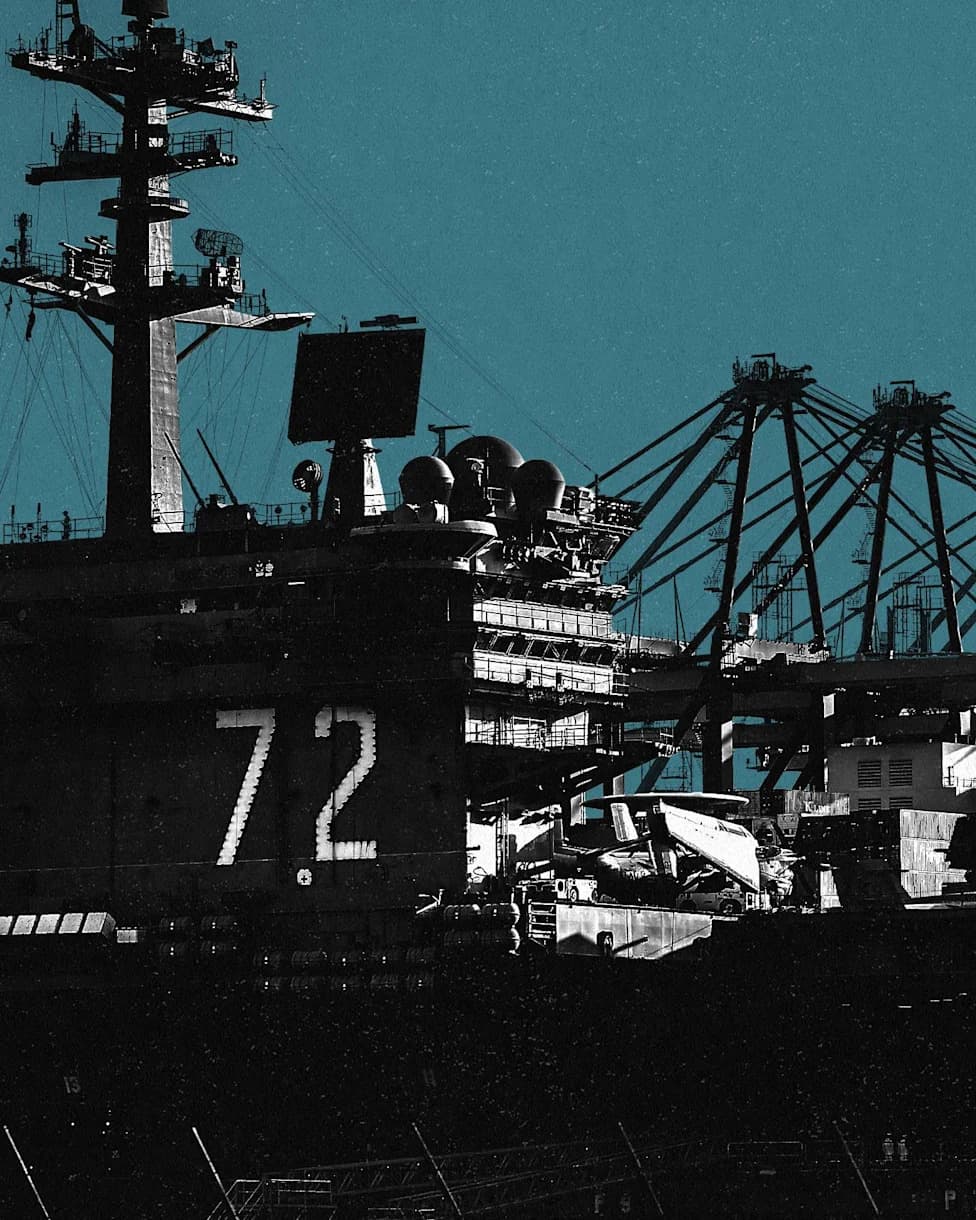
US officials say a naval blockade of Iranian ports can be sustained "indefinitely" by rotating ships, while Treasury officials promise unprecedented economic measures. Reports of severe strain aboard the USS Abraham Lincoln after nearly seven months at sea have prompted congressional inquiries and denials from the Pentagon and CENTCOM. Tehran insists
US Says It Can Sustain 'Indefinite' Blockade Of Iran — Strains Mount On USS Abraham Lincoln
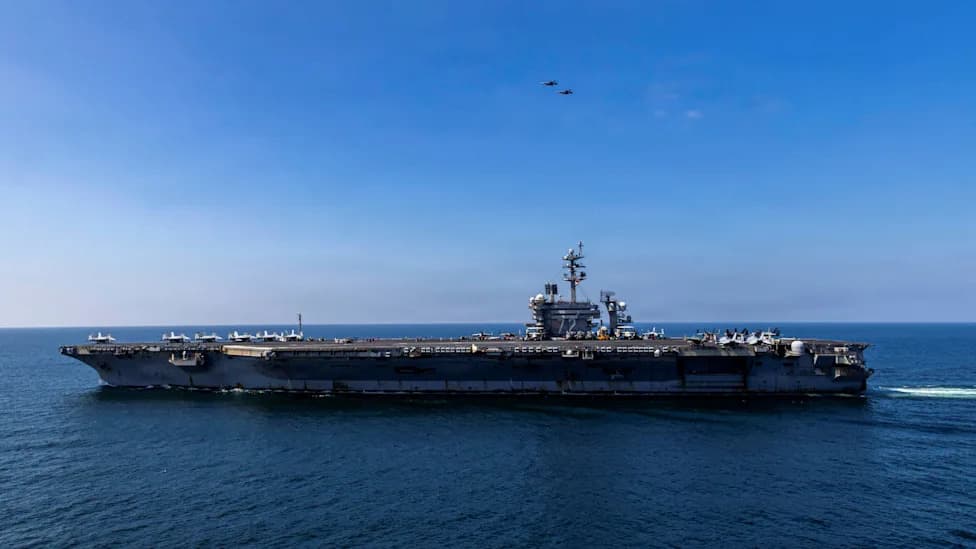
The USS Abraham Lincoln pictured in March, 2026 [US Navy/Reuters]
The United States says it can maintain an "indefinite" naval blockade of Iranian ports and is preparing unprecedented economic measures to further isolate Tehran, even as diplomatic talks remain stalled. At the same time, reports of declining morale and mental-health problems aboard the aircraft carrier USS Abraham Lincoln have prompted urgent congressional scrutiny and rebuttals from the Pentagon.
What US Officials Are Saying
Defense Secretary Pete Hegseth told reporters the US Navy can keep a sustained presence in the region "indefinitely" by rotating ships in and out. Treasury Secretary Scott Bessent said the administration plans to announce economic steps "that have never been seen in the history of economic isolation on a country," and described the measures as paired with the naval blockade to squeeze Iranian trade.
Allegations About Conditions Aboard USS Abraham Lincoln
Two Navy-focused outlets, Navy Times and Stars and Stripes, published accounts from family members alleging plunging morale, worsening mental health and at least one attempted overboard incident on the carrier, which left San Diego in November with more than 5,000 sailors and Marines. Senator Richard Blumenthal has written to Secretary Hegseth saying the carrier has been "continuously at sea for a record length of nearly seven months," and raised concerns about water contamination, supply shortages, safety incidents and disrupted mail delivery.
"These reports warrant immediate attention," Blumenthal wrote, asking whether the Navy can sustain the current operational tempo without degrading readiness and the wellbeing of service members.
The Pentagon and US Central Command (CENTCOM) have denied reports that sailors were killed aboard the ship and disputed some of the media accounts. CENTCOM said no service members aboard the carrier have died and that a sailor who fell overboard on August 3 was recovered.
Congressional Reaction
Senators and members of Congress, including Senate Minority Leader Chuck Schumer and Representative Mike Levin, have publicly demanded answers. Some lawmakers have called for leadership changes at the Defense Department, while others have pressed for more transparent reporting and immediate relief plans for the crew.
Operational Limits And Maintenance
Retired naval officers and analysts warn that prolonged deployments erode readiness. Harlan Ullman, a retired senior naval officer, emphasised that nuclear-powered carriers and their advanced systems require routine in-port maintenance that cannot be fully replicated at sea. Extended rotations may reduce a ship's ability to conduct repairs and sustain complex weapon and propulsion systems.
Economic Pressure And Tehran's Leverage
Washington aims to cripple Iran's oil revenues and broader economy; analysts say the blockade has hit Tehran's crude exports and that some estimates put lost oil revenue at roughly $6 billion since the blockade began in April, a figure cited in media reporting and disputed by Iranian authorities. Tehran, for its part, insists the Strait of Hormuz remains closed until its conditions are met and has threatened to use regional proxies and other asymmetrical measures to counter the blockade.
Iran's Persian Gulf Strait Authority posted on X: "The Strait of Hormuz remains blocked and will not be reopened until Iran's conditions are accepted."
What Experts Say
Analysts warn both sides hold significant leverage. The US controls substantial naval power and sanctions tools, while Iran can exploit the strategic chokepoint of the Strait of Hormuz and mobilise allied proxy groups to disrupt regional energy exports. Some experts caution that economic pressure alone may not force rapid political change in Tehran because Iran's leadership is insulated from popular pressure.
Outlook
The blockade's durability depends on multiple variables: the US ability to maintain long-term forces at sea without degrading readiness or morale, the effectiveness and international reach of added economic measures, and Iran's willingness to escalate through attacks on regional infrastructure or by empowering proxies. For now, the situation remains fluid and heavily dependent on operational constraints, diplomatic moves and potential escalation dynamics.
Help us improve.