President Trump signed an executive order directing that the combined MMR vaccine be offered as three separate single-disease shots once available domestically. However, no single-disease MMR vaccines are currently licensed in the U.S., and manufacturers and experts say developing, testing and approving three separate products could take many years—potentially up to a decade. Public-health authorities endorse the combined MMR shot to reduce missed doses, and experts warn the order could increase vaccine hesitancy and risk outbreaks.
Experts: Trump's Order To Split MMR Could Take Years — Possibly Up To A Decade
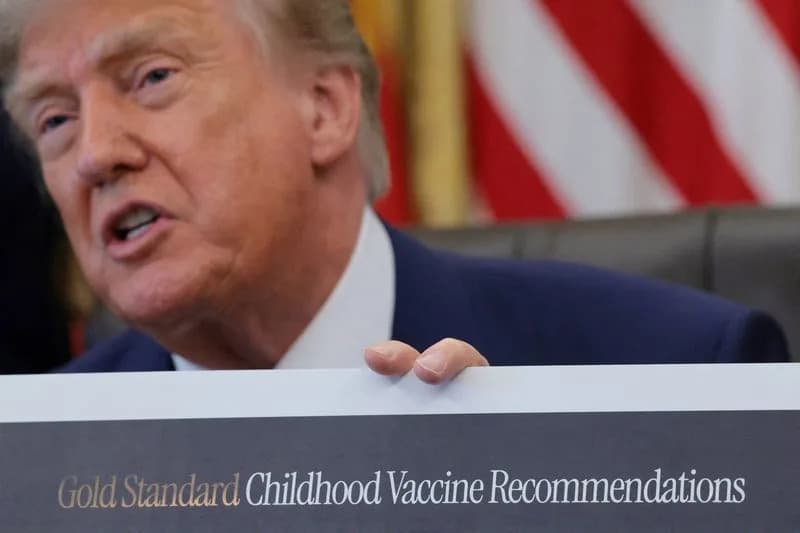
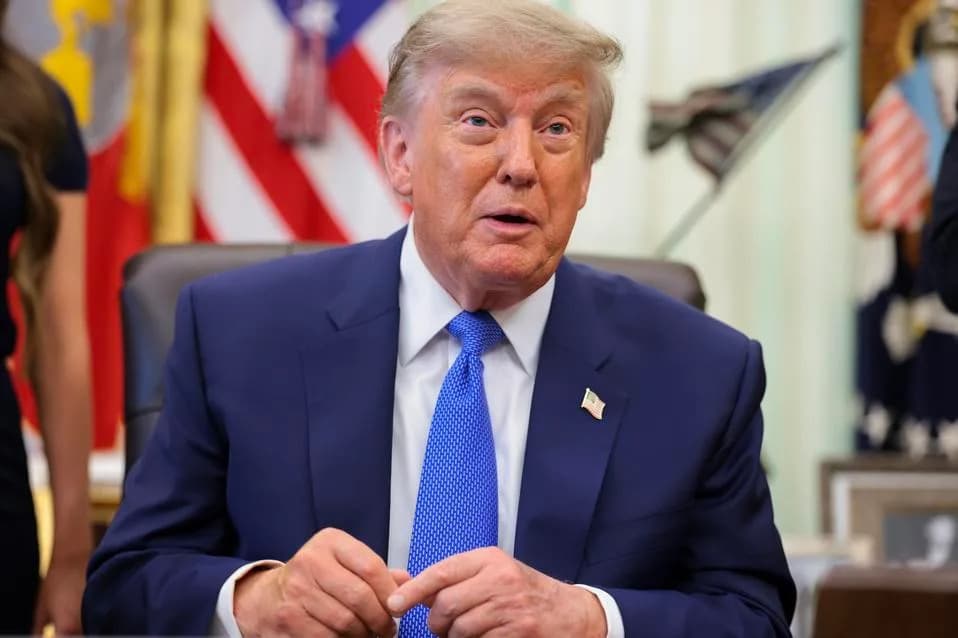
U.S. President Donald Trump speaks during an event to sign an executive order regarding vaccine flexibility, in the Oval Office at the White House in Washington, D.C., U.S., August 10, 2026. REUTERS/Kylie Cooper
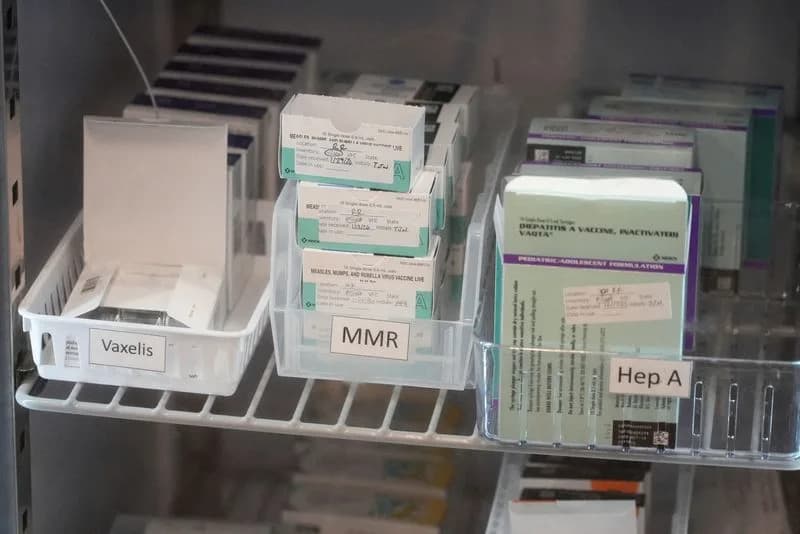
President Donald Trump has signed an executive order directing that the combined measles-mumps-rubella (MMR) vaccine be offered as three separate single-disease shots once such products are available in the United States. Experts and vaccine manufacturers say there is an immediate and substantial obstacle: no single-disease MMR vaccines are currently licensed in the U.S., and creating, testing and approving three separate products could take many years, possibly up to a decade.
Regulatory and Manufacturing Hurdles
Only two companies — Merck & Co. and GlaxoSmithKline (GSK) — hold U.S. licenses for the combined MMR vaccine. Merck stopped producing single-disease versions in the U.S. in 2008, and single-component MMR shots are not routinely used in many other countries.
Merck and GSK have both said there is no peer-reviewed scientific evidence showing a health benefit from separating the combined MMR shot, and pointed to decades of safety data supporting the combined formulation. Merck warned that "even under current expedited review pathways, it could take years — potentially as many as 10 — to meet the safety and efficacy requirements to obtain FDA approval and then begin manufacturing and commercialization" of single-disease vaccines.
Former FDA Chief Scientist Jesse Goodman noted that approval would involve not only clinical testing but also regulatory review of manufacturing processes. "They'd be making three times as many vials or vaccines and filling three times as many," he said, adding that manufacturers don’t typically have idle filling lines to absorb that workload and might need to retool facilities or build new capacity.
Public-Health Implications
Health authorities including the Centers for Disease Control and Prevention (CDC) and major medical groups have long recommended the combined MMR vaccine because it reduces the number of injections children receive and lowers the risk that a child will miss protection against one of the three diseases.
At a press conference, President Trump reiterated suggestions that vaccines could be linked to autism — a claim that contradicts extensive scientific evidence. Several public-health experts warned that the executive order could increase vaccine hesitancy and leave more children vulnerable to measles, mumps and rubella outbreaks.
"They wouldn't be able to do that probably for another 10 years, and there's no indication that they have any interest in doing that," said Dr. Andrew Racine, president of the American Academy of Pediatrics, referring to manufacturers producing separate MMR components.
Dorit Reiss, a vaccine-policy scholar and law professor at UC Law San Francisco, noted that licensing new vaccines typically takes at least 10 to 18 months in favorable circumstances, and industry players might simply wait out the current administration rather than invest in a costly, uncertain development process.
Political and Market Response
A White House official said the administration plans to work with the private sector and rely on market-based solutions to expand parents' options over time. Industry leaders, however, have signaled that scientific evidence, regulatory timelines and economic considerations make rapid implementation unlikely.
Experts emphasize that any shift in policy should be guided by science and public-health best practices to avoid undermining vaccination coverage and community protection against preventable diseases.
Help us improve.