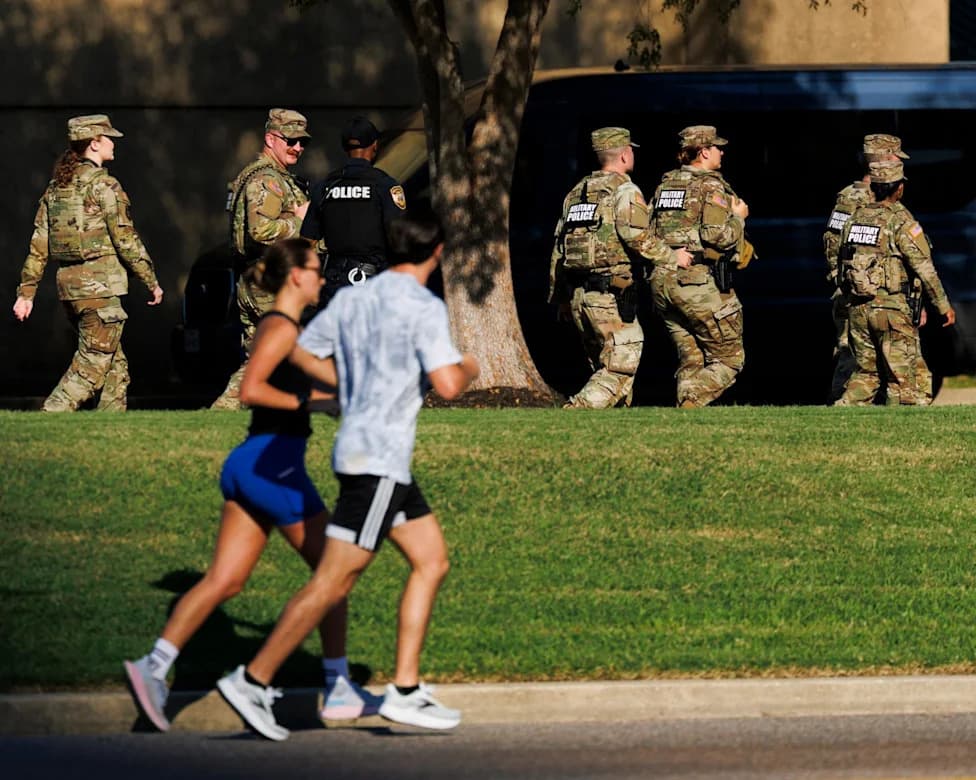
The National Guard deployment that began after President Trump declared a "crime emergency" in August 2025 has been extended through January 2029, drawing both praise and sharp criticism. Supporters credit the surge with helping to produce more than 13,000 arrests and a 20% drop in overall crime (32% fewer homicides), while opponents call it federal overreach into a city with limited autonomy. The extension, estimated to cost $1.4 billion, has become a central issue in local elections and prompted legal challenges and concerns about the Guard's presence through future national elections.
National Guard Deployment in Washington Extended Through January 2029, Sparking Local Backlash
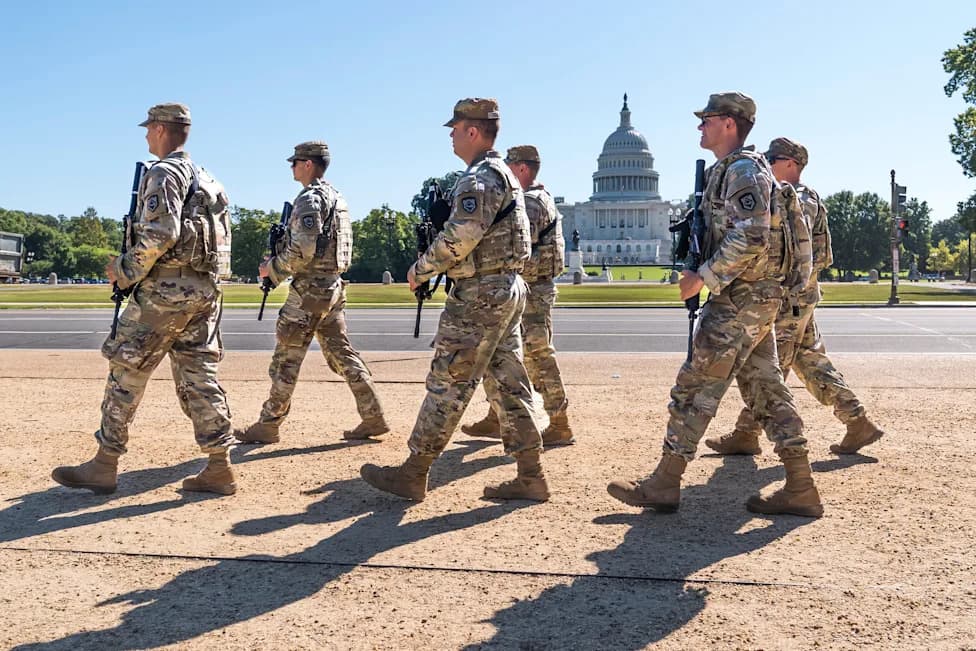
FILE - Armed National Guard soldiers from West Virginia patrol the Mall near the Capitol in Washington, as part of President Donald Trump's order to impose federal law enforcement in the nation's capital, Aug. 26, 2025. (AP Photo/J. Scott Applewhite, File)(AP Photo/J. Scott Applewhite)
WASHINGTON — What began as a federal "crime emergency" announced by President Donald Trump in August 2025 has been extended: the National Guard and accompanying federal law enforcement presence in the District of Columbia will remain in place through January 2029. The prolonged deployment — viewed by supporters as a crime-fighting surge and by critics as federal overreach — is reshaping local politics and renewing questions about Washington's limited autonomy.
Deployment By the Numbers
As of Aug. 4, more than 4,600 National Guard personnel from D.C. and 24 states and territories were deployed in the city, alongside additional federal law enforcement officers whose totals have not been publicly disclosed. The Defense Department estimates the extended mission will cost roughly $1.4 billion. Federal prosecutors have credited the surge with contributing to more than 13,000 arrests.
FILE - The Vermont state Capitol building is seen, May 8, 2025, in Montpelier, Vt. (AP Photo/Alex Driehaus, File)(AP Photo/Alex Driehaus)
Crime Trends and Debate
Metropolitan Police Department statistics show overall crime was down about 20% through Aug. 7 compared with the same period in 2025, including a reported 32% decline in homicides (from 97 to 66). Supporters of the federal action point to these figures as evidence the surge has helped improve public safety. Critics and some analysts say crime had been trending downward before the surge and that local initiatives and policing strategies also played major roles.
Local Reaction and Legal Challenges
The continued presence of uniformed troops in neighborhoods and at tourist sites — from the Tidal Basin during the Cherry Blossom Festival to quieter areas like Georgetown — has provoked unease. Guardsmen have performed a mix of duties, including supporting arrests, assisting with medical incidents, snow removal and neighborhood cleanups, actions that have earned both praise and criticism from residents.
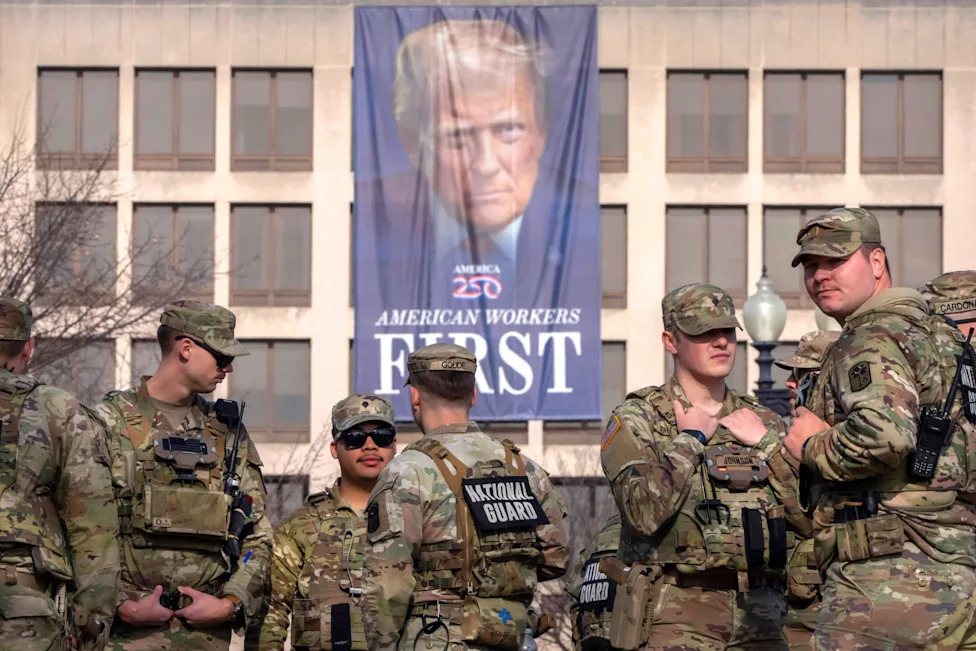
FILE - National Guard members gather near a large portrait of President Donald Trump on the Labor Department headquarters before the body of Metropolitan Police Department officer Terry Bennett is driven past the Capitol, Jan. 8, 2026, in Washington. (AP Photo/Mark Schiefelbein, File)(AP Photo/Mark Schiefelbein)
'There’s a deep irony that here we are in the capital of the free world, and our president is treating it like a police state,' said Scott Michelman, legal director of the ACLU of the District of Columbia. 'D.C. residents have lived with our National Guard troops in our neighborhoods for about a year, despite the absence of any genuine emergency.'
City Council Member Brianne K. Nadeau described the prolonged deployment as "demoralizing," and community groups such as FreeDC have actively monitored and documented Guard activity across the city. A lawsuit challenging the deployment is pending; observers note that legal challenges in other cities have sometimes blocked Guard missions, but opponents express limited optimism about a quick resolution given Washington’s unique federal status.
Why D.C. Has Limited Options
Under the Home Rule Act of 1973, District residents elect a mayor and council, but Congress retains budget oversight, review authority over local laws and the ability to summon city officials. Unlike states, the District's National Guard answers directly to the president. That structure sharply limits the ability of local leaders to remove or control federal forces operating in the capital.
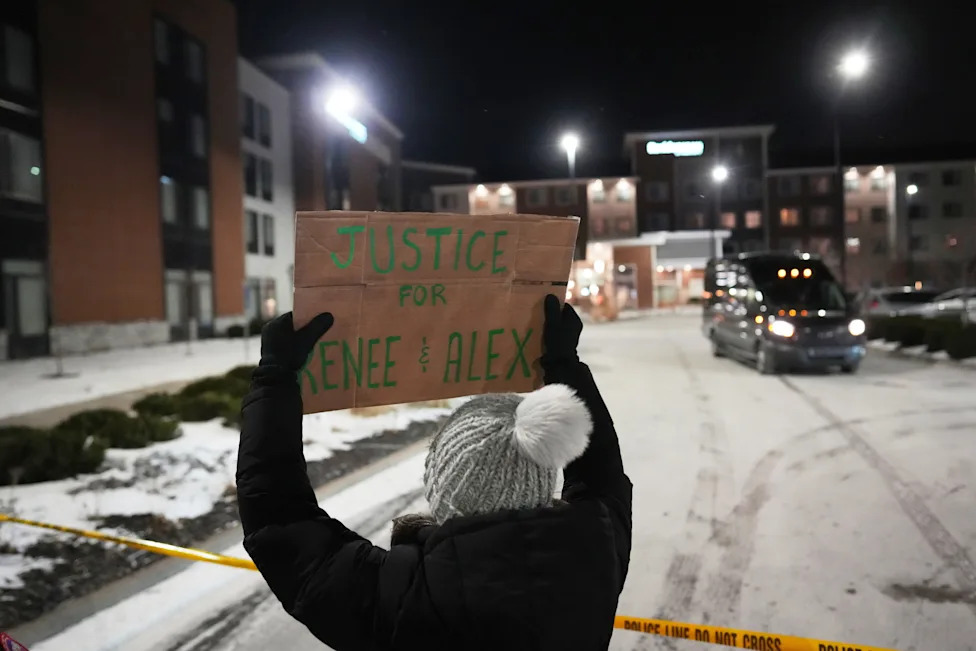
FILE - A demonstrator holds a sign reading "Justice for Renee & Alex" during a protest outside a SpringHill Suites and Residence Inn by Marriott hotels, Jan. 26, 2026, in Maple Grove, Minn. (AP Photo/Adam Gray, File)(AP Photo/Adam Gray)
Political Fallout
The surge has become a central issue in local Democratic primaries and the broader push for D.C. statehood. Janeese Lewis George, a progressive who is widely seen as the likely next mayor in the heavily Democratic city, has clashed with the president, who warned he might place the city under tighter federal control should she take office. Robert White Jr. won the Democratic primary for the city's congressional seat and has pledged to mobilize residents and allies to counter federal interference.
Outgoing Mayor Muriel Bowser has struck a more measured tone, emphasizing public safety and protection of home rule while warning that District residents — more than 700,000 taxpayers — lack full voting representation and control over the D.C. National Guard.
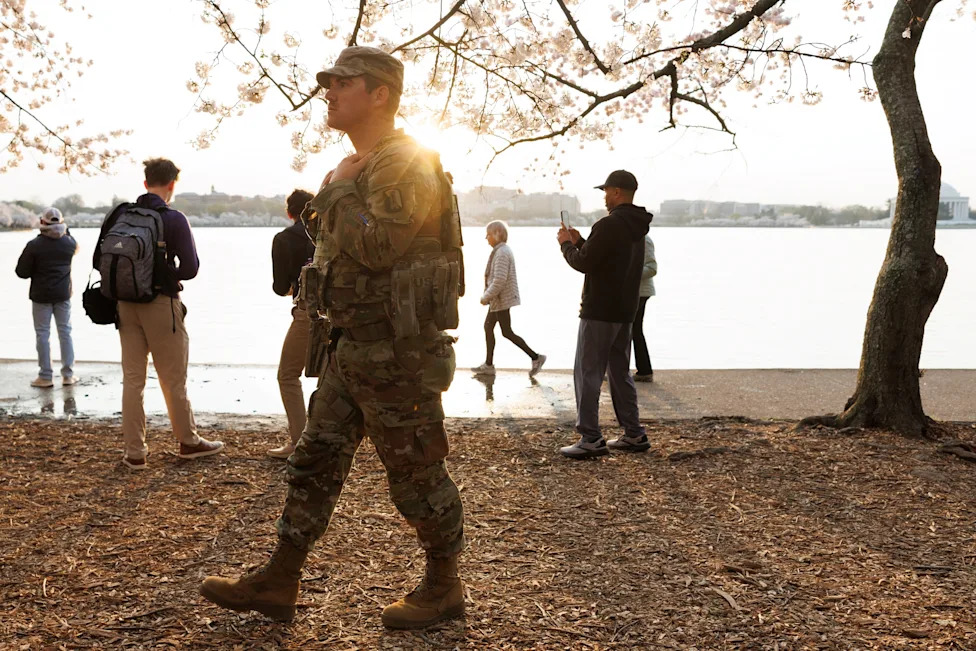
FILE - A member of the Mississippi National Guard walks among the cherry blossom trees along the tidal basin on the National Mall on Thursday, March 26, 2026, in Washington. (AP Photo/Tom Brenner, File)(AP Photo/Tom Brenner)
Resident Concerns and Election Risks
Some residents welcome the additional security and the Guard's assistance with emergency tasks. Others, like part-time resident Donna Powell, say they feel safe without troops and would rather the money be invested in social services.
There are broader concerns about the optics and risks of having thousands of troops in the capital through the 2028 presidential election. Alex Dodds, co-founder of the activist group FreeDC, warned of the potential dangers of a large, active force available during contentious national political moments.
The debate over the deployment is likely to continue as new local leaders take office and as legal and political efforts to define the District's relationship with the federal government move forward.
Help us improve.