The Ohio Department of Natural Resources and the University of Dayton's Gantchoff Lab are collaring and tagging black bears as part of a five-year study into population size, movement and behavior. The May 2026 report shows a record 537 sightings in 69 counties during 2025, up from 370 sightings in 55 counties in 2024. Researchers have recorded surprising finds — including a 576-pound male — and stress public education and securing attractants to reduce human-bear conflicts.
Ohio Sets Record for Black Bear Sightings as Researchers Collar and Monitor Animals
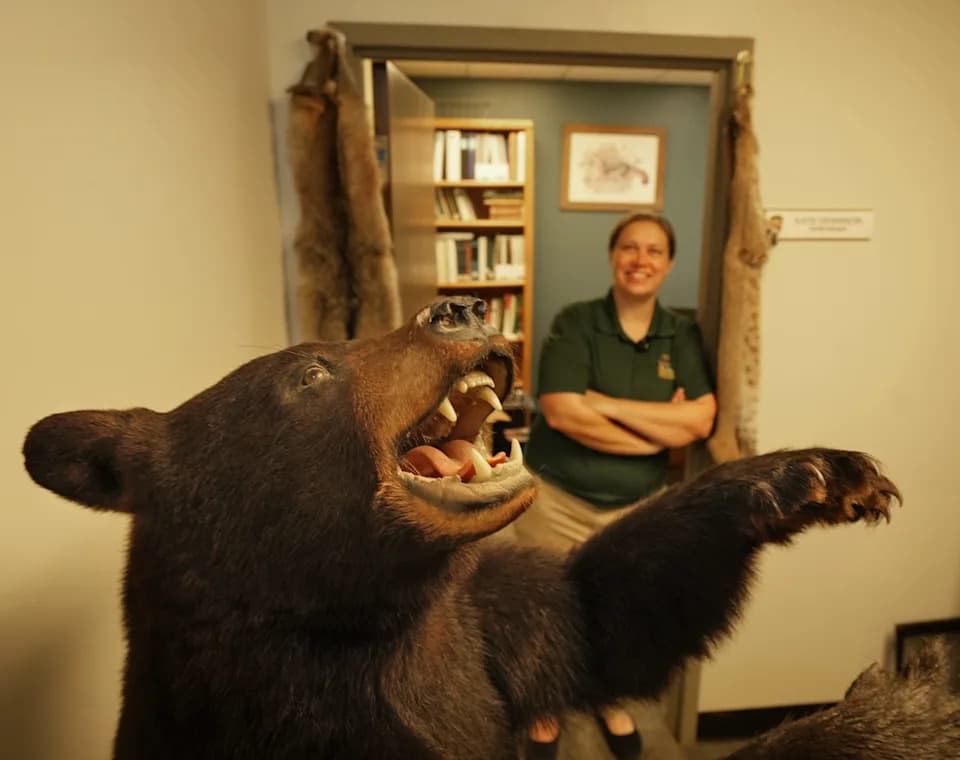
Katie Dennison is the bear expert for the Ohio Department of Natural Resources, which has tagged six bears to monitor their travels and learn about their habits. She has a taxidermy bear outside of her ODNR office in Columbus.
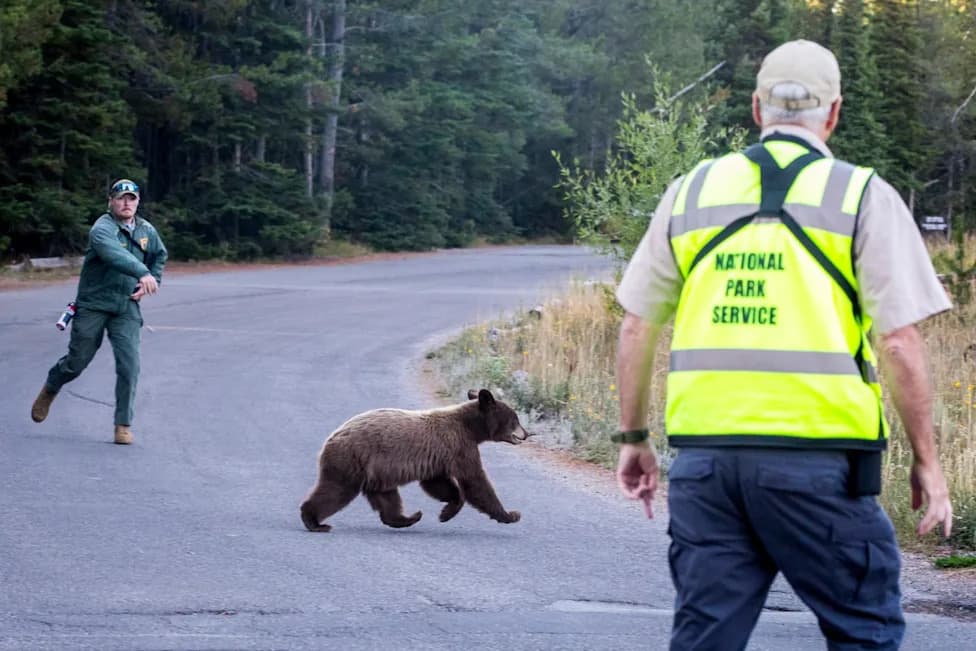
Wildlife officials in Ohio are seeing a sharp rise in black bear reports and are responding by trapping, tagging and tracking the animals to learn how they are using farmland, suburbs and forests.
Tracking Program and Methods
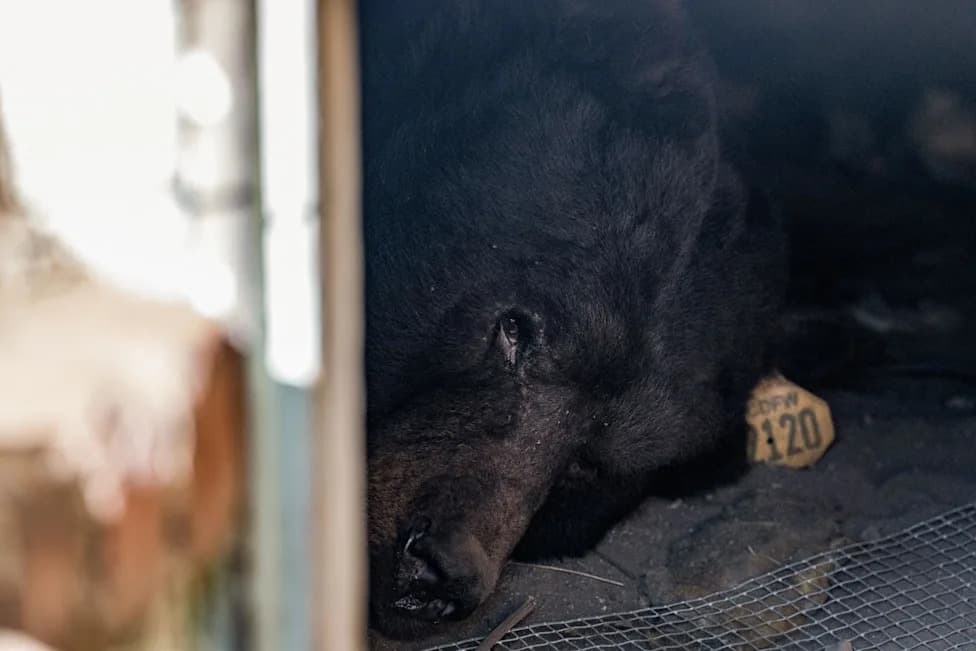
The Ohio Department of Natural Resources (ODNR), working with the Gantchoff Lab at the University of Dayton, has fitted five black bears with battery-powered GPS collars and placed ear tags on two additional animals as part of an ongoing five-year research project. The May 2026 Ohio Black Bear Monitoring Report documents 537 reported sightings in 69 counties during 2025 — the highest number on record for the state, up from 370 sightings in 55 counties in 2024.
Researchers rely on tips from landowners and use baited traps (corn, syrup and sweet baked goods) monitored by trail cameras. When a bear is captured, crews anesthetize the animal in the field and complete a standard research protocol: fit a GPS collar and ear tag, insert a microchip, collect fur, blood, tissue and scat samples, take measurements, and monitor the animal until it is alert enough to stand. After recovery, the bear is released at the capture site.
Key Findings and Surprises
The telemetry work has produced unexpected findings: Ohio now appears to host more bears than researchers initially thought. One memorable capture in June produced a 576-pound male. Katie Dennison, the ODNR bear biologist leading the field work, recalled the bear’s size and musculature as "definitely intimidating." A male collared two years ago traveled hundreds of miles across Ohio, Pennsylvania and New York before being fatally struck by a vehicle last summer.
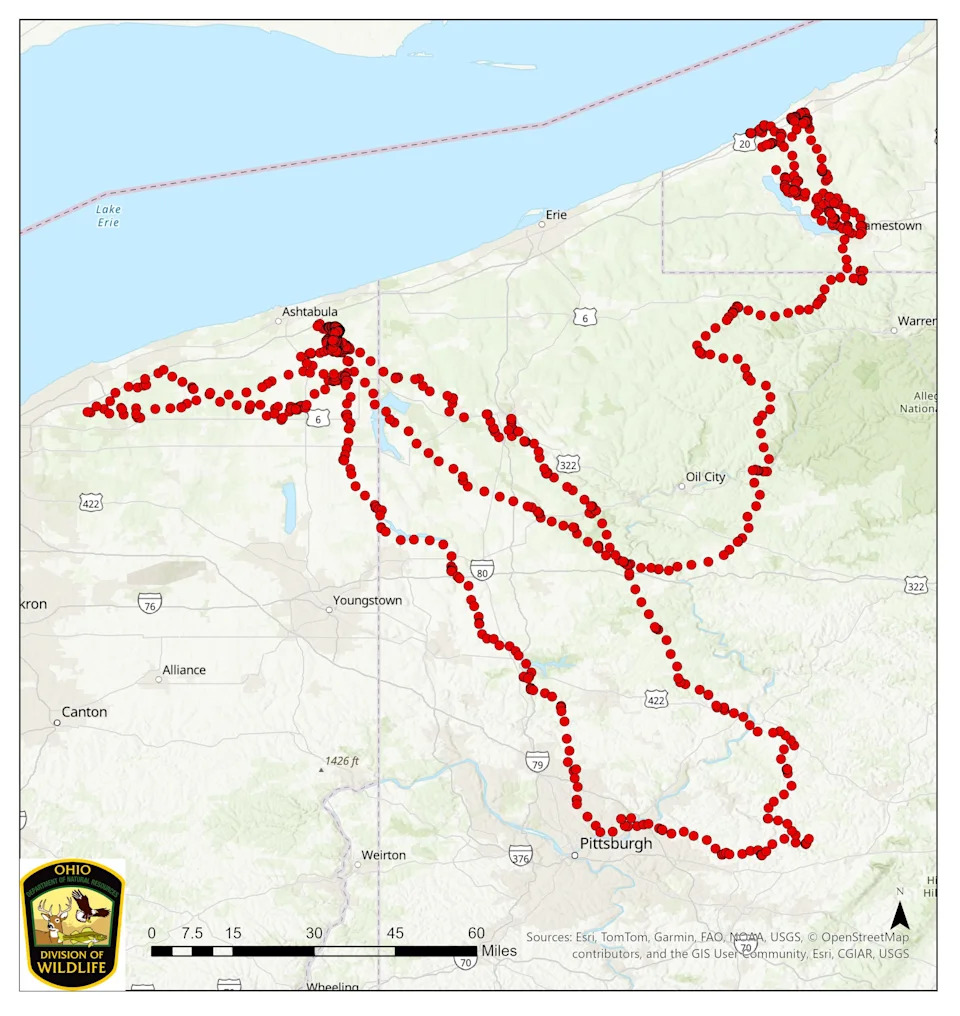
The first male bear collared by the Ohio Department of Natural Resources traveled hundreds of miles over two years before being fatally struck by a vehicle in New York. Ohio DNR is studying bears in the state.
"Attacks on people are incredibly rare, but because bears are attracted to human food and other attractants, there is potential for conflict," Dennison said. "Understanding what bears are doing in the state helps us reduce conflicts and educate the public."
Behavior and Home Range
Movement patterns change seasonally. Both males and females increase travel during the mating period (mid-May through late June). Adult male home ranges can extend up to roughly 300 square miles, while females commonly occupy home ranges up to about 50 square miles; actual ranges depend on habitat quality and food availability. Those estimates help scientists gauge how many bears Ohio’s habitat could support.
Public Safety and Reporting
Dennison can track collared bears in real time but generally does not share precise locations to avoid encouraging people to seek them out. In Ohio, black bears are listed as an endangered species and trapping by untrained members of the public is illegal; ODNR and its partners are permitted to trap for research and conservation only. The state provides an online reporting tool at wildohio.gov where residents can submit sightings and upload photos.
How Residents Can Reduce Conflicts
Bears typically avoid people, but they are attracted to easy food sources. Residents in bear country should secure garbage, remove or temporarily stop bird feeders, keep grills clean, and store pet food indoors. These steps reduce the likelihood bears will approach homes.
Local Encounters
Some Ohio residents have already encountered bears. Darcie Little of Montville in Geauga County spotted a collared bear on June 23; her porch camera confirmed the sighting. "We're a little more cautious now," she said. The family has tightened routines for their dog and talked with their daughters about bear safety.
For more information or to report a sighting, visit wildohio.gov. Contact: Laura Bischoff, state government reporter, [email protected].
Help us improve.