A PET imaging study in eBioMedicine found that adults with long COVID who developed new apathy and depression had about 18% fewer dopamine-signalling nerve endings (lower VMAT2 binding) in the striatum compared with healthy controls. Region-specific reductions correlated with lower motivation, slower movement and memory and word-finding problems. The changes were detectable up to 4.6 years after infection, but the small, observational study requires replication before causal conclusions or broad clinical use of VMAT2 imaging can be recommended.
PET Scans Show About 18% Fewer Dopamine Nerve Endings in People With Long COVID
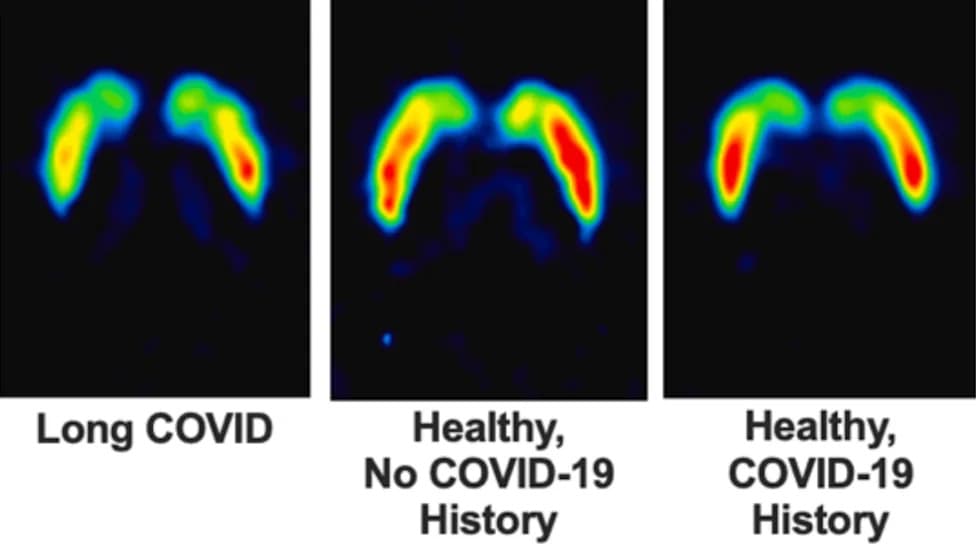
(Guedj et al., eBioMedicine, 2026)
New Canadian imaging research suggests that COVID-19 may cause lasting dopaminergic changes in people who developed new, persistent neuropsychiatric symptoms after infection. The changes—detectable on PET scans—are associated with reduced motivation, slower movement and memory difficulties in affected individuals.
Study Background and Methods
Previous work has linked long COVID cognitive problems to blood–brain barrier disruption, hippocampal enlargement, elevated markers of brain injury and reduced brain volume on MRI. Building on that research, Lu et al. (eBioMedicine, 2026) used positron emission tomography (PET) to examine a dopaminergic marker in adults with long COVID.
YouTube Thumbnail
The study compared 24 adults with long COVID who developed new apathy and depression after infection with 24 age-matched healthy volunteers. Participants received a radiotracer that binds to vesicular monoamine transporter 2 (VMAT2), a validated marker of monoaminergic nerve terminals used in neurodegenerative research (for example, Parkinson’s disease).
Key Findings
Reduced VMAT2 Binding: People with long COVID showed roughly 18% lower VMAT2 binding in the striatum compared with healthy controls, indicating fewer dopamine-signaling nerve endings.
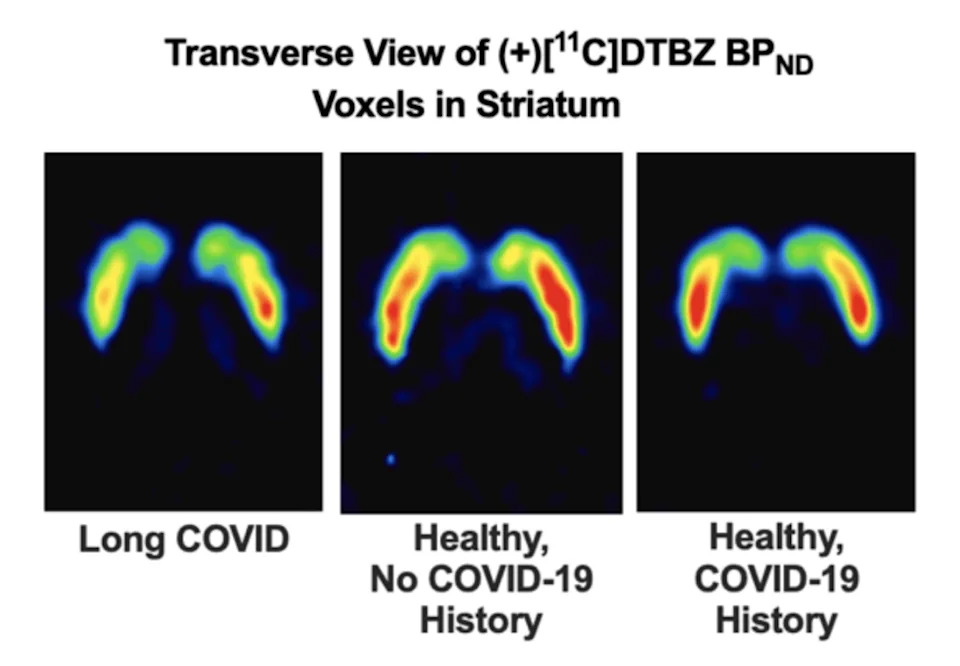
People with long COVID had lower levels of a tracer that binds to dopamine nerve endings than healthy people. Healthy people who had been infected with COVID-19 had fewer dopamine nerve endings than healthy people who had not been infected with thevirus. (Luiet al., eBioMedicine, 2026)
Region-Specific Associations: Reduced binding in the ventral striatum correlated with lower motivation. In the dorsal striatum, lower VMAT2 in the putamen was associated with slower movement and longer task completion times, while reductions in the caudate nucleus were linked to memory problems and word-finding difficulties.
Persistence: These dopaminergic differences were observed in people living with long COVID for as long as 4.6 years after acute infection.

Subscribe to ScienceAlert's free fact-checked newsletter
Implications and Cautions
That the changes are measurable on PET scans is notable: it provides an objective signal that aligns with clinical symptoms. However, the study is small and observational. The findings show an association but do not prove that COVID-19 caused the loss of dopamine terminals. Replication in larger, diverse cohorts is needed.
Jeffrey Meyer (University of Toronto) noted that VMAT2 imaging could have diagnostic potential and that some patients might benefit from therapies that increase terminal density or enhance dopamine release. Meyer and colleagues plan a clinical trial to test a repurposed dopamine-influencing drug; the approach is patented by the Centre for Addiction and Mental Health, and Meyer is listed as an inventor.
Broader Context
Validated diagnostics and treatments for long COVID remain limited. Current management often focuses on symptom relief or repurposed drugs used by trial and error. Estimates of long COVID prevalence vary, commonly cited between about 2% and 10% of those infected; globally at least an estimated 65 million people may be affected. Long COVID is a multisystem illness associated with hundreds of symptoms, including fatigue, cognitive dysfunction, orthostatic intolerance and psychiatric symptoms, and it can lead to chronic conditions such as ME/CFS and dysautonomia.
“What cannot be seen is too often considered uncertain,” wrote Eric Guedja and Danielle Beckman in a commentary, highlighting the value of measurable imaging signals that match clinical presentations.
Next Steps: Larger studies and longitudinal follow-up are needed to confirm these findings, clarify mechanisms, and determine whether dopamine-targeting therapies can safely and effectively improve symptoms for people with long COVID.
Help us improve.