Malawi's Kanengo battery — a 20 MW / 40 MWh lithium-ion system funded by a $20 million grant — charges on excess daytime solar and discharges during evening peaks to stabilize the grid after Tropical Storm Ana damaged major hydropower in 2022. The project cut load shedding from roughly eight hours a day to about two, reduced diesel use, and established a regional center of excellence at Mzuzu University. Plans exist for three more projects, but financing and private investment remain unresolved.
Small Battery, Big Impact: How a Container-Scale System Is Keeping Malawi's Lights On
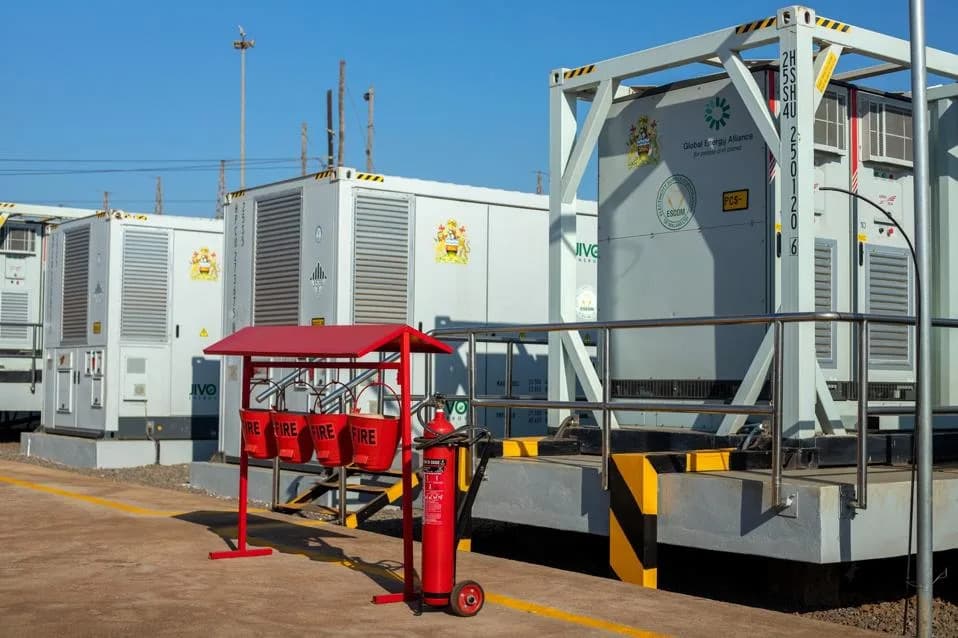
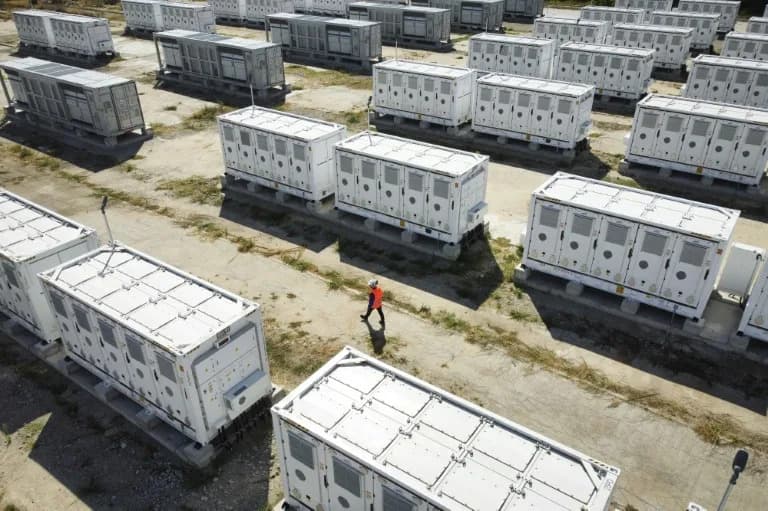
Lithium battery system about the size of a few shipping containers, installed near Lilongwe, Malawi.4KAYA
On a cloudy afternoon in Lilongwe, when the sun slips behind clouds, up to a fifth of Malawi's electricity can disappear — the predictable downside of relying on solar without storage. After Tropical Storm Ana damaged the Kapichira Dam in January 2022 and took roughly 129 megawatts of hydropower offline, Malawi experienced blackouts lasting as long as 18 hours a day. A new container-scale lithium-ion battery installation at Kanengo is now bridging much of that gap.
How the Kanengo Battery Works
The Kanengo facility is a 20-megawatt, 40-megawatt-hour battery system funded by a $20 million grant from the Global Energy Alliance for People and Planet and built in partnership with Escom, Malawi's national utility. It charges during daylight from excess output produced by roughly 100 megawatts of recently added solar capacity and discharges during evening demand peaks. Beyond energy shifting, the system also helps stabilize frequency and voltage — a critical service that the damaged hydropower plant used to provide.
Immediate Impacts
Escom reports an immediate reduction in load shedding: what had been approximately four hours in the morning and four in the evening has fallen to about two hours total since the battery came online. That decline has allowed the utility to prioritize households over industry in its rationing schedule and to rely less often on expensive diesel generators — an important benefit in a landlocked country where diesel costs about $3–$3.50 per liter and foreign currency for imports can be scarce.
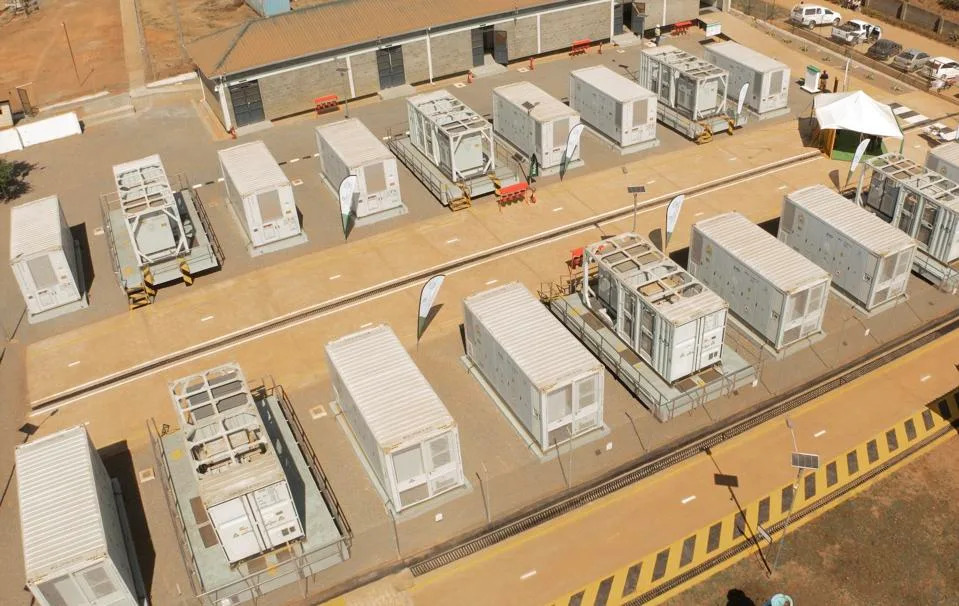
Lithium battery system in Malawi
Scale, Context, and Limits
Context matters: a 20 MW battery is modest by wealthier-grid standards (the U.S. grid has roughly 1,200 gigawatts of capacity and more than 26 gigawatts of utility-scale battery storage at the end of 2024). But Malawi's entire installed capacity is under 600 megawatts, so a two-hour, 20 MW system can be the difference between a functioning economy and a paralyzed one. Still, Kanengo is primarily a reliability intervention — it does not by itself expand household electrification, which remains around 25% nationally and requires distribution expansion and off-grid solutions supported by other programs, including a separate $150 million World Bank-backed effort.
Regional Influence and Next Steps
To spread lessons learned, the Global Energy Alliance and Escom established a Southern Africa battery storage "center of excellence" at Mzuzu University to host technical documentation — design files, procurement records, and construction plans — that other countries can study. The project has logged more than 270 downloads and generated technical inquiries from Kenya, Uganda, Togo, and others. Malawi plans three additional battery projects, but details on private financing and investor commitments remain undefined.
"For decades, we have been at the mercy of the clock and the weather," said Malawi's Minister of Energy, Dr. Jean Mathanga, at the commissioning. "Solar power may have sparked our energy revolution, but battery storage will sustain it."
Conclusion
Kanengo demonstrates how standard grid technologies can serve as practical insurance in climate-exposed, resource-constrained systems. While financing and scale-up challenges persist, the project has delivered measurable reliability gains, reduced reliance on diesel, and created a replicable technical reference for other African utilities evaluating battery storage.
Help us improve.