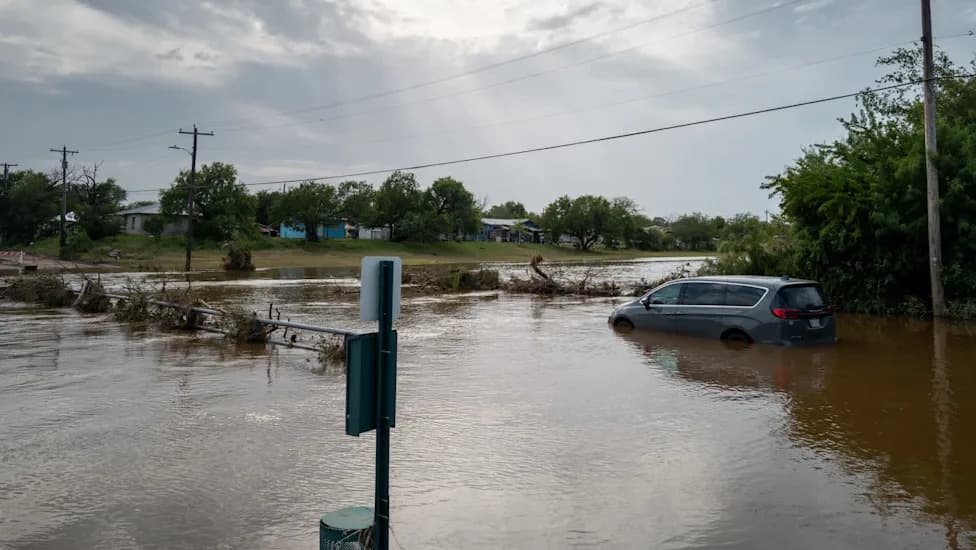
Governor Greg Abbott has threatened to take over Corpus Christi's water response as long-term supply risks grow and a desalination project faces delays. The desalination plant was expected to add roughly 30 million gallons per day and has received more than $750 million in state loans. The Nueces River Authority — overseen by a board Abbott appointed — warns desalination funding could run out by late August, raising the prospect of mandatory water cuts under a Level 1 emergency.
Texas Water Crisis Deepens: Abbott Threatens Takeover as Desalination Board Faces Cash Crunch

Photo Credit: Getty Images
Texas Governor Greg Abbott has warned he may take control of Corpus Christi's water response as the coastal city confronts persistent supply risks — even as a state-appointed river authority tied to the same crisis warns its desalination work could run out of funding by late August.
The dispute centers on whether taps will keep running for more than 500,000 residents if drought conditions return. A planned desalination plant, which ProPublica and partner outlets reported was expected to add about 30 million gallons a day to regional supplies, has been delayed despite the state providing more than $750 million in low-interest loans to support the project.
Who’s Responsible?
Abbott has publicly criticized Corpus Christi city leaders for delays, saying the state may need to "take over and micromanage" the city's response if local officials do not move forward. At the same time, the Nueces River Authority (NRA) — a separate agency governed by a 21-member board appointed in full by Abbott — is battling its own financial shortfall after expected contracts failed to materialize.
Authority officials say spending has outpaced revenue and that three desalination-related contracts lapsed without renewal, leaving the NRA's desalination effort at risk of running dry by the end of August. In May the NRA selected Israel-based IDE Technologies for development work, but the authority still faces a major funding and capacity gap for the estimated $6.4 billion project.
What Could Happen If Supplies Fall
If water supplies decline enough to trigger Corpus Christi's Level 1 water emergency plan, both residents and businesses would be required to cut usage by 25%. Households would be capped at 6,000 gallons per month, outdoor landscape watering would be prohibited, and surcharges could apply for exceeding limits.
State Steps and Expert Views
The governor's office says responsibility for securing water and managing project finances rests with the Corpus Christi City Council and the NRA board, while the state has taken narrower steps — preserving the city's Lake Texana allocation and loosening rules to allow groundwater to be routed to the city's treatment plant.
"The city of Corpus Christi needs a lot of help, it doesn't need threats, and the Nueces River Authority is in way over its head," said Cal Jillson, political science professor at Southern Methodist University. Gabriel Collins of Rice University's Baker Institute suggested the state could act as a financial catalyst to help local authorities overcome political and capacity barriers.
Recent rainfall has offered temporary relief but has not resolved the region's long-term supply challenges. As state and local officials continue to trade blame, critical infrastructure work remains unfinished and time is a growing constraint.
Help us improve.