Researchers at the Arc Institute used a generative model called Evo to design viral genomes and reported the results in Science. From roughly 700,000 generated candidates, 16 designs proved active against E. coli, and some combinations overcame bacteria that had evolved resistance to a natural phage. The viruses target bacteria and are not known to infect humans; the team avoided training Evo on human pathogens. Experts warn the work exposes a governance gap: generative AI can now compose genomes even though safeguards and oversight lag.
AI Designs Novel Bacterial Viruses, Raising Biosecurity Questions

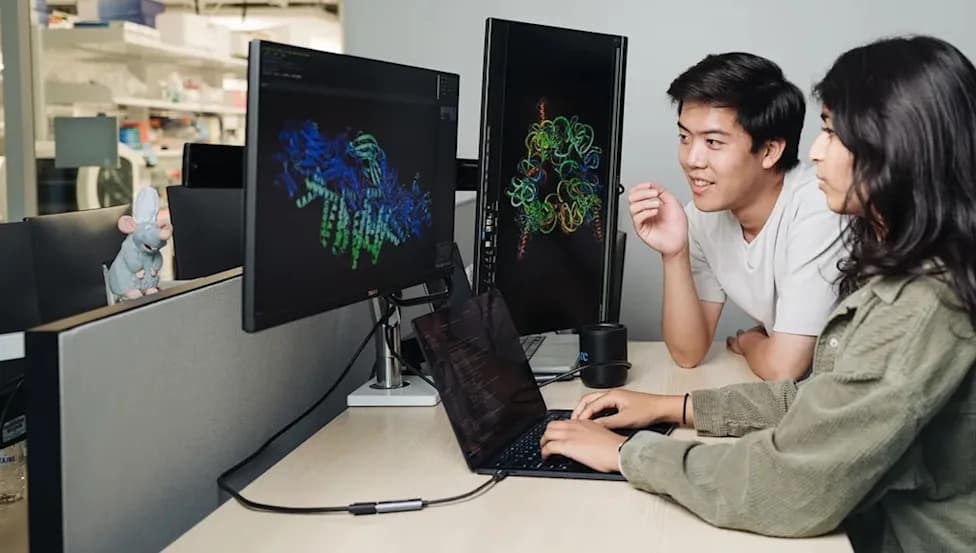
Stock image of a scientist working on a computer in a lab
Researchers have used a generative artificial intelligence system to design viral genomes not seen in nature, a development that has reignited debate about biosecurity and oversight. The work—reported in Science by a team at the Arc Institute in Palo Alto—demonstrates both the potential of AI to accelerate biological design and the governance gaps that could allow misuse.
Study Details
The team trained a model called Evo on naturally occurring genetic sequences and generated roughly 700,000 candidate viral genomes. In laboratory tests pairing the designs with Escherichia coli, 16 candidates showed functional activity, and certain combinations of those designed viruses "rapidly overcame bacteria that had evolved resistance to a natural bacteriophage." The reported viruses are bacteriophages—viruses that infect bacteria—and the authors emphasize they are not known to infect humans.
Safety Measures Taken
To reduce risk, the researchers deliberately excluded viral sequences known to affect humans from Evo's training data. Study co-author Brian Hie, a computational biologist at Stanford University, told reporters the team took extra precautions to avoid designing human pathogens. The experiments were conducted under laboratory controls and described in peer-reviewed publication.
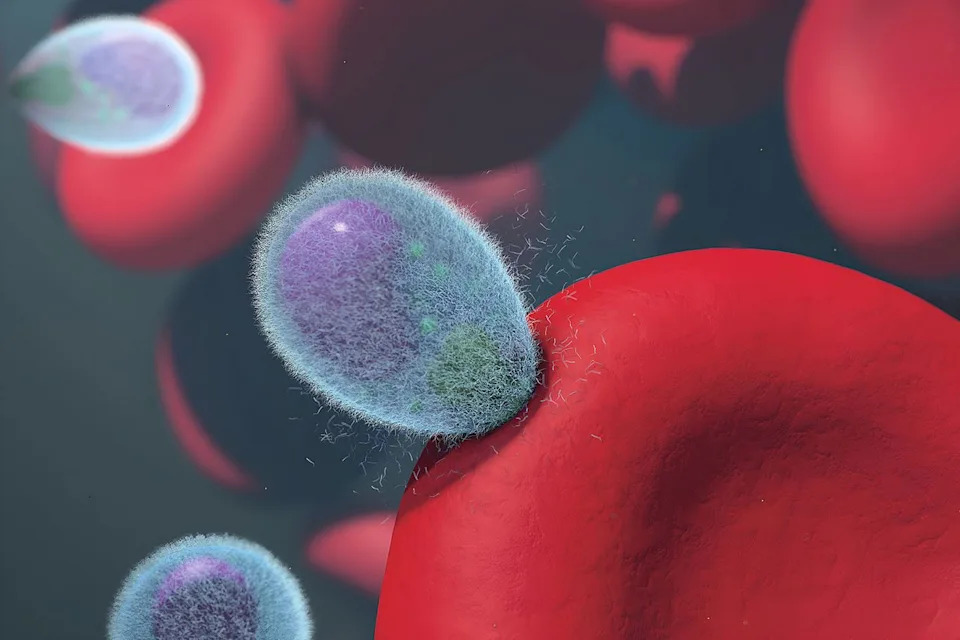
Stock image of a virus invading a blood cellCredit: NIH-NIAID/Image Point FR/BSIP/Universal Images Group via Getty
Biosecurity Concerns and Expert Views
Despite these safeguards, biosecurity experts warn that the ability to compose genomes with generative AI creates new challenges. As Dr. Moritz Hanke of the Johns Hopkins Center for Health Security noted, an AI could, in principle, be asked to produce harmful modifications to a human pathogen. In an accompanying commentary, Hanke and Tom Inglesby argued that "the ability to compose viral genomes using generative AI now exists; the governance to safely steer it does not."
"What is the risk of what I've never seen before?" — Dr. Moritz Hanke
Other scientists urge perspective: Tom Ellis, a professor of synthetic genome engineering at Imperial College London, told The Guardian that modifying existing pathogens in the lab (for example, via gain-of-function changes) remains a more immediate and plausible route to harm than end-to-end AI design of entirely novel genomes.
Implications
The study highlights a tension: AI can accelerate biological design in ways that may be valuable (for example, developing bacteriophages to combat antibiotic-resistant bacteria), but the same capabilities raise governance, oversight, and ethical questions. Experts call for clearer regulations, stronger lab safeguards, and international coordination to ensure beneficial uses while minimizing risk.
Bottom line: The experiment demonstrates that generative AI can produce functional bacteriophages, but it also underscores the need for robust oversight and risk mitigation as AI tools become more powerful in biological design.
Help us improve.