Polls closed in Tennessee with Sen. Marsha Blackburn leading the Republican primary to succeed term-limited Gov. Bill Lee. Blackburn faced challengers including Rep. John Rose and Monty Fritts while former President Trump stayed publicly neutral. Key federal contests included an unopposed Bill Hagerty in the GOP Senate primary and House races reshaped by a new GOP-drawn map that added a right-leaning seat. High-profile House primaries and outside spending underscored the stakes for both state and national politics.
Tennessee Primary: Marsha Blackburn Leads GOP Governor Race As Key Federal Contests Unfold

Republican gubernatorial candidate Sen. Marsha Blackburn
Polls have closed across Tennessee as conservative U.S. Sen. Marsha Blackburn, a two-term senator and former longtime congresswoman, pressed her bid to move from Washington, D.C., to Nashville in the Republican primary for governor.
Blackburn entered the contest as the clear front-runner to replace term-limited Gov. Bill Lee, buoyed by a high national profile from frequent cable-news appearances and a strong fundraising operation. Her primary challengers included four-term Rep. John Rose, who — like Blackburn — has been a vocal supporter of former President Donald Trump, and state Rep. Monty Fritts.

Republican Sen. Marsha Blackburn of Tennessee is running for governor in the 2026 race to succeed term-limited GOP Gov. Bill Lee.
Trump's Stance: While President Trump has weighed in with endorsements in other GOP gubernatorial contests this cycle, he remained publicly neutral in Tennessee. In January he told reporters he would prefer Blackburn remain in the Senate: "Unfortunately, she's running for governor. She's running for governor of Tennessee. I'd love her not to, I begged her. I said, 'Marsha, don't. We don't want to lose you in the Senate.'" Still, Trump has praised Blackburn and acknowledged Rose's loyalty. Blackburn has signaled continued support for Trump, posting on social media on the eve of the primary that she is ready to "deliver for the people of the Volunteer State" as Trump "sends power and authority back to the states."
Democratic Field: On the Democratic side, five candidates — including Memphis City Councilwoman Jerri Green — vied for the party's gubernatorial nomination in a state where Democrats have not won the governor's mansion in roughly two decades.
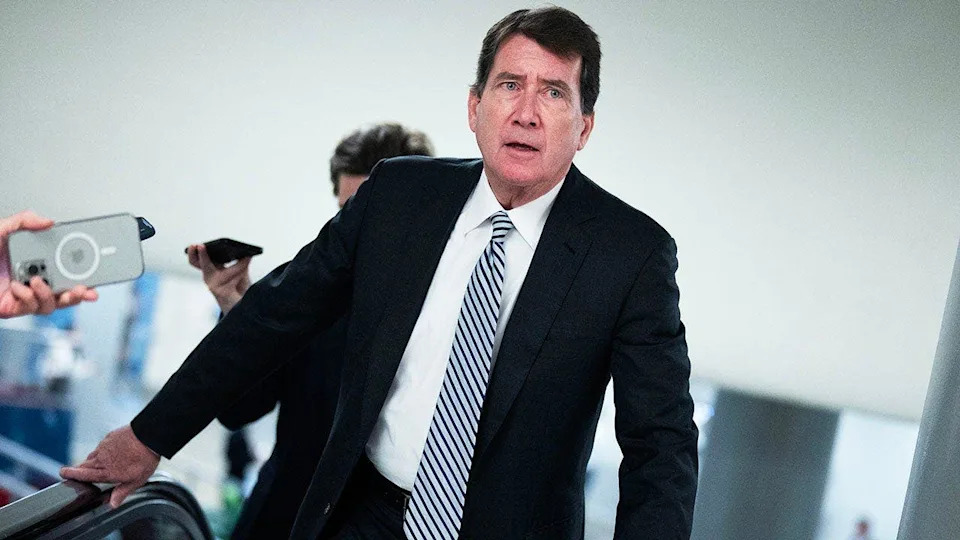
Sen. Bill Hagerty, R-Tenn., is seen inside the U.S. Capitol on Feb. 4, 2026.
Federal Races And Redistricting Impact
In the U.S. Senate contest, Republican Sen. Bill Hagerty faced no primary opposition as he sought a second six-year term. Five Democrats stepped up to challenge him in November; the last Democratic Senate win in Tennessee dates to then-Sen. Al Gore's 36-year-old re-election campaign.
Redistricting also reshaped the U.S. House map. A GOP-drawn plan in Tennessee added a right-leaning seat and altered districts in Memphis, a change that contributed to longtime Democratic Rep. Steve Cohen deciding not to seek re-election.

Rep. Andy Ogles (R-Tenn.) walks through the U.S. Capitol on February 3, 2026, in Washington, D.C.
Contested House Primary: Two-term Rep. Andy Ogles, a prominent Trump ally backed by the former president, faced a strong Republican primary challenge from Tennessee Agriculture Commissioner Charlie Hatcher. Gov. Bill Lee recently endorsed Hatcher, and the race has attracted substantial outside spending — signaling its importance to national and state-level power dynamics.
As results stream in, Tennessee's primary will shape the state's political landscape heading into the 2026 general election, highlighting the influence of national figures, redistricting and intra-party battles within the GOP.
Help us improve.