The U.S. Air Force used robotic incremental sheet forming (ISF) to produce a replacement left nose panel for C-17 tail 01-0194 after March 4, 2025 storm damage. Boeing could not find a vendor willing to tool for a single panel, so the RSO and the University of Dayton Research Institute produced the part starting January 2026. The panel was installed in July and the jet returned to flight on July 30, 2026 — the first incrementally formed part certified to fly on an Air Force aircraft.
Air Force Uses Robotic Fabrication To Restore C-17 After Storm Damage — First ISF Part Flies
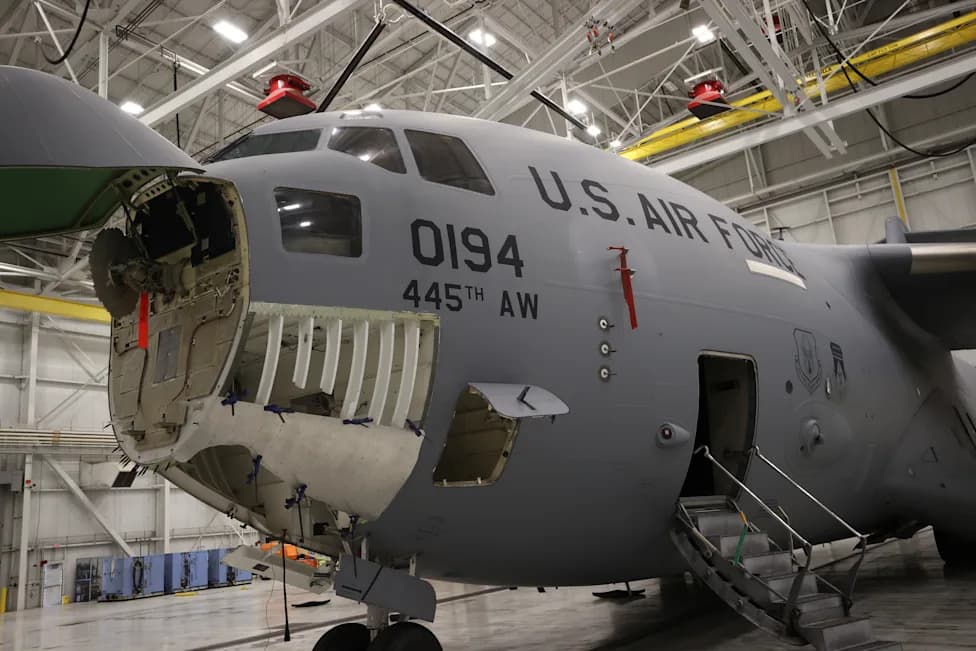
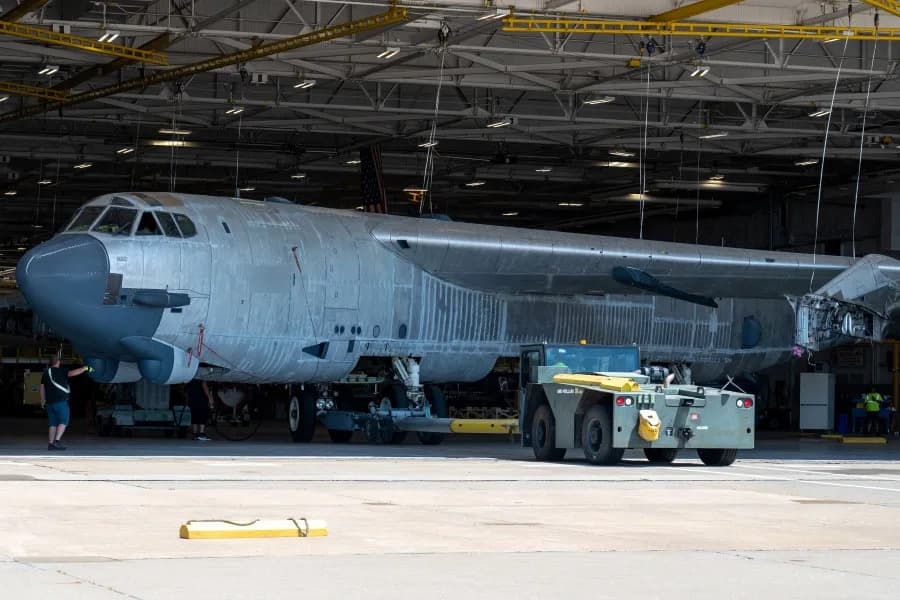
A newly formed nose panel undergoes an initial fit check on the C-17 on April 20, 2026, at Wright-Patterson Air Force Base in Dayton, Ohio. (Casey Tromp/U.S. Air Force)
A U.S. Air Force C-17 Globemaster III (tail 01-0194) that was expected to sit out of service for nearly two years is airborne again after maintainers used a robotic manufacturing process to produce a replacement nose panel that vendors would not tool for a single unit.
Storm Damage and a Supply-Chain Roadblock
On March 4, 2025, the C-17 assigned to the 445th Airlift Wing at Wright-Patterson Air Force Base, Ohio, was parked overnight at Perot Field Fort Worth Alliance Airport when severe storms and microbursts — with winds up to 80 mph — drove two private Bombardier Challenger business jets into the airlifter. Video from that morning shows one Challenger resting beneath the C-17's wing. The collisions damaged the left-side door, fuselage and nose.
Crews managed to fly the jet home using a Boeing-qualified, Air Force-approved temporary nose panel, arriving with the landing gear down. Back in Ohio, maintainers repaired the door and fuselage but found the left nose panel required full replacement — and Boeing could not find a vendor willing to build the specialized tooling for a single replacement panel.
Robotic Incremental Sheet Forming Provides a Solution
The 445th turned the problem over to the Air Force Rapid Sustainment Office (RSO), a Life Cycle Management Center division at Wright-Patterson that pursues alternative fabrication methods when the traditional supply chain cannot deliver. Engineers determined the panel was a strong candidate for incremental sheet forming (ISF), a process in which a robotic tool incrementally shapes a flat metal sheet to a complex contour by following a digital toolpath rather than a dedicated mold or die.
Working with the University of Dayton Research Institute, the RSO began producing the new nose panel in January 2026. Boeing and wing maintainers installed the finished component in July 2026, and C-17 01-0194 returned to flight on July 30, 2026 — about 17 months after the storm.
"This is a tremendous win for our maintenance group," said Col. Karen Gharst, commander of the 445th Maintenance Group. "Using ISF technology to rapidly produce an otherwise unobtainable part allowed us to avoid a prolonged work stoppage."
The flight marks the first time an incrementally formed component has been certified to fly on an Air Force aircraft.
What This Means Going Forward
Boeing ended C-17 production in 2015, and the Air Force expects to operate the fleet into the 2070s. That long service life for legacy platforms means similar gaps in the supply chain could recur, and the RSO is already applying ISF and other sustainment techniques to parts for other legacy aircraft, including the KC-135 tanker and F-15 fighter.
Key players: 445th Airlift Wing maintainers, the Air Force Rapid Sustainment Office (RSO), the University of Dayton Research Institute, and Boeing.
Help us improve.