A federal judge held DHS in contempt for failing to promptly produce personal phone records from ICE agents involved in 2025 Los Angeles raids, ordering expedited imaging of more than 800 devices and imposing a $500-per-day fine until the agency complies. DHS told the court it was processing roughly three phones every two weeks — a pace plaintiffs say could take nearly four years. Court filings already identify racist slurs such as "wetback" and "tonk," and the ruling heightens scrutiny over allegations of extremist material and misconduct within parts of the agency.
Judge Finds DHS In Contempt Over Slow Turnover Of ICE Agents' Phone Records
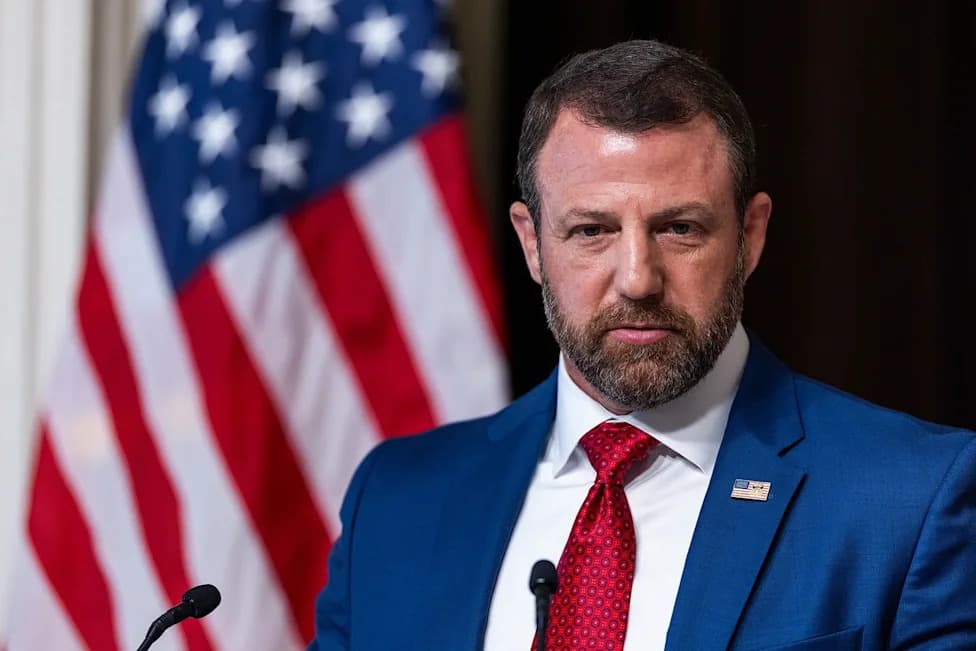
Markwayne Mullin, secretary of the US Department of Homeland Security (DHS), during a news conference in the Eisenhower Executive Office Building in Washington DC, US, on Friday, July 17, 2026. Mullin threatened fines, penalties or prison time for state election officials who refuse to hand over sensitive voter data to DHS, AP reports. Photographer: Jim Lo Scalzo/EPA/Bloomberg via Getty Images
A federal judge has held the Department of Homeland Security (DHS) in contempt for failing to promptly produce personal phone records from Immigration and Customs Enforcement (ICE) agents tied to controversial Los Angeles raids in 2025.
Court Order and Penalty
U.S. District Judge Maame Ewusi-Mensah Frimpong ordered the expedited imaging of more than 800 personal cell phones belonging to agents involved in the operation and imposed a daily fine of $500 on the federal government until DHS complies. The judge also required the government to reimburse the plaintiffs' attorneys for legal costs associated with obtaining the records.
Disputed Pace Of Production
In June, DHS lawyers acknowledged the agency had not produced the requested records and said the agency was processing devices at a rate of roughly three phones every two weeks. Plaintiffs noted that pace would take nearly four years to complete the imaging required by the court.
Racist Language And Broader Allegations
Court filings in the civil-rights lawsuit have already identified exchanges among federal agents that include racist slurs, including the words "wetback" and "tonk". Reporting and filings indicate “tonk” has been used to describe the sound of an immigrant being struck with a flashlight or baton, though its precise origin is unclear.
Plaintiffs and critics have pointed to broader concerns about extremist content and white-supremacist propaganda circulating within parts of DHS, and some commentators and legal experts have compared masked ICE units to historical paramilitary groups. Those allegations remain part of litigation and public debate.
What This Means
The contempt finding increases judicial pressure on DHS to accelerate discovery and may raise political and public scrutiny over agency conduct during immigration enforcement actions. If additional derogatory or inflammatory messages are disclosed, they could influence public opinion and the legal outcomes of the civil-rights case.
“The court ordered expedited imaging and will continue to hold the government accountable until it complies,” the ruling said, underscoring the judiciary's role in enforcing discovery obligations.
Key facts: Judge Frimpong ordered imaging of >800 personal phones tied to 2025 Los Angeles raids; the government faces a $500-per-day fine until it complies; DHS was processing about three phones every two weeks, a pace plaintiffs say would take years to finish.
Help us improve.