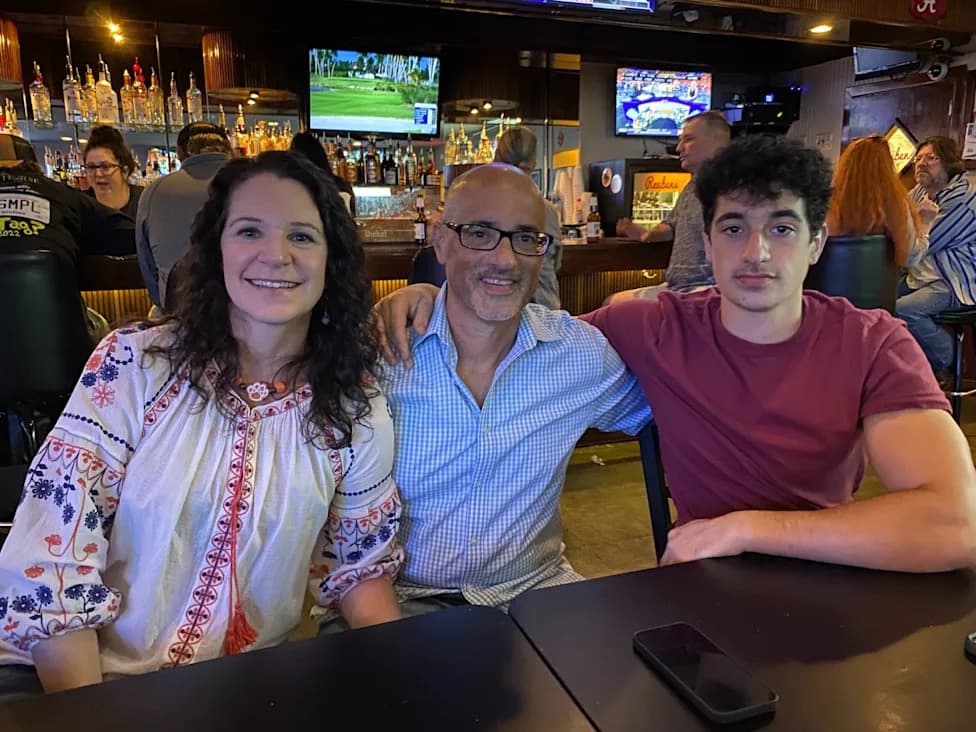
After his leg amputation, the author's father was denied prior authorization by UnitedHealthcare for a short, specialized rehab program despite clear clinical need. Even with legal and institutional advocacy, the family could not overcome repeated denials and delays, and the author argues prior authorization has evolved into a profit-driven corporate veto that wastes clinician time and harms patients. The article calls for structural reforms — independent review, strict time limits, doctor-to-doctor conversations, limits on when prior authorization applies, and a ban on AI-only denials.
How Prior Authorization Denied My Father Rehab — And How Insurers Profit From Saying No

As my family is painfully aware, the costs aren’t just monetary – they’re devastatingly human.
Last year I called UnitedHealthcare to ask why it had denied prior authorization for my father to enter a short, intensive rehab program designed for amputees. The call-center representative sounded as shocked as I was: "This is unreasonable, but I don't know how I can fix it," she told me.
Johns Hopkins Hospital's care team had prescribed the rehabilitation to help my father recover after the amputation of his leg. UnitedHealth requires pre-approval for certain post-acute services, and what followed was a maze of paperwork and contradictory denials.
Paperwork Over Patients
The first denial seemingly cited his cancer history and did not register that his leg had just been removed — the very reason he needed rehab. A second denial said he did not qualify because of his "progress" — progress that consisted of learning to hop from his hospital bed to a chair on one leg. Hopkins clinicians, family members, and I spent dozens of hours looking for anyone at UnitedHealth or its affiliate NaviHealth with the authority and clinical judgement to reverse the decision.
"They kind of sapped my momentum," my father told me. He never received a prosthetic leg.
When I asked UnitedHealth for comment about the denial, the company said it could not discuss a member case without a signed release or power of attorney. In a follow-up statement UnitedHealth said its post-acute-care approach is intended to help members "receive the right care, at the right time, in the most appropriate setting" and that it follows Medicare requirements, CMS guidance, plan benefits, and evidence-based criteria.
Not An Isolated Case
This was not a one-off glitch. Prior authorization began as a narrow tool to curb unnecessary care, but it has expanded into a pervasive gatekeeping mechanism that can override clinicians' judgments. As my co-author Emma Freer and I document, a small number of private health conglomerates now exercise wide control over what care patients can receive.
The administrative toll is enormous. Government data imply prior authorization consumes the equivalent of more than 99,000 full-time clinicians' work annually and may cost up to $32.7 billion each year — capacity that could otherwise treat patients. Meanwhile, more than one in four physicians report that prior authorization has contributed to a serious adverse event for a patient, including hospitalization, life‑threatening events, permanent disability, or death.
Profit Motive And Conflicts Of Interest
The conflict of interest is obvious: insurers increasingly own or control the entities that adjudicate authorization requests, and they profit when they deny care. Automation and algorithmic reviews are being used more often to make those decisions — sometimes without adequate clinical oversight.
Compare traditional Medicare and Medicare Advantage. In one year, traditional Medicare adjudicated roughly 625,000 prior-authorization requests (about 0.02 per enrollee). Medicare Advantage plans adjudicated nearly 53 million determinations (about 1.7 per enrollee), despite covering a similar population and following similar rules. That heavier reliance on prior authorization has not saved money: Medicare Advantage plans cost taxpayers roughly 22% more per patient that year — about $83 billion extra — than traditional Medicare.
A Path Forward
Incremental fixes and voluntary industry pledges have not stopped the problem because denials currently increase insurers' profits. The reform must be structural and remove the financial conflict at the root:
- Prohibit insurers from owning or affiliating with the companies that adjudicate prior authorization requests, or from adjudicating them in-house.
- Permit prior authorization only in narrowly defined, well-documented cases of genuine overuse.
- Require independent third-party review with strict time limits and mandatory clinician-to-clinician discussion.
- Ban AI-only denials; algorithmic tools may assist reviewers but cannot substitute for a licensed clinician's decision.
Insurers will claim these reforms will raise premiums. That argument should be scrutinized: the industry-cited studies are often commissioned by insurers and omit the administrative savings from ending excessive prior authorization and the health costs of delayed care.
Personal And Public Stakes
When I asked my father if I could tell our story while his care continued, he refused. Though he spent his life speaking truth to power as a professor and activist, he feared insurer retaliation while he still needed coverage. He died in February, having spent his final months in a wheelchair. I now speak on his behalf: no company should profit from denying care that a patient's doctor prescribes.
Dedication: This piece is dedicated to my father, Michael L. Monheit (1946–2026). The American Economic Liberties Project is collecting stories from people who have been denied care via prior authorization.
Help us improve.