After decades of secrecy and ridicule, U.S. institutions are now treating unidentified anomalous phenomena (UAPs) as a matter of public interest and security. A 2026 release of hundreds of government reports, new laws, and advisory bodies—alongside testimony from military personnel—has pushed the issue into mainstream debate. Scientists and private groups are building dedicated instruments to gather better data while policymakers weigh transparency, national-security risks, and cultural consequences.
America Treats Unidentified Aerial Phenomena As Serious National Issue
On August 11, 1948, two brothers playing in their yard in Hamel, Minnesota, reported a dull gray, circular object that landed briefly, left a roughly 2-foot depression in the soil, emitted a high-pitched whistle, then burst upward and vanished. The Leuer brothers' account joined hundreds of similar civilian and military reports that for decades were marginalized, stigmatized, or dismissed.
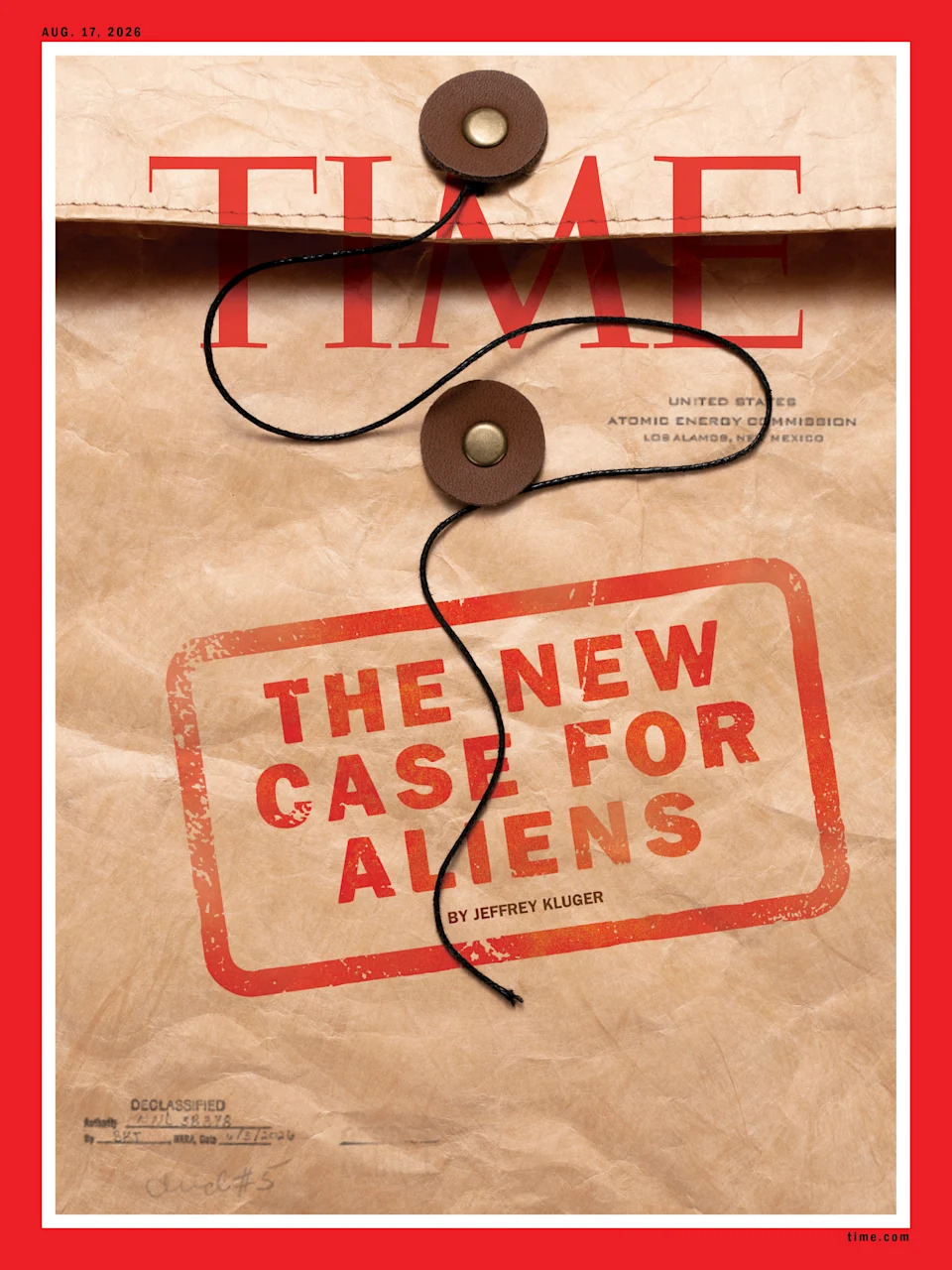
—TIME photo illustration
From Secrecy to Public Scrutiny
That long-running stigma began to change in the 2020s as institutions moved from denial and mockery to open investigation. On May 8, 2026, the White House ordered a phased release of more than 450 official UAP reports spanning decades, directing them to be posted on a Department of Defense website for public review. The release followed congressional hearings in 2022–2023 and the creation of new offices and laws aimed at formalizing how sightings are collected and examined.
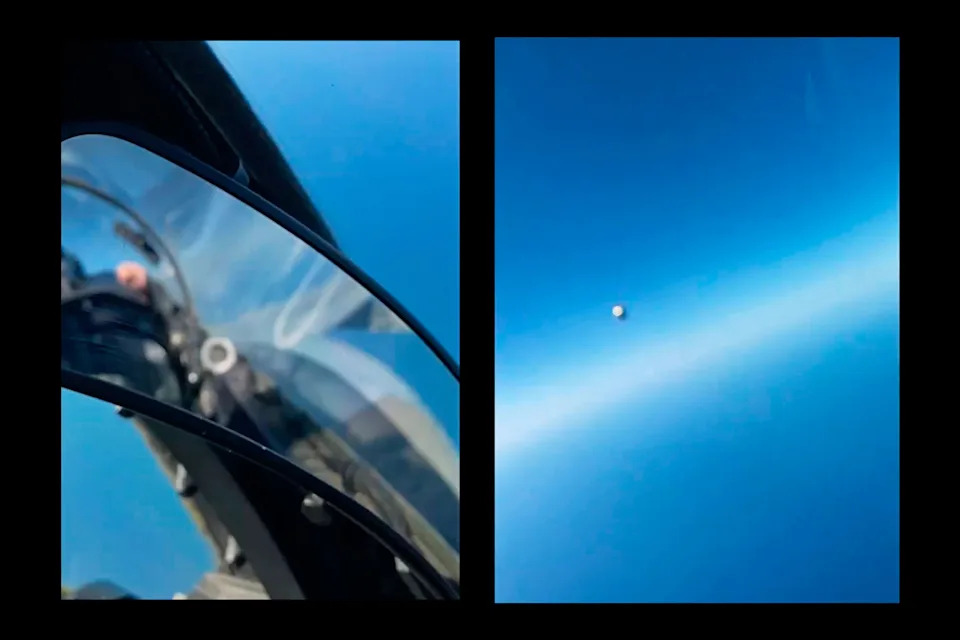
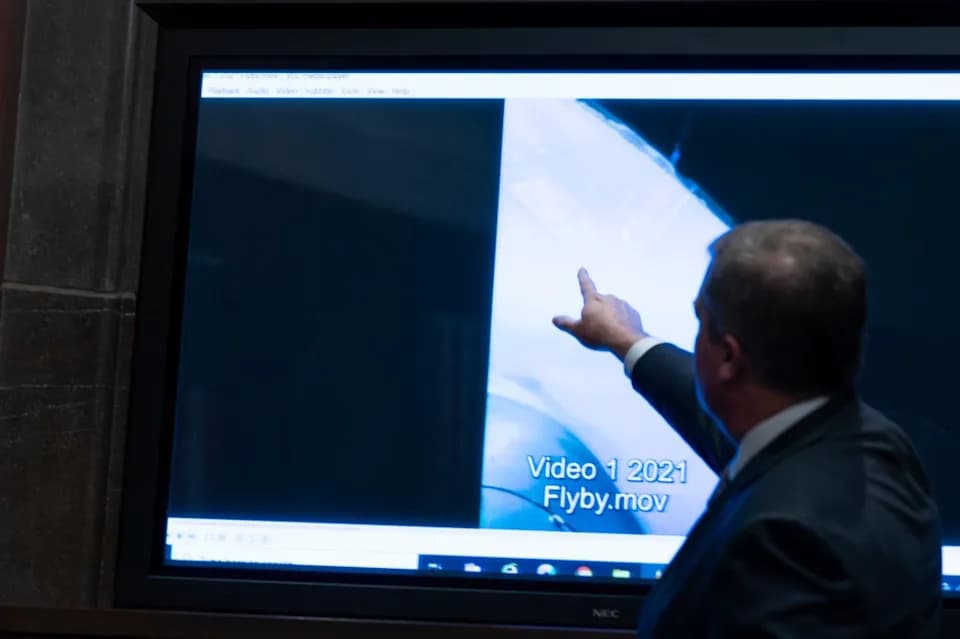
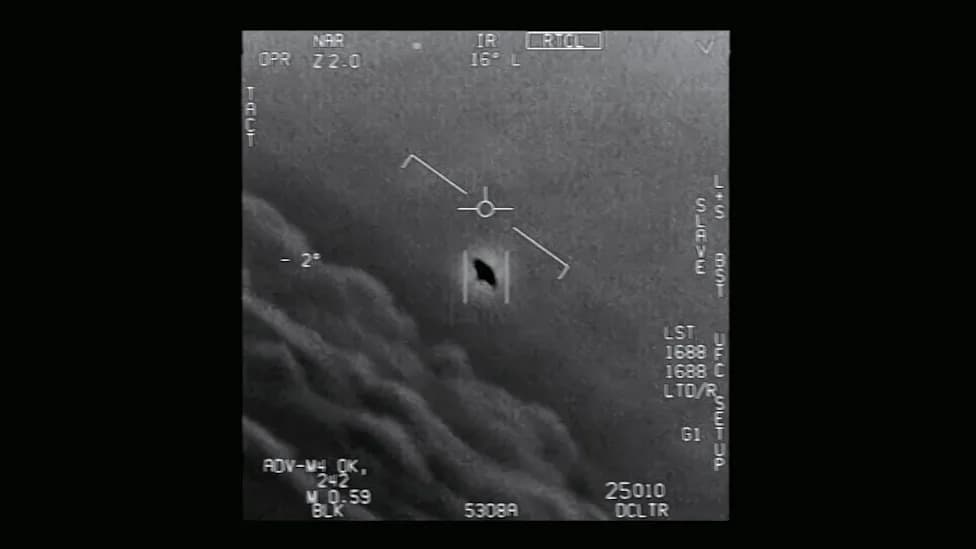
In an open hearing before the House Intelligence Counterterrorism, Counterintelligence, and Counterproliferation Subcommittee on May 17, 2022, Deputy Director of Naval Intelligence Scott Bray shared this video of a U.S. naval jet encounter with an unidentified anomalous phenomenon (UAP). The object's path was fleeting, but a cockpit camera captured it before it vanished. The left-hand image includes a portion of the jet's canopy. —U.S. Department of War (DOW)—The appearance of U.S. DOW visual information does not imply or constitute DOW endorsement.
New Institutions And Public Pressure
In 2022 the All-domain Anomaly Resolution Office (AARO) was established to "detect, identify and attribute objects of interest." In December 2023, legislation titled the Unidentified Anomalous Phenomena Disclosure Act was signed into law, requiring more systematic collection, review, and public disclosure of sightings and encounters. The White House also convened a UAP Science Advisory Council led by Harvard astrophysicist Avi Loeb to evaluate scientific and national-security implications.
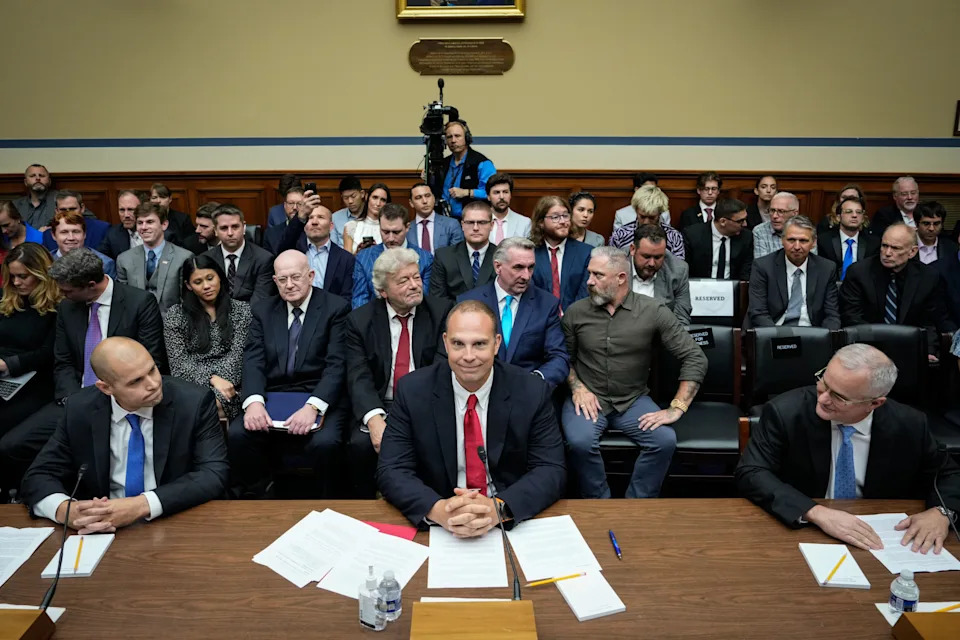
(L-R) Ryan Graves, executive director of Americans for Safe Aerospace, David Grusch, former National Reconnaissance Officer Representative of Unidentified Anomalous Phenomena Task Force at the U.S. Department of Defense, and Retired Navy Commander David Fravor take their seats as they arrive for a House Oversight Committee hearing titled "Unidentified Anomalous Phenomena: Implications on National Security, Public Safety, and Government Transparency" on Capitol Hill 26, 2023 in Washington, DC. —Drew Angerer—Getty Images
High-Profile Encounters
Military and law-enforcement testimony has driven much of the renewed attention. Retired naval lieutenant Ryan Graves described multiple objects tracked near naval airspace after 2012 that behaved in ways hard to reconcile with known technology. The 2004 "Tic Tac" incident—where pilots tracked a 45-foot, fast-moving, cigar-shaped object off the California coast—remains one of the most widely discussed cases because of cockpit video, radar returns, and sworn testimony.
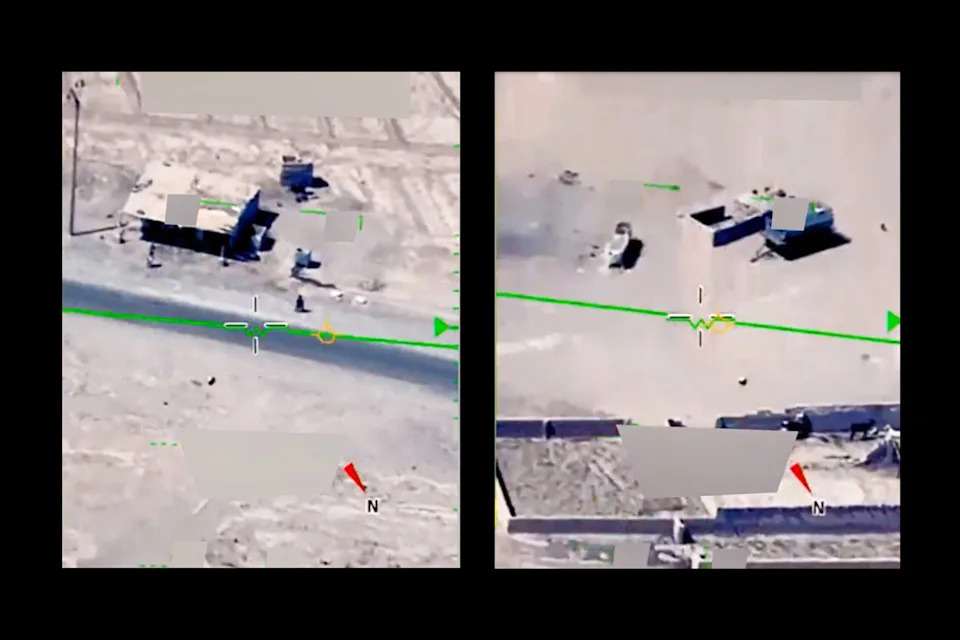
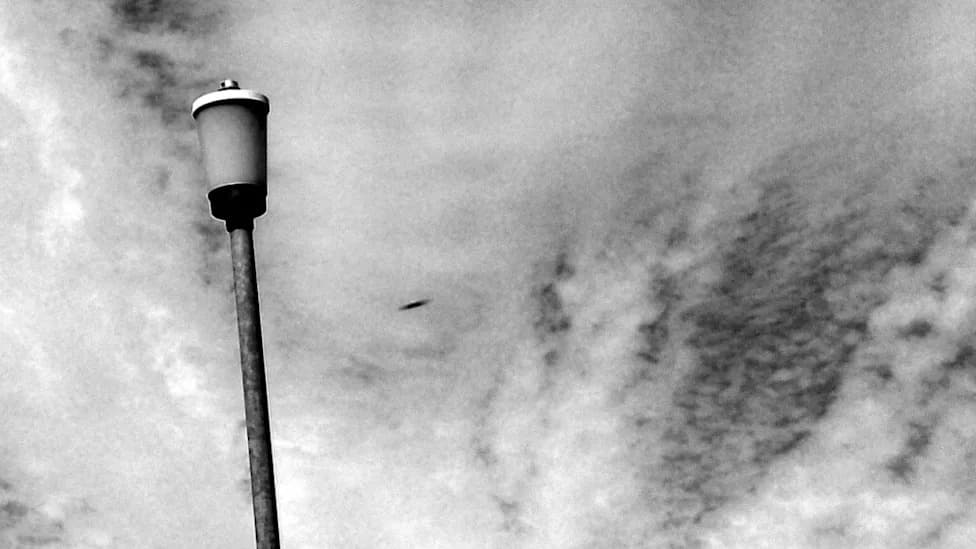
On April 19, 2023, Sean Kirkpatrick, director of the All-domain Anomaly Resolution Office (AARO), shared a video that depicts an apparent silver, orblike object crossing a video sensor's field of view. Kirkpatrick said the "metallic orbs" are the most common type of UAP and are reported from "all over the world." —U.S. Department of War (DOW)—The appearance of U.S. DOW visual information does not imply or constitute DOW endorsement.
Other episodes include repeated UAP incursions over Langley Air Force Base in December 2024, and a 2023 account in which law-enforcement officers near a sensitive national-security site reported a luminous "mother orb" producing smaller red orbs at dusk. AARO director Sean Kirkpatrick has also shared videos of metallic, orb-like objects, which he says are among the most commonly reported UAP types worldwide.
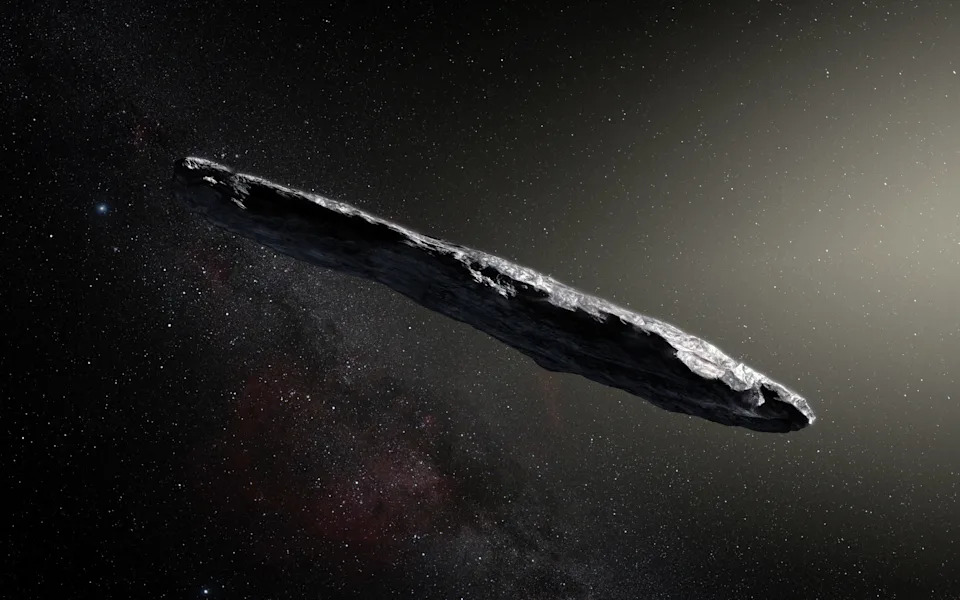
An artist's conception of the fast-moving interstellar comet Oumuamua, which has been discussed as a possible UAP. —ESO/M. Kornmesser
Science, Skepticism, And Private Research
Responses from the scientific community range from cautious skepticism to active investigation. Some researchers emphasize the need for rigorous evidence—radar, multi-sensor corroboration, and physical debris—before accepting extraordinary claims. Others, like Avi Loeb, have formed private initiatives such as the Galileo Project to deploy dedicated telescopes and sensors to capture better data. Loeb and colleagues have even debated whether objects like the interstellar visitor Oumuamua could be technological in origin, a contested but influential hypothesis.
Possible Explanations
Explanations span a broad spectrum: classified domestic or foreign aerospace projects, atmospheric and optical phenomena that mislead human perception, sensor or data-processing anomalies, and—at the far end—visitation by nonhuman intelligence. Many experts adopt a working null hypothesis that most reports will prove to be terrestrial or mundane, while acknowledging a subset of well-documented cases that defy easy explanation.
National-Security And Societal Implications
Beyond pure curiosity, UAPs raise possible national-security concerns if objects repeatedly violate U.S. airspace and cannot be identified. Polls show strong bipartisan public demand for transparency. Experts also warn of broader social consequences if nonhuman intelligence were confirmed: psychological effects, religious and cultural reinterpretation, and significant shifts in global priorities.
Where Things Stand
Congress continues to pursue greater transparency—introducing measures like the UAP Transparency Act—and private organizations press for improved sensors and open data. For now, UAPs remain an unresolved mix of documented incidents, plausible terrestrial explanations, and open questions. The Leuer brothers' 1948 sighting is one of many memories preserved in government files; whether those files ultimately point to earthly technology, atmospheric trickery, or something more extraordinary remains to be proven.
Bottom line: Better sensors, fuller disclosure, and sustained scientific inquiry are making UAPs a mainstream policy, scientific and public debate, but definitive answers are still elusive.
Help us improve.