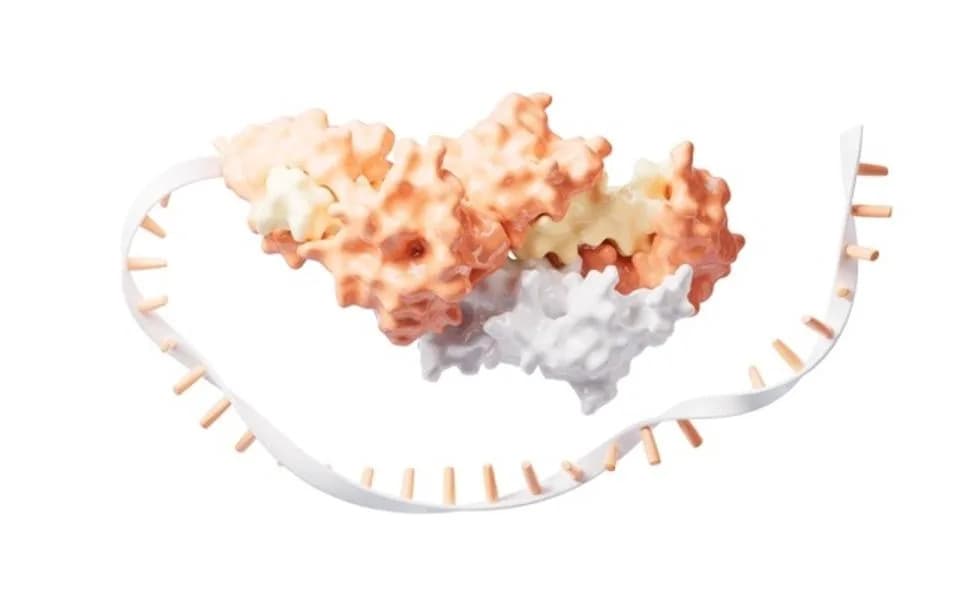
Long-read sequencing and completed T2T reference genomes reveal that DNA frequently adopts 'non-B' shapes beyond the classic double helix. Researchers mapped these alternative structures across the human genome and six ape species, finding many concentrated in satellite repetitive regions and estimating they occupy about 13% of the human genome. Non-B forms — including G-quadruplexes, hairpins and Z-DNA — can affect replication, transcription, methylation and genome stability, with implications for evolution and disease.
Beyond the Double Helix: Long-Read Sequencing Reveals Widespread 'Non-B' DNA in Humans and Apes
(Alones Creative/iStock/Getty Images)
The iconic double helix is only one of several shapes DNA can adopt. New long-read sequencing and the most complete reference genomes from the Telomere-to-Telomere (T2T) consortium have now revealed a far broader landscape of alternative, or 'non-B', DNA structures across the human genome and in six ape species.
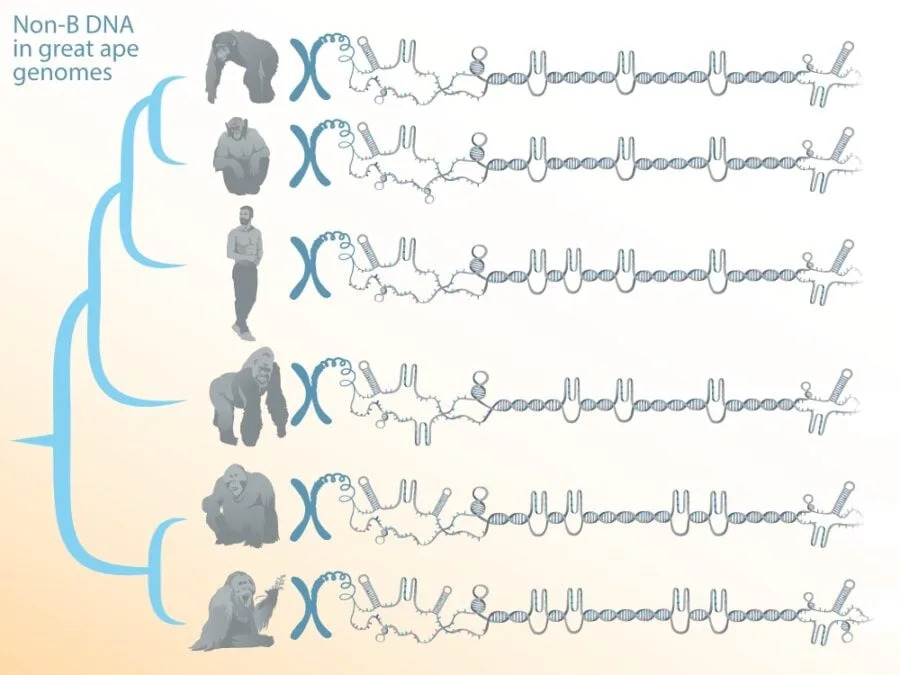
Illustration of primates and their representative chromosomes, with canonical helical and non-B DNA formations. (Dani Zemba and Makova Laboratory/Penn State)
Complete Genomes, New Insights
When the human genome was first published in 2001, roughly 8% remained unresolved — mostly highly repetitive sequences. A concerted effort by the T2T consortium produced the most complete human reference genome in 2022 and finished sequencing remaining regions in 2023. In 2025 the T2T project extended that progress by completing reference genomes for six apes: chimpanzee, bonobo, gorilla, Bornean orangutan, Sumatran orangutan and siamang.
YouTube Thumbnail
What the New Study Found
Using those T2T assemblies, a team led by Kateryna Makova (Pennsylvania State University) and first author Linnéa Smeds searched for sequence motifs that are prone to forming non-B DNA structures. Because long-read technologies generate much longer contiguous sequences than older short-read methods, researchers could assemble and analyze previously inaccessible repetitive regions and detect structural motifs missed before.

Subscribe to ScienceAlert's free fact-checked newsletter
'We now have a complete picture of the motifs that are prone to non-B DNA formation for these genomes,' said Linnéa Smeds.
The reanalysis of the human reference uncovered an overrepresentation of many types of non-B DNA motifs in the newly added T2T sequences. These motifs are often concentrated in satellite DNA — long stretches of repetitive, non-coding sequence that contribute to chromosome organization and stability. In ape genomes, the distribution of non-B motifs is uneven between species and genomic regions.
Types and Potential Effects of Non-B DNA
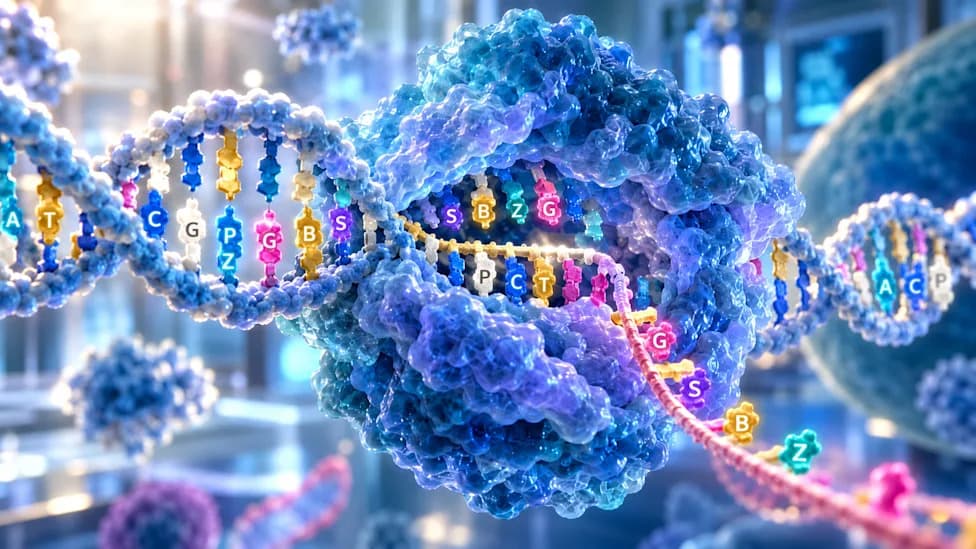
- Forms: Examples include bent or cruciform DNA, hairpin loops, G-quadruplexes (G4s), and left-handed Z-DNA.
- Prevalence: The authors estimate that alternative structures may occupy roughly 13% of the human genome.
- Functional Impacts: Non-B DNA can influence DNA replication, transcription regulation, methylation patterns, chromosome protection and overall genome stability.
Non-B structures are a double-edged sword: they can promote evolutionary innovation but also interfere with replication, elevate mutagenesis, and contribute to genome instability. The team notes links between alternative DNA shapes and diseases such as cancer, some neurodegenerative conditions, and genetic disorders including Werner syndrome.
Why This Matters
Mapping where non-B structures occur is an important step toward understanding how DNA shape — not just sequence — affects cellular processes and human health. The study, published in Nucleic Acids Research, provides a genome-wide catalog of non-B motifs in humans and several ape species, offering a resource for future functional and medical research.
Reference: Makova K. et al., Nucleic Acids Research (study analyzing T2T human and ape reference genomes).
Help us improve.