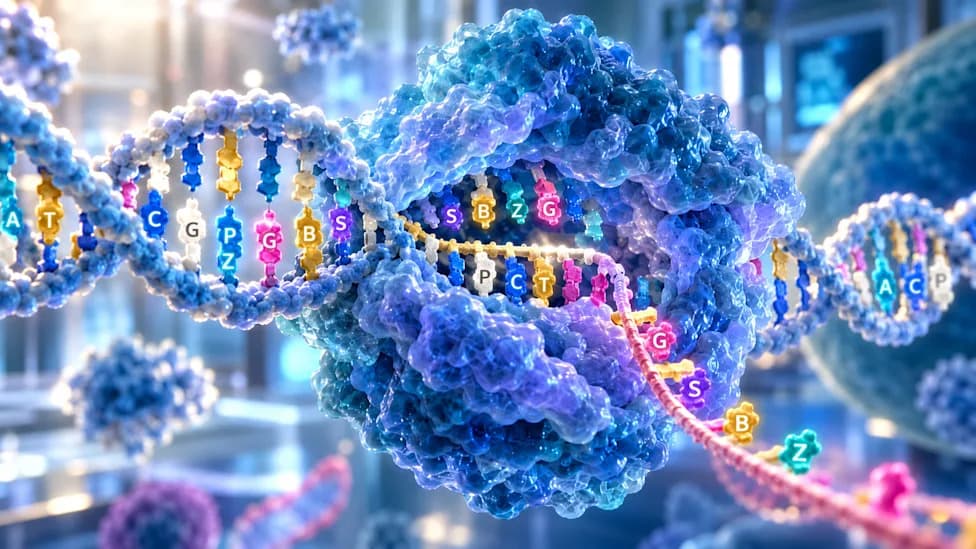
New research finds thousands of candidate hybrid RNAs in macrophages, suggesting cells can join RNA fragments from different genes — sometimes from different chromosomes — to make hybrid proteins. The process, called trans‑splicing, appears linked to inflammation-driven chromosome looping and requires splicing machinery and a chromosome‑folding protein. While one hybrid (Gsdmd–Tmem106a) has protein-level support, technical artifacts and transcriptional read‑through must be ruled out before trans‑splicing is accepted as a common, regulated mechanism in mammals.
The Genome’s Hidden Layer: How Trans‑Splicing May Produce Hybrid Proteins
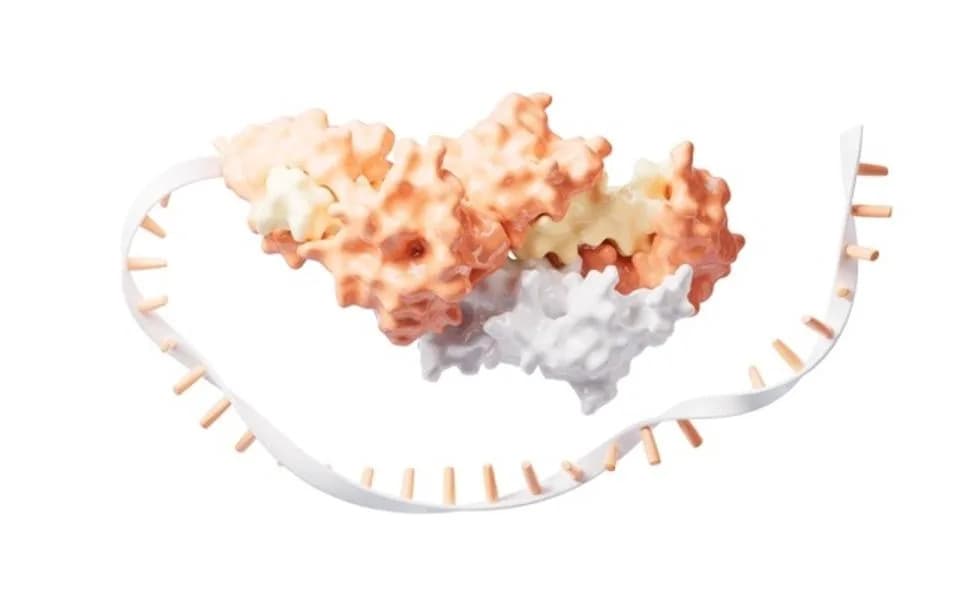
RNA and proteins with biological concept, 3d rendering. 3D illustration.vinkf on Magnific
New research suggests the genome’s coding potential may be far richer than the conventional gene→RNA→protein model implies. In a study of immune cells called macrophages, researchers report thousands of candidate "hybrid" RNA messages formed by joining RNA pieces from different genes — sometimes even from different chromosomes — that could be translated into novel proteins.
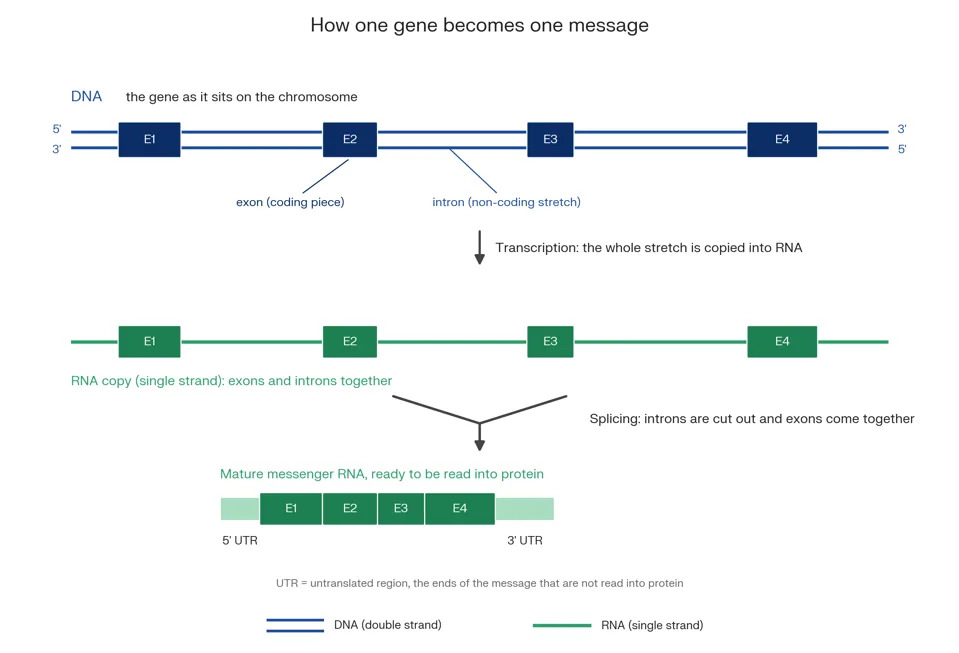
A gene is mostly introns with exons scattered through it. The cell copies the entire stretch into RNA, then splicing removes the introns and stitches the exons together into the messenger RNA that is read to build a protein.
What the Study Found
The team scanned macrophage RNA and identified more than 30,000 candidate hybrid RNAs in mouse macrophages and over 900 candidates in human macrophages. Some hybrids were present in resting cells, while others increased in response to inflammation or tissue-repair signals. Specific examples rose during influenza in lung macrophages, during bacterial meningitis in brain immune cells, and after exposure to bacterial toxin in abdominal macrophages.
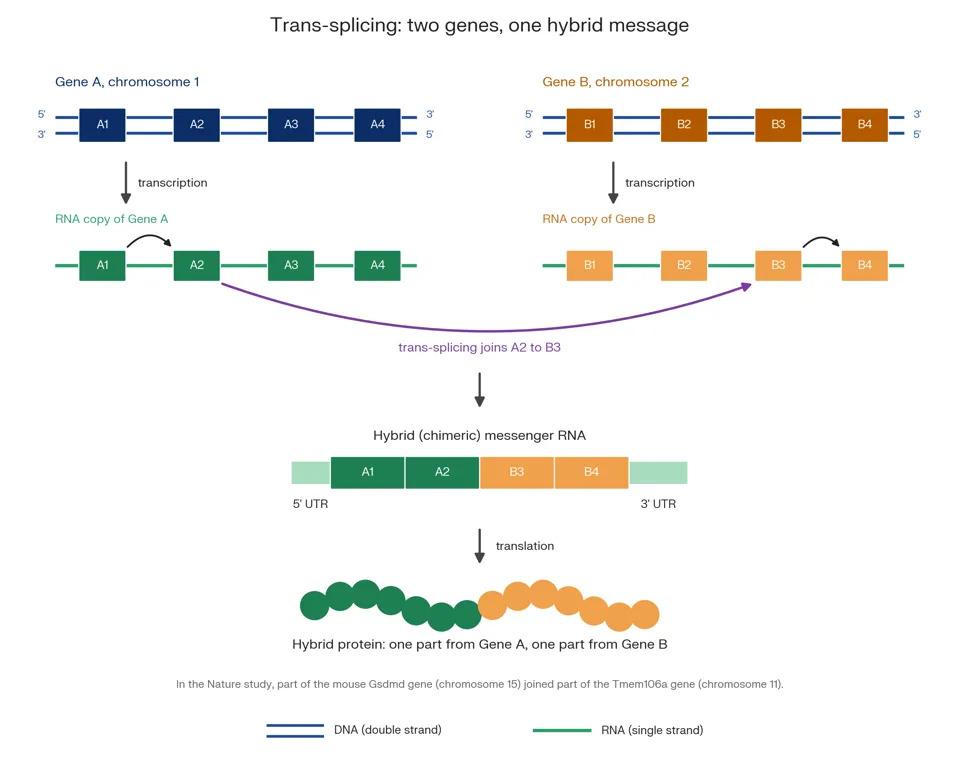
In trans-splicing, messages copied from two genes on separate chromosomes are cut and joined into one hybrid messenger RNA. The cell reads that message to build a single protein with one part from each gene.
A Validated Example
One hybrid joins parts of the gasdermin D gene (Gsdmd) and Tmem106a. To support its existence the researchers engineered a small molecular tag at the predicted junction and raised an antibody that recognizes that junction-specific tag, providing protein-level evidence for the hybrid product.
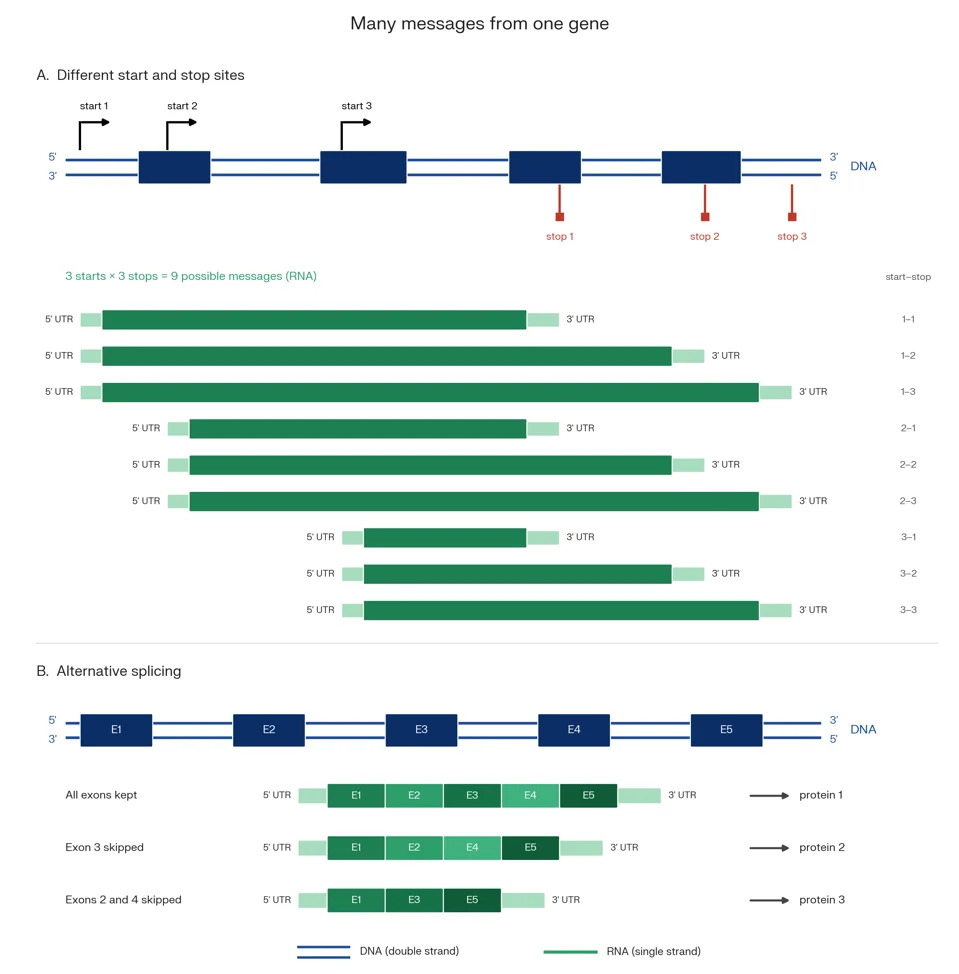
In Panel A, a gene with three possible start sites and three possible stop sites can produce nine messages of different lengths. In Panel B, the same gene can keep all its exons or skip some, and each version encodes a different protein.
How Hybrids Might Arise
Most protein-coding genes are split into exons (short coding segments) and introns (long non-coding stretches). When a gene is transcribed, the whole region becomes pre-mRNA; splicing removes introns and joins exons into a mature messenger RNA. In trans‑splicing, the splicing machinery can ligate exons originating from two different pre-mRNAs, producing a single composite messenger that could be translated into a hybrid protein.
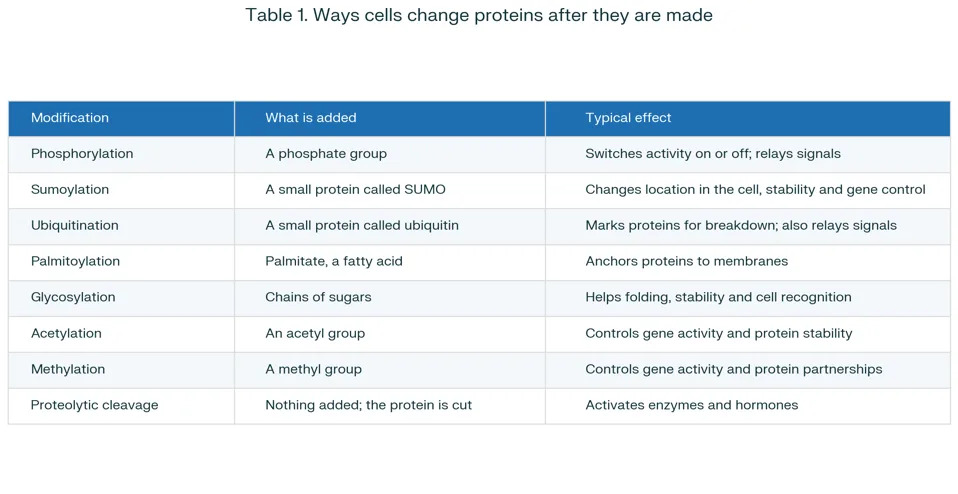
After a protein is built, cells can modify it in hundreds of ways. These eight common changes control whether a protein is active, where it sits in the cell, what it binds to and when it is broken down.
The study shows that bacterial signals can trigger chromosomal looping that brings distant gene loci into physical proximity in the nucleus. This looping depends on a chromosome-folding protein; disrupting that protein prevented loop formation and abolished the hybrids, while inhibiting splicing erased the hybrid messages. These findings point to a regulated mechanism, not random noise.
Alternative Explanations and Technical Caveats
Three types of artifacts can mimic bona fide trans‑splicing: (1) genomic rearrangements that fuse genes at the DNA level, (2) transcriptional read-through that creates extended transcripts spanning neighboring genes, and (3) sequencing/library-preparation artifacts in which reverse-transcriptase or polymerase hops between molecules. The study used direct RNA sequencing and DNA analyses to rule out a genomic fusion for the Gsdmd–Tmem106a case (they reside on separate chromosomes), but many candidate hybrids involved adjacent genes where read-through cannot be excluded. Definitive validation therefore requires careful cell-type selection and orthogonal methods.
Why It Matters
Cells already diversify proteins through alternative splicing, variable transcription start/stop sites, and numerous post‑translational modifications. If trans‑splicing is confirmed as a regulated mechanism in mammals, it would add a qualitatively new layer of proteomic diversity: one genome could encode context‑dependent hybrid proteins that expand functional repertoires in specific cell types or during particular responses.
Bottom line: The evidence for regulated trans‑splicing in mammalian immune cells is intriguing and potentially paradigm‑shifting, but rigorous validation is still required to distinguish true biological events from technical or genomic artifacts.
Originally published on Forbes.com; this version clarifies methods, caveats and implications for a broad scientific audience.
Help us improve.