Researchers are testing vaccines designed to train the immune system to recognize and destroy precancerous cells caused by Lynch syndrome, an inherited defect that greatly increases colorectal and other cancer risks. In an early MD Anderson trial, a Nouscom vaccine targeting 209 abnormal proteins elicited T‑cell responses and was associated with fewer precancerous lesions among 45 participants. Moderna, ImmunityBio and Oxford-led efforts are pursuing similar strategies; larger trials and booster results are expected.
Experimental Vaccines Show Promise in Blocking Lynch Syndrome–Linked Colon Cancer
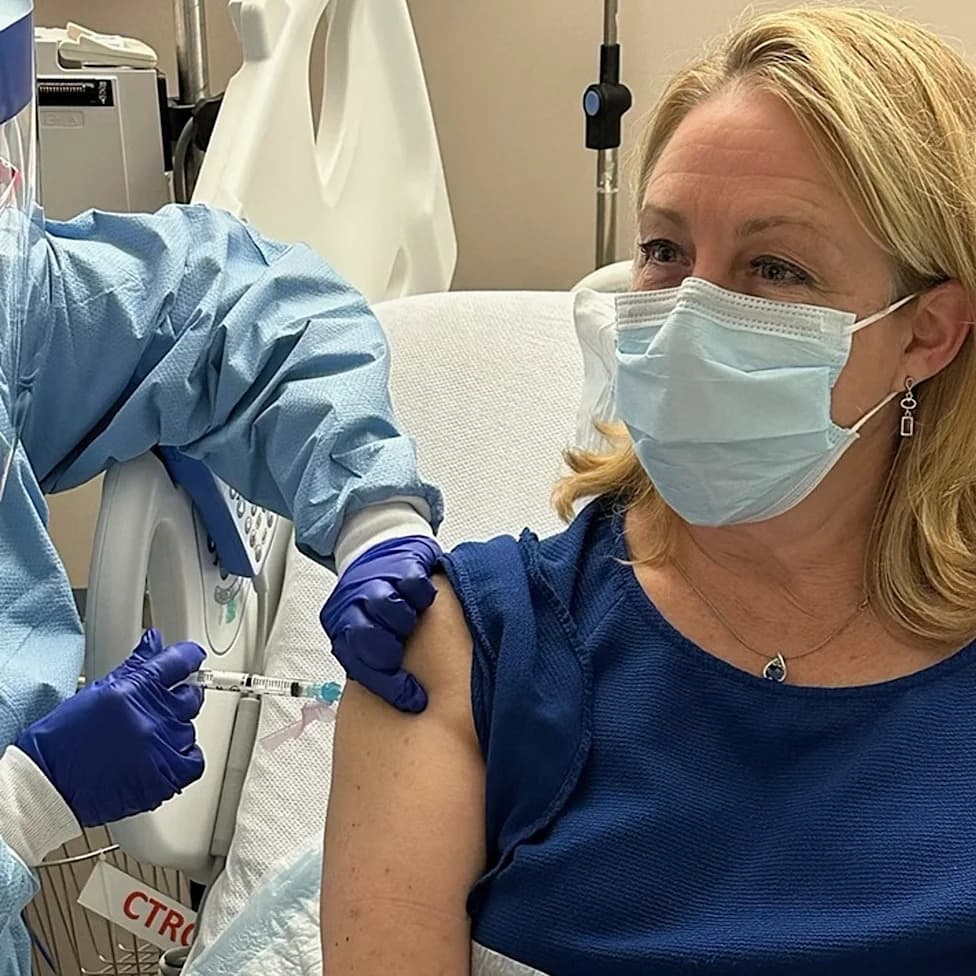
In this photo provided by Dr. Stacy Norton, she receives a trial vaccine for Lynch Syndrome at the MD Anderson Cancer Center Infusion Center in Houston, on April 11, 2023. (Courtesy Dr. Stacy Norton via AP)
Dr. Stacy Norton still remembers being 7 when her mother died of colon cancer. Decades later, Norton — an obstetrician-gynecologist in Houston — enrolled in an experimental vaccine trial designed to teach the immune system to intercept precancerous cells driven by Lynch syndrome, a hereditary defect that sharply raises colorectal and other cancer risks.
How These Vaccines Work
Lynch syndrome stems from faulty mismatch-repair genes, which normally act like cellular spellcheckers to correct DNA copying errors. When these genes fail, cells accumulate many mutations that generate abnormal proteins (neoantigens). Vaccine researchers aim to train the immune system, especially T cells, to recognize and eliminate cells expressing those novel proteins before they become visible tumors.
Early Clinical Results
In a first-step study led by MD Anderson Cancer Center, Norton and 44 other Lynch carriers received a vaccine developed by Swiss biotech Nouscom that targets 209 common abnormal proteins seen in Lynch-related precancers. The investigators reported that the vaccine stimulated tumor‑killing T cells, and one year later colonoscopies in the vaccinated group showed fewer precancerous lesions and no advanced polyps. For Norton, colonoscopies one and two years after vaccination were polyp-free for the first time since 2014.
Other Approaches Underway
Several other candidates are in development. Oxford University teams are beginning trials of a similar concept, Moderna is developing an mRNA-based vaccine using technology from its COVID-19 program, and ImmunityBio is running a larger randomized study testing its Tri-Ad5 vaccine against a placebo.
Why This Matters
About 1 in 279 people carry Lynch syndrome — roughly 1 million Americans — though many remain unaware of their status. While the average person faces about a 5% lifetime risk of colorectal cancer, a Lynch carrier’s lifetime risk can reach as high as 80%, depending on the specific gene involved. Carriers also face markedly higher risks for endometrial (uterine) cancer and increased risks for pancreatic, stomach, ovarian, certain skin cancers, and rare brain tumors.
Today many Lynch carriers undergo colonoscopies annually to detect and remove polyps early. If vaccines can reliably prevent precancers from progressing, they could reduce the frequency of invasive surveillance and lessen anxiety and cancer burden in high-risk families — though larger trials and longer follow-up are still needed.
What Patients Should Know
For people without Lynch syndrome, U.S. guidelines recommend routine colorectal screening beginning at age 45. At any age, seek medical evaluation for warning signs such as blood in the stool or rectal bleeding; persistent changes in bowel habits; unintended weight loss; or prolonged abdominal pain or cramps. Genetic testing is increasingly offered to people with family histories or early-onset tumors that suggest Lynch syndrome, which can help identify at-risk relatives.
"It gives me hope," Norton said of the vaccine results. Investigators expect larger trials and additional data on booster doses to begin or report results soon.
The Associated Press Health and Science Department receives support from the Howard Hughes Medical Institute’s Department of Science Education and the Robert Wood Johnson Foundation. The AP is solely responsible for the content.
Help us improve.