Prime Minister Christopher Luxon said he would consider a referendum on New Zealand's electoral system, potentially as early as 2027 if re-elected after the Nov. 7 general election. He did not say whether any referendum would be binding. The proposal has drawn criticism from coalition partner New Zealand First and opposition from ACT and Labour, and highlights wider tensions in Luxon's National-led coalition. The article explains how MMP works, its 1996 adoption and 2011 retention, and the potential political consequences of reopening the debate.
Luxon Open To Referendum On New Zealand’s Electoral System, Deepening Coalition Rift
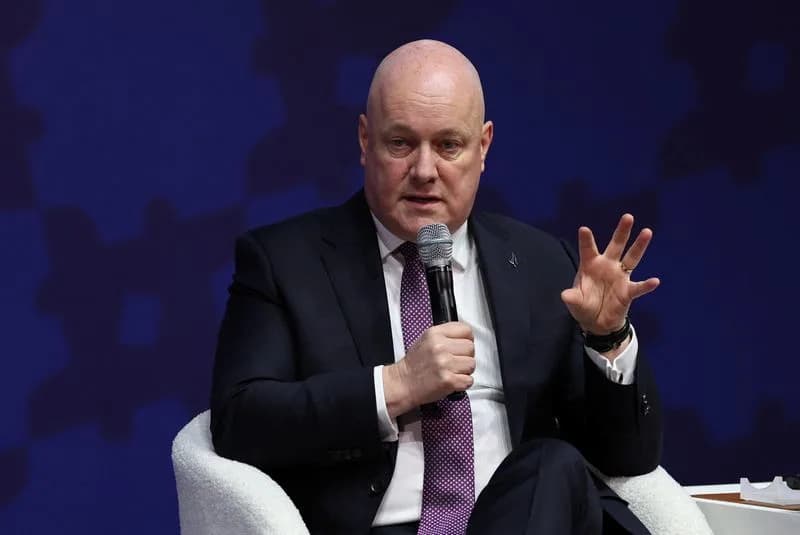
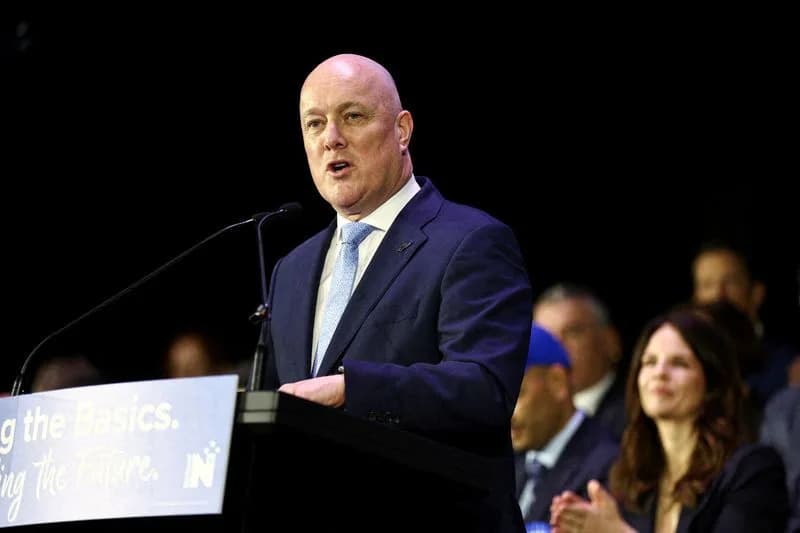
New Zealand's Prime Minister Christopher Luxon speaks at the 2025 Asia-Pacific Economic Cooperation (APEC) CEO Summit in Gyeongju, South Korea, October 29, 2025. REUTERS/Tyrone Siu
WELLINGTON, Aug 6 — New Zealand Prime Minister Christopher Luxon said on Thursday he would consider holding a referendum on whether to change the country's electoral system, a proposal that has widened divisions inside his centre-right coalition with months to go before the Nov. 7 general election.
Luxon told radio station Newstalk ZB that a referendum is "something we should consider," and suggested it could be held as early as 2027 if he returns to office after the election. He did not say whether any referendum would be binding.
Political Reaction
The announcement drew swift criticism from coalition partners and opponents. Winston Peters, leader of New Zealand First, called the idea "inexplicable," saying on X that it would amount to "a power grab" and would undermine democratic representation. The ACT Party, led by David Seymour, and the main opposition Labour Party also voiced opposition.
Political commentators say the move highlights tensions in Luxon's National-led coalition, where partners already disagree on economic and minority policy issues. Critics argue revisiting the voting system so close to a general election risks political instability and could be seen as an attempt to reshape the electoral playing field.
Background: Why MMP Was Adopted
New Zealand adopted the German-style Mixed Member Proportional (MMP) system in 1996 following an inquiry that found smaller parties were being excluded under the previous first-past-the-post model. MMP was retained in a 2011 referendum, when 58% of voters chose to keep the system.
How MMP Works
MMP gives voters two votes: one for a local electorate candidate and one for a political party. Winners of the 71 electorate seats take those places automatically; the remaining seats are filled from party lists so that each party’s total number of seats reflects its share of the nationwide vote. There are typically around 49 list seats, though the exact number can change because of the system’s technical rules (including overhang seats).
The system is praised for allowing smaller parties greater representation and for producing broadly representative parliaments, but it is also criticized for complexity and for often requiring coalition governments. One notable feature of New Zealand's system is the seven Maori electorate seats, reserved for voters who choose to be on the Māori roll.
Other Reforms Mentioned
In the same interview, Luxon reiterated his support for extending New Zealand's current three-year parliamentary terms to four years, a separate constitutional change that has been debated for decades.
Why It Matters: Any move to hold a referendum on MMP would have significant political consequences — it would require public debate on the fundamentals of New Zealand’s representative system, could reshape coalition dynamics, and would be a major campaign issue ahead of and after the general election.
(Reporting by Alasdair Pal in Sydney and Lucy Craymer in Wellington; Editing by Stephen Coates)
Help us improve.