Monkeys, especially troops of macaques, are increasingly raiding crops across rural Nepal, destroying fields in minutes and threatening farmers' livelihoods. Villagers stage daily dawn vigils using slings, dogs, laser lights and noise cannons, but deterrents often fail. The problem has worsened after firearms used during the Maoist insurgency were confiscated about a decade ago, and rural depopulation has left fewer people to defend farmland. Local leaders and lawmakers face hard choices balancing wildlife protection with community survival.
Crop‑Raiding Macaques Devastate Nepal's Rural Farms — Villagers Keep Watch at Dawn
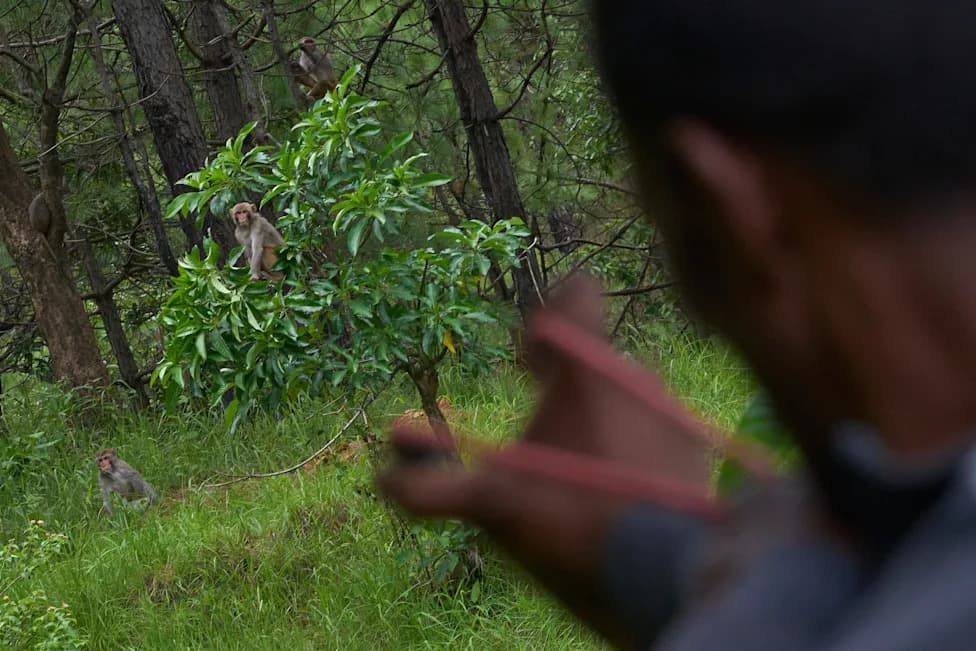
A farmer uses a slingshot while guarding crops and keeping monkeys away in Dharamghar, Dolakha district, about 86 kilometers (53 miles) east of Kathmandu, Nepal, Saturday, July 25, 2026. (AP Photo/Niranjan Shrestha)(AP Photo/Niranjan Shrestha)
Dharmghar, Nepal — Macaques are emerging as a growing and destructive threat to farmers across rural Nepal, sweeping through fields and stripping crops in minutes.
At first light, villagers fan out across fields armed with slings, sticks, laser lights, guard dogs and homemade noise cannons, keeping a careful watch along the tree line. The goal is urgent and simple: prevent troops of monkeys from moving in and destroying months of work in moments.
The repeated dawn vigils underscore a widening crisis. Farmers say monkey raids now rank among the biggest risks to livelihoods, even after years of attempts to repel increasingly bold animals. The problem is compounded by rural depopulation: as young people leave for cities and overseas jobs, fewer hands remain to tend and defend farmland.
Local efforts to deter macaques are wide-ranging but often short-lived. Villagers use slings, stones, laser pointers, dogs and noise devices. In a recent attempt to push the animals back, a rural municipality in eastern Nepal closed schools and government offices for three days so hundreds of residents could drive monkeys into nearby forests—only to see the animals return days later.
Lawmakers and community leaders say the problem intensified about a decade ago after authorities confiscated firearms that villagers had relied on during the Maoist insurgency to protect crops and livestock. Without that deterrent, many say, macaques grew bolder. The issue has become political, forcing Parliament to weigh wildlife protection laws against the immediate survival needs of rural communities.
Human costs are real. Seventy-one-year-old Debaka Karki wakes most mornings to guard her small plot, watching the trees for movement. Once she stepped away for a few minutes to refill a bottle of warm water; when she returned, a troop of monkeys had stripped her field of its produce. With her sons working in Kathmandu, she and her husband now shoulder the work—and the risk—alone.
In Dharmghar, a village in Dolakha District, population has fallen dramatically, from nearly 800 people in 2017 to roughly 150 today, according to Ganesh Karki, head of the local community forest. Of about 210 households, only half remain occupied; abandoned fields and homes have given macaque troops more room to expand.
Seventy-three-year-old Krishna Bahadur Khadka said he was knocked to the ground and bitten during a monkey attack last year, leaving him bedridden for nearly four months. "Thankfully other people came and chased the monkeys away. Otherwise I don't know what would have happened," he said.
This documentary photo essay, curated by AP photo editors, highlights the rising tensions between human communities and wildlife in rural Nepal—and the difficult tradeoffs facing policymakers, conservationists and farmers on the front lines.
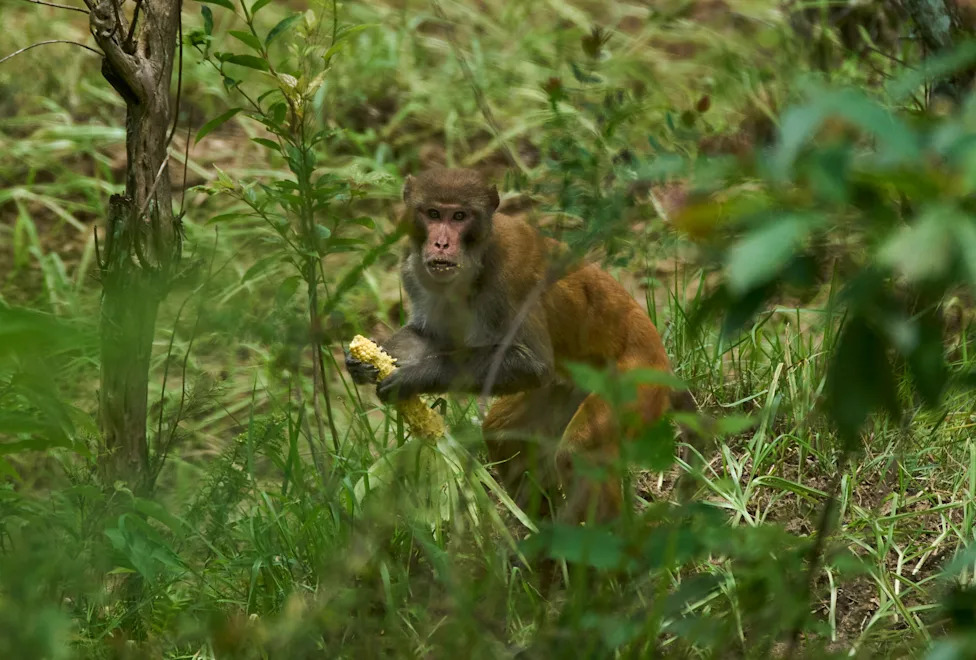
A monkey eats corn stolen from a nearby farmland in Dharamghar, Dolakha district, about 86 kilometers (53 miles) east of Kathmandu, Nepal, Friday, July 24, 2026. (AP Photo/Niranjan Shrestha)(AP Photo/Niranjan Shrestha)
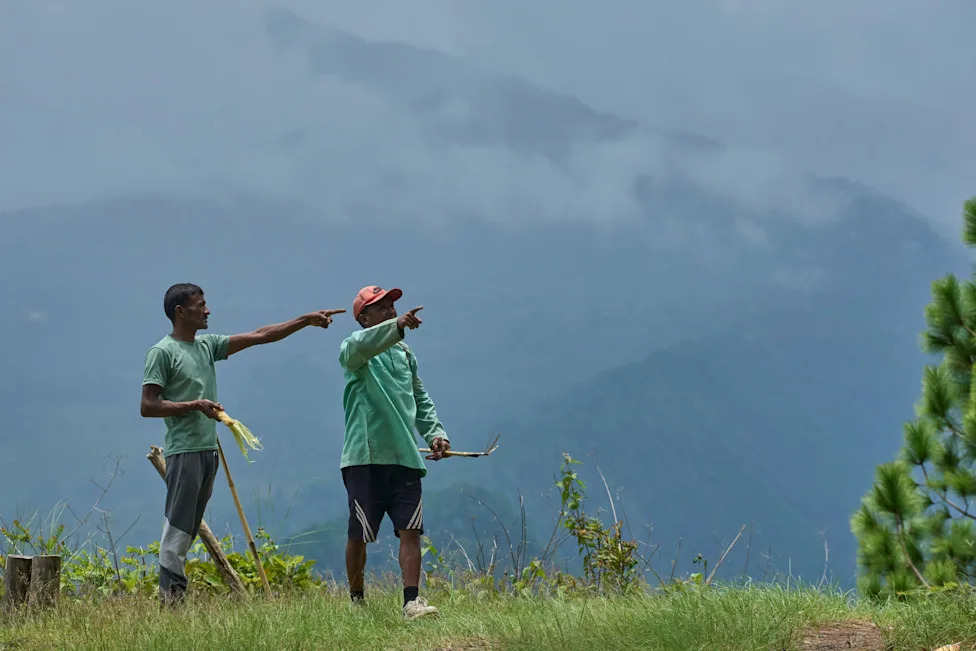
Farmers look for the direction a troop of monkeys fled after chasing them away to protect their farmland in Dharamghar, Dolakha district, about 86 kilometers (53 miles) east of Kathmandu, Nepal, Friday, July 24, 2026. (AP Photo/Niranjan Shrestha)(AP Photo/Niranjan Shrestha)
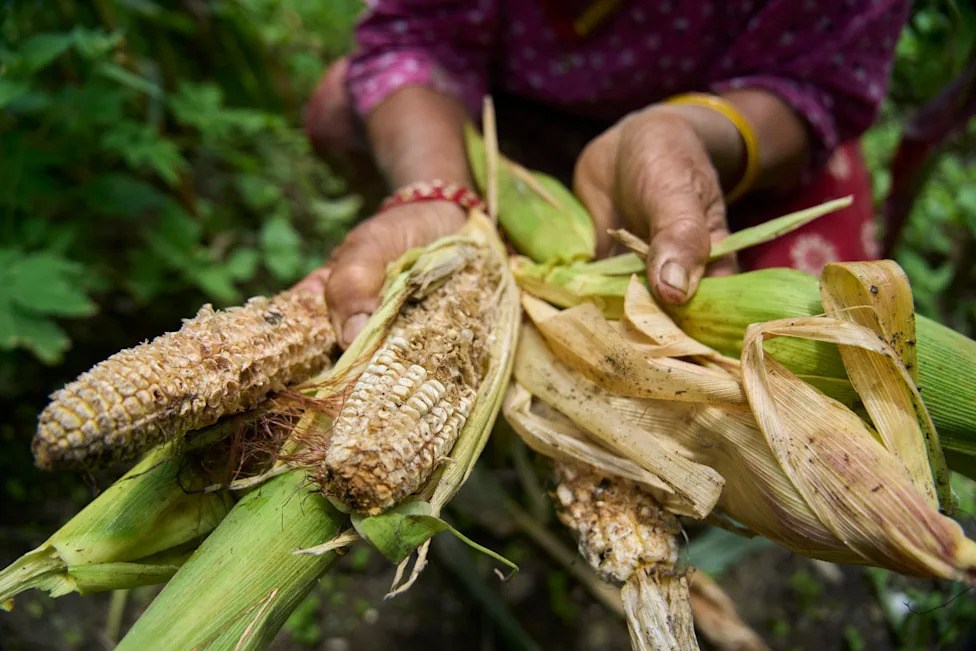
Maya Devi Khadka, 69, shows maize damaged by monkeys in Dharamghar, Dolakha district, about 86 kilometers (53 miles) east of Kathmandu, Nepal, Friday, July 24, 2026. (AP Photo/Niranjan Shrestha)(AP Photo/Niranjan Shrestha)
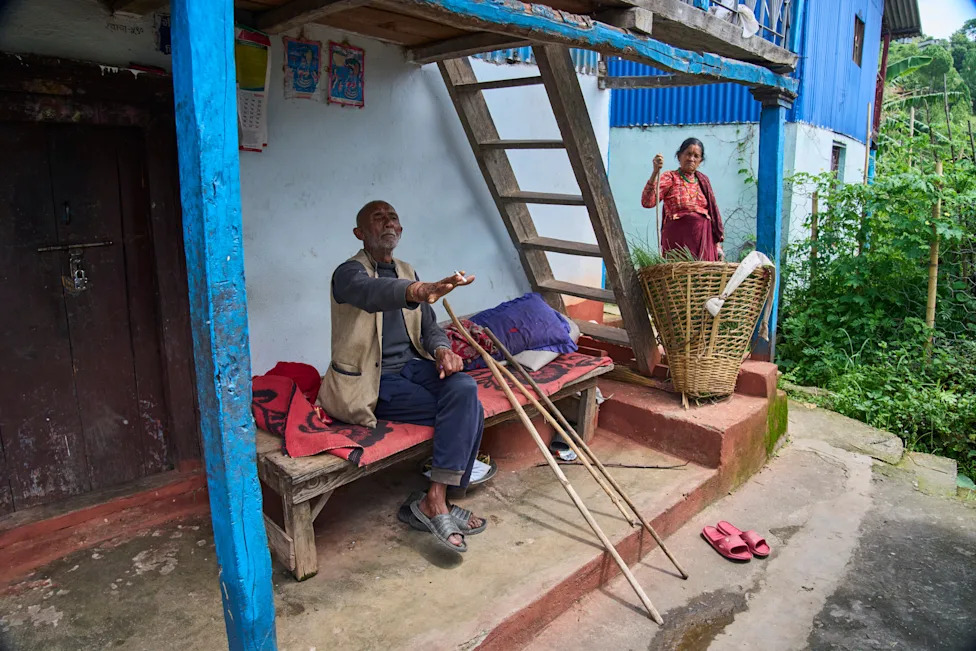
Hari Bahadur Karki, 73, shares his experience about monkeys raiding the village farmland, as Bhawani Khadka, 70, listens while holding a stick she uses to guard her farm against monkeys in Dharamghar, Dolakha district, about 86 kilometers (53 miles) east of Kathmandu, Nepal, Friday, July 24, 2026. (AP Photo/Niranjan Shrestha)(AP Photo/Niranjan Shrestha)
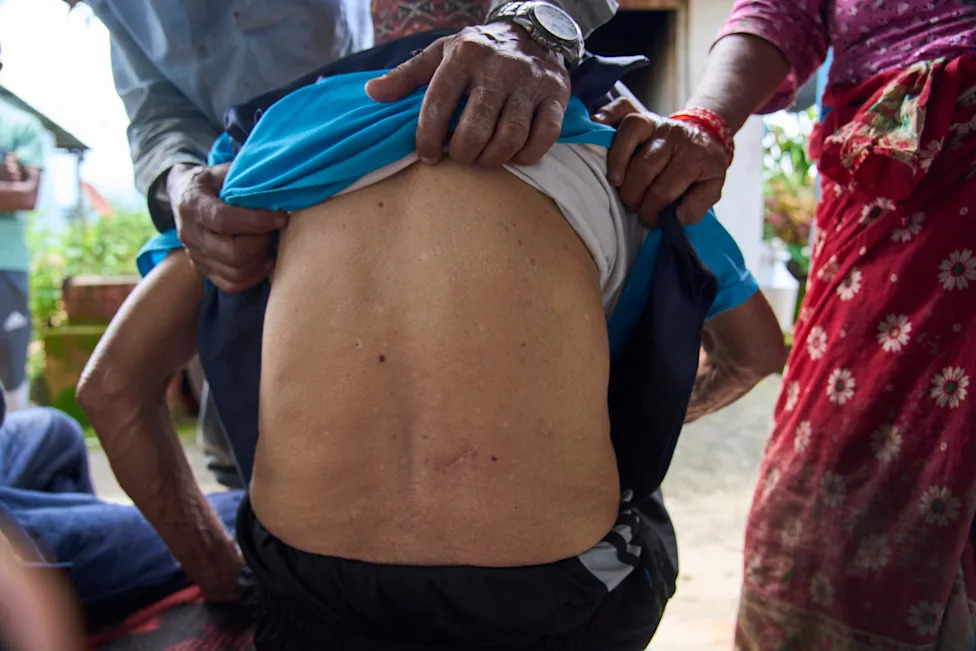
Krishna Bahadur Khadka, 73, shows scars from monkey bites after he was attacked while guarding his crop in Dharamghar, Dolakha district, about 86 kilometers (53 miles) east of Kathmandu, Nepal, Friday, July 24, 2026. (AP Photo/Niranjan Shrestha)(AP Photo/Niranjan Shrestha)
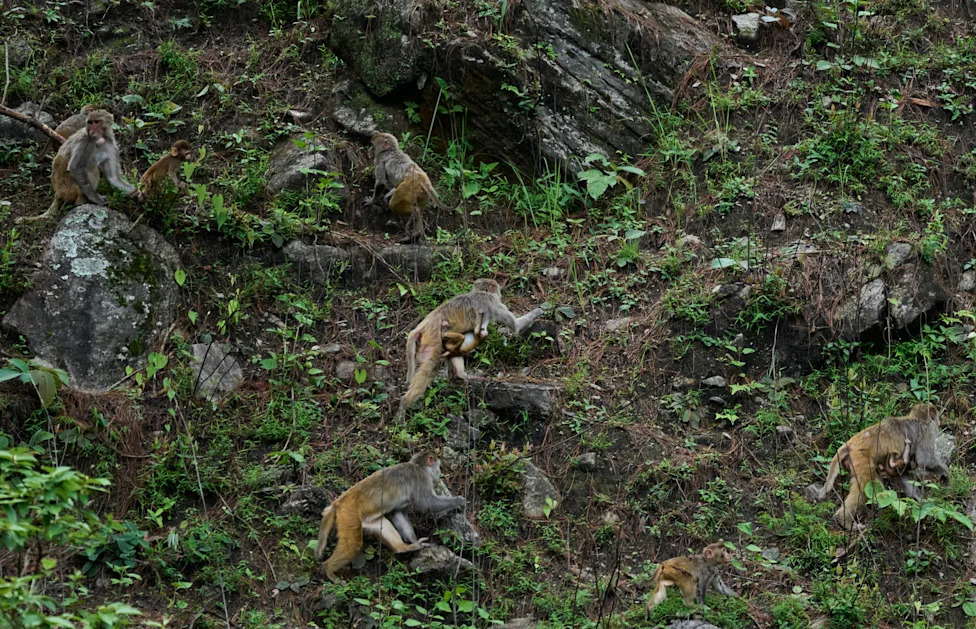
A troop of monkeys scatter after being chased by farmers from a nearby farmland in Dharamghar, Dolakha district, about 86 kilometers (53 miles) east of Kathmandu, Nepal, Friday, July 24, 2026. (AP Photo/Niranjan Shrestha)(AP Photo/Niranjan Shrestha)
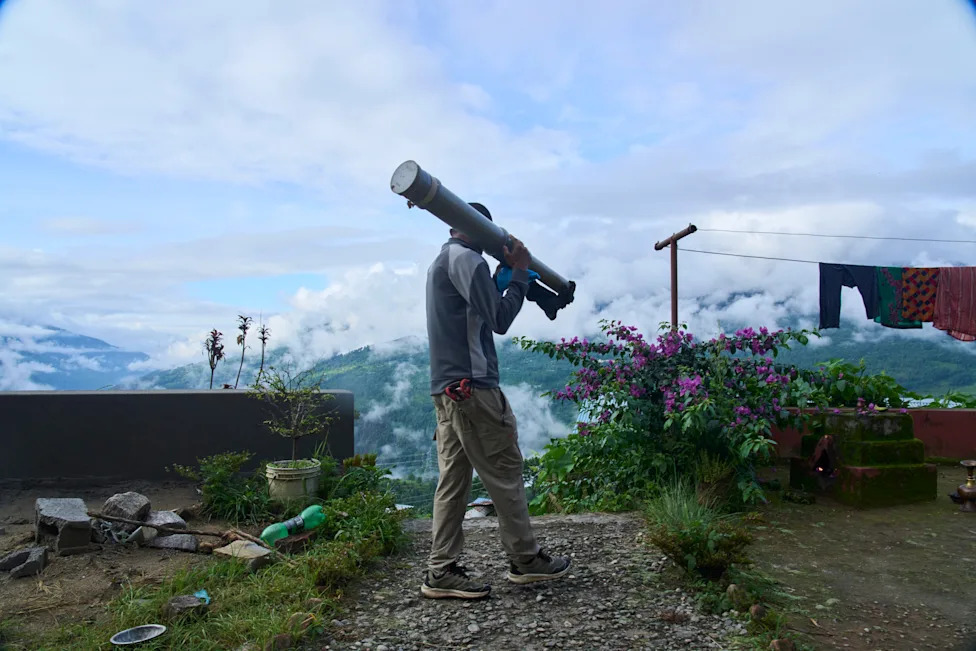
Ganesh Karki, 44, carries a homemade canon that creates noise used to chase monkeys away from nearby farmlands in Dharamghar, Dolakha district, about 86 kilometers (53 miles) east of Kathmandu, Nepal, Saturday, July 27, 2026. (AP Photo/Niranjan Shrestha)(AP Photo/Niranjan Shrestha)
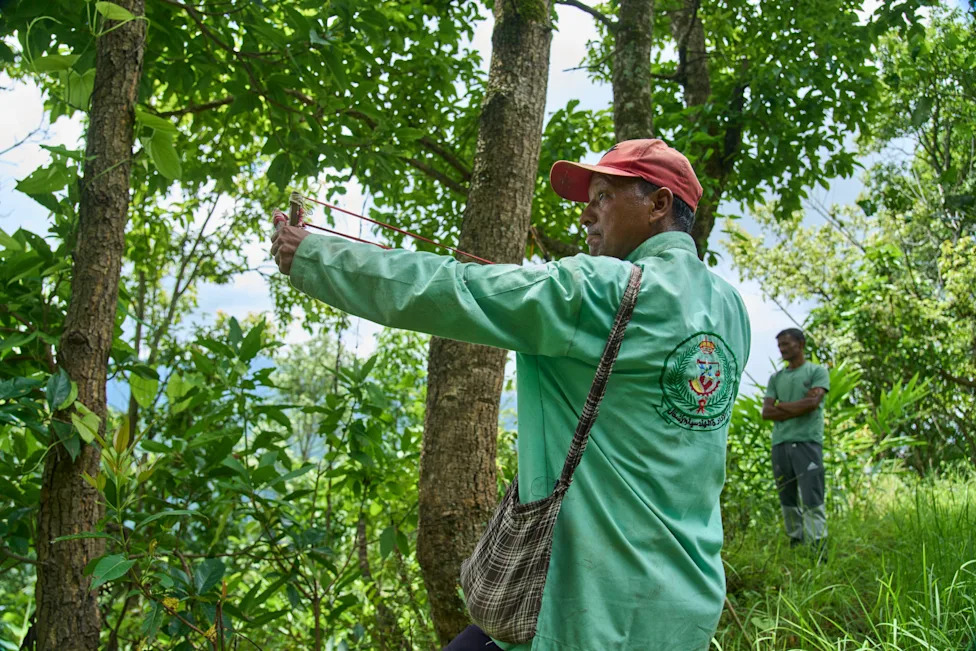
A farmer uses a slingshot while guarding crops from monkeys in Dharamghar, Dolakha district, about 86 kilometers (53 miles) east of Kathmandu, Nepal, Friday, July 24, 2026. (AP Photo/Niranjan Shrestha)(AP Photo/Niranjan Shrestha)
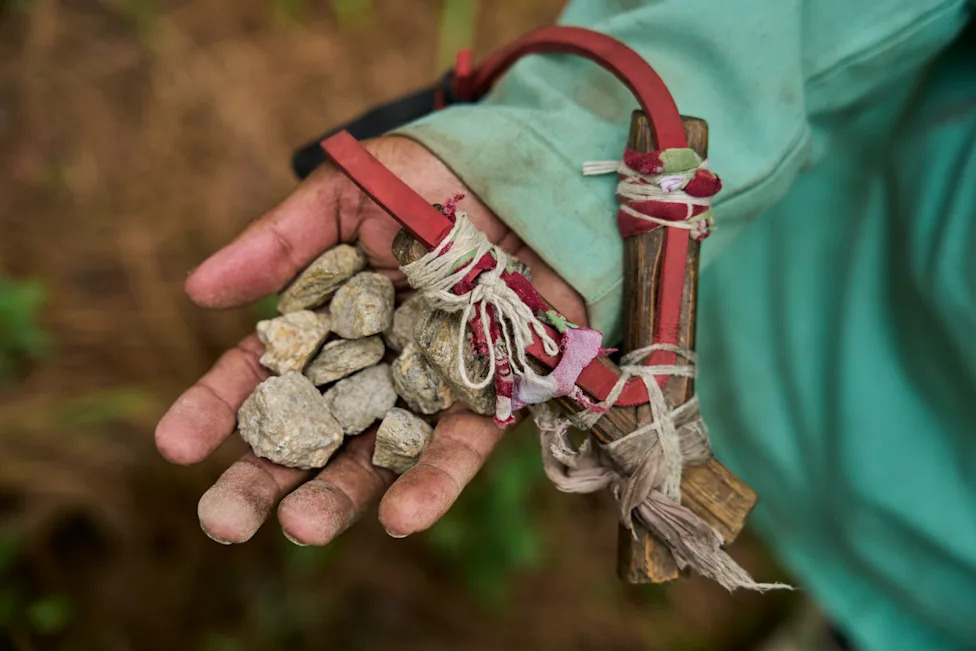
A farmer shows the slingshot and stones he uses to chase monkeys away from nearby farmland in Dharamghar, Dolakha district, about 86 kilometers (53 miles) east of Kathmandu, Nepal, Friday, July 24, 2026. (AP Photo/Niranjan Shrestha)(AP Photo/Niranjan Shrestha)
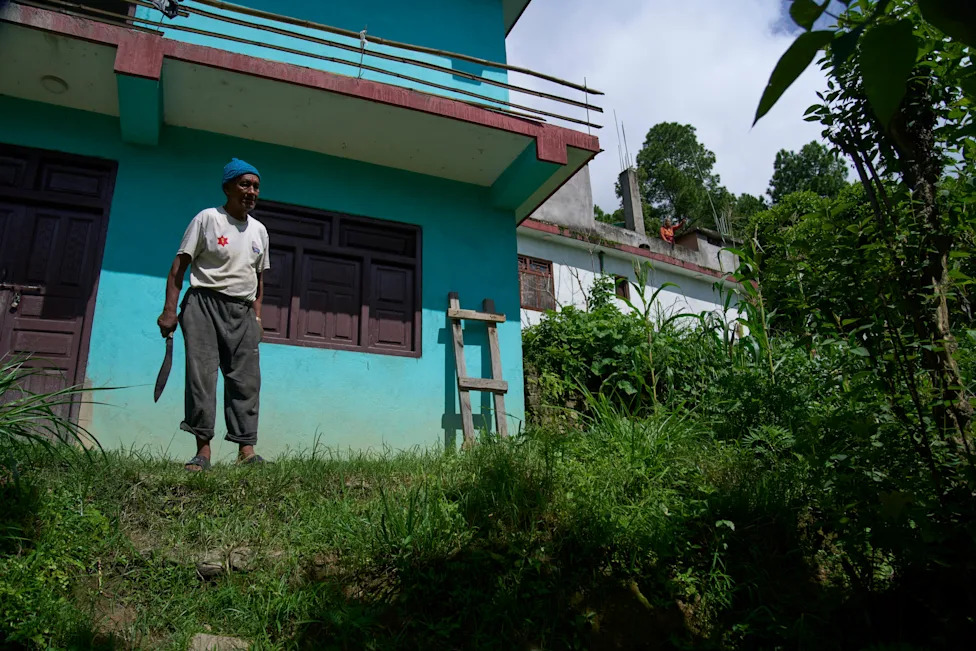
An elderly farmer stands vigil guarding his crop from monkeys in Dharamghar, Dolakha district, about 86 kilometers (53 miles) east of Kathmandu, Nepal, Saturday, July 25, 2026. (AP Photo/Niranjan Shrestha)(AP Photo/Niranjan Shrestha)
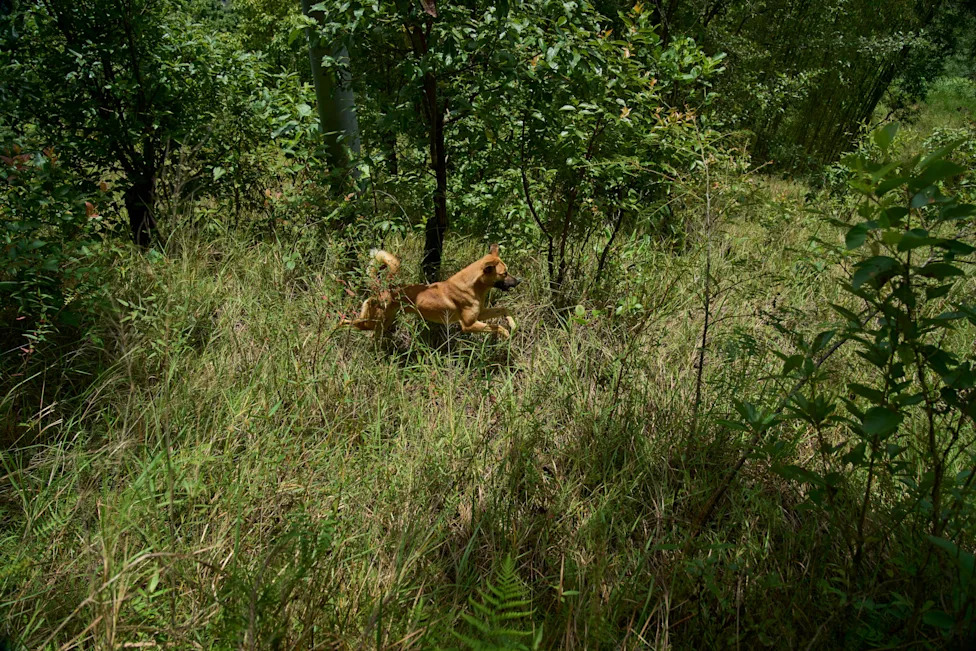
A dog follows farmers chasing monkeys in Dharamghar, Dolakha district, about 86 kilometers (53 miles) east of Kathmandu, Nepal, Friday, July 24, 2026. (AP Photo/Niranjan Shrestha)(AP Photo/Niranjan Shrestha)
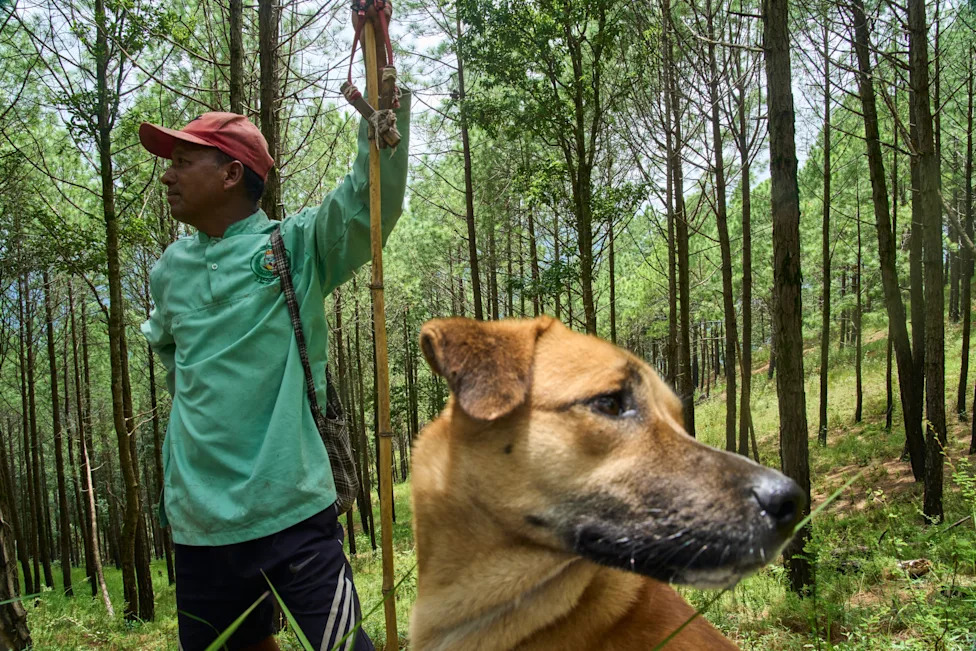
A farmer and his dog look for the direction a group of monkeys fled in Dharamghar, Dolakha district, about 86 kilometers (53 miles) east of Kathmandu, Nepal, Friday, July 24, 2026. (AP Photo/Niranjan Shrestha)(AP Photo/Niranjan Shrestha)
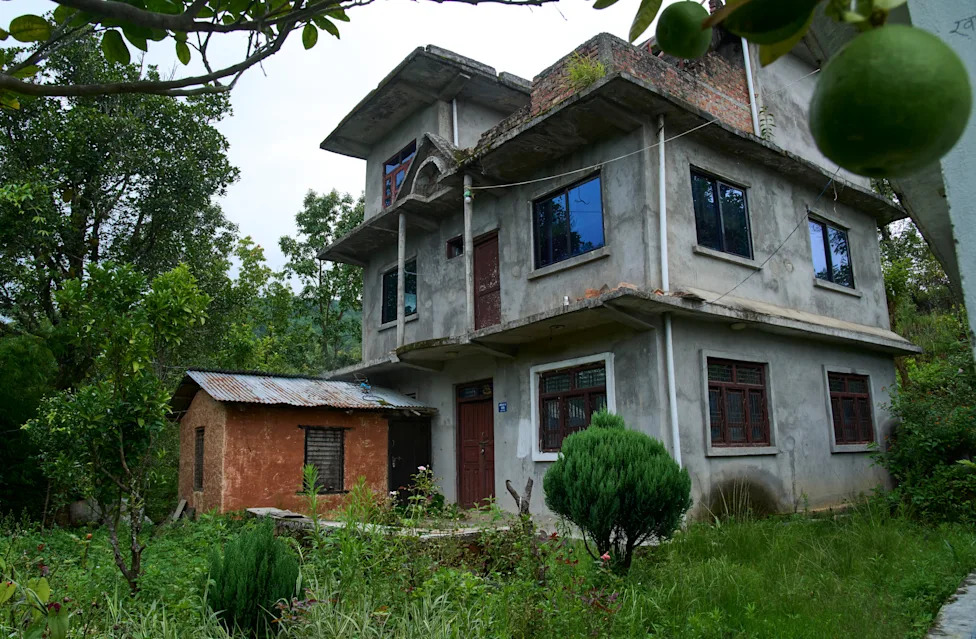
An abandoned house stands in Dharamghar, Dolakha district, about 86 kilometers (53 miles) east of Kathmandu, Nepal, Friday, July 24, 2026. (AP Photo/Niranjan Shrestha)(AP Photo/Niranjan Shrestha)
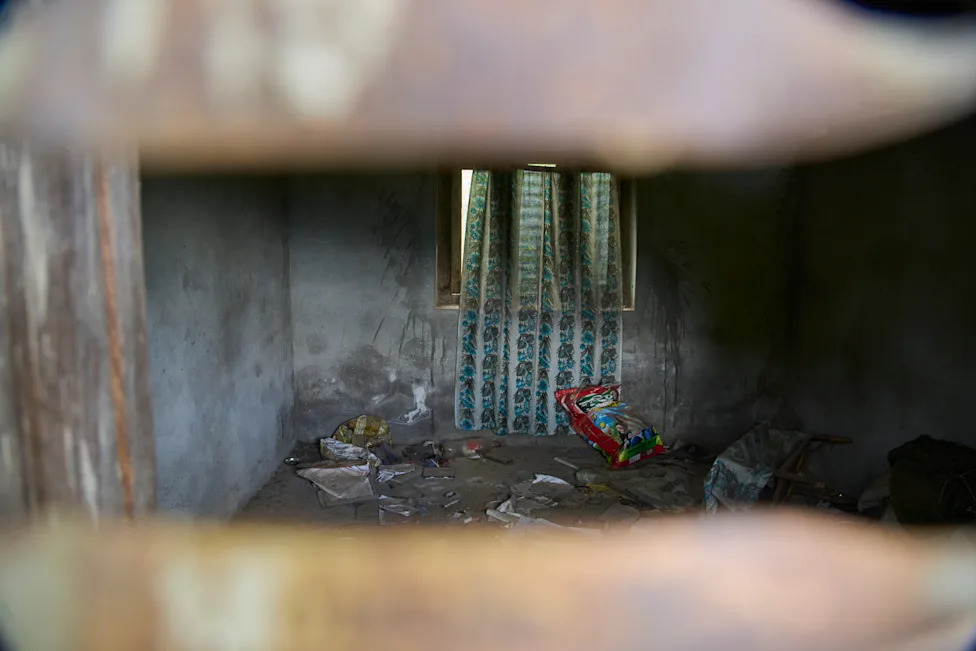
An abandoned house is seen in Dharamghar, Dolakha district, about 86 kilometers (53 miles) east of Kathmandu, Nepal, Friday, July 24, 2026. (AP Photo/Niranjan Shrestha)(AP Photo/Niranjan Shrestha)
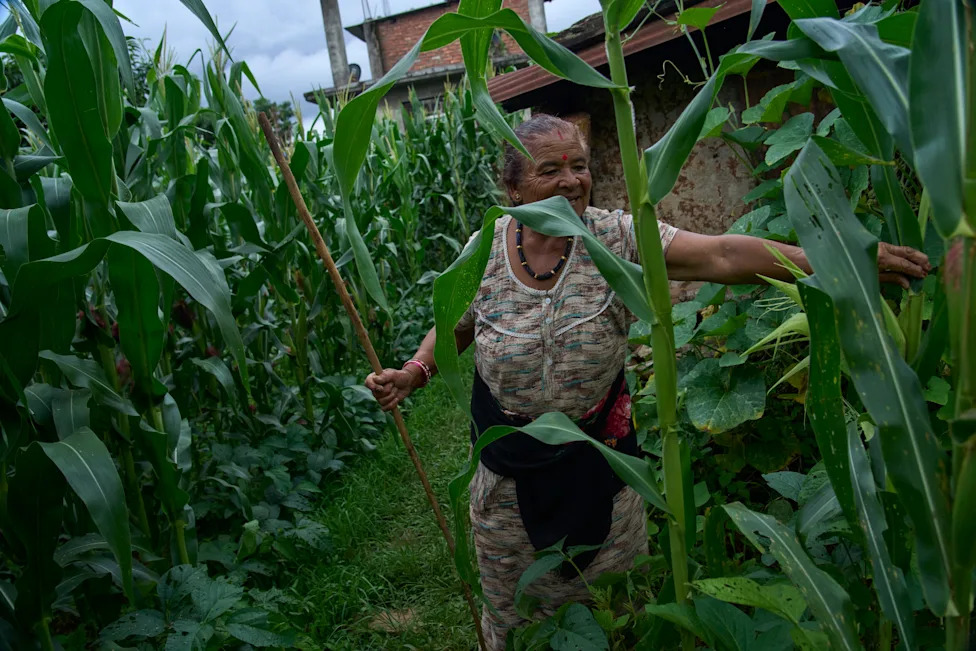
Debaka Karki, 71, checks for damaged maize crop after a raid by monkeys at Dharamghar, Dolakha district 86km east from Kathmandu, Nepal, Saturday, July 25, 2026. (AP Photo/Niranjan Shrestha)(AP Photo/Niranjan Shrestha)
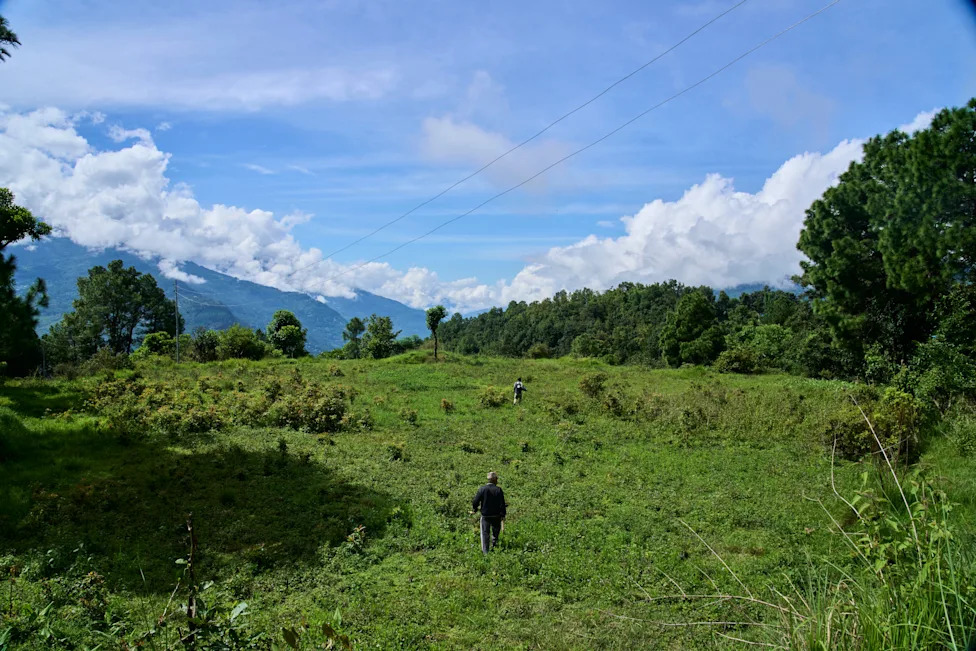
A farmer stands in an empty field that was once farmland but is now uncultivated because of repeated monkey raids in Dharamghar, Dolakha district, about 86 kilometers (53 miles) east of Kathmandu, Nepal, Saturday, July 25, 2026. (AP Photo/Niranjan Shrestha)(AP Photo/Niranjan Shrestha)
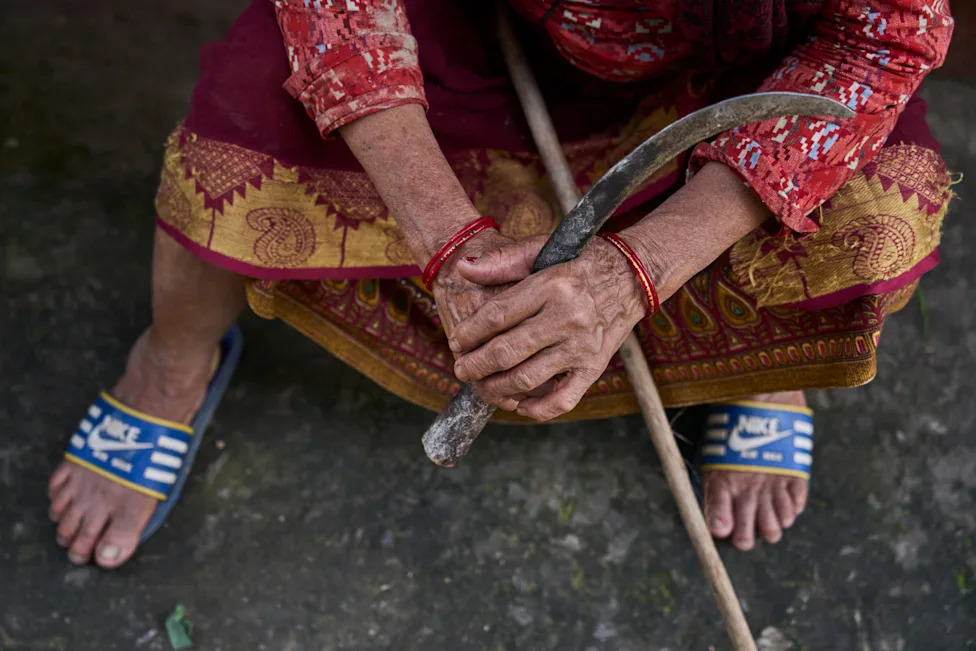
Bhawani Khadka, 70, holds a sickle and a stick to guard against monkey raids in Dharamghar, Dolakha district, about 86 kilometers (53 miles) east of Kathmandu, Nepal, Friday, July 24, 2026. (AP Photo/Niranjan Shrestha)(AP Photo/Niranjan Shrestha)
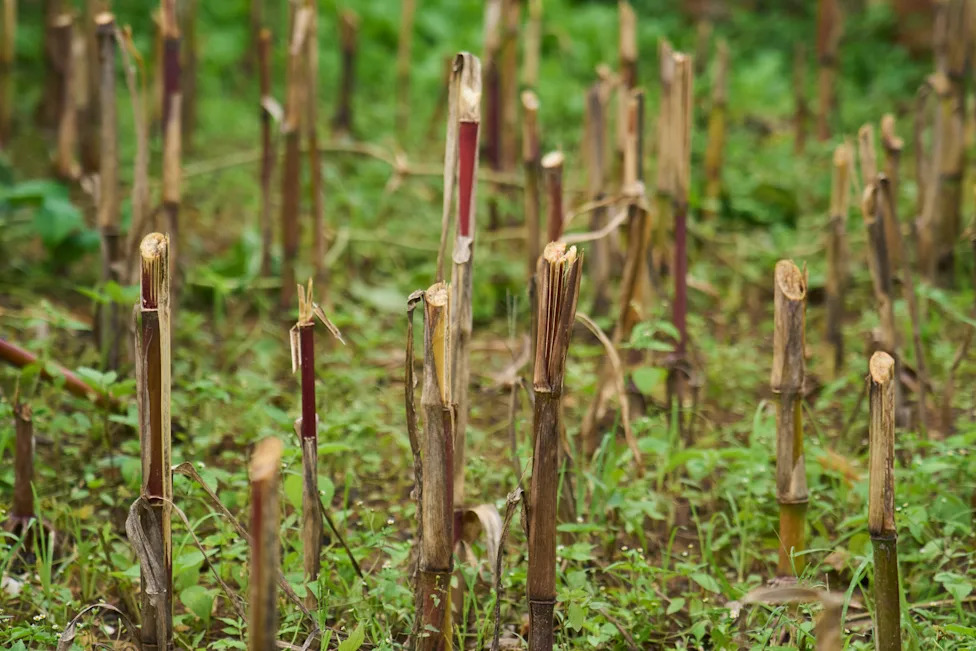
Stalks of a maize field chopped off by farmers after the crop was vandalised by monkeys is seen in Dharamghar, Dolakha district, about 86 kilometers (53 miles) east of Kathmandu, Nepal, Saturday, July 25, 2026. (AP Photo/Niranjan Shrestha)(AP Photo/Niranjan Shrestha)
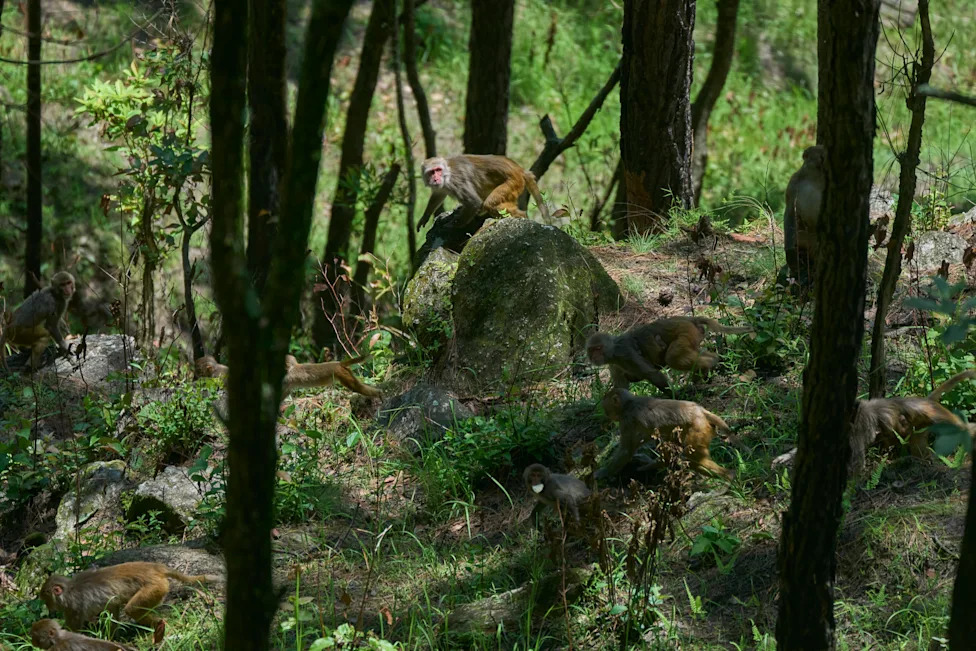
A troop of monkeys scatters after being chased by farmers protecting their farmland in Dharamghar, Dolakha district, about 86 kilometers (53 miles) east of Kathmandu, Nepal, Saturday, July 25, 2026. (AP Photo/Niranjan Shrestha)(AP Photo/Niranjan Shrestha)
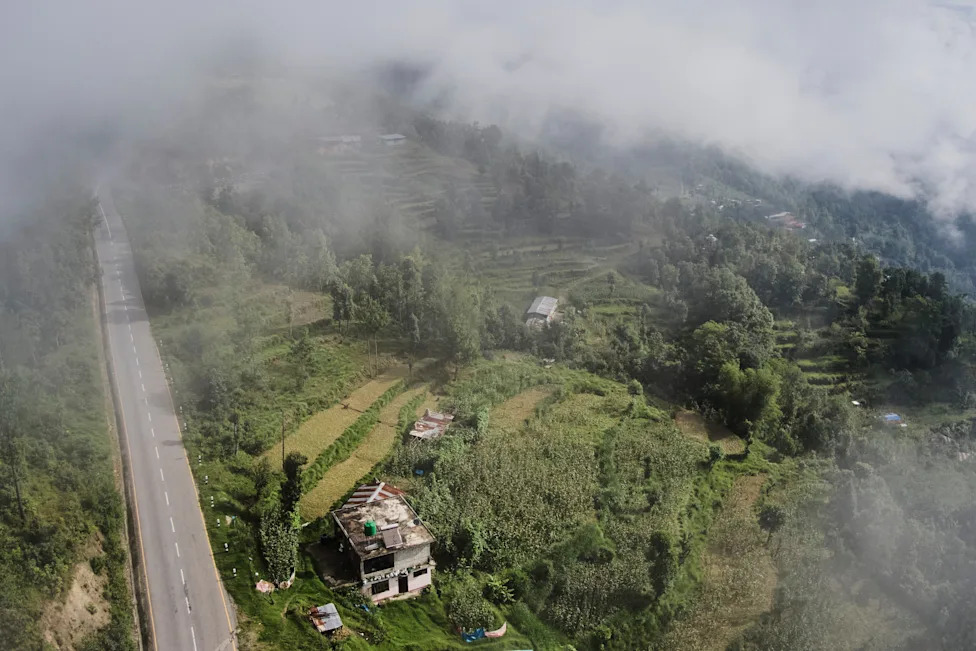
An aerial view of Dharamghar village, Dolakha district, about 86 kilometers (53 miles) east of Kathmandu, Nepal, Sunday, July 26, 2026. (AP Photo/Niranjan Shrestha)(AP Photo/Niranjan Shrestha)
Help us improve.