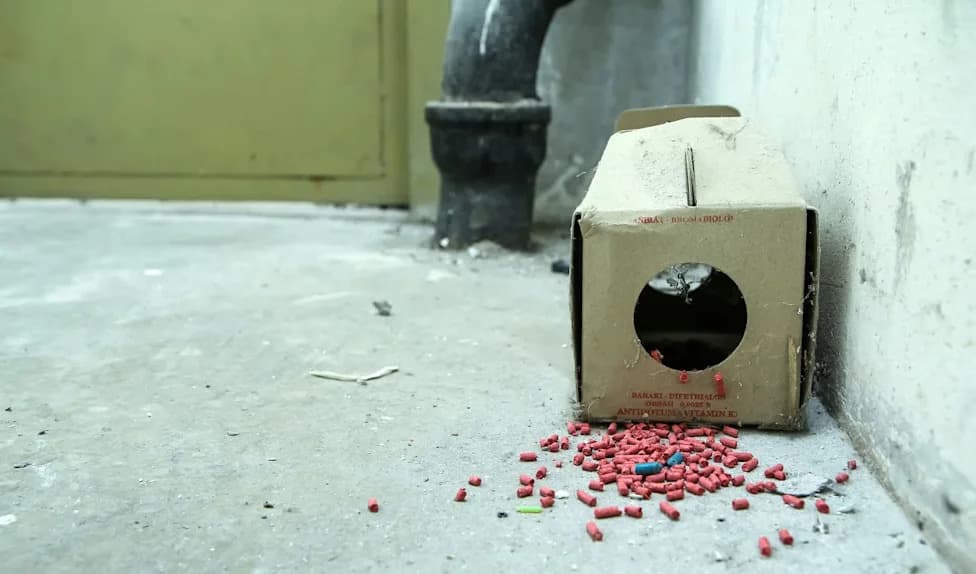
Rutgers researchers tested nearly 300 urban rodents and found high levels of genetic resistance to anticoagulant rodenticides, especially in house mice. Nearly 84% of mice carried at least one resistance-linked mutation and about 20% carried two. The peer-reviewed study urges rotating rodenticides and emphasizing integrated pest management—cleaning food debris, sealing entry points, and prompt maintenance—to limit infestations and reduce disease risks.
Rutgers Study: 84% Of NYC House Mice Carry Genetic Resistance To Common Rat Poisons

Photo Credit: iStock
A Rutgers University study suggests the most commonly used rat poisons in New York City may be losing effectiveness, particularly against house mice. Researchers analyzed nearly 300 rats and mice collected by pest control companies from New York City and other urban areas across the northeastern United States to look for genetic markers linked to rodenticide resistance.
Key findings: The study found that house mice had the highest prevalence of resistance to anticoagulant rodenticides (ARs), the most widely used class of rodent poisons in the U.S. Nearly 84% of house mice carried at least one mutation associated with AR resistance. About one in five mice (roughly 20%) carried two mutations that can confer greater resistance. By comparison, roughly 35% of rats tested carried the same resistance-linked mutation.
"We found that resistance appears to be much more widespread in house mice than many people realized," said Jin-Jia Yu, lead author and a postdoctoral fellow in Rutgers' Department of Entomology.
The research team noted behavioral differences that may help explain the slower spread of resistance in rats. Rats often sample novel foods cautiously and may repeatedly approach bait before consuming it, a behavior that can reduce selection pressure compared with mice.
Published in the peer-reviewed journal Pest Management Science, the study raises practical concerns for urban pest control. If common poisons become less effective, infestations can last longer, become more expensive to control, and spread more easily between units in multiunit housing. The authors also warn that rising resistance could increase rodents' capacity to carry and transmit diseases and parasites through communities.
What Experts Recommend
The study's authors urge pest managers and residents to avoid relying on a single chemical control. They recommend alternating rodenticide types and emphasizing integrated pest management (IPM) strategies. Nonchemical measures—such as cleaning food debris, sealing holes and cracks, prompt building maintenance, and improved sanitation—reduce rodents' access to food and shelter and help limit the development and spread of resistance. Where infestations persist, residents should consider coordinated, professional pest-management plans rather than repeated use of the same bait.
In dense urban neighborhoods and older buildings, these combined steps can make control more effective and reduce the public-health risks associated with longer-lasting infestations.
Help us improve.