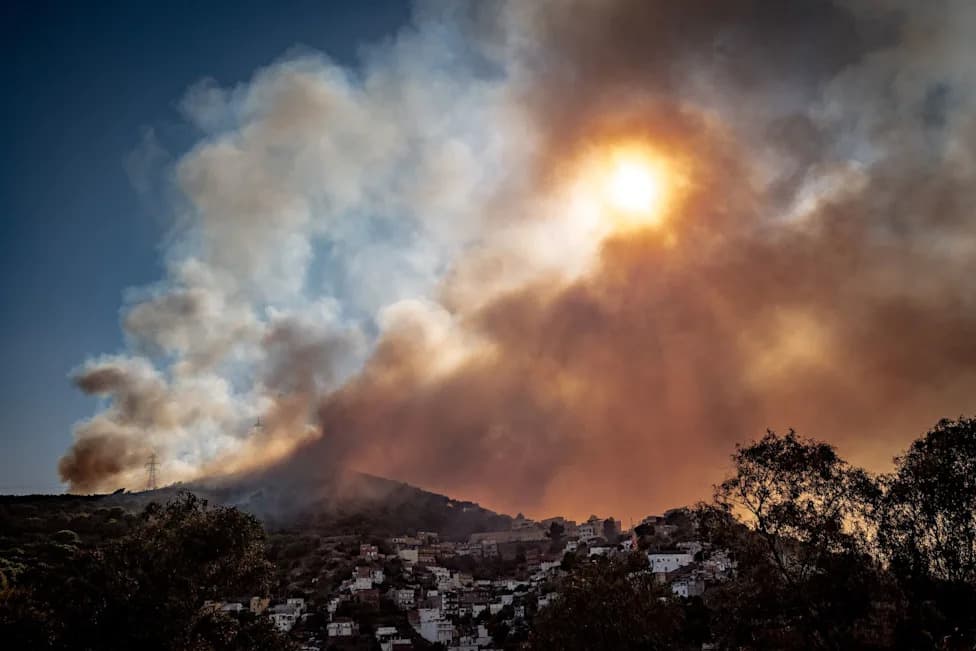
Research led by Lutz Sager (ESSEC) finds global inequality in exposure to PM2.5 increased from a Gini index of 0.30 to 0.35 between 2000 and 2020. The study identifies a "choking billion" — nearly one billion people exposed to particulate levels almost 12 times the WHO guideline — concentrated mainly in India, China, Bangladesh and Pakistan. Experts warn health burdens are even more uneven than exposure alone, and argue modest investments (e.g., a <$100,000 reference monitor) could catalyse progress.
Why Air Pollution Hits Some Countries Far Harder — The Rise Of A ‘Choking Billion’
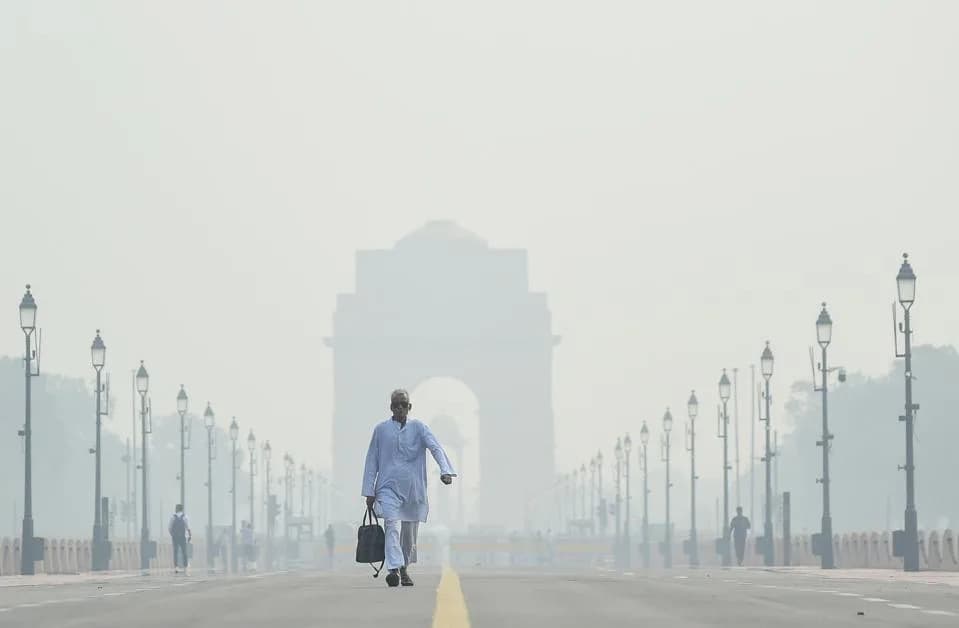
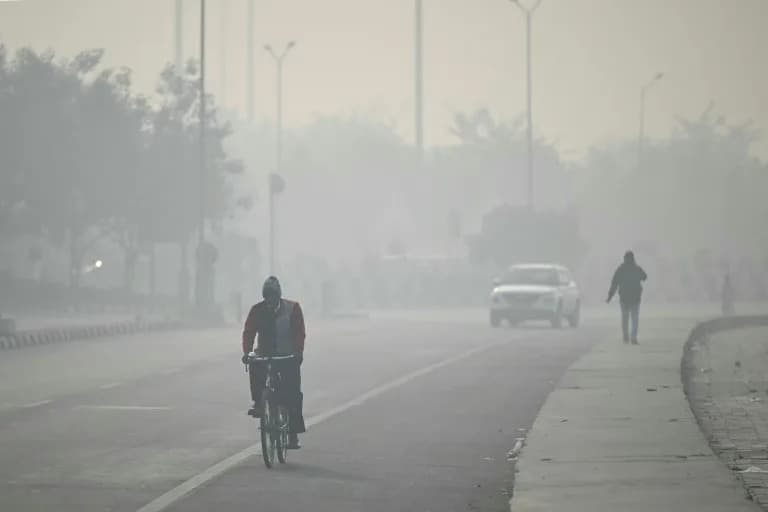
NEW DELHI, INDIA - OCTOBER 29: A commuter walks near India Gate amid heavy smog pollution on October 29, 2025 in New Delhi, India. Delhi is once again blanketed by hazardous smog following the Diwali festival, as pollution levels spike to the "very poor" and "severe" categories, with air quality indexes far exceeding safe limits. The crisis, which is driven by firecracker use, emissions, and seasonal crop residue burning has prompted emergency measures like cloud seeding. (Photo by Ritesh Shukla/Getty Images)Getty Images
NEW DELHI, INDIA — New Delhi was once again shrouded in hazardous smog after the Diwali festival, with air quality indexes reaching the "very poor" and "severe" categories. The spike, driven by firecracker use, vehicle emissions and seasonal crop-residue burning, prompted emergency measures such as cloud seeding.
New research from Lutz Sager, an assistant professor at ESSEC Business School, shows these national- and international-level disparities are growing: exposure to fine particulate matter (PM2.5) is becoming more uneven across countries, not just within them.
Widening Global Gap
Sager's analysis finds the global Gini index for PM2.5 exposure — a measure of how unequally fine particles are distributed across the world population — rose from 0.30 in 2000 to 0.35 by 2020. That increase means air pollution exposure inequality between countries can exceed many measures of income inequality.
The "Choking Billion"
The study identifies roughly one billion people — the "choking billion" — who face the highest average daily particulate levels on Earth, with exposures nearly 12 times higher than the World Health Organization's guideline of 5 µg/m³. Nearly half of that group (about 479 million) live in India; other large shares live in China (184 million), Bangladesh (128 million) and Pakistan (85 million).
"The data in the report shows there is excessive inequality worldwide," Sager said. "We sometimes focus on inequality within individual countries, and it's true there is inequality within countries, but compared to the inequality between France and India, it's on a very different level."
Health Burdens Are Worse Than Exposure Alone Suggests
The researchers also emphasize that health impacts are even more uneven than exposure statistics indicate. Where high pollution overlaps with vulnerability — limited healthcare, higher baseline disease or poverty — the health burden multiplies and deepens inequality.
Funding, Monitoring And Practical Steps
Dr. Christa Hasenkopf of the Clean Air Fund highlights the skewed allocation of global resources: under 0.1% of global philanthropic giving goes to air pollution, and whole regions receive only a fraction of that support. "Africa, for example, attracts just 1% of global clean air funding," she said, noting that some countries lack even a single air quality monitor.
Hasenkopf points out that modest investments can have outsized impact: "Less than $100,000 a year can provide a country's first reference-grade air monitor and catalyse national clean air progress."
Glory Dolphin Hammes, CEO of IQAir North America, stresses there is no single cause for national differences in pollution. Energy systems, industrial activity, transportation, urbanization, seasonal practices (like crop burning), geography, climate and public policy all interact. Cross-border transport of pollution also means emissions in one country can degrade air quality hundreds or thousands of miles away.
"Ultimately, air pollution is not inevitable," Hammes said. "Cutting it requires sustained investment in cleaner energy, stronger policies, effective emissions controls, and reliable air quality monitoring."
What This Means: The study underscores that global air pollution is as much a problem of international inequality and resource allocation as it is of local emissions. Targeted, low-cost investments in monitoring and policy can unlock large health and governance gains for the most affected countries.
Originally published on Forbes.com. Reporting and quotes are from Lutz Sager (ESSEC), Dr. Christa Hasenkopf (Clean Air Fund) and Glory Dolphin Hammes (IQAir North America).
Help us improve.