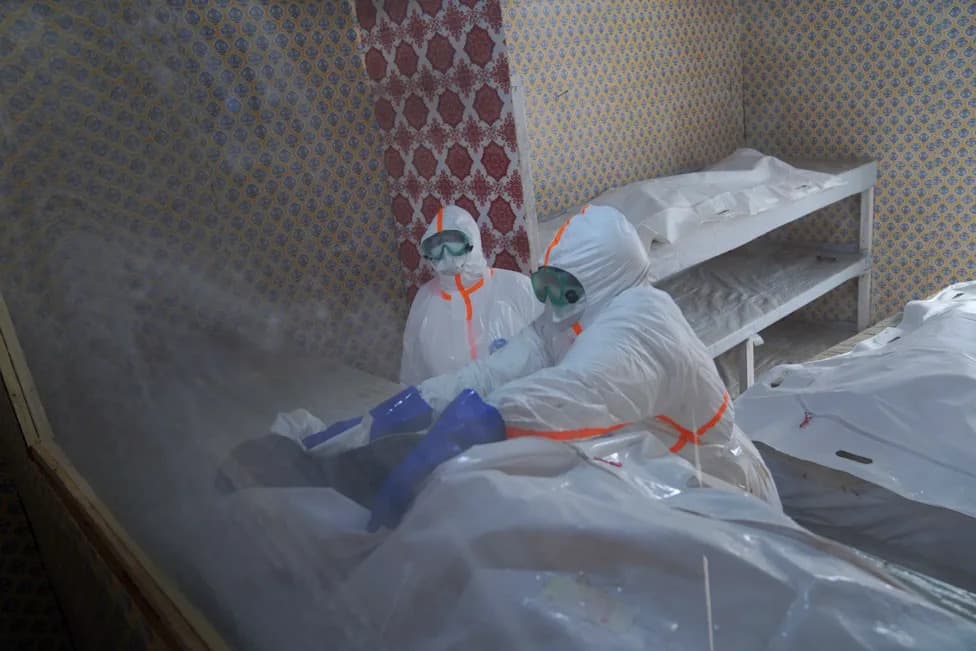
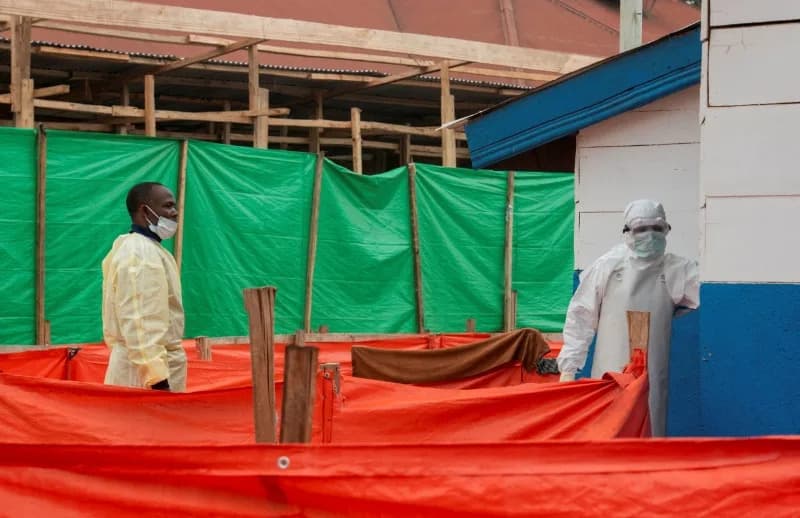
Key finding: The officially reported 3,822 confirmed Ebola cases (3,802 in the DRC; 20 in Uganda) and 1,707 deaths likely understate the outbreak’s true scale by several-fold.
On 25 January 2026 a 50-year-old woman near Mongbwalu, an artisanal gold-mining town in Ituri province, died after vomiting blood. Her mother died six days later; her husband fell ill and recovered. None of these early cases were recorded as Ebola, and the Democratic Republic of the Congo (DRC) did not declare the outbreak until 15 May.
How much is being missed?
Laboratory testing has identified the virus as the Bundibugyo species — a rarer Ebola strain for which there is currently no licensed vaccine and no approved targeted treatment. The 3,822 confirmed infections represent only those who reached clinics and laboratories; many more infected people never entered formal surveillance.
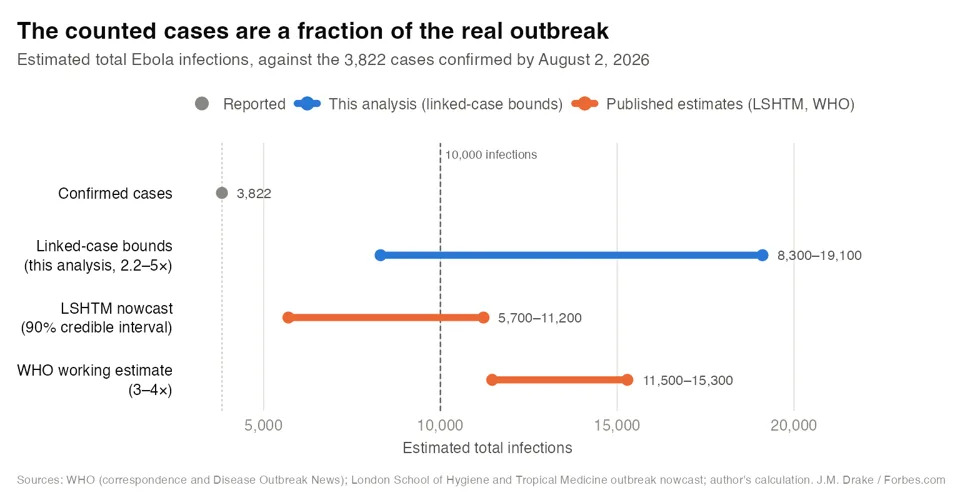
WHO correspondence shared with the author indicates the outbreak is "likely 3–4 times larger than we are currently observing." Applying that multiplier to the confirmed total implies roughly 11,500–15,300 infections.
Estimated total infections in the 2026 Ebola outbreak against the 3,822 cases confirmed by August 2, 2026. The linked-case method brackets the true number between about 8,300 and 19,100. WHO's unpublished working estimate sits above the London School of Hygiene and Tropical Medicine nowcast, which is run on data through August 1. The dashed line marks 10,000 infections. Sources: WHO correspondence and Disease Outbreak News; LSHTM outbreak nowcast; author's calculation.
Linked-case analysis and bounds
WHO field data show that, once investigators finish their work, about 40–45% of confirmed cases have a known epidemiological link. In July, 309 of 671 well-documented confirmed cases (46%) had a known link. Using this share as a rough detection rate implies roughly 8,300 infections — a conservative lower bound because sparse records (which are excluded from the calculation) are less likely to show traceable sources.
By contrast, the 20–25% of cases who were already on contact lists before symptoms set a firm upper bound: anyone pre-identified is almost certain to be recorded. That implies an upper estimate near ~19,000 infections. WHO’s unpublished 3–4× estimate falls inside these bounds, closer to the middle.
Models, deaths and surveillance bias
The London School of Hygiene & Tropical Medicine (LSHTM) nowcast estimates total infections between 5,700 and 11,200 with 90% probability; the European Centre for Disease Prevention and Control cited models giving a wider 3.0–10.2× range. These model ranges differ partly because of how they treat early, unrecognized January cases.
Estimating infections does not map directly to deaths. Fatalities are harder to miss than mild infections, and missed infections tend to be milder cases who did not seek care. The real death toll is therefore likely greater than the reported 1,707 but probably by less than a three- to four-fold factor. LSHTM also projects an additional 246–608 deaths among people infected before 1 August even if transmission stopped immediately — which it has not.
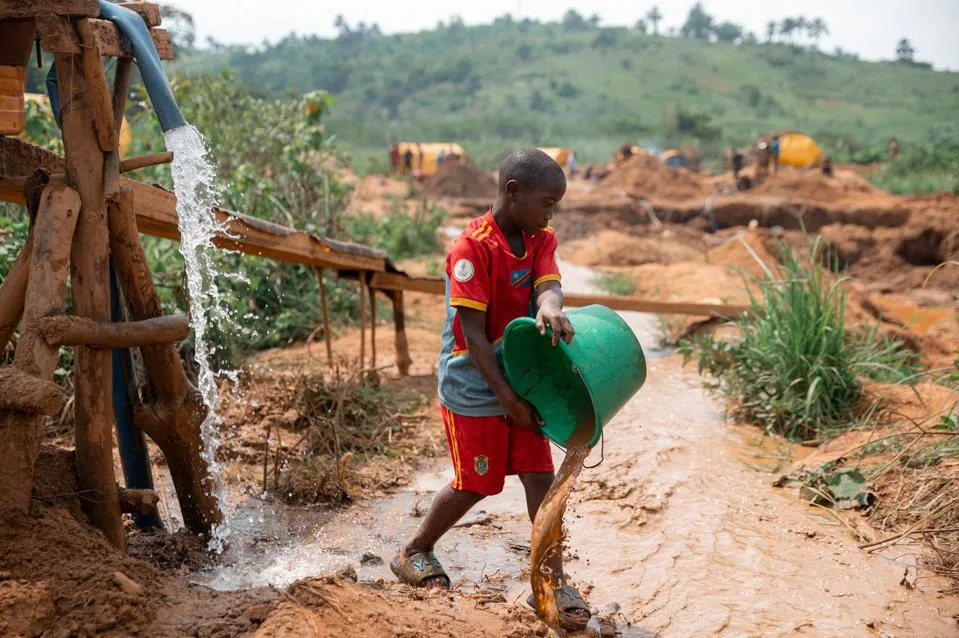
TOPSHOT - A young boy washes a plastic basin as he searches for gold particles in the final stages of panning and sorting at an artisanal mining site in Mongbwalu, Ituri province, on June 16, 2026. The latest Ebola outbreak in the Democratic Republic of the Congo, declared on May 15, 2026, has mainly affected the remote, conflict-weary northeastern province of Ituri. Health officials warn that population movements linked to artisanal mining, displacement and insecurity are hampering containment efforts in a region where no approved vaccine exists for this Ebola strain. (Photo by Jospin Mwisha / AFP via Getty Images)
The confirmed-case fatality ratio rose from 28.8% at the end of June to 44.1% a month later—a rise WHO attributes to delays in detection, referral and access to care, and to a predominance of community deaths. A surveillance system that finds patients late or only after community death will report a higher apparent fatality rate because the undetected cases are disproportionately survivors.
Trajectory and risk
The outbreak’s effective reproduction number (R) is now estimated around 1.1, with uncertainty overlapping either side of one. While R has fallen from early estimates of 2–3, a value near 1.1 still means the epidemic is growing. Reducing transmission fast enough to end the outbreak in months — rather than years — would require cutting transmission by more than half (an R nearer 0.5) across the 33 health zones where transmission is active.
WHO rates the risk inside the DRC as "very high." The epidemic is already urban in parts — Bunia, Ituri’s provincial capital, is the largest cluster with 880 confirmed cases. The outbreak is unfolding in a region affected by armed groups, displacement and artisanal mining, and 151 health workers have been infected. That mix of urban transmission, insecurity and population movement raises the risk the outbreak could grow substantially, as occurred in West Africa in 2014.
What this means for response
Because comprehensive serosurveys and systematic testing of community deaths are impractical across 49 health zones in five provinces during an active and insecure emergency, public-health decisions must be made amid uncertainty. Practically, planners should assume the outbreak is significantly larger than confirmed counts indicate and prioritize rapid case-finding, contact tracing, safe care and protection for health workers in insecure areas.
Bottom line: The epidemic on paper remains a shadow of the real event. The response must be built for the larger outbreak that the surveillance data imply.