The Philippines is seeing a rapid rise in rooftop solar driven by soaring electricity bills, frequent outages and falling panel prices—trends amplified by the Middle East conflict. Imports from China surged (China exported $13.96 billion in solar cells and panels from January–May, up 26% year-on-year) and rooftop installations have nearly doubled since early 2025, but only roughly 0.5% of usable roof space is fitted with solar. Major barriers remain: typical household systems cost $3,000–$5,000, permitting can take up to eight months, and VAT and limited financing slow wider adoption.
High Bills and Cheaper Panels Spark a Philippine Rooftop Solar Surge
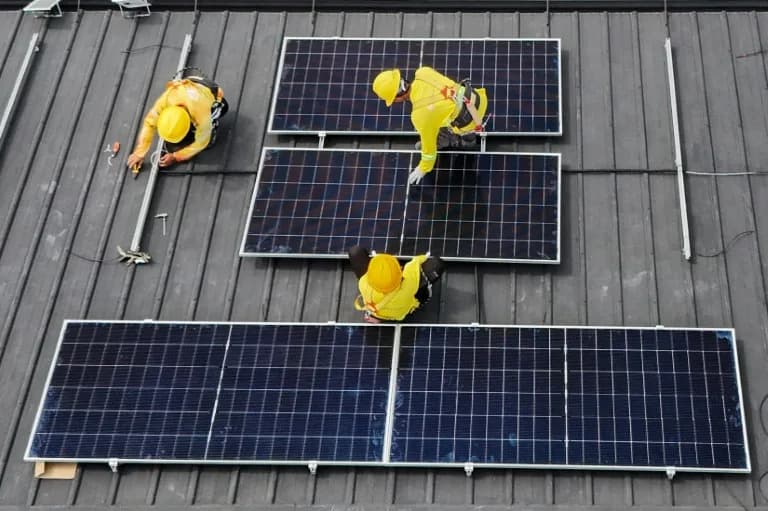
Workers instal solar panels on a roof in Carmona, in the Philippine province of Cavite (Jam STA ROSA)
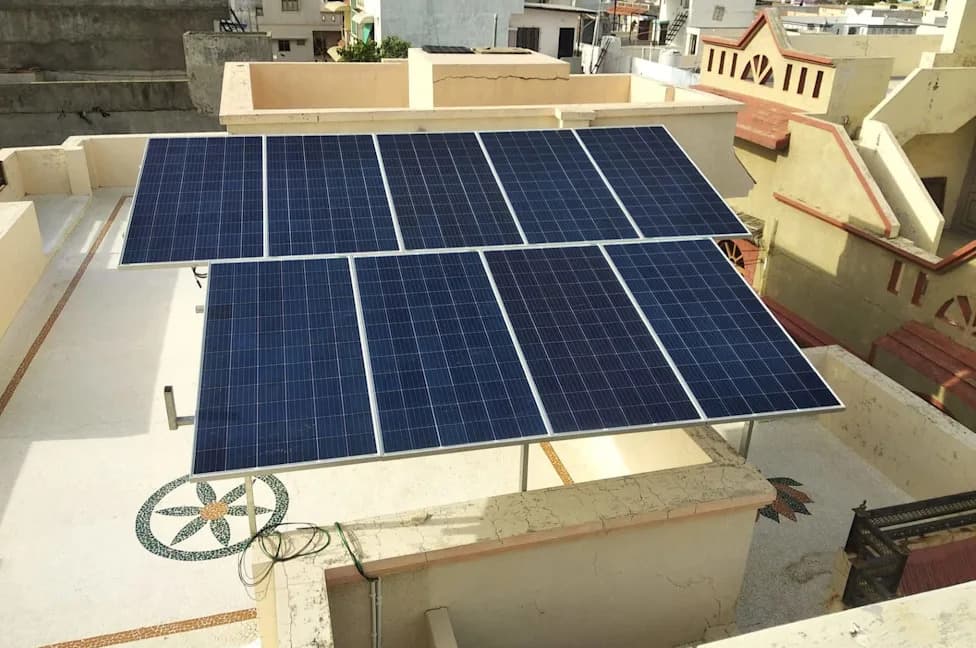
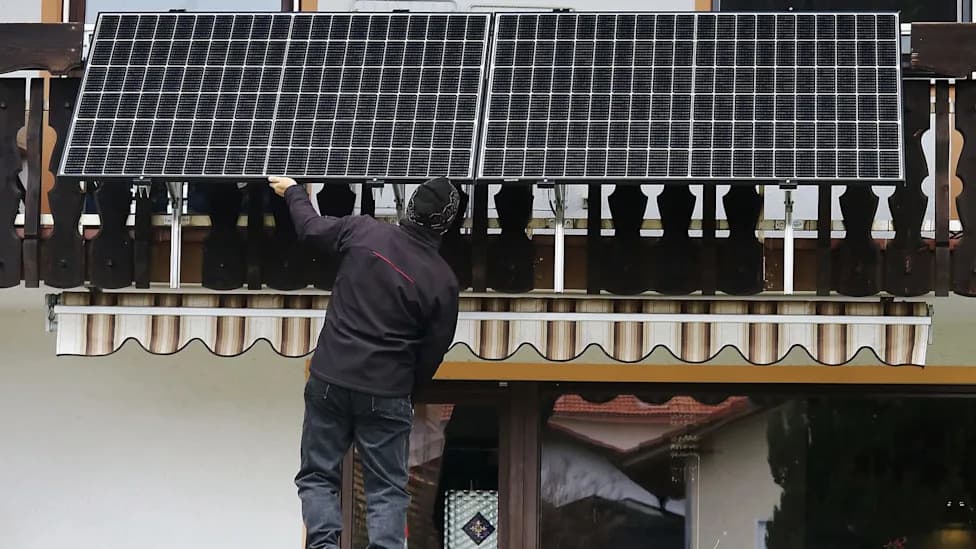
Edwin Salas watched as the first of 20 solar panels was mounted on his roof—one small installation in a wider wave of household and commercial solar adoption across the Philippines that accelerated after the outbreak of war in the Middle East.
Why Filipinos Are Switching To Solar
The 46-year-old shuttle bus driver, who lives about two hours south of Manila, said crippling electricity bills—among the highest in the region—and frequent brownouts were his main reasons for investing. "Even if we don't achieve a zero bill, we'll be able to save a lot and have power even during outages," he told AFP.
Although the Philippine government has set a target of 35 percent renewable energy by 2030, industry specialists say much of the current growth in rooftop solar is grassroots: households and businesses responding to rising power costs rather than a top-down program.
"For years, rooftop solar was often framed as an environmental choice... today, it's a practical response to financial pressure," said Brenda Valerio, Country Director for the nonprofit New Energy Nexus.
Imports and Market Dynamics
A report from global energy think tank Ember found the Philippines has become China's number-two buyer of solar cells and panels this year. Official Chinese customs data reviewed by AFP show exports of solar cells and panels rose to $13.96 billion from January through May—up 26 percent from $11.07 billion in the same period last year.
Mike de Guzman, CEO of Manila-based Solaric, said the Middle East conflict fast-tracked many customers' decisions. "It's like a war happened and we were a bullet factory," the 49-year-old said, adding that about five months of inventory was "wiped out" within weeks after the conflict began and his firm was still taking roughly 60 calls a day months later.
Room To Grow
Despite rapid import growth, installation lags. The Manila-based Institute for Climate and Sustainable Cities, which tracks rooftop adoption via satellite imagery, estimates only about 0.5% of the Philippines' usable roof space is fitted with solar—meaning the opportunity to scale is immense.
Large rooftop deployments are helping push adoption: SM Group has installed more than 200,000 panels across its malls, supplying roughly 50 percent of energy needs at those sites, including a solar pergola at the Mall of Asia that shades visitors from the sun. Competitors follow suit—Robinsons advertises 28 solar-powered malls and Ayala has arrays atop 13 properties.
Barriers: Upfront Cost, Red Tape, Taxes
Falling panel prices and rising electricity rates have shortened payback times, but upfront costs remain a barrier for many households. Valerio estimates a typical residential system costs around $3,000–$5,000, which is often unaffordable without financing. The government offers a financing program for civil servants, but broader loan options are limited.
Procedural delays also slow growth. Metering and grid-connection approvals are supposed to take 10 days but can stretch to eight months in some areas. "The problem with solar rooftops is red tape," Philippine Senate President Sherwin Gatchalian said in June, urging streamlined permitting.
Installers also want relief from value-added taxes that raise consumer costs and discourage uptake. Industry representatives say there is substantial pent-up demand and point to Australia—where about one in three homes have rooftop solar—as a possible trajectory for the Philippines.
Outlook
With panels getting cheaper and imports rising, the Philippines appears poised for continued rooftop solar expansion. Key constraints—access to financing, faster permitting, and tax policies—will determine how quickly household and commercial adoption scales to meet that potential.
Help us improve.