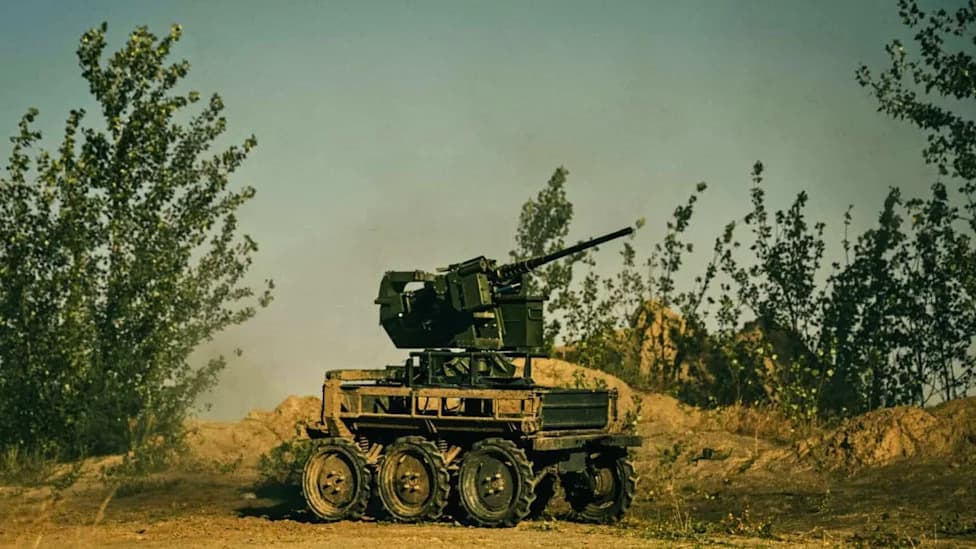
Ukraine has rapidly adopted hundreds of unmanned ground vehicle models for logistics and combat, but the flood of varied systems has produced a critical standardization problem. Roughly 550 UGV models from 270 domestic makers are in service, and Kyiv ordered 25,000 units in H1 2026 with a target of 50,000 by year-end. Officers warn that incompatible parts, connectors and maintenance needs undermine large-scale use; solutions include standardized platform families, parts supply chains and expanded technician training. The DevDroid TW 12.7 stands out as a combat-proven UGV with AI targeting and a .50-caliber weapon.
Ukraine Is Flooded With War Robots — Standardization, Parts and Training Are the Real Battle
Zysko Sergii/Shutterstock
Ukraine has rapidly integrated unmanned ground vehicles (UGVs) into front-line operations for logistics, casualty evacuation, engineering tasks and direct combat. While the pace of innovation and production is impressive, the enormous variety of platforms is creating a major operational headache: without standardization, fielding UGVs at scale becomes expensive, inefficient and risky.
Standardization Problem
The Ministry of Defense estimates roughly 550 distinct UGV models from about 270 domestic manufacturers are now in service. Kyiv ordered some 25,000 UGVs in the first half of 2026 and aims for 50,000 units by year-end. That scale shows a strong national push to expand robotic capabilities, but it also highlights a logistical and training crisis.
“There is no single unified model, no standard set of 10 UGV variants. Instead, there are dozens of UGV types from different manufacturers. They are not standardized. They have different parts, different nuts and bolts, different motors, different power connectors. Everything is different.” — Ivan Halenko, Ukrainian officer
DevDroid TW 12.7: A Standout Platform
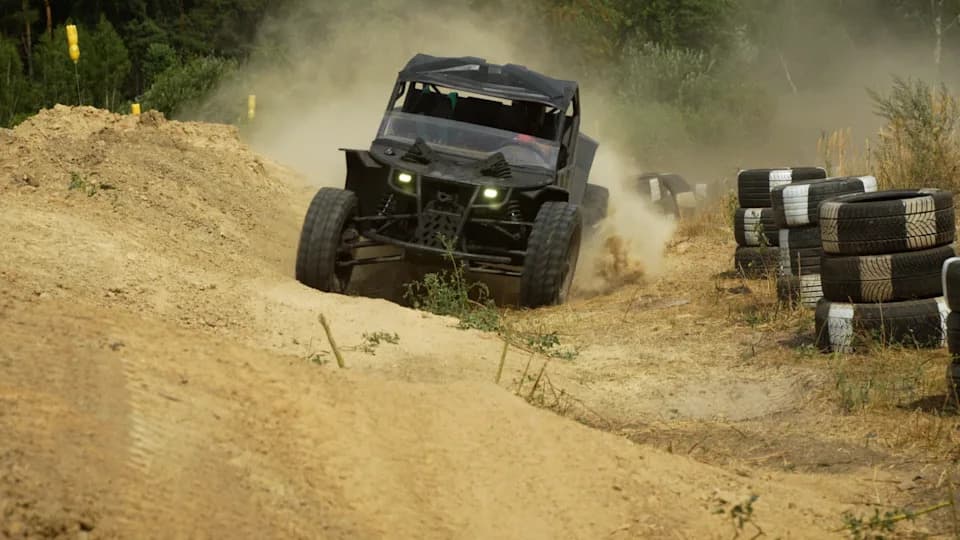
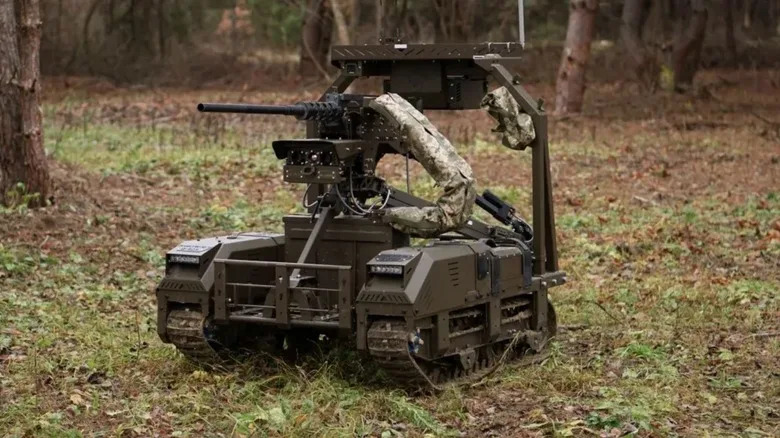
Among many systems, the tracked DevDroid TW 12.7 has earned a strong combat reputation. Armed with a .50-caliber M2 Browning machine gun, the TW 12.7 reportedly fought on an unnamed sector of the front for 45 days and is credited with destroying a Russian MT-LB armored vehicle while deployed with the 5th Separate Assault Brigade.
DevDroid
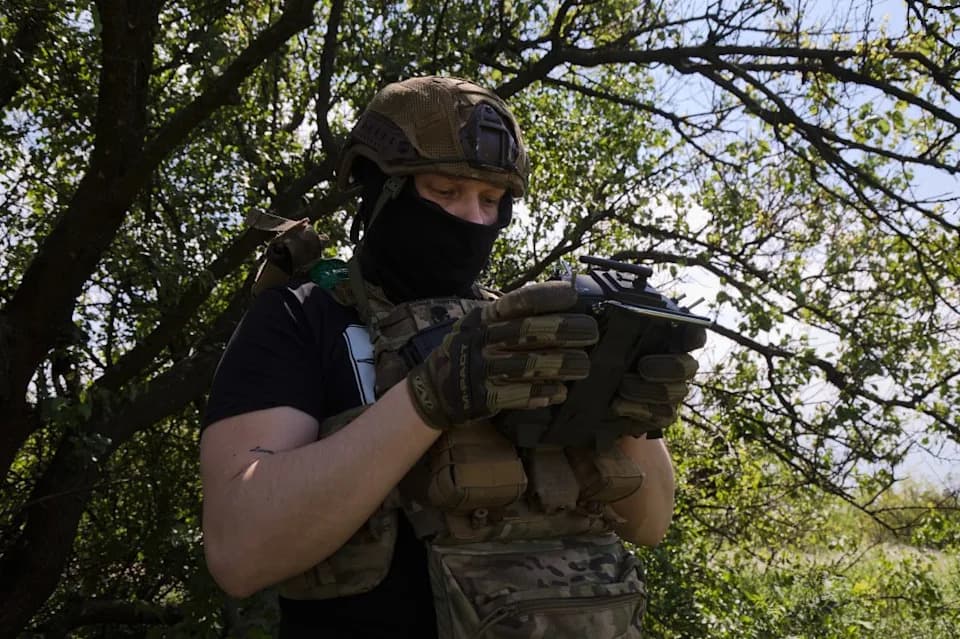
The TW 12.7 is remotely controlled via a tablet and integrates a ballistic computer and AI-assisted tracking. Its primary sensors include three externally mounted cameras — narrow-field, wide-angle and a thermal imager. The AI was trained on extensive combat footage to improve recognition and runs two detection modes: general motion detection and a soldier-identification mode. Reported capabilities include soldier detection beyond 2,000 feet, an operating range of about 13.6 miles, and a top speed near 4 mph.
What Ukraine Needs To Make UGVs Work at Scale
Creative designs and proven combat performance are not the limiting factor; the missing pieces are commonality, logistics and training. To scale UGV use effectively, Ukraine needs:
- Standardized platform families: A limited set of interoperable chassis and modular payload interfaces to simplify training and maintenance.
- Reliable spare parts and supply chains: Consistent sources for motors, batteries, connectors and weapon mounts to reduce downtime.
- Unified maintenance and documentation: Standard operating procedures, repair manuals and depot workflows across units.
- Expanded operator and technician training: Trained crews and technicians who can service multiple platform types and troubleshoot field issues.
- Procurement coordination: Centralized standards and testing to ensure new designs meet compatibility and sustainment requirements.
Addressing these areas will make UGVs more than a collection of experimental prototypes — it will turn them into reliable force multipliers that brigades can use effectively under combat conditions.
Sources: Ukrainian defense ministry figures, Defense News reporting, and interviews with Ukrainian officers.
Help us improve.