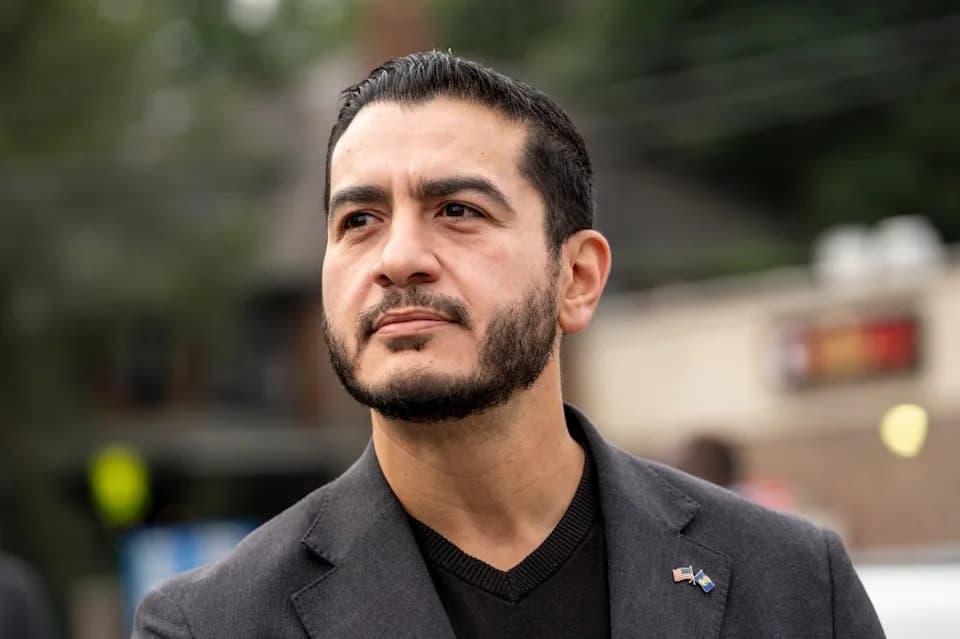
The Aug. 4 primaries in Michigan, Virginia, Kansas, Washington and Missouri will decide nominees for three Senate contests, two open governor’s races and roughly 46 House seats. Michigan’s Democratic Senate primary — Abdul El‑Sayed vs. Haley Stevens — is the highest-profile contest and a test of intra-party direction. Races across these states will also measure how much influence Donald Trump’s endorsements retain and shape fall strategies and redistricting outcomes.
Aug. 4 Primaries in Five States Could Test Trump’s Influence and Reshape Congress
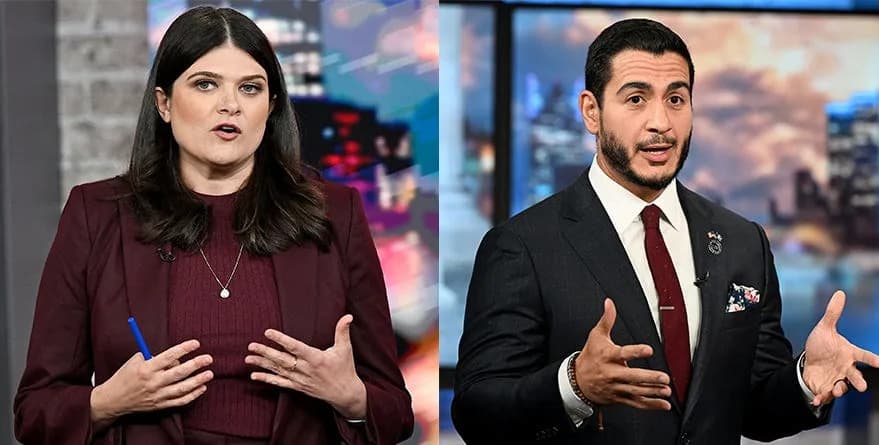
Candidates Abdul El-Sayed (D-MI), right, and U.S. Rep. Haley Stevens during theU.S. Senatedebate in Southfield, Mich. on July 27, 2026. Of all the Democratic primaries between a progressive populist and establishment liberal this year, the Michigan Senate contest Aug. 4 could be the most consequential in mapping the party's future. The race betweenAbdul El-Sayed, a Detroit-based public health officer, and U.S. Rep.Haley Stevens, a former Obama administration official, has touched almost every nerve on the political left leading up to the 2026 midterms. Whether it's who is toblame for the 2024 electionoutcome, whattype of candidate is bestto defeat Republicans in a general election or the U.S. relationship with Israel and its prosecution of thewar in Gaza, centrist and left-leaning factions agree that the stakes are higher than in any other primary battle.(Pool photo by Robin Buckson via REUTERS)
Voters in Michigan, Virginia, Kansas, Washington and Missouri head to the polls on Tuesday, Aug. 4, in primary contests that will help determine the balance of power heading into the 2026 general election. The contests include three Senate races, two open governor’s races and roughly 46 U.S. House seats. Many races will also serve as a gauge of how much sway former President Donald Trump’s endorsements retain with Republican primary voters.
Why These Primaries Matter
These five states combine high-profile Senate and gubernatorial contests with dozens of competitive House nominations. Outcomes will influence control of Congress, each party’s fall strategy and the shape of congressional maps after contentious redistricting fights.
Michigan: The Most Watched Democratic Primary
Michigan hosts the marquee Democratic matchup: Detroit public health official Abdul El-Sayed versus U.S. Rep. Haley Stevens for the nomination to replace Sen. Gary Peters, who announced in April he will not seek reelection. El-Sayed has drawn national attention and support from progressive groups, while Stevens is backed by more establishment Democrats, including Gov. Gretchen Whitmer.
Polling has shown wide variation: a July 30 Emerson poll put El-Sayed roughly 15 points ahead of Stevens on the Democratic side, while a July 28 Michigan Education Association poll suggested Stevens would narrowly lead former U.S. Rep. Mike Rogers in a November matchup. Another poll showed Rogers leading El-Sayed in a hypothetical general election.
The Michigan primary has been heated: El-Sayed has denied socialist labels and said, "I believe in capitalism. I just believe that capitalism has to be regulated." He faced criticism after campaigning with streamer Hasan Piker, whose past comments drew pushback from Jewish groups and some Democrats. Campaign rhetoric turned personal at times as rivals traded sharp public attacks.
Senate Races: Kansas and Virginia
In Kansas, Republican Sen. Roger Marshall faces at least one primary challenger, Pond Naramore, while a crowded Democratic field seeks a nominee to challenge him. Although Kansas has long leaned Republican at the Senate level, some Democrats are hoping to make the race competitive.
In Virginia, Sen. Mark Warner is unopposed in the Democratic primary and will move on to the general election. Several Republican challengers, including Kim Farrington, Bert Mizusawa and David Williams, are vying for the GOP nod, but the Cook Political Report currently rates the seat as solidly Democratic following a convincing Democratic gubernatorial victory in 2025.
Open Governor Races
Both Michigan and Kansas have open governor’s contests after sitting Democratic governors were term-limited. In Michigan, Secretary of State Jocelyn Benson leads the Democratic field to replace Gov. Whitmer, while Trump-endorsed Rep. John James is the leading Republican in some polls. In Kansas, state Senate President and Trump-endorsed candidate Ty Masterson is a leading GOP contender facing Secretary of State Scott Schwab and others; the primary will test whether Trump-style endorsements carry weight among Kansas Republicans.
House Races and Redistricting Flashpoints
Roughly 46 House seats across these states are in play. In Kansas, GOP-led efforts to redraw districts in 2025 fell short despite pressure from Trump and allies; the 3rd District (held by Democrat Sharice Davids) remains a focus. In Missouri, a court last fall upheld Republican-drawn maps that critics say favor GOP pick-ups, and all eight House seats are on the ballot amid ongoing legal challenges. The 5th District, represented by Democrat Emanuel Cleaver, was redrawn in a way that GOP critics argue benefits their challengers.
In Virginia, an April constitutional amendment allowing mid-decade redistricting briefly raised the prospect of new lines, but the Virginia Supreme Court rejected specific maps Democrats proposed, leaving the 2024 lines in place for this cycle.
Washington uses a top-two primary system, meaning the top two finishers, regardless of party, advance to November. Nine of the state’s 10 House incumbents plan to run; Republican Rep. Dan Newhouse is retiring from the 4th District.
Voter Measures and Local Stakes
Kansas voters will decide a high-profile ballot measure that would make Kansas Supreme Court seats elected rather than appointed; groups on both sides have spent roughly $10 million on the campaign. Across these states, the primaries will also help determine which candidates parties view as best positioned for the general election.
What To Watch On Aug. 4
- Whether El-Sayed or Stevens wins Michigan’s Democratic Senate primary and how that result shapes national Democratic strategy.
- If Trump-endorsed candidates carry the day in GOP governor and congressional primaries, particularly in Kansas and Michigan.
- How redistricting disputes and court rulings affect competitive House races in Missouri, Kansas and Virginia.
- Voter reaction to the Kansas Supreme Court ballot measure and the role of outside spending.
These primaries will provide an early read on candidate appetites, intra-party dynamics and the viability of competing strategies heading into November’s general election.
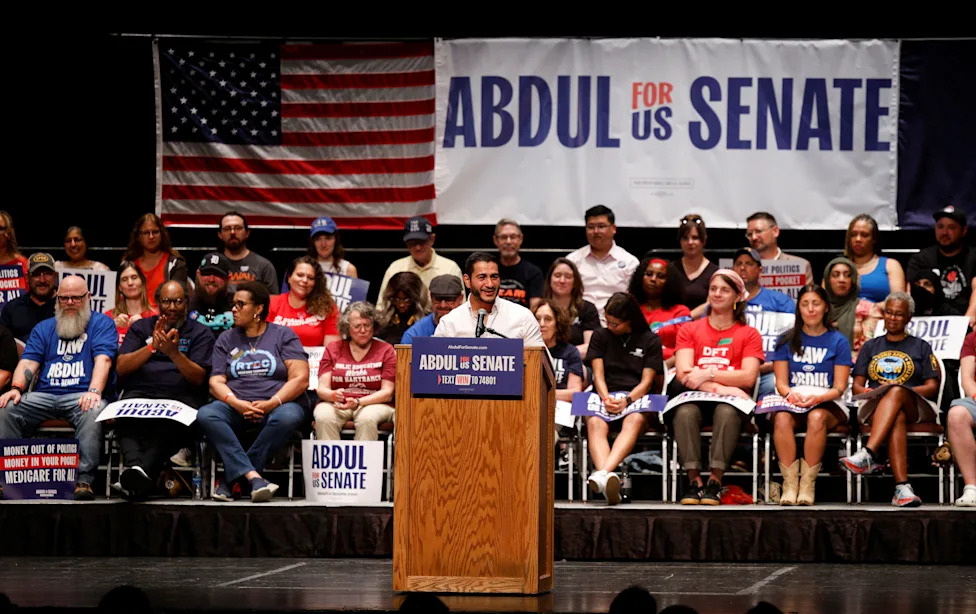
U.S. Senatecandidate Abdul El-Sayed holds a campaign rally in Detroit, Mich. on July, 18, 2026.(Rebecca Cook, REUTERS)
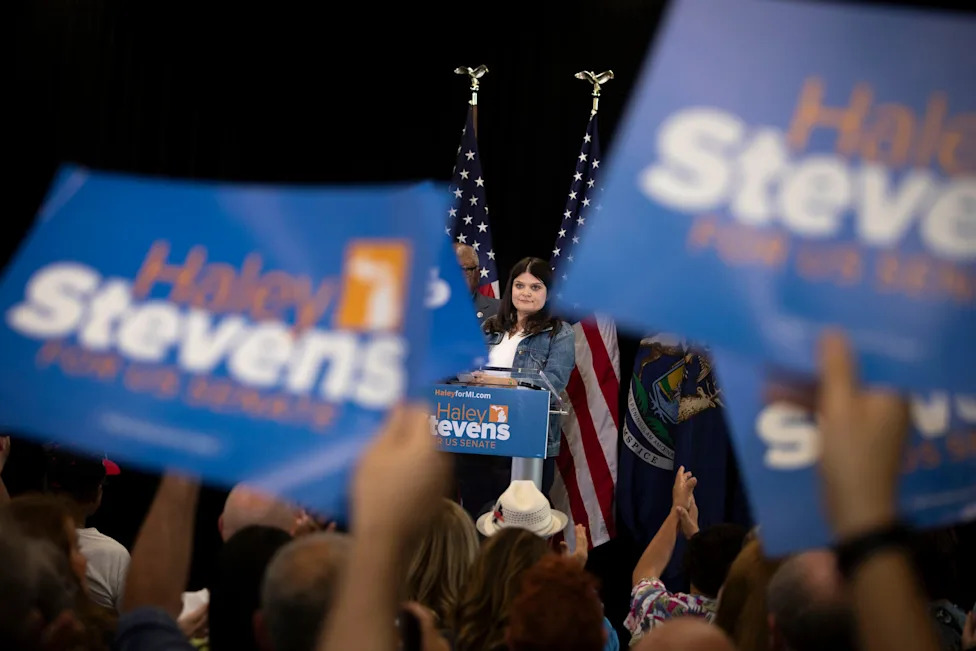
U.S. Rep. Haley Stevens (D-MI), a candidate for Michigan's open U.S. Senate seat, hosts a "Meet and Greet" campaign event with former House Majority Whip Congressman Jim Clyburn (D-SC) and Michigan Gov. Gretchen Whitmer at Michigan Conference-Teamsters on July 24, 2026 in Detroit, Michigan. Stevens is running against fellow Democrat U.S. Senate candidate Abdul El-Sayed in Michigan's Primary Election, which will be held on August 4th.(Bill Pugliano, Getty Images)
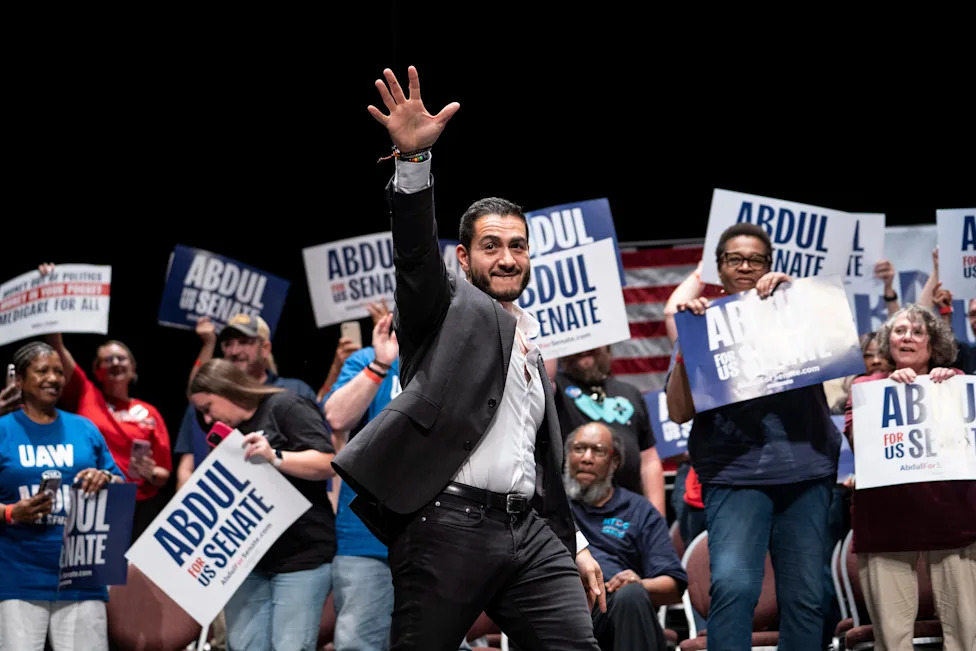
Michigan Democratic candidate for Senate Abdul El-Sayed takes the stage at The People V. The Powerful rally at the Detroit Opera House on July 18, 2026 in Detroit, Michigan. U.S. Sen. Bernie Sanders (I-VT), U.S. Rep. Alexandria Ocasio-Cortez (D-NY) and others joined El-Sayed to rally the crowds.(Sarah Rice, Getty Images)
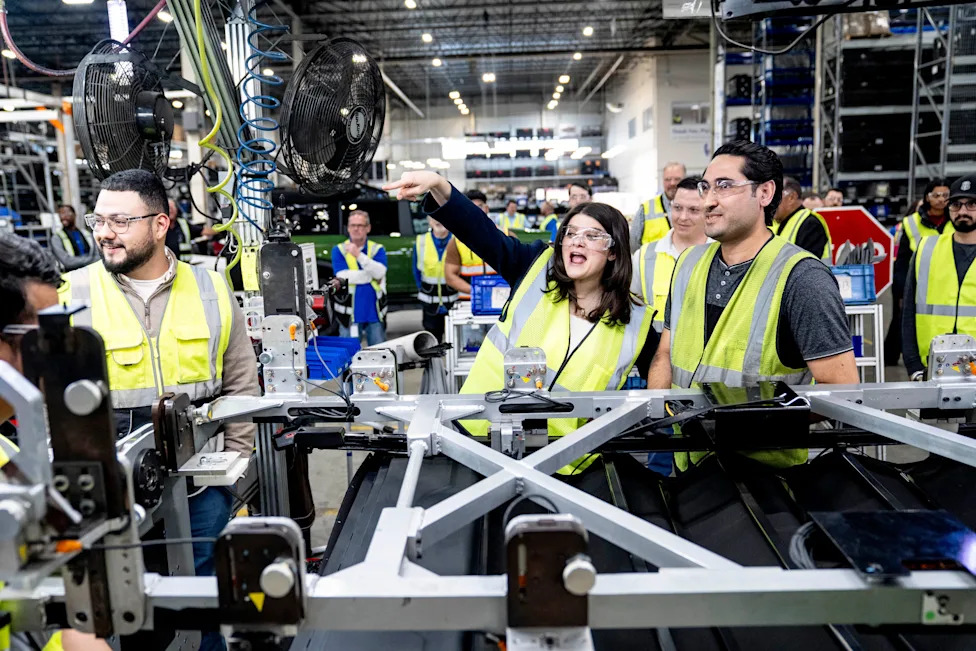
U.S. Rep. Haley Stevens (D-MI) greets employees as she talks to Joaquin Sarmiento, left, and Haroon Davlatzai, right, during a tour of the Webasto Plymouth Plant on May 1, 2026 in Plymouth, Michigan. Stevens, the Democratic front‑runner in Michigan’s open U.S. Senate race, visited the Michigan convertibles roof plant where workers recently voted to unionize with the United Auto Workers.(Sarah Rice, Getty Images)
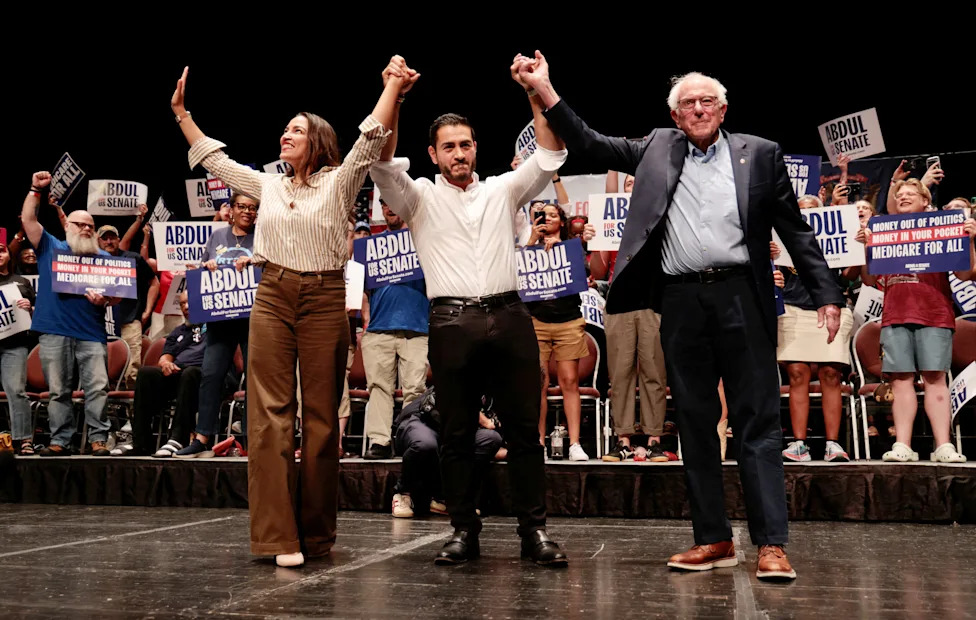
U.S. Senator Bernie Sanders (I-VT) and U.S. Representative Alexandria Ocasio-Cortez (D-NY) rally with U.S. Senate candidate Abdul El-Sayed in Detroit, Mich. on July, 18, 2026.(Rebecca Cook, REUTERS)
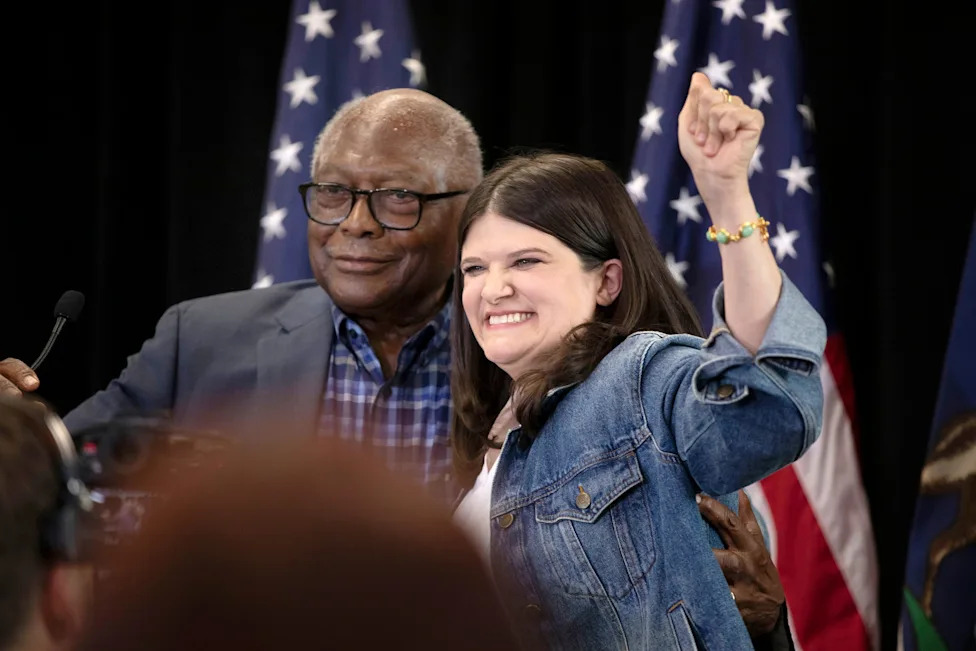
U.S. Rep. Haley Stevens (R) (D-MI), a candidate for Michigan's open U.S. Senate seat, hosts a "Meet and Greet" campaign event with former House Majority Whip Congressman Jim Clyburn (L) (D-SC) and Michigan Gov. Gretchen Whitmer at Michigan Conference-Teamsters on July 24, 2026 in Detroit, Michigan.(Bill Pugliano, Getty Images)
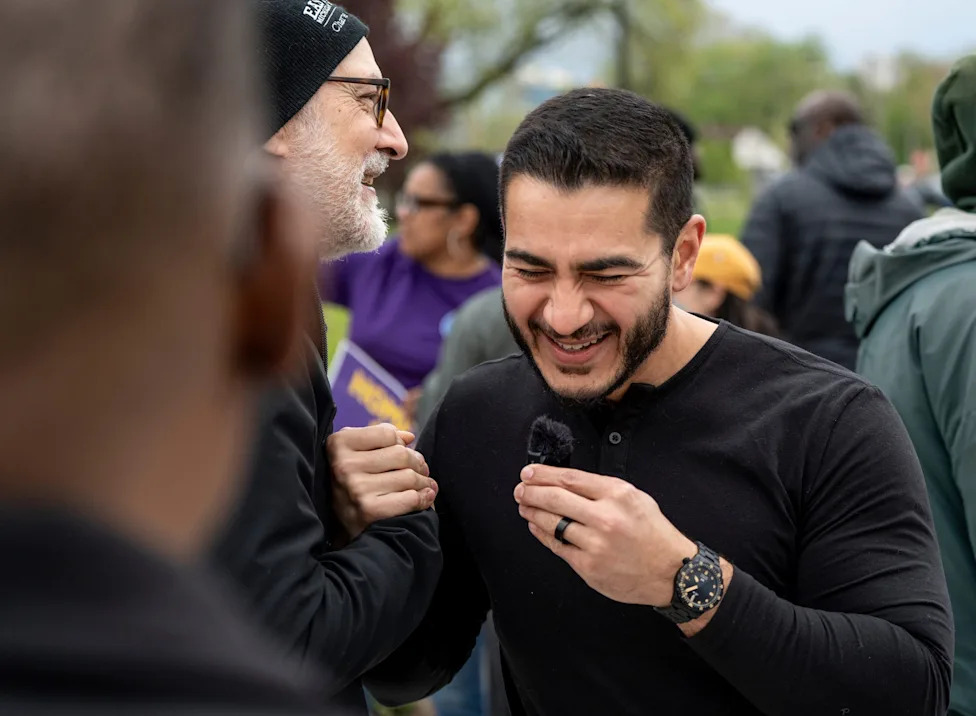
Former Wayne County and Detroit health director Abdul El Sayed, right, interviews Peter Putnam, of Detroit, as union workers and protesters rally to mark May Day, also known as International Workerís Day, at Roosevelt Park in Detroit on Friday, May 1, 2026, to push back against President Trump.(Ryan Garza, Detroit Free Press via USA TODAY Network)
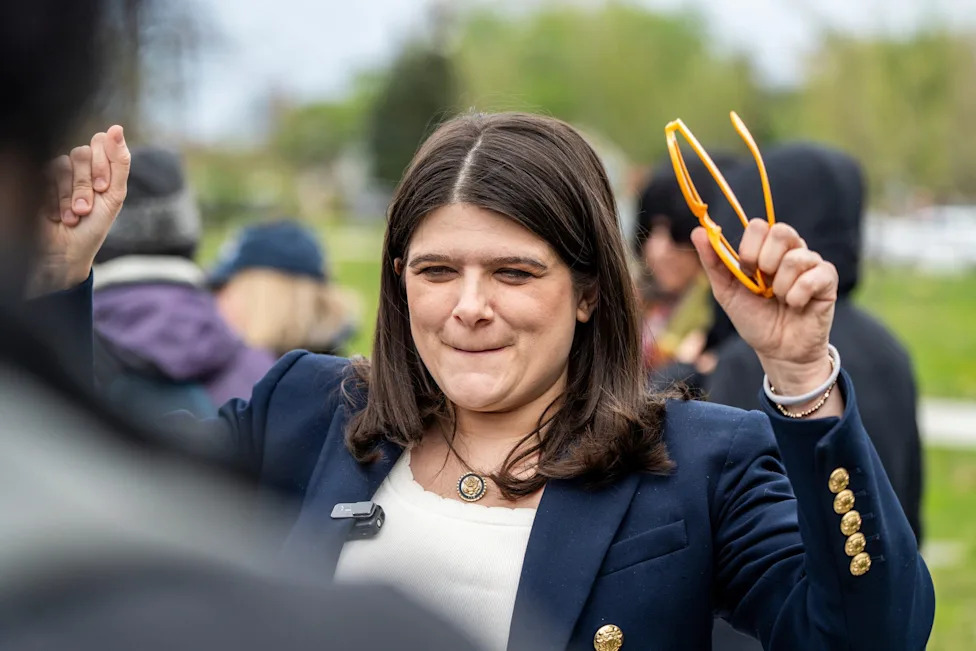
U.S. Rep. Haley Stevens, center, dances around while talking with union workers and protesters rally to mark May Day, also known as International Workerís Day, at Roosevelt Park in Detroit on Friday, May 1, 2026, to push back against President Trump.(Ryan Garza, Detroit Free Press via USA TODAY Network)
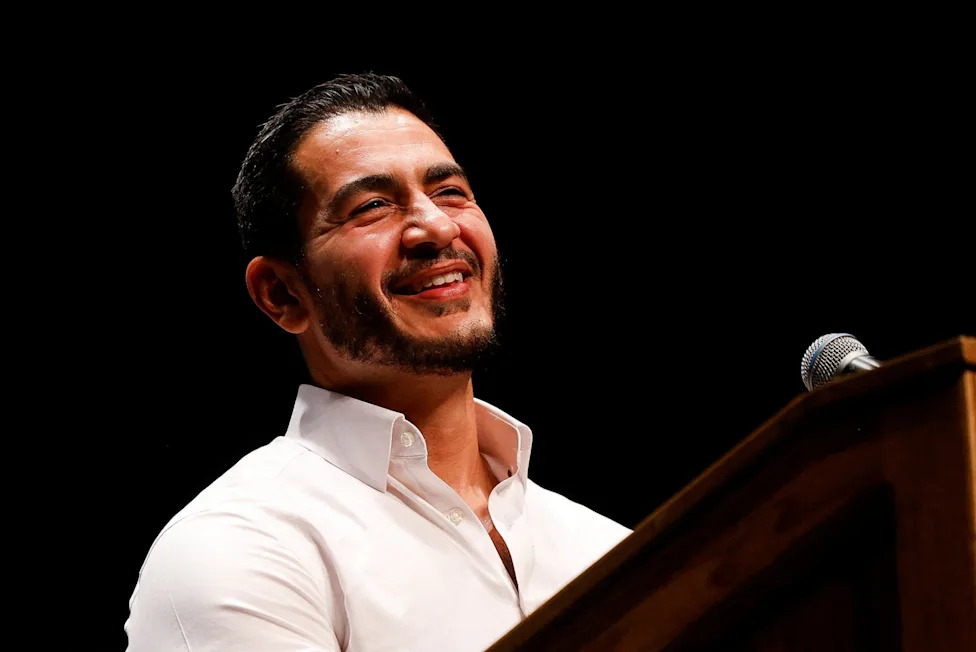
U.S. Senate candidate Abdul El-Sayed smiles during a campaign rally in Detroit, Mich. on July 18, 2026.(Rebecca Cook, REUTERS)
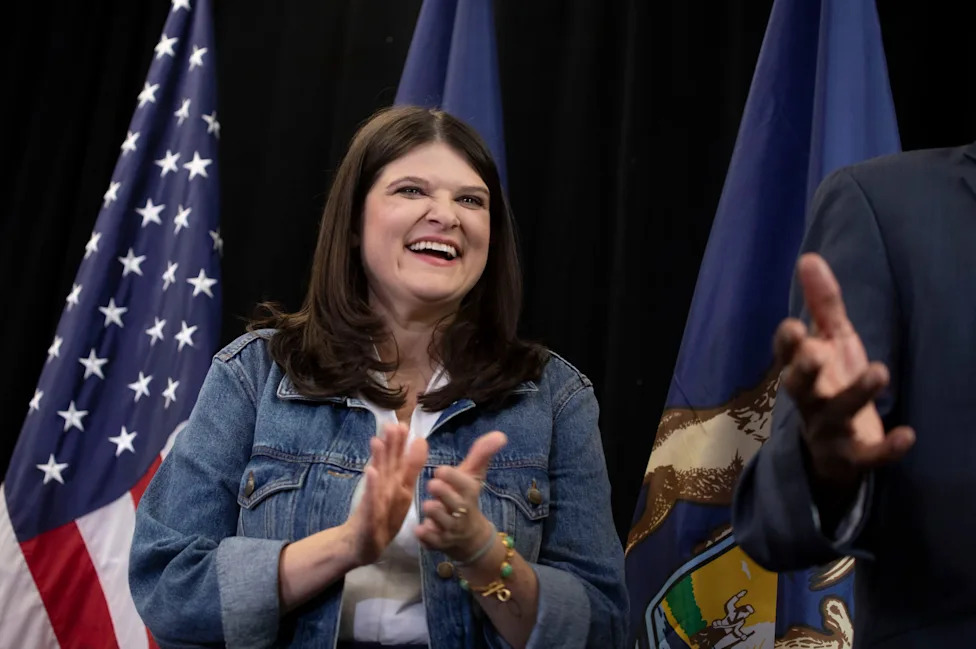
U.S. Rep. Haley Stevens (D-MI), a candidate for Michigan's open U.S. Senate seat, hosts a "Meet and Greet" campaign event with former House Majority Whip Congressman Jim Clyburn (D-SC) and Michigan Gov. Gretchen Whitmer at Michigan Conference-Teamsters on July 24, 2026 in Detroit, Mich.(Bill Pugliano, Getty Images)
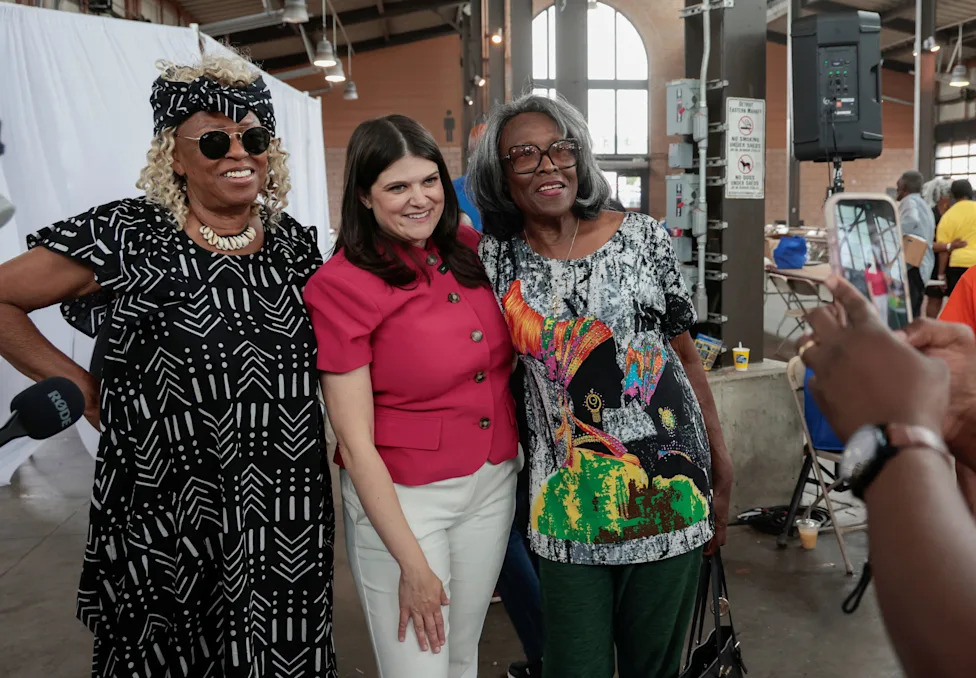
Democratic Senate candidate Haley Stevens poses for a photo with attendees at an event with Detroit Seniors ahead of the primary election in Detroit, Mich. on July, 28, 2026.(Rebecca Cook, REUTERS)
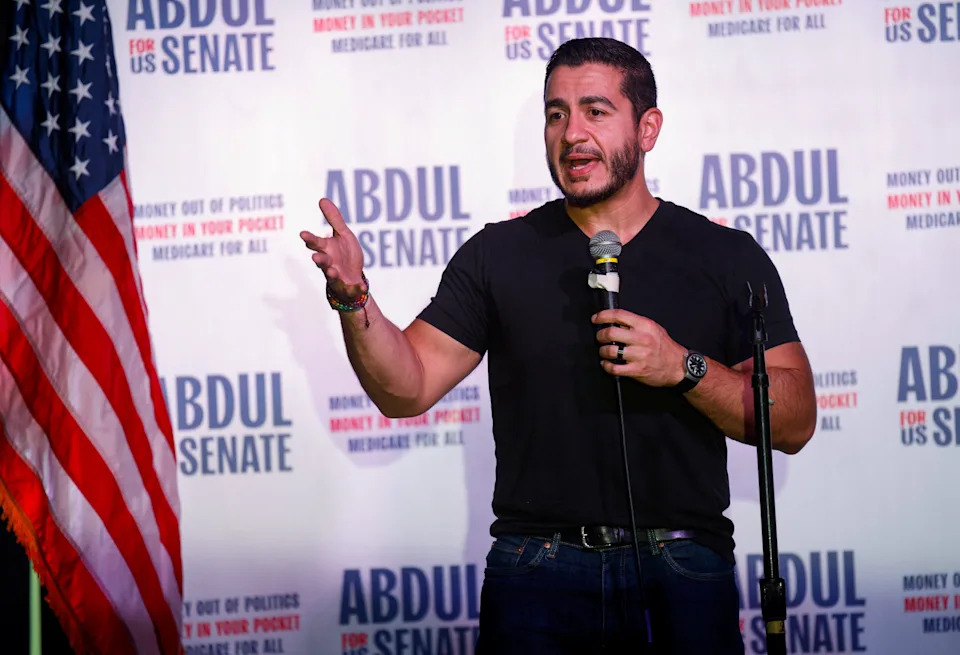
Democratic U.S. Senate candidate Abdul El-Sayed campaigns in Ferndale, Michigan, on July 25, 2026.

U.S. Sen. Roger Marshall spoke with local business leaders in Topeka on April 1, 2026.
Help us improve.